
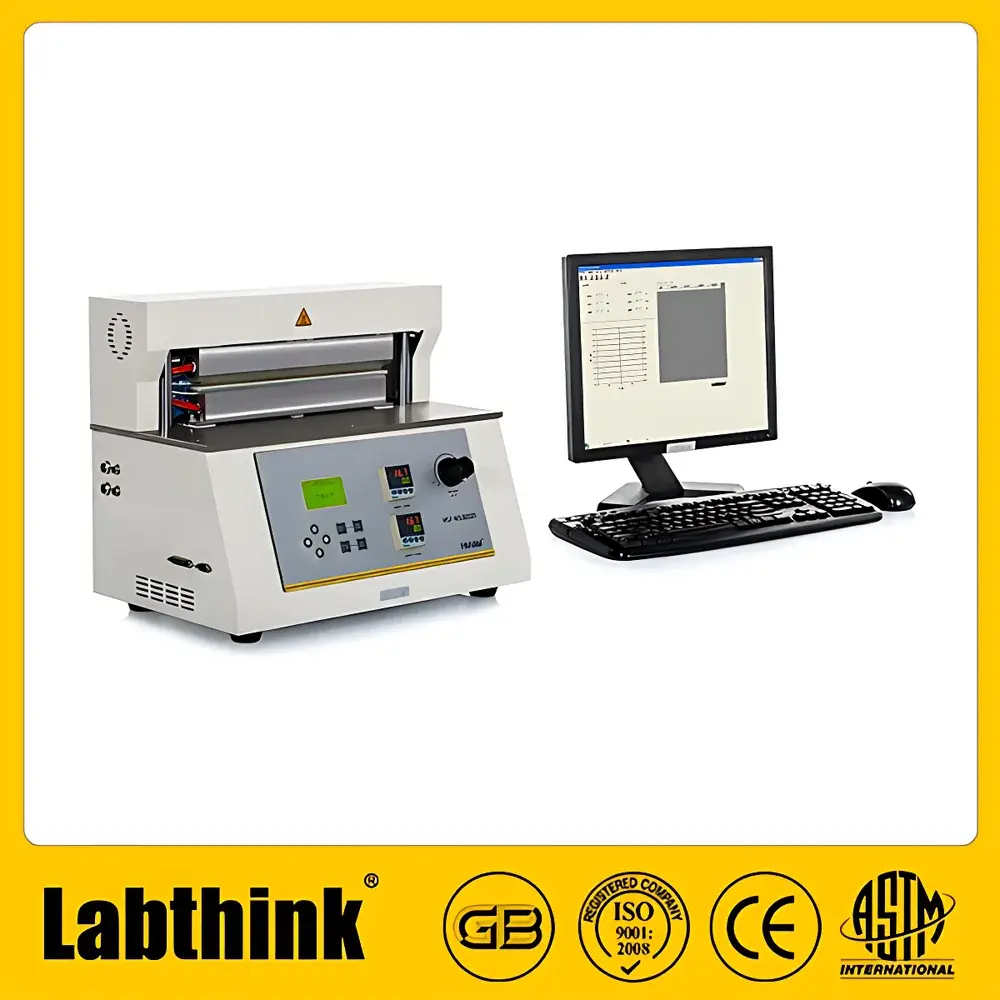
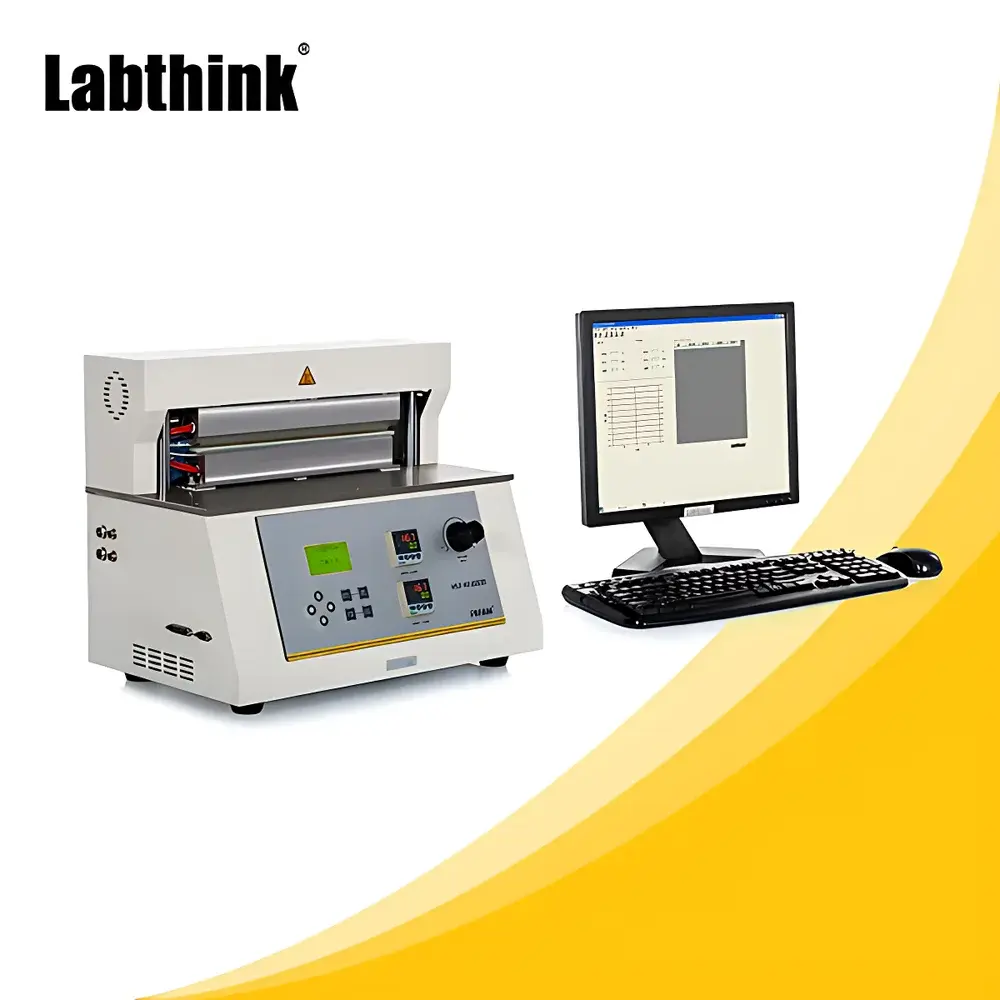
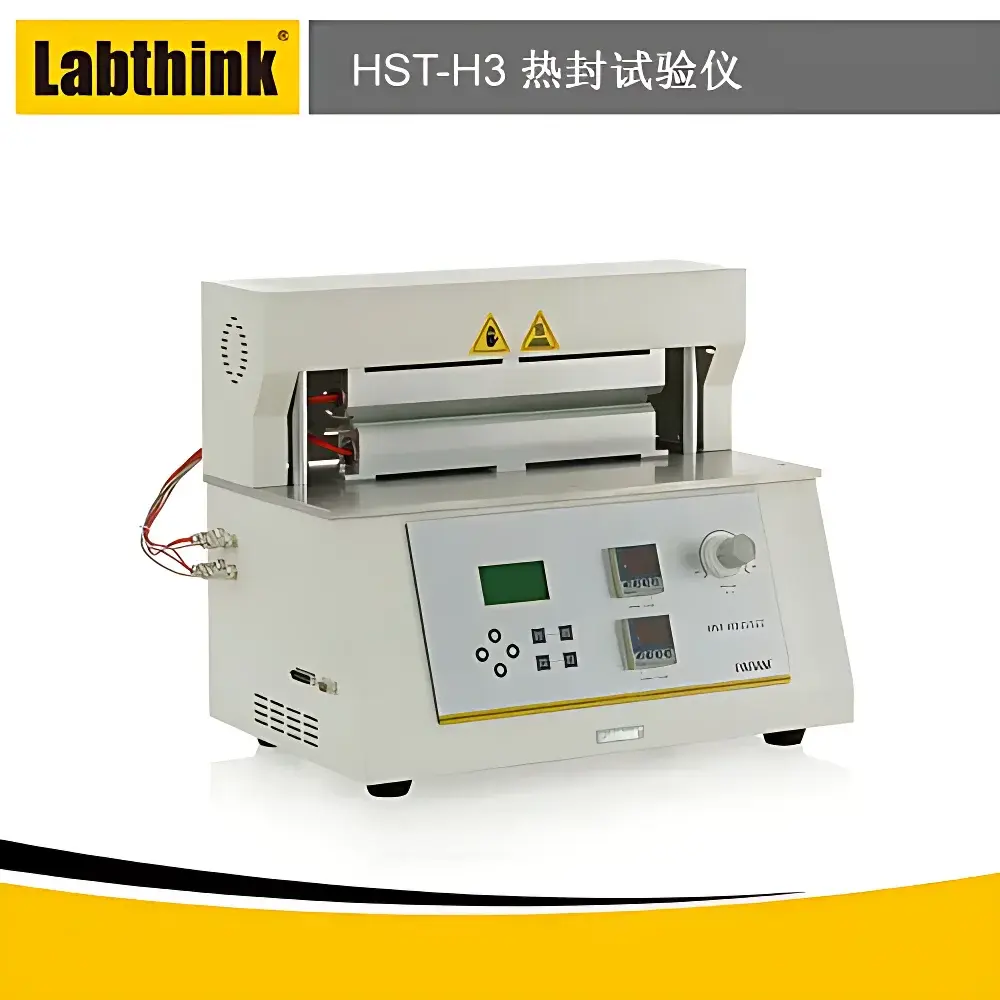
Labthink HST-H3 Dual-Head Independent Temperature-Controlled Heat Sealing Tester
| Brand | Labthink |
|---|---|
| Origin | Shandong, China |
| Manufacturer Type | Direct Manufacturer |
| Region of Origin | Domestic (China) |
| Model | HST-H3 Dual-Head Independent Temperature-Controlled Heat Sealer |
| Price Range | USD 1,400 – 8,500 |
| Heat Seal Temperature Range | Ambient to 300 °C |
| Temperature Control Accuracy | ±0.2 °C |
| Seal Time Range | 0.1–999.9 s |
| Seal Pressure Range | 0.05–0.7 MPa |
| Seal Jaw Dimensions | 330 mm × 10 mm (customizable) |
| Heating Mode | Single or Dual Independent Heating |
| Pneumatic Supply Requirement | 0.5–0.7 MPa |
| Air Inlet Fitting | Φ6 mm Polyurethane Tubing |
| Overall Dimensions | 536 mm (L) × 335 mm (W) × 413 mm (H) |
| Power Supply | AC 220 V, 50 Hz |
| Net Weight | 43 kg |
| Compliance Standards | QB/T 2358, ASTM F2029, YBB00122003 |
Overview
The Labthink HST-H3 Dual-Head Independent Temperature-Controlled Heat Sealing Tester is an engineering-grade instrument designed for precise, repeatable thermal sealing evaluation of flexible packaging materials. It operates on the principle of controlled heat-pressure-time (HPT) application via pneumatic actuation and resistive heating elements, enabling deterministic assessment of seal initiation temperature, optimal seal time, and pressure-dependent seal integrity. Unlike single-zone thermal systems, the HST-H3 features two fully independent heating zones—one for each sealing jaw—allowing differential temperature programming to simulate asymmetric sealing conditions encountered in high-speed form-fill-seal (FFS) lines or multi-layer laminates with disparate melting behaviors. This dual-zone architecture supports rigorous method development per ISO 11607-2 and ASTM F1884, particularly for medical device packaging validation where seal strength, hot tack, and peel resistance must be mapped across process windows.
Key Features
- Dual independent temperature control channels (upper and lower jaws), each programmable from ambient to 300 °C with ±0.2 °C stability—critical for evaluating coextruded structures or metallized laminates with mismatched polymer transitions.
- Pneumatically driven sealing mechanism delivering consistent, adjustable pressure (0.05–0.7 MPa) with real-time feedback calibration traceable to NIST-traceable pressure transducers.
- Configurable sealing jaw geometry: standard 330 mm × 10 mm linear seal bar; optional custom widths, curved profiles, or patterned surfaces (e.g., embossed, waffle, or stepped geometries) for specialized applications including lidding and tube tail sealing.
- High-resolution timing control (0.1 s resolution up to 999.9 s) synchronized with pressure ramping and thermal soak phases to replicate industrial dwell profiles.
- Modular pneumatic interface (Φ6 mm PU tubing) compatible with standard lab-grade oil-free compressors; no integrated air supply required—reducing footprint and maintenance overhead.
- Robust stainless-steel frame with precision-ground aluminum heating plates, engineered for long-term dimensional stability under repeated thermal cycling.
Sample Compatibility & Compliance
The HST-H3 accommodates a broad spectrum of thermoplastic-based packaging substrates, including but not limited to: cast or blown polyethylene (LDPE, LLDPE, HDPE), polypropylene (CPP, BOPP), polyester (PET, PETG), nylon (PA6, PA66), ethylene-vinyl alcohol (EVOH) barrier laminates, aluminum foil composites, metallized films, paper-plastic hybrids, and pharmaceutical-grade cold-form blister lidding materials. Its design conforms to regulatory test protocols mandated by global packaging standards: QB/T 2358 (Chinese national standard for plastic film heat seal strength), ASTM F2029 (standard test method for determining heat seal strength of thermoplastic pouches), and YBB00122003 (Chinese pharmaceutical packaging standard for aluminum-plastic composite blister packaging). The instrument supports GLP-compliant operation when paired with optional audit-trail software (21 CFR Part 11 ready).
Software & Data Management
Optional Labthink TS21 professional software enables full instrument control, parameter logging, and statistical analysis (mean, SD, Cp/Cpk) of seal strength data acquired via external tensile testers (e.g., XLW series). All test sequences—including temperature ramps, dwell times, pressure profiles, and operator ID—are timestamped and stored in encrypted binary format. Raw data exports to CSV or PDF support integration into LIMS environments. Audit trail functionality records all parameter modifications, user logins, and calibration events—meeting FDA 21 CFR Part 11 requirements for electronic records and signatures in regulated pharmaceutical and medical device labs.
Applications
- Development and optimization of heat seal parameters for rollstock used in vertical and horizontal form-fill-seal packaging lines.
- Validation of seal integrity for sterile barrier systems per ISO 11607-1 and -2, including hot tack evaluation during cooling phase.
- Comparative analysis of seal performance across resin batches, additive formulations, or surface treatments (e.g., corona, plasma).
- Testing of specialty closures: jelly cup lids (using custom cavity inserts), collapsible tube tails, sachet spouts, and stand-up pouch zippers.
- Root cause analysis of seal failures—leak paths, delamination, channeling, or scorching—by correlating HPT parameters with post-test microscopy or dye penetration results.
FAQ
Does the HST-H3 support simultaneous dual-temperature sealing?
Yes—the upper and lower jaws are independently heated and controlled, allowing asymmetric temperature profiles (e.g., 180 °C top / 160 °C bottom) to emulate real-world FFS conditions.
Is compressed air included with the system?
No—users must provide an external oil-free compressed air source meeting 0.5–0.7 MPa pressure and ISO 8573-1 Class 2 purity specifications.
Can the sealing width be modified beyond the standard 330 × 10 mm configuration?
Yes—Labthink offers OEM-engineered custom jaw sets, including narrow strips (3 mm), wide bars (up to 600 mm), and contoured geometries for non-planar substrates.
What documentation is provided for IQ/OQ qualification?
A comprehensive qualification protocol package—including installation checklist, operational test scripts, traceable calibration certificates (temperature, pressure, time), and blank URS templates—is supplied with each unit.
Is the instrument suitable for use in cleanroom environments?
The HST-H3 meets ISO 14644-1 Class 8 (100,000) particulate limits when operated with filtered air supply and routine stainless-steel surface cleaning; optional HEPA-filtered exhaust ducting is available.
Related Products





