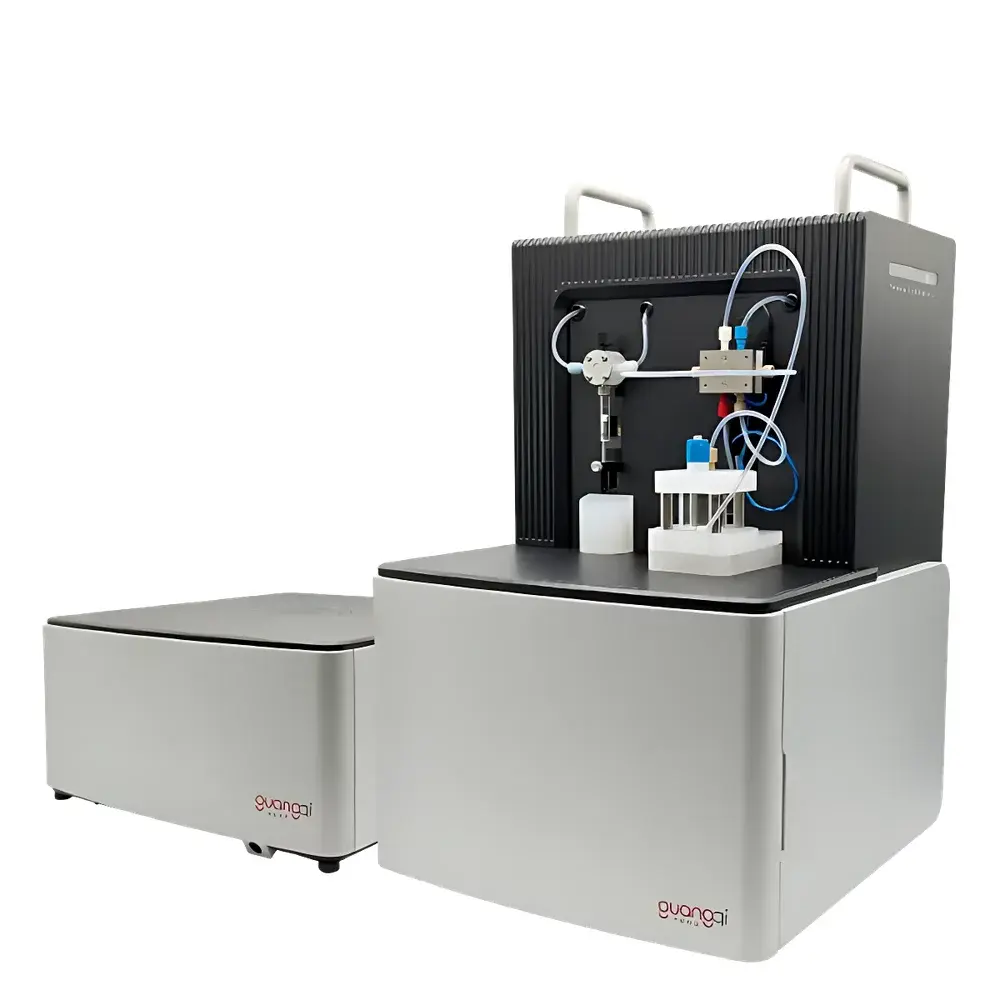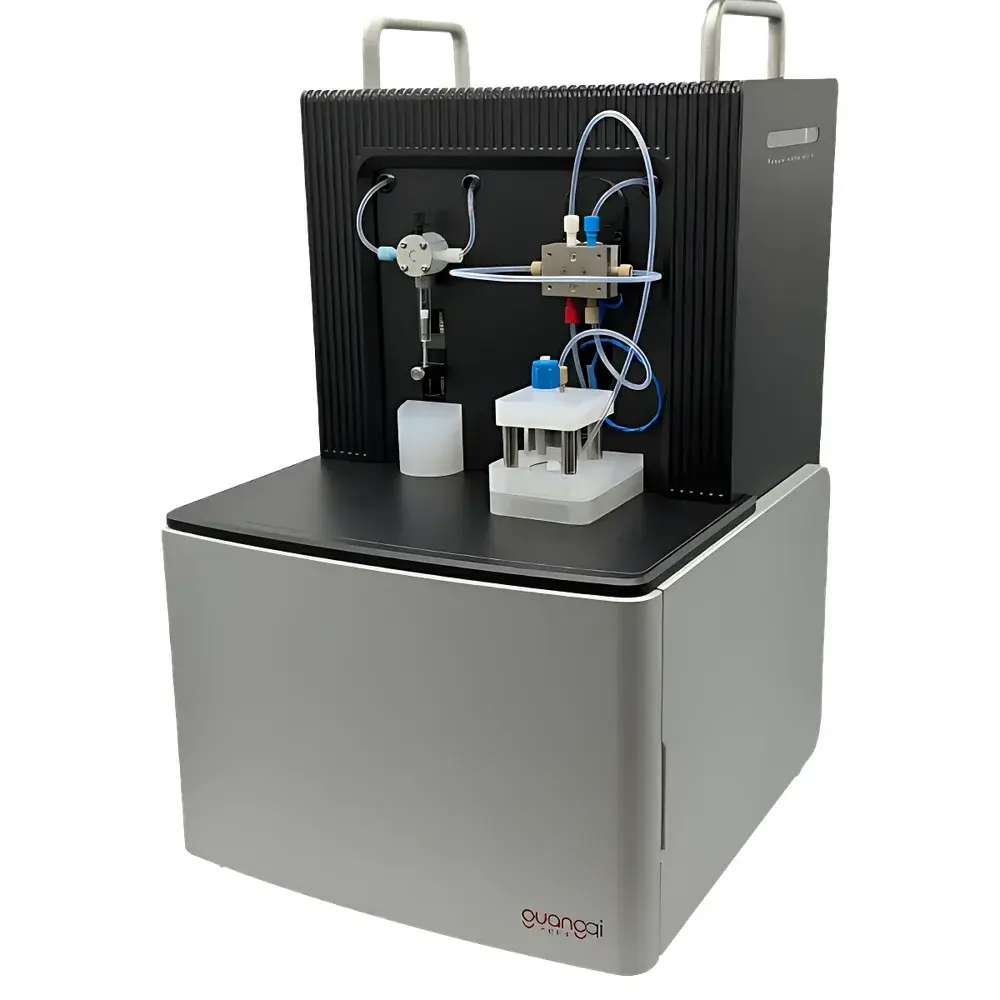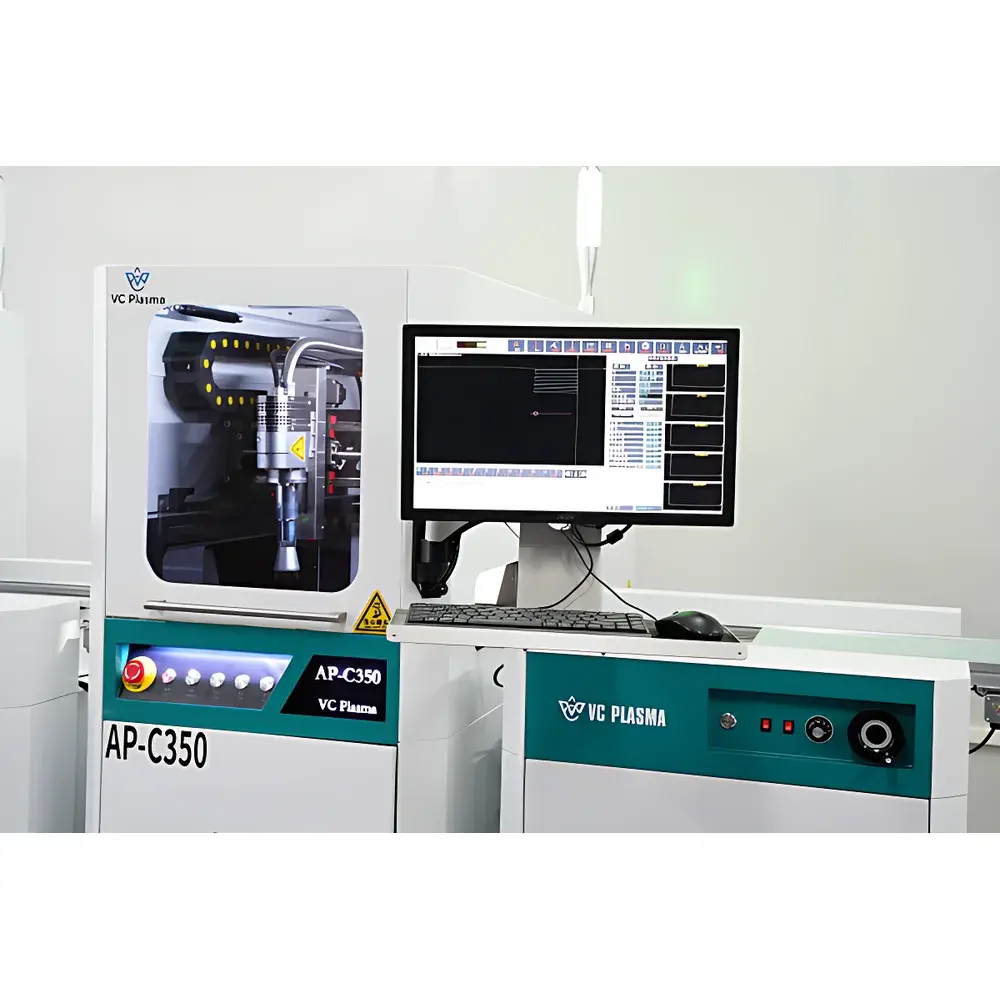
Lake Shore CRX-6.5K Helium-Free Cryogenic Probe Station
| Brand | Lake Shore |
|---|---|
| Origin | USA |
| Model | CRX-6.5K |
| Cooling Method | Two-Stage Closed-Cycle Refrigerator |
| Base Temperature | 8 K (2-probe configuration) to 10 K (6-probe configuration) |
| Temperature Control Range | 8.5–350 K (standard), extendable to 20–675 K with PS-HTSTAGE option |
| Vacuum Level | <5×10⁻⁴ Torr at room temperature, <1×10⁻⁵ Torr at base temperature, <5×10⁻⁵ Torr at max temperature |
| Sample Diameter Capacity | Up to 51 mm (2 in) |
| Probe Arm Capacity | Up to 6 arms |
| DC/RF Probe Insulation Resistance | >100 GΩ |
| Microwave Probe Frequency Range | DC to 67 GHz |
| Optical Fiber Probe Compatibility | Yes (for electro-optic measurements) |
| Landing Area | 25.4 mm diameter circle |
| Vibration Level | <2 µm RMS |
| Thermal Stability | ±25 mK (<10 K), ±10 mK (11–350 K), ±50 mK (351–675 K) |
| Total Cool-down Time | 6.25 h (including 0.5 h pump-down, 3.5 h cooling, 2.25 h warm-up) |
Overview
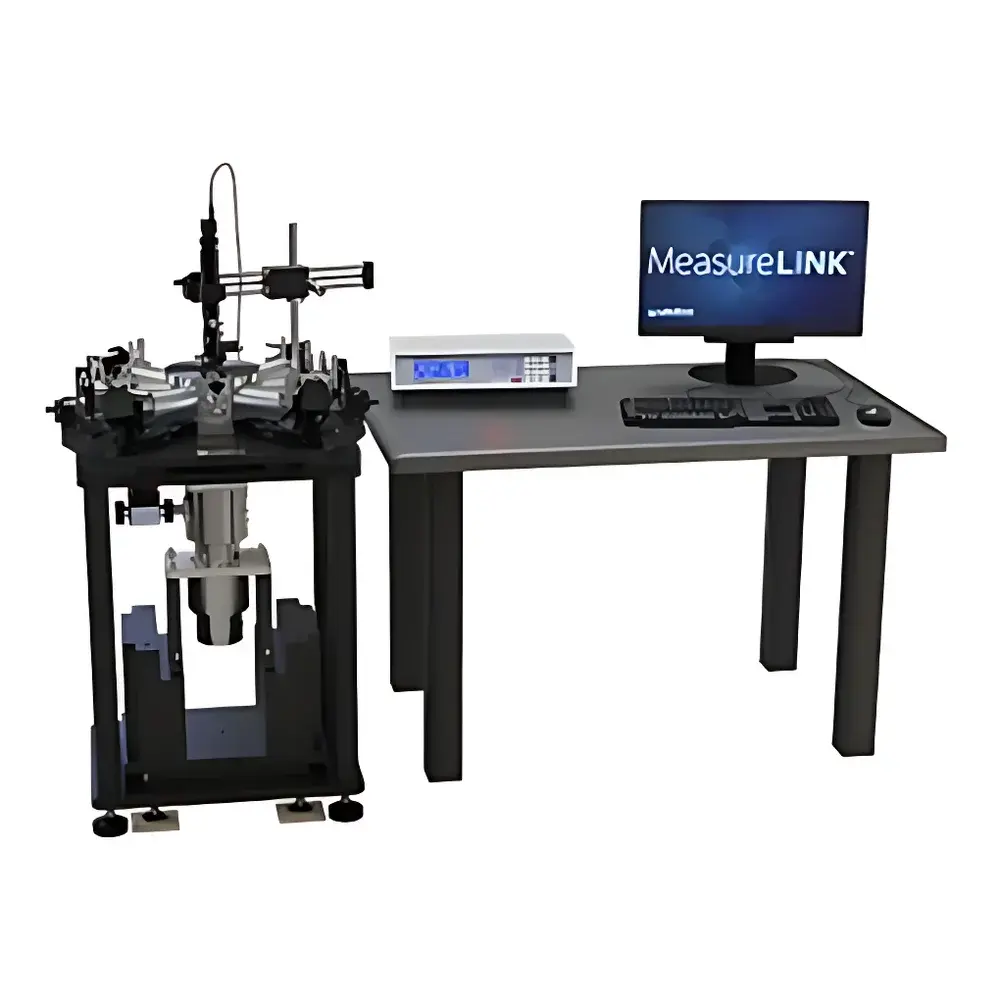
The Lake Shore CRX-6.5K is a helium-free cryogenic probe station engineered for precision electrical, capacitance-voltage (C-V), and high-frequency characterization of semiconductor devices and quantum materials under controlled low-temperature and high-vacuum conditions. Unlike traditional liquid-helium-based systems, the CRX-6.5K employs a two-stage closed-cycle refrigerator (CCR), eliminating dependency on cryogenic liquids while maintaining thermal stability and operational reliability consistent with Lake Shore’s legacy in cryogenic instrumentation. Its core architecture integrates a high-vacuum chamber (<1×10⁻⁵ Torr at base temperature), thermally decoupled probe arms, and a modular sample stage capable of accommodating full or partial wafers up to 51 mm in diameter. The system operates across a broad temperature range—8.5 K to 350 K as standard—with optional high-temperature extension (20 K to 675 K) via the PS-HTSTAGE add-on, enabling both cryogenic transport studies and elevated-temperature reliability testing within a single platform.
Key Features
- Helium-free operation using a two-stage closed-cycle refrigerator—reduces operating cost, logistical complexity, and downtime associated with liquid cryogen refills.
- Configurable probe arm capacity (2, 4, or 6 arms), each thermally anchored to radiation shields or cold stages to minimize parasitic heat load and ensure probe tip temperatures remain below 20 K at base conditions.
- DC/RF probe insulation resistance exceeding 100 GΩ—critical for ultra-low-leakage current measurements in gate dielectrics, 2D materials, and organic semiconductors.
- Integrated microwave probe support up to 67 GHz—enabling on-wafer S-parameter extraction, impedance matching, and high-frequency device modeling without external RF enclosures.
- Optical fiber feedthrough compatibility for electro-optic characterization—including photoluminescence excitation, carrier lifetime mapping, and integrated photonics testing.
- Sub-2 µm mechanical vibration isolation—achieved through optimized cold-head mounting and rigid chamber design—ensuring stable contact during nanoscale probing and long-duration I-V sweeps.
- High-precision temperature control with stability of ±25 mK below 10 K, ±10 mK from 11–350 K, and ±50 mK up to 675 K—validated per ASTM E220 and ISO/IEC 17025 traceable calibration practices.
Sample Compatibility & Compliance
The CRX-6.5K accommodates full 2-inch (51 mm) wafers, diced dies, and custom substrates mounted on interchangeable sample holders—including low-thermal-mass copper stages, guarded guard-ring configurations for C-V metrology, and backside-contact-compatible platforms. Its vacuum integrity meets UHV-adjacent specifications (<5×10⁻⁵ Torr at elevated temperature), supporting surface-sensitive measurements such as in situ annealing or contamination-free transport studies. All electrical feedthroughs comply with MIL-STD-202G for hermeticity and leakage current. The system is compatible with GLP/GMP environments when paired with Lake Shore’s compliant software logging (21 CFR Part 11 audit trail enabled), and its temperature control firmware supports traceable calibration records per ISO/IEC 17025 requirements.
Software & Data Management
Lake Shore’s BlueBox™ software provides unified instrument control, real-time thermal monitoring, and synchronized data acquisition across multiple measurement channels (e.g., SMUs, LCR meters, VNAs). It supports scripting via Python API for automated parameter sweeps, conditional logic (e.g., pause on instability detection), and metadata embedding—including operator ID, timestamp, vacuum pressure, and stage temperature gradients. Raw datasets are exported in HDF5 format with embedded calibration coefficients and units, ensuring interoperability with MATLAB, Python (NumPy/Pandas), and industry-standard analysis suites like Keysight PathWave. Audit trails record all user-initiated actions, setpoint changes, and hardware state transitions—fully compliant with FDA 21 CFR Part 11 for regulated R&D workflows.
Applications
- Low-temperature charge transport analysis in novel channel materials (e.g., MoS₂, graphene, topological insulators).
- Gate oxide reliability testing (TDDB, NBTI) under variable thermal stress from 8 K to 675 K.
- On-wafer RF characterization of GaN HEMTs and SiGe HBTs up to Ka-band frequencies.
- Cryogenic C-V profiling for dopant activation mapping and interface trap density (Dit) extraction.
- Electro-optic response of integrated photonic devices (e.g., microring modulators, superconducting nanowire single-photon detectors).
- Fundamental physics studies requiring milli-Kelvin thermal stability and sub-picoampere current resolution—such as quantum dot spectroscopy and Majorana fermion signature verification.
FAQ
Does the CRX-6.5K require liquid nitrogen or liquid helium for operation?
No. It operates exclusively with electrical power and compressed helium gas (for the CCR compressor), eliminating all cryogenic liquid dependencies.
Can the system perform simultaneous DC and RF measurements?
Yes. Its multi-port feedthrough architecture supports concurrent DC biasing, low-frequency capacitance, and vector network analysis—provided appropriate probe selection and grounding schemes are implemented.
Is backside electrical access available for wafer-level testing?
Not natively; the standard configuration does not include a backside electrode port. However, custom sample holders with integrated backside contacts can be fabricated upon request.
What vacuum pumping options are supported?
The system ships with a turbomolecular pump and backing pump pre-integrated and validated. Alternative dry scroll pumps may be substituted subject to ultimate pressure verification.
How is temperature uniformity across the sample stage verified?
Lake Shore performs multi-point thermal mapping during factory acceptance testing (FAT) using calibrated Cernox® sensors. Uniformity data (±0.15 K over central 20 mm) is included in the system certificate.