
Lake Shore FP Series Hall Effect Probe
| Key | Brand: Lake Shore |
|---|---|
| Origin | USA |
| Model | FP Series Hall Probe |
| Field Range | Earth’s magnetic field to 35 T |
| Sensor Active Area | 0.1 mm² |
| Frequency Response | DC to 50 kHz |
| Output Type | Analog voltage (ratiometric or compensated) |
| Compensation | Built-in temperature and magnetic linearity compensation |
| Probe Form Factor | Handheld and mountable configurations |
| Axis Sensitivity | Axial, transverse, and triaxial options available |
| Calibration | NIST-traceable, factory-calibrated |
| Compliance | Designed for ASTM E1447, ISO/IEC 17025-compliant labs, compatible with Lake Shore F71/F41 Teslameters and 475/455/425 Gaussmeters |
Overview
The Lake Shore FP Series Hall Effect Probe is a high-precision, NIST-traceably calibrated magnetic field sensor engineered for quantitative DC and AC magnetic field measurements across an exceptionally wide dynamic range—from ambient geomagnetic fields (~50 µT) up to 35 tesla. Based on semiconductor-based Hall effect physics, the probe converts magnetic flux density perpendicular to its active sensing plane into a proportional analog voltage output, with intrinsic ratiometric stability relative to excitation current. Its 0.1 mm² active area enables spatially resolved field mapping in confined geometries—critical for characterizing superconducting magnets, permanent magnet assemblies, and magnetic shielding performance. The FP Series integrates real-time temperature and magnetic nonlinearity compensation circuitry directly within the probe housing, eliminating post-acquisition correction and ensuring traceable accuracy over extended thermal cycles and field sweeps. It is designed exclusively for use with Lake Shore’s metrology-grade field measurement systems, including the F71 and F41 Teslameters and the 475, 455, and 425 Gaussmeters, and adheres to the electrical interface, signal conditioning, and calibration data exchange protocols defined in Lake Shore’s proprietary probe-host handshake architecture.
Key Features
- Ultra-wide field range: 50 µT to 35 T, covering both Earth’s magnetic field and high-field research environments such as hybrid magnets and pulsed-field facilities.
- Sub-millimeter spatial resolution: 0.1 mm² active Hall element enables precise gradient analysis and localized field profiling in tight air gaps or near pole faces.
- TruZero™ auto-zero stabilization: Eliminates manual nulling during operation; maintains baseline stability without drift over hours of continuous measurement.
- Integrated dual compensation: Onboard thermistor and polynomial-based magnetic linearity correction ensure ≤ ±0.25% reading uncertainty across full temperature (–40 °C to +85 °C) and field ranges.
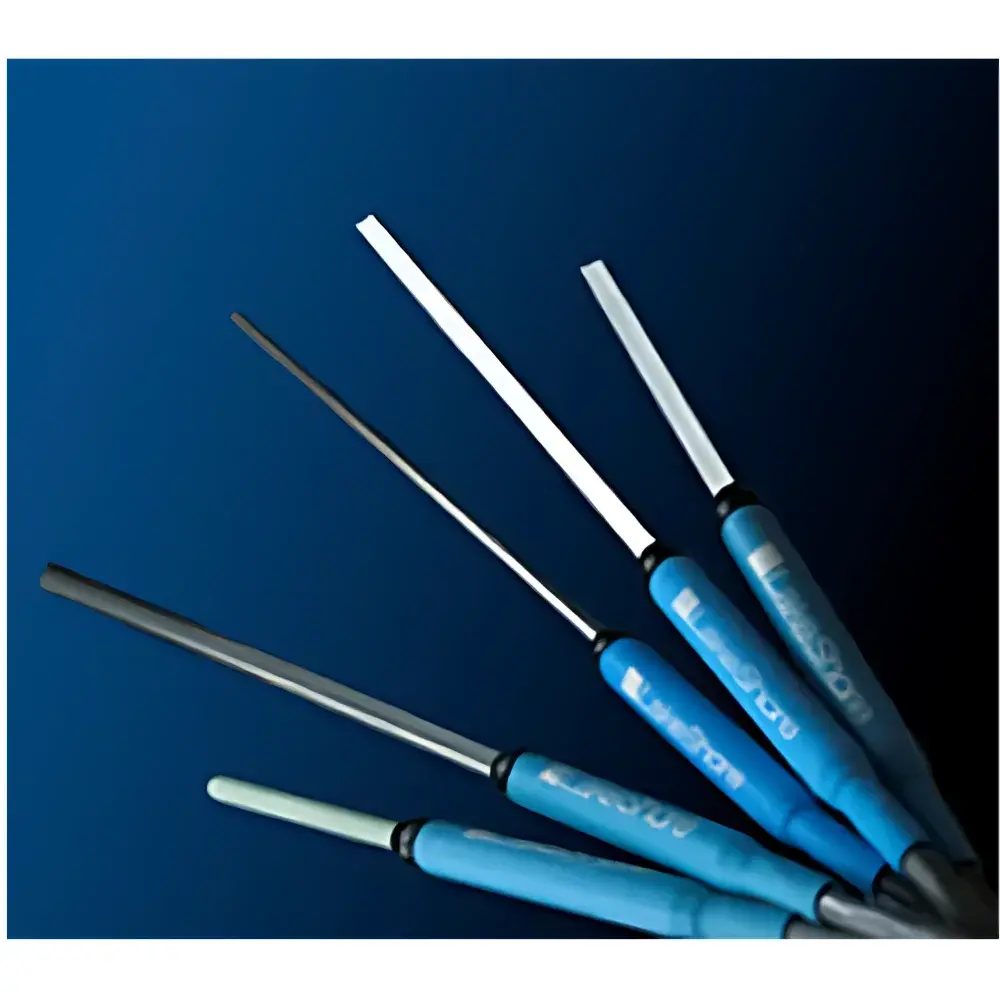
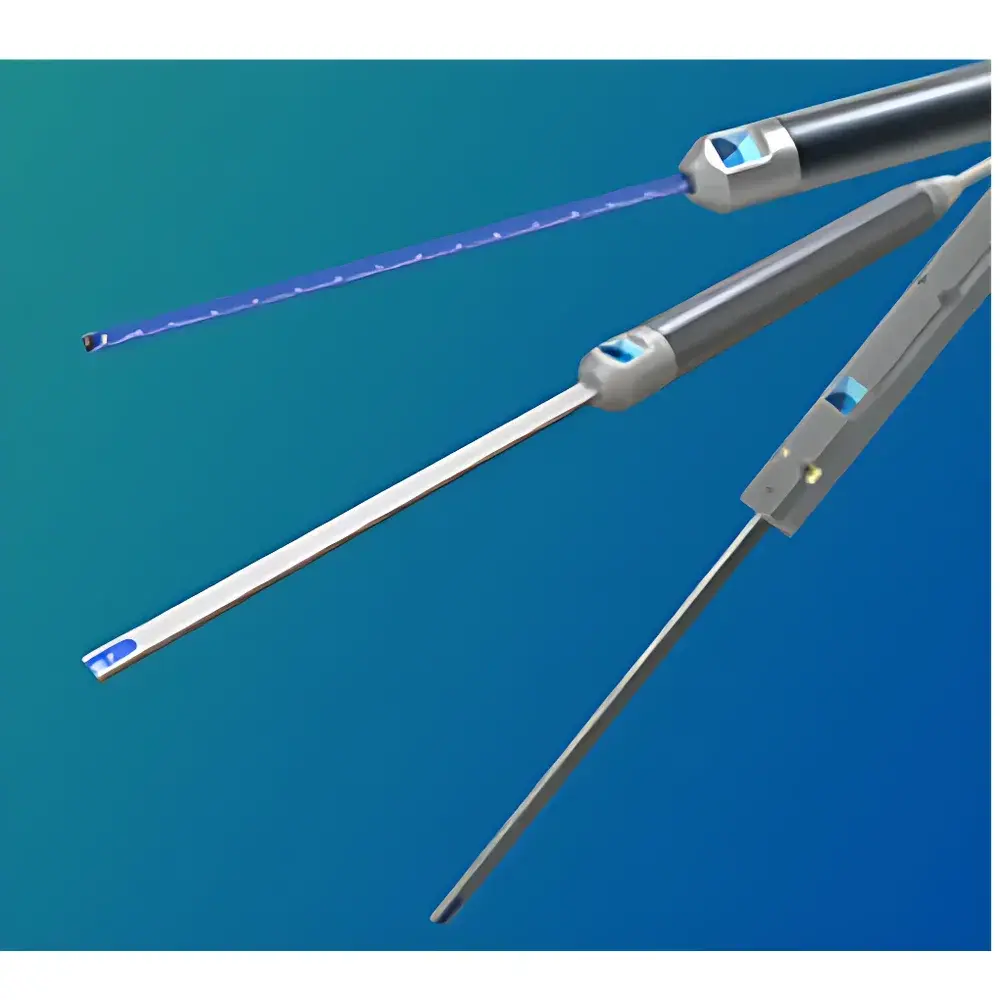
- Modular mechanical design: Interchangeable handles—including ergonomic handheld grips, rigid stainless-steel measurement rods, and vacuum-compatible feedthrough mounts—support benchtop, cryogenic, and industrial integration.
- Directional flexibility: Available in axial, transverse, and triaxial configurations, each with laser-etched polarity and active-area orientation markers for unambiguous field vector alignment.
Sample Compatibility & Compliance
The FP Series probe is compatible with standard non-ferromagnetic and non-conductive sample environments. Its low-mass ceramic and polyimide construction ensures minimal perturbation in sensitive magnetic measurements, including those performed inside superconducting magnet bores, cryostat cold fingers, and electromagnetic compatibility (EMC) test chambers. All probes are supplied with individual calibration certificates traceable to NIST Standard Reference Materials (SRMs), and calibration data files conform to IEEE 1690-2022 metadata standards. The probe system supports GLP/GMP workflows through secure digital calibration file encryption and audit-ready timestamped calibration logs. When used with Lake Shore’s F71 Teslameter, it satisfies requirements for ASTM E1447 (Standard Test Method for Measuring Magnetic Fields) and supports ISO/IEC 17025 accreditation for magnetic field metrology laboratories.
Software & Data Management
Probe calibration data is embedded in a secure, read-only memory chip within the connector housing and automatically loaded by compatible Lake Shore instruments upon connection. No manual entry or file import is required. The F71 and F41 platforms support real-time display of compensated field magnitude, vector components, and temperature-corrected uncertainty bands. Data export formats include CSV, HDF5, and MATLAB .mat, all preserving native time stamps, calibration metadata, and sensor-specific error models. For automated test systems, the probes integrate via SCPI command set over USB or Ethernet, enabling synchronization with motion controllers, power supplies, and data acquisition systems under LabVIEW, Python (PyVISA), or MATLAB environments. Full audit trails—including calibration history, firmware version, and operator ID—are retained per measurement session in compliance with FDA 21 CFR Part 11 requirements when configured with optional electronic signature modules.
Applications
- Characterization of superconducting and resistive magnets in national labs and fusion research facilities.
- Quality control of NdFeB, SmCo, and AlNiCo permanent magnet assemblies in automotive and aerospace supply chains.
- Magnetic field mapping inside MRI shimming coils and gradient coil assemblies during R&D and service calibration.
- Verification of magnetic shielding effectiveness in satellite payload enclosures and quantum computing dilution refrigerators.
- DC and AC field harmonics analysis in electric motor and generator stator testing (up to 50 kHz bandwidth).
- Material science studies involving magnetostriction, domain wall dynamics, and spintronic device response.
FAQ
Is the FP Series probe compatible with non-Lake Shore meters?
No. The FP Series uses a proprietary analog signal format, embedded calibration memory, and bidirectional communication protocol that is only supported by Lake Shore F71, F41, 475, 455, and 425 instruments.
What is the recommended recalibration interval?
Lake Shore recommends annual recalibration for applications requiring ISO/IEC 17025 traceability; for R&D use under stable environmental conditions, recalibration every 24 months is acceptable per internal validation protocols.
Can the probe be used in cryogenic vacuum environments?
Yes—select FP variants are qualified for operation at 4 K and 10−6 Torr; consult the specific model datasheet for material certifications and outgassing compliance (per ASTM E595).
Does TruZero™ eliminate the need for zeroing before every measurement?
TruZero™ maintains zero stability during operation but does not replace initial system-level zeroing after thermal equilibration or mechanical repositioning.
How is sensor linearity verified across the full 35 T range?
Linearity is validated using primary-standard pulsed-field magnetometers and reference coils traceable to NIST SRM 2500, with residual nonlinearity modeled via 7th-order polynomial fitting and stored in the probe’s EEPROM.



