
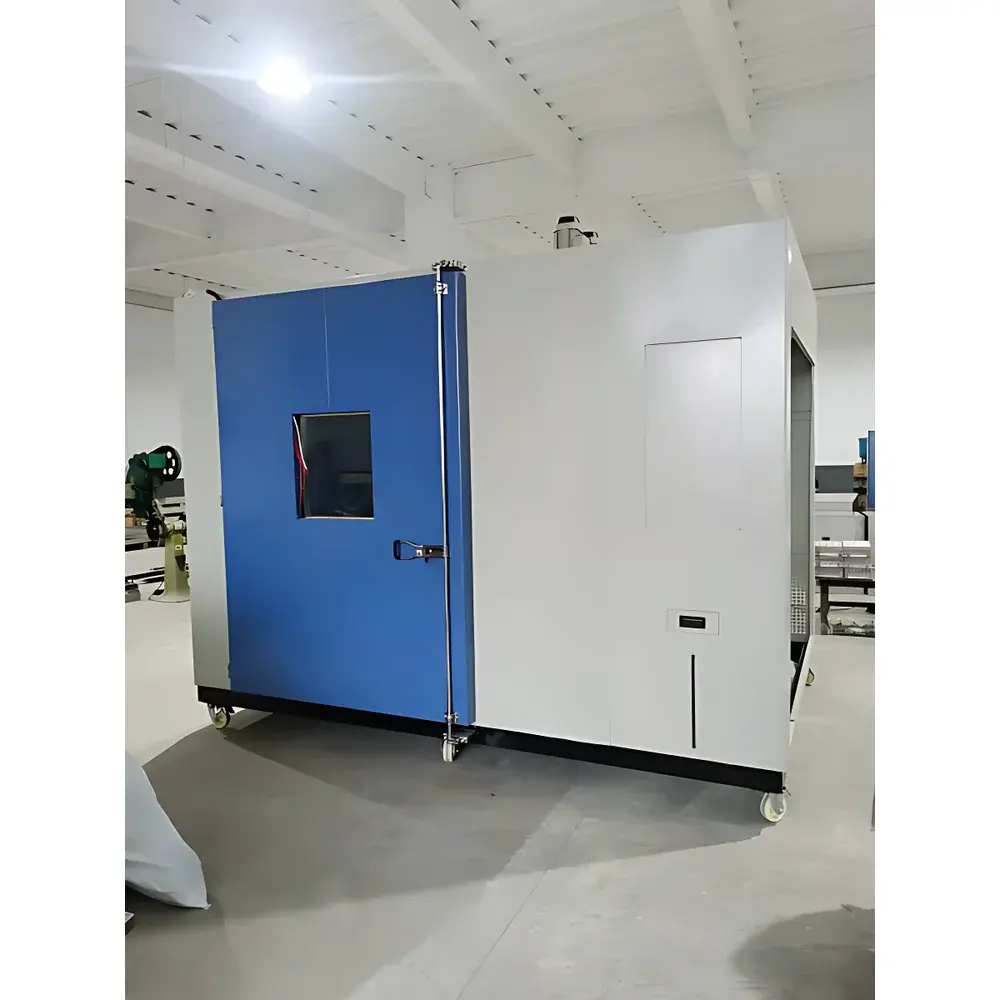
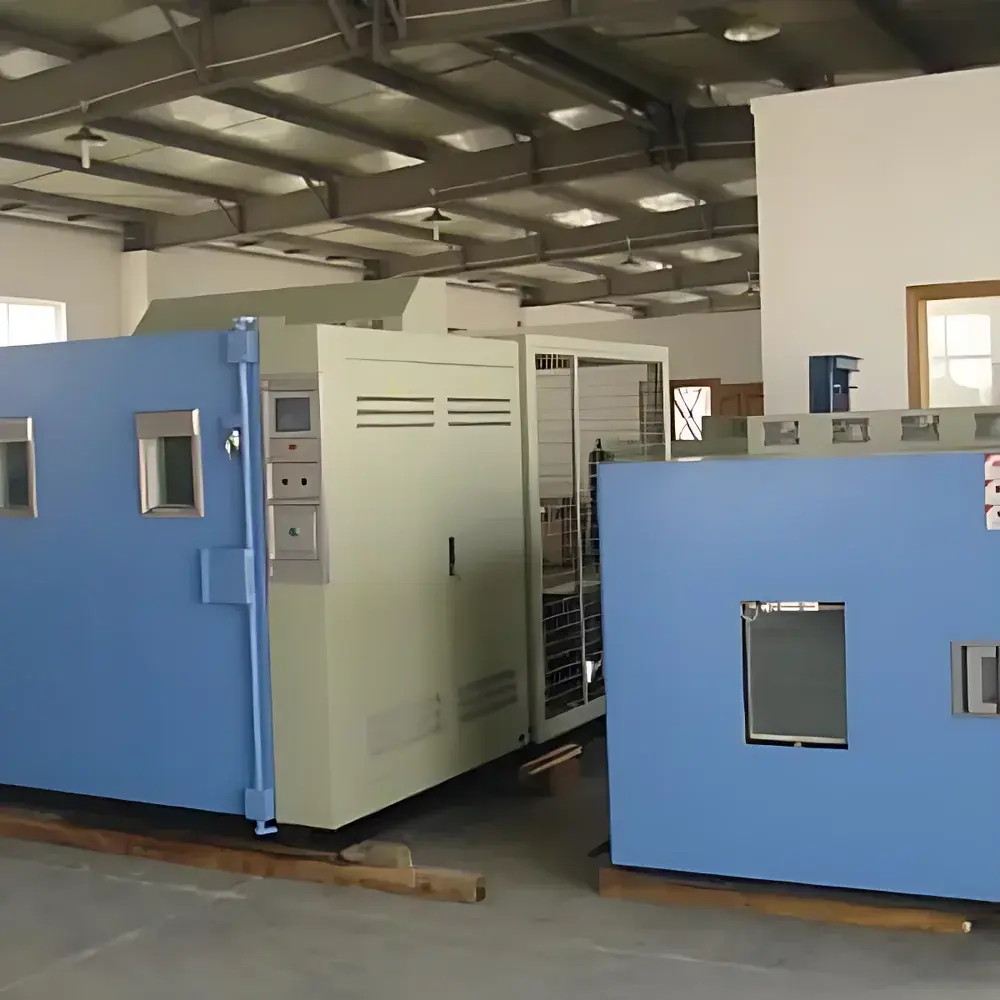
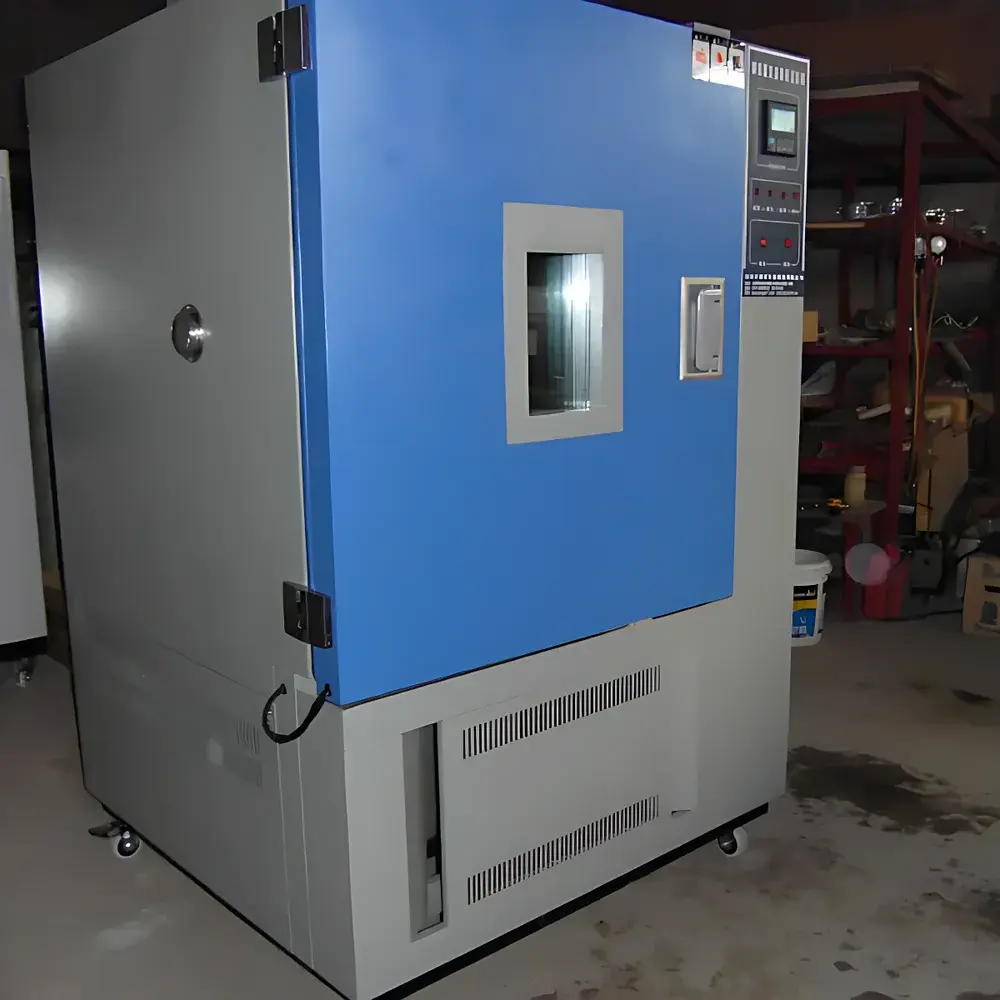
Langbo DHG-1600C Automated Compostability Testing System
| Brand | Langbo |
|---|---|
| Origin | Jiangsu, China |
| Manufacturer Type | Authorized Distributor |
| Country of Origin | China |
| Model | DHG-1600C |
| Price Range | USD 70,000 – 140,000 |
| Channel Capacity | 36 or 72 (customizable) |
| Temperature Range | Ambient to 100 °C (±1 °C accuracy) |
| Humidity Control | Up to 90 % RH |
| Airflow Control | 0.01–100 mL/min |
| Reaction Vessel Volume | 2.3 L (borosilicate glass) |
| CO₂ Quantification Method | NaOH absorption followed by titration or Total Inorganic Carbon (TIC) analysis |
| Power Supply | 220 V AC, 50/60 Hz, 5000 W |
| Weight | 230 kg |
| Compliance Standards | GB/T 19277.1–2011, GB/T 19277.2–2013, GB/T 20197–2016, GB/T 22047–2008, ISO 14855-1:2012, ISO 14855-2:2018, ISO 17556:2012, ASTM D5338, EN 13432 |
Overview
The Langbo DHG-1600C Automated Compostability Testing System is an engineered platform for standardized aerobic biodegradation assessment of polymeric and bio-based materials under controlled composting conditions. It operates on the principle of respirometric CO₂ evolution measurement: test specimens are incubated in mature, active compost inoculum maintained at thermophilic temperatures (typically 58 °C per ISO 14855-2), where indigenous microbial consortia metabolize organic carbon into CO₂, H₂O, and biomass. A continuous, humidity- and flow-regulated stream of CO₂-scrubbed air passes through each reaction vessel; evolved CO₂ is quantitatively trapped in alkaline absorbent (sodium hydroxide solution), and its mass gain—or subsequent titrimetric/TIC-derived carbonate concentration—is used to calculate cumulative mineralization. This gravimetric/chemical endpoint method delivers high reproducibility and traceable compliance with internationally recognized biodegradability protocols.
Key Features
- Modular 36-channel or 72-channel configuration—scalable to higher throughput via system expansion—enabling parallel testing of multiple samples, controls, and blanks under identical environmental conditions.
- Precise thermostatic control (ambient to 100 °C, ±1 °C) via integrated water-bath heating with intelligent liquid-level sensing and auto-refill functionality to ensure uninterrupted temperature stability across extended test durations (up to 180 days).
- Independent airflow regulation per channel (0.01–100 mL/min) with built-in diaphragm pump and humidity-saturated gas delivery, meeting ISO 14855’s requirement for consistent O₂ supply and moisture maintenance.
- Borosilicate glass reaction vessels (2.3 L capacity) provide chemical inertness, thermal resilience, and optical clarity for visual monitoring—compatible with both solid films and granular feedstocks.
- Real-time parameter logging and automated anomaly detection: simultaneous monitoring of temperature, relative humidity, elapsed time, and airflow; audible/visual alerts triggered upon deviation from user-defined thresholds.
- Comprehensive safety architecture including earth-leakage circuit protection, overtemperature cut-off relays, and fail-safe power interruption logic aligned with IEC 61000-6-2/6-4 EMC and low-voltage directive requirements.
Sample Compatibility & Compliance
The DHG-1600C supports diverse sample formats—including plastic films, molded articles, mulch films, food packaging laminates, and particulate biopolymers—provided they meet size, surface-area-to-volume, and inoculum-contact criteria specified in ISO 14855-1 and ASTM D5338. Each vessel accommodates up to 20 g of dry material mixed homogeneously with standardized compost matrix (C/N ratio 25:1, moisture 55 ±5 %, pH 7.0–8.0). The system is validated for full alignment with regulatory frameworks governing industrial compostability: it satisfies the pass/fail criteria of EN 13432 (≥90 % theoretical CO₂ evolution within 6 months), GB/T 20197–2016 (Chinese compostability standard), and ISO 17556 (soil biodegradation screening). Data outputs are structured to support GLP-compliant study reports and FDA 21 CFR Part 11–ready audit trails when paired with validated TLR0.1 software configurations.
Software & Data Management
Control and data acquisition are managed via the Langbo-certified TLR0.1 software suite running on a dedicated industrial PC, interfaced with the embedded PLC controller. The software provides real-time graphing of CO₂ evolution rates, cumulative mineralization curves, and derivative metrics (e.g., lag phase duration, maximum degradation rate, time to 10 % and 90 % mineralization). All raw sensor values—including weight changes of NaOH traps, temperature/humidity logs, and flow meter outputs—are timestamped, digitally signed, and stored in encrypted binary archives compliant with ISO/IEC 17025 documentation integrity requirements. Export options include CSV, PDF analytical reports, and XML-formatted datasets compatible with LIMS integration. Audit trail functionality records all user actions, method modifications, and calibration events with immutable timestamps—essential for regulatory submissions under EU REACH, USDA BioPreferred, or certification bodies such as TÜV Austria (OK Compost INDUSTRIAL).
Applications
- Validation of compostable packaging claims for food service ware, agricultural mulch films, and single-use consumer goods.
- Comparative biodegradation kinetics studies across polymer chemistries (e.g., PLA, PHA, PBAT, starch blends) under standardized thermophilic conditions.
- Supporting R&D for novel bio-based materials requiring third-party verification prior to commercial launch or eco-label certification.
- Quality assurance testing of incoming compost feedstock consistency and microbial activity prior to biodegradation assay initiation.
- Academic and governmental research on microbial community dynamics, enzyme expression profiling, and carbon balance modeling during aerobic mineralization.
FAQ
What standards does the DHG-1600C fully support for declaration of industrial compostability?
It meets all technical requirements of ISO 14855-1:2012, ISO 14855-2:2018, EN 13432:2000, GB/T 19277.1–2011, and ASTM D5338–22—including vessel geometry, inoculum specification, temperature ramp profiles, and CO₂ recovery efficiency validation procedures.
Can the system operate unattended for multi-week tests?
Yes—integrated auto-refill, continuous power conditioning, redundant thermal cutoffs, and remote monitoring via Ethernet enable stable 24/7 operation for up to 180-day assays without manual intervention.
Is TIC analysis mandatory, or can classical acid–base titration be used for CO₂ quantification?
Both methods are supported: the system includes calibrated burettes and pH-stat modules for titration, and optional integration with certified TIC analyzers (e.g., Shimadzu TOC-L) for enhanced precision and reduced operator dependency.
How is moisture loss compensated during long-duration testing?
The water-bath thermal management system maintains constant vessel immersion depth; combined with saturated airstream humidification and periodic gravimetric correction using reference blanks, moisture drift is maintained within ±2 % of target throughout the test period.
Does the DHG-1600C provide raw data export for independent statistical analysis?
Yes—all sensor readings, calculated mineralization percentages, and metadata are exportable in open-format CSV and XML files, with no proprietary encryption or vendor lock-in.





