
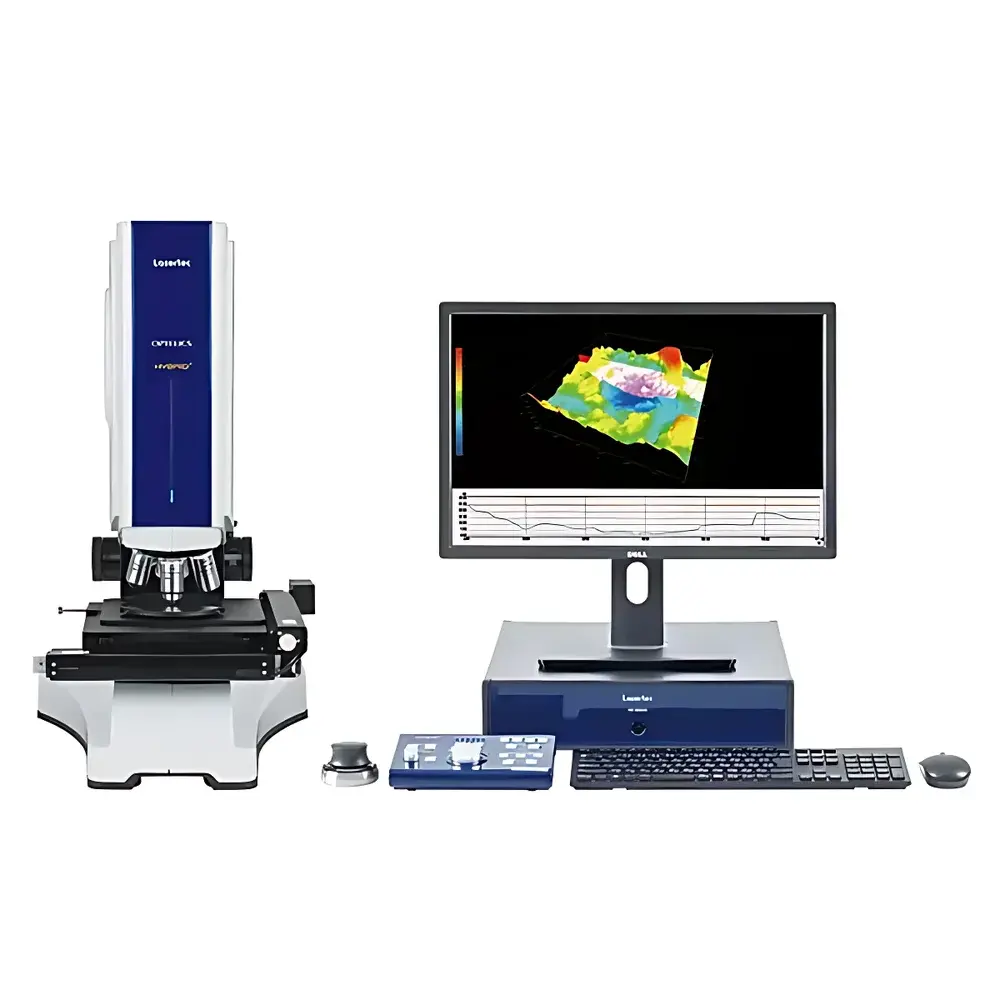
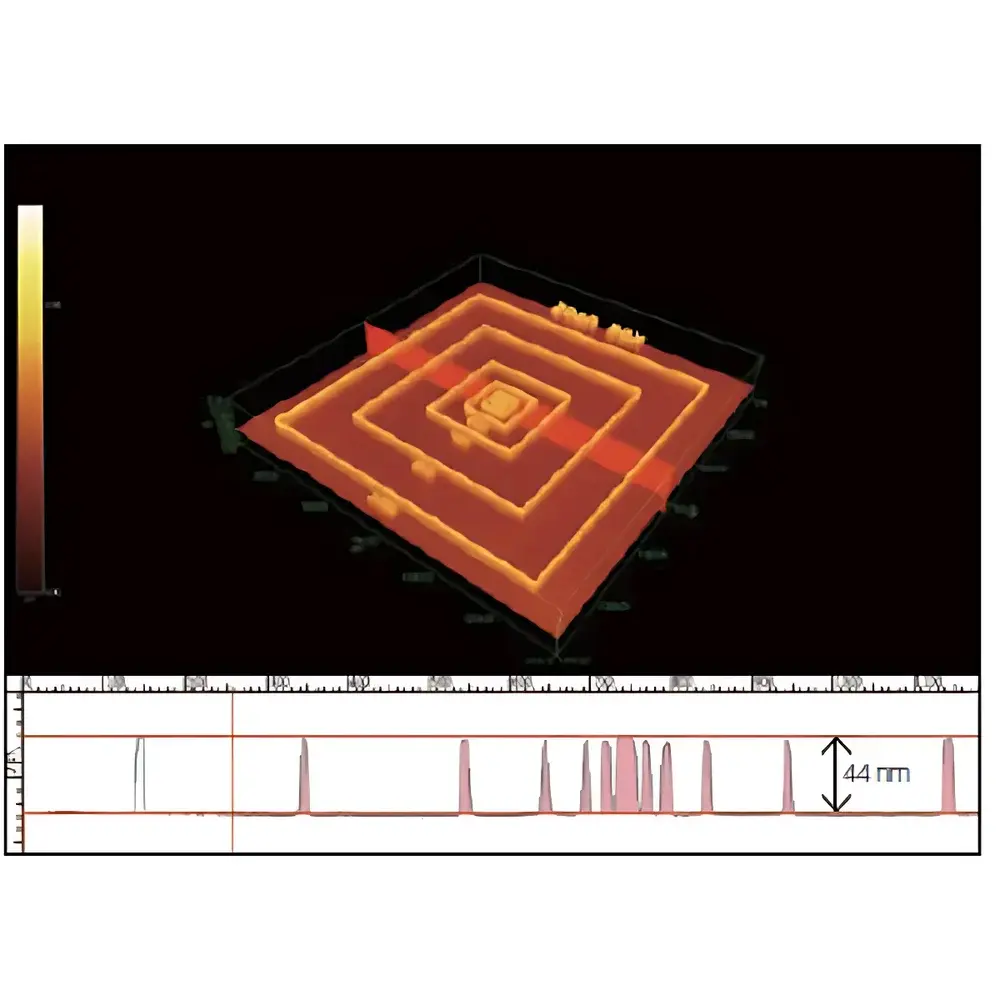
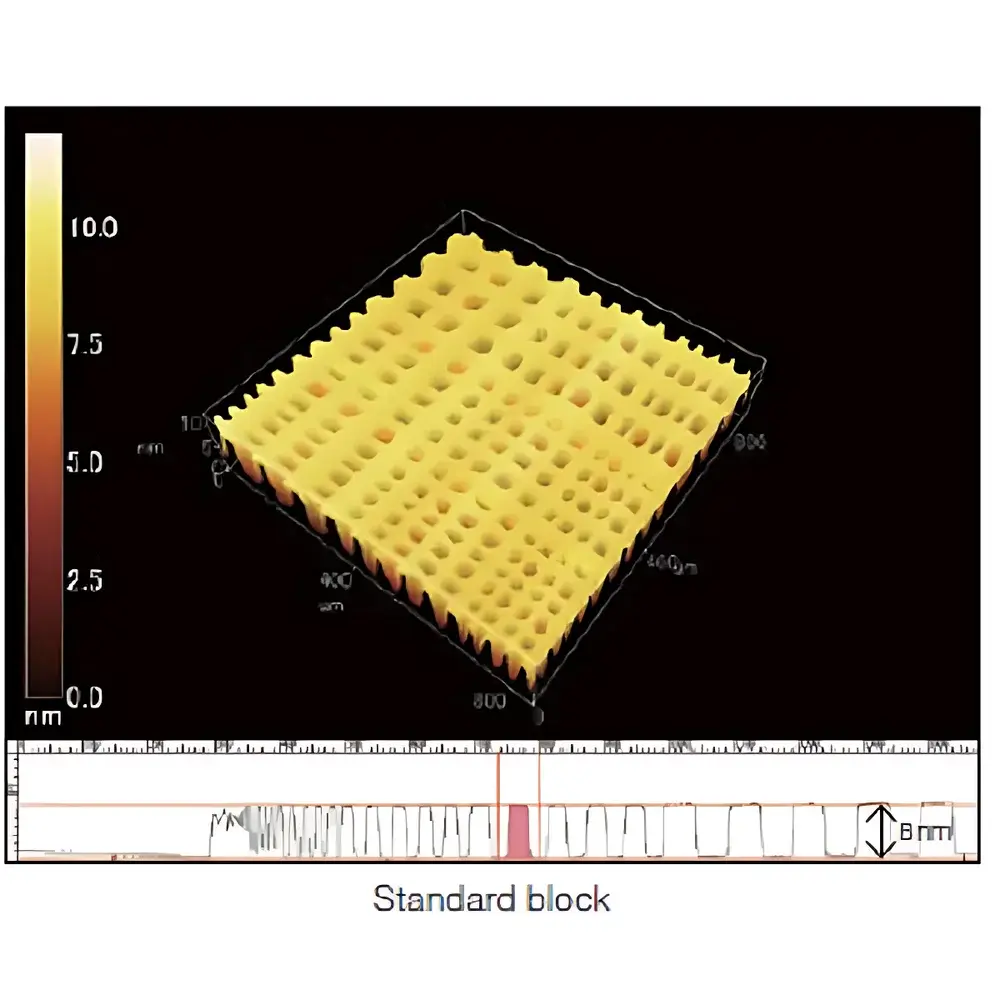
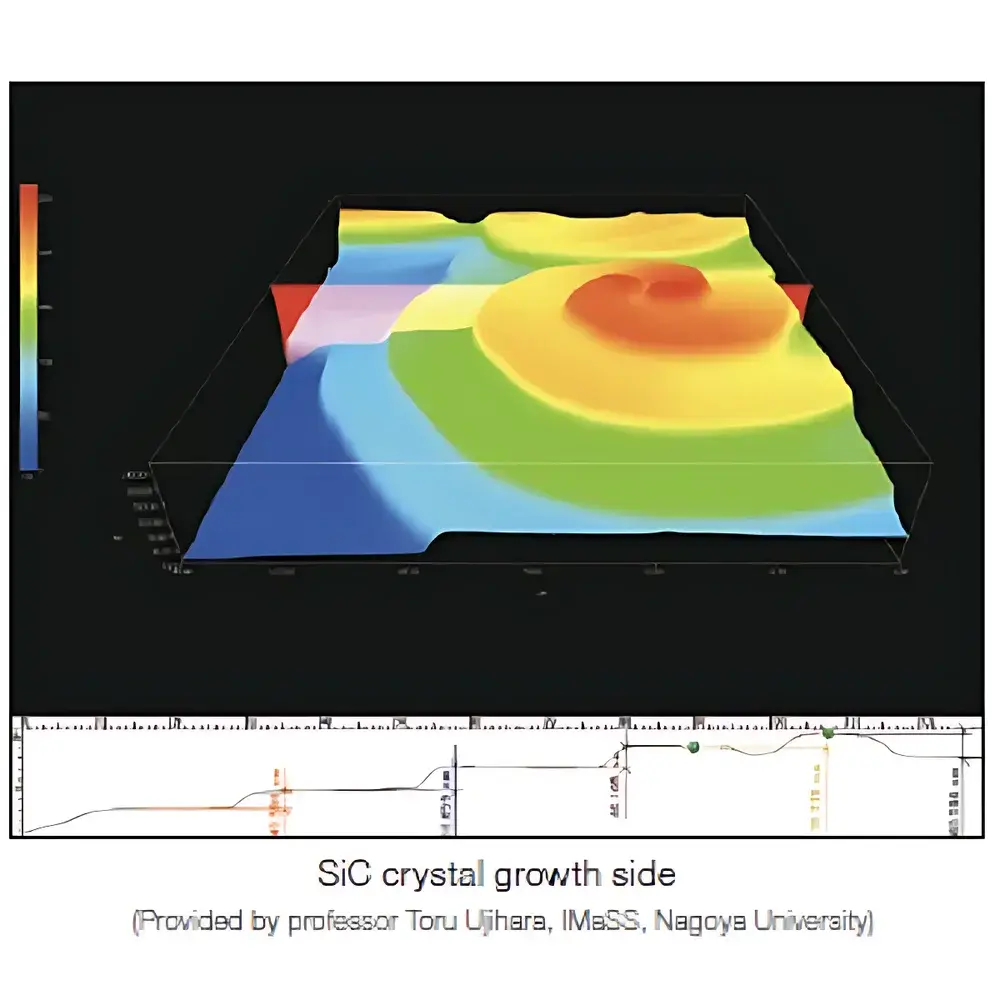
Lasertec OPTELICS HYBRID Laser Confocal Microscope
| Brand | Lasertec |
|---|---|
| Origin | Japan |
| Instrument Type | Point-Scanning Confocal Microscope |
| Vertical Resolution | 0.05 nm |
| Laser Source | 405 nm Semiconductor Laser |
| Detector | High-Sensitivity Photodetector |
| Scanning Module | Integrated Scanner-Microscope Architecture |
| Scanning Axes | XYZ |
| Maximum Scan Rate | 120 Hz |
| Optical Zoom | 0.1× Continuous Zoom |
| Objective Lenses | 10× to 150× |
| Microscope Illumination | White Light + Six Discrete Wavelengths (Selectable) |
| Software Platform | LM Eye, LIBRA, LM Inspect |
| Vibration Isolation Table | 1200 × 900 mm Dedicated Anti-Vibration Platform |
| XY Stage Control | Motorized or Manual Selection |
Overview
The Lasertec OPTELICS HYBRID is a high-precision, multi-modal 3D optical surface profiler engineered for nanoscale topographic characterization in research laboratories and advanced manufacturing quality control environments. Based on dual confocal optical architecture—combining white-light confocal and laser confocal principles—the system delivers sub-nanometer vertical resolution (0.05 nm) with traceable metrological performance. Unlike conventional single-mode instruments, the HYBRID integrates six complementary measurement modalities into one unified platform: white-light confocal microscopy, laser confocal microscopy (405 nm), differential interference contrast (DIC), vertical scanning white-light interferometry (VSI), phase-shifting interferometry (PSI), and spectroscopic reflectometric thin-film thickness measurement. This convergence eliminates cross-platform calibration uncertainty and reduces inter-instrument variability—critical for ISO/IEC 17025-accredited labs and GMP-compliant process validation workflows.
Key Features
- Dual-confocal optical design enables seamless switching between wide-field white-light imaging (for rapid survey scans) and high-magnification laser confocal mode (405 nm) for sub-10 nm lateral feature resolution.
- Integrated XYZ scanning mechanism with 120 Hz frame rate supports real-time stitching of large-area 3D datasets (>5 mm × 5 mm) without mechanical stage repositioning delays.
- 0.1× continuous optical zoom allows dynamic magnification adjustment during acquisition—preserving signal-to-noise ratio across scale transitions.
- Multi-wavelength illumination system (white light + six discrete wavelengths) enables spectral reflectance modeling for accurate thin-film metrology (1 nm–1 µm range) with pixel-level thickness mapping.
- Self-developed optical path architecture minimizes aberration and chromatic dispersion—ensuring consistent point-spread function (PSF) stability across all magnifications and illumination modes.
- Dedicated anti-vibration platform (1200 × 900 mm) meets ISO 20816-5 Class A requirements for precision optical metrology under ambient laboratory conditions.
Sample Compatibility & Compliance
The OPTELICS HYBRID accommodates diverse sample geometries—from polished wafers and MEMS devices to roughened metallic surfaces and transparent polymer films—without mandatory conductive coating or vacuum chamber insertion. Its non-contact, non-destructive operation complies with ASTM E2923-22 (Standard Guide for Measurement of Surface Topography Using Confocal Microscopy) and ISO 25178-602 (Geometrical Product Specifications – Surface Texture). The instrument’s software architecture supports audit trail generation, electronic signature enforcement, and data integrity controls aligned with FDA 21 CFR Part 11 and EU Annex 11 requirements. All height measurements are traceable to NIST-traceable step-height standards via built-in calibration routines.
Software & Data Management
The HYBRID operates through three tightly integrated software modules: LM Eye (core acquisition and analysis), LIBRA (automated batch measurement scripting), and LM Inspect (AI-assisted defect detection and classification). LM Eye provides standardized parameter extraction per ISO 4287/4288 (surface roughness), ISO 25178 (areal surface texture), and SEMI MF1530 (thin-film uniformity). LIBRA supports G-code-like protocol definition for unattended operation—including auto-focus, region-of-interest selection, and pass/fail threshold evaluation against user-defined specifications. LM Inspect employs convolutional neural networks trained on >50,000 labeled defect images to classify particles, scratches, pits, and film delamination with >99.2% precision (validated per ISO/IEC 17025 internal method verification). Raw data is stored in vendor-neutral HDF5 format with embedded metadata (wavelength, objective ID, scan parameters, environmental logs).
Applications
- Semiconductor metrology: Trench depth, line-edge roughness (LER), contact hole profile, and multi-layer stack thickness uniformity.
- MEMS/NEMS device inspection: Cantilever deflection quantification, actuator surface deformation, and packaging-induced stress relief patterns.
- Optical component characterization: Lens surface irregularity (PV, RMS), anti-reflective coating homogeneity, and diffraction grating pitch fidelity.
- Biomaterial interface analysis: Cell-substrate adhesion topography, hydrogel swelling dynamics, and scaffold pore architecture quantification.
- Advanced battery R&D: Anode/cathode particle morphology evolution, SEI layer growth kinetics, and separator surface degradation mapping.
- Automotive coating QC: Paint layer thickness distribution, scratch resistance assessment, and corrosion initiation site localization.
FAQ
What standards does the OPTELICS HYBRID comply with for surface metrology?
The system conforms to ASTM E2923-22, ISO 25178-602, ISO 4287/4288, and SEMI MF1530. Calibration procedures follow ISO/IEC 17025 guidelines and support traceability to NIST SRM 2150a.
Can the HYBRID measure transparent thin films on reflective substrates?
Yes—using its six-wavelength spectroscopic reflectometer module, it models complex optical stacks (e.g., SiO₂/TiN/Si) and calculates individual layer thicknesses with <±0.3 nm repeatability at 1σ.
Is vibration isolation mandatory for achieving 0.05 nm vertical resolution?
Yes—the included 1200 × 900 mm active/passive hybrid isolation table is required to maintain specified resolution; performance degrades measurably on standard optical tables per ISO 20816-5 testing.
How does the system handle autofocus on low-contrast or highly reflective samples?
It employs adaptive focus algorithms combining intensity gradient analysis, Z-contrast maximization, and multi-wavelength coherence gating—enabling reliable autofocus on mirror-polished metals and amorphous carbon films.
Does the software support custom report generation for regulatory submissions?
Yes—LM Eye exports PDF/HTML reports with embedded raw data, measurement uncertainty budgets, operator ID, timestamp, and instrument calibration status—fully compliant with FDA eCTD and EU CTD formatting requirements.




