
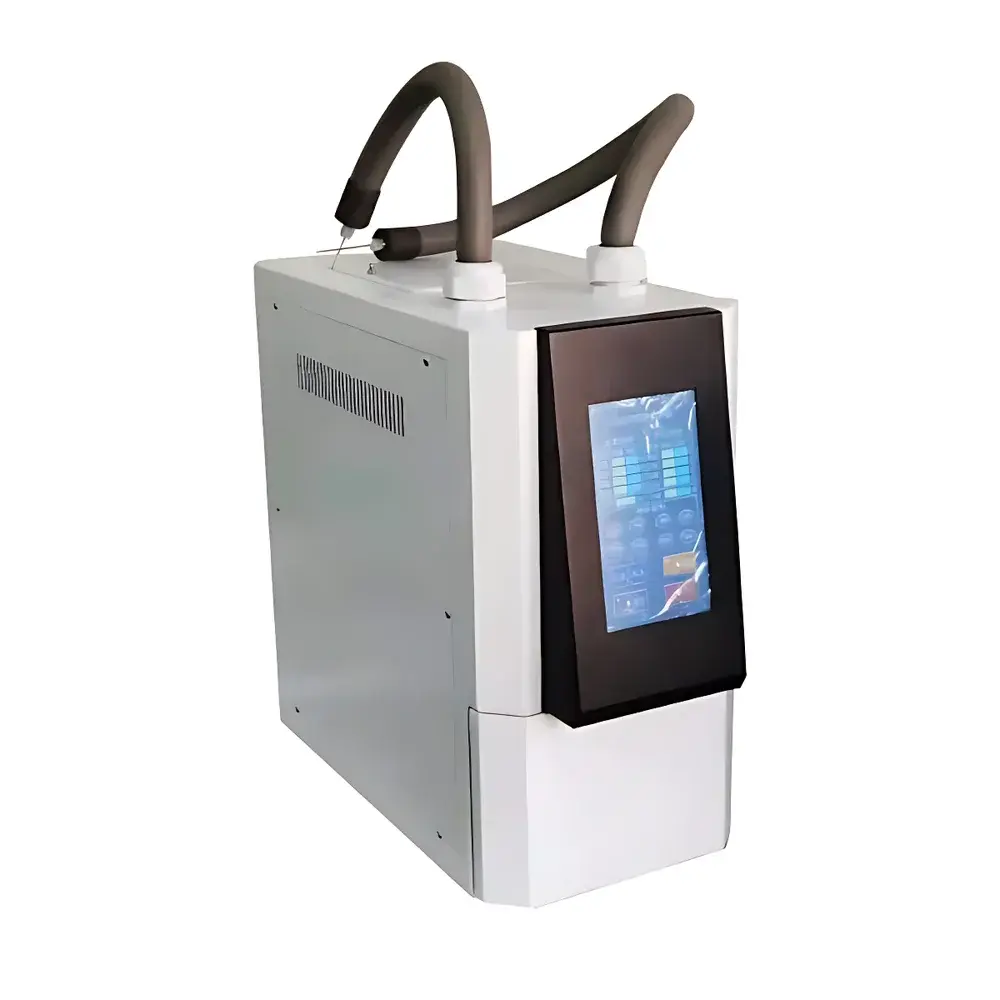
Luchuang LCHS-20N Automated Static Headspace Sampler
| Brand | Luchuang |
|---|---|
| Origin | Shandong, China |
| Manufacturer Type | Direct Manufacturer |
| Instrument Type | Static Headspace Sampler |
| Automation Level | Semi-Automatic |
| Sample Vial Capacity | 20 positions |
| Vial Size | 20 mL (10 mL optional |
| Sample Zone Temperature Range | Ambient to 300 °C (1 °C increment, ±0.5 °C accuracy) |
| Valve System Temperature Range | Ambient to 180 °C (1 °C increment, ±0.5 °C accuracy) |
| Transfer Line Temperature Range | Ambient to 200 °C (1 °C increment, ±0.5 °C accuracy |
| Pressure-Controlled Sampling Range | 0–0.4 MPa (continuously adjustable) |
| Purge Flow Rate | 0–400 mL/min (continuously adjustable) |
| Precision | RSD ≤3% (measured with 200 ppm ethanol in water) |
| Dimensions | 420 × 248 × 380 mm |
| Weight | ~15 kg |
Overview
The Luchuang LCHS-20N Automated Static Headspace Sampler is a precision-engineered sample introduction system designed for gas chromatography (GC) analysis of volatile and semi-volatile organic compounds in solid, liquid, or viscous matrices. It operates on the principle of static headspace equilibrium—where a sealed sample vial is heated to a defined temperature, allowing analytes to partition into the vapor phase above the sample (the “headspace”). After thermal equilibration, the vapor-phase mixture is transferred directly into the GC injector via pressure-driven sampling, eliminating solvent handling and minimizing matrix interference. This method is widely adopted in environmental testing (e.g., VOCs in soil/water), pharmaceutical residual solvent analysis (per ICH Q2(R2) and USP ), food flavor profiling, forensic toxicology, and polymer outgassing studies. The LCHS-20N implements pressure-balanced injection—a patented technique ensuring symmetrical, narrow peak shapes and improved chromatographic resolution—while maintaining full compatibility with all major GC platforms without hardware modification.
Key Features
- 20-position carousel with programmable sequential processing, enabling unattended overnight operation and high-throughput batch analysis
- Triple-zone independent temperature control: sample oven (ambient–300 °C), valve system (ambient–180 °C), and transfer line (ambient–200 °C), each with ±0.5 °C accuracy and minimal thermal gradient (<±0.5 °C)
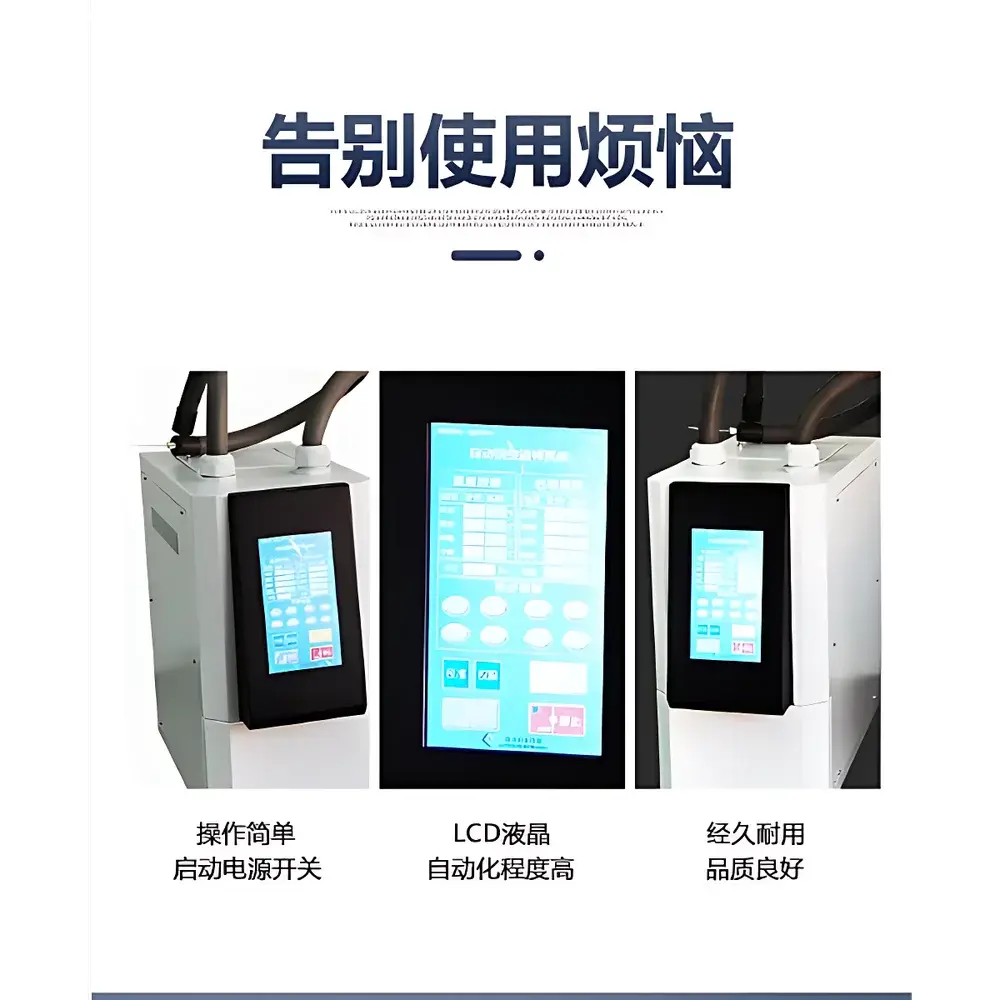
- 7-inch capacitive touchscreen interface with intuitive time-programmable workflow: pressurization, equilibration, sampling, injection, and automated backflush—all executed with single-button initiation
- Integrated pressure regulation module allows seamless integration with existing GC systems; supports both external carrier gas supply and native GC instrument gas lines
- Patented auto-backflush function for valve and transfer line (ZL 2021 2 1874159.8), preventing carryover and cross-contamination between runs
- Modular design accommodates optional fused-silica or deactivated quartz transfer tubing for enhanced inertness during analysis of reactive or adsorptive compounds (e.g., aldehydes, amines, sulfur species)
- Adjustable sampling parameters—including equilibration time, pressurization pressure (0–0.4 MPa), and injection duration—enabling precise control over analyte mass introduced to the GC column
- Low-voltage (24 V DC) heating for transfer line ensures operational safety and compliance with laboratory electrical standards
Sample Compatibility & Compliance
The LCHS-20N accepts standard 20 mL crimp-top headspace vials (with septa), with optional support for 10 mL and custom-sized vials (e.g., 50 mL). Its robust thermal management enables reliable analysis of diverse sample types: aqueous solutions, blood serum, pharmaceutical tablets, polymer pellets, soil slurries, and packaged food matrices. The system meets core requirements for GLP-compliant laboratories, including traceable temperature calibration logs, user-accessible method storage, and audit-ready parameter recording. While not inherently 21 CFR Part 11 compliant out-of-the-box, its microprocessor-based control architecture supports integration with validated LIMS or chromatography data systems (CDS) that enforce electronic signature, audit trail, and role-based access controls per FDA and EMA regulatory expectations.
Software & Data Management
Control is managed through an embedded microcontroller with non-volatile memory for storing up to 100 user-defined methods. Each method includes configurable setpoints for all three temperature zones, pressurization profile, equilibration delay, injection timing, and backflush duration. Real-time status indicators display elapsed time, current temperature, valve position, and active stage—critical for troubleshooting and method validation. The device outputs TTL-level trigger signals to synchronize GC oven ramp initiation and data acquisition start commands. Raw method parameters are exportable via USB for archival or QA review. No proprietary software installation is required; configuration remains fully accessible via the onboard interface, reducing IT dependency and validation overhead.
Applications
- Residual solvent quantification in APIs and excipients (ICH Q3C guidelines)
- VOC monitoring in drinking water and wastewater (EPA Methods 502.2, 524.4, ISO 15681-2)
- Flavor compound profiling in beverages, dairy, and fermented products
- Head-space analysis of packaging materials for migration studies (EU 10/2011)
- Forensic detection of ethanol, acetone, or volatile toxins in biological fluids
- Quality control of adhesives, coatings, and composite resins for off-gassing compliance
FAQ
Is the LCHS-20N compatible with Agilent, Thermo Fisher, and Shimadzu GC systems?
Yes—it interfaces via standard pneumatic connections and TTL triggering; no GC firmware or hardware modification is needed.
Can I use 10 mL vials with this instrument?
Yes—vial adapters are available as optional accessories; the standard configuration supports 20 mL vials.
What is the typical carryover rate after backflush?
When operated within specified purge flow (100–400 mL/min) and temperature parameters, carryover for mid-polarity compounds (e.g., ethanol, acetone) is consistently below 0.5% (n=5, 200 ppm standard).
Does the system support method validation documentation?
It provides timestamped temperature logs, run history, and parameter recall—sufficient for IQ/OQ protocols when paired with lab-specific SOPs and calibration records.
Is remote operation or network connectivity supported?
No native Ethernet or Wi-Fi; however, external relay modules or PLC interfaces can be integrated for centralized lab automation systems.





