MBS Fitlylab-L03 Enterobacteriaceae Rapid Detection System
| Brand | MBS.SRL |
|---|---|
| Origin | Italy |
| Model | Fitlylab-L03 |
| Instrument Type | Benchtop |
| Detection Principle | Respirometric Colorimetric Culture-Based Assay |
| Certification | ISO 16140:2003 (Alternative Method Validation), ISO/IEC 17025:2005 (Internal Accreditation) |
| Detection Capacity | 8 Independent Channels |
| Optical Detection | Simultaneous Tri-Wavelength Photometry (450 nm, 540 nm, 630 nm) |
| Sensitivity | ≥1 CFU per test |
| Specificity | >99.999% for target Enterobacteriaceae and E. coli |
| Sample Types | Liquid, solid, surface swab, aerosol (via impinger collection), semi-solid (e.g., dairy, paste) |
| Reporting | Automated PDF generation with timestamped audit trail, GLP-compliant data storage |
Overview
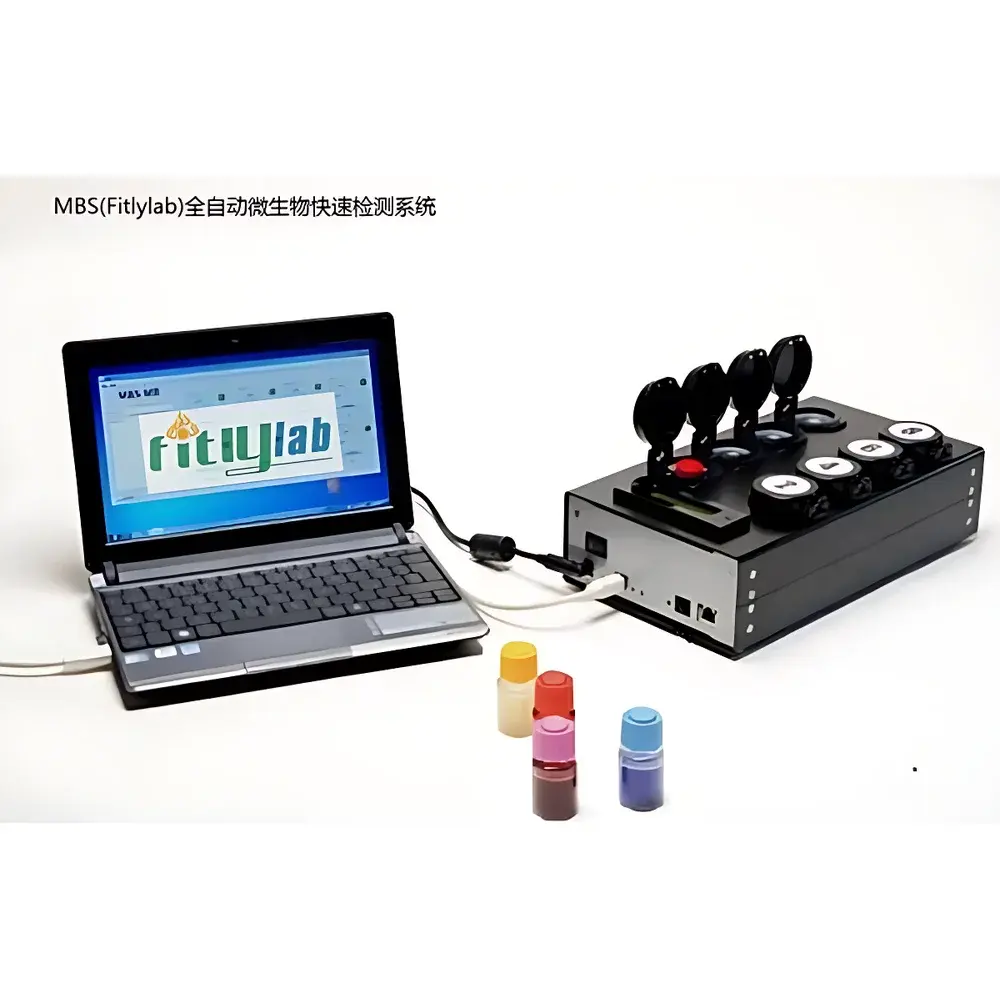
The MBS Fitlylab-L03 Enterobacteriaceae Rapid Detection System is a benchtop, respirometric colorimetric analyzer engineered for quantitative microbiological assessment of Enterobacteriaceae—including Escherichia coli—across diverse matrices without culture enrichment or laboratory infrastructure. Unlike conventional plate-count methods requiring 24–48 h incubation and subjective colony interpretation, the Fitlylab-L03 employs a proprietary multi-modal detection principle integrating selective nutrient formulation, enzymatic substrate cleavage (β-glucuronidase), redox-sensitive chromogenic indicators, and real-time optical kinetics. Within each sealed VL detection vial, target microorganisms metabolize defined substrates under controlled aerobic or facultative anaerobic conditions, generating electron flux through the respiratory chain. This alters the oxidation-reduction potential of the medium, inducing a time-dependent, stoichiometric shift in chromophore absorbance across three discrete wavelengths (450 nm, 540 nm, 630 nm). The MBS-MR host instrument captures high-resolution photometric time-series data from all eight independent reaction chambers, identifying inflection points in differential absorbance curves to compute microbial load (CFU/mL or CFU/g) via calibrated kinetic algorithms. The system operates autonomously—requiring no operator intervention post-sampling—and delivers fully traceable, ISO 16140:2003-validated results in as little as 4–12 h, depending on initial contamination level.
Key Features
- Eight thermally regulated, optically isolated detection channels enabling parallel analysis of heterogeneous samples—including water, food homogenates, surface swabs, air filters, and dairy products.
- Tri-wavelength photometric acquisition (blue, green, red) mitigates scattering artifacts from turbid or particulate-laden samples, ensuring robust performance with raw milk, ground meat, or leafy produce extracts.
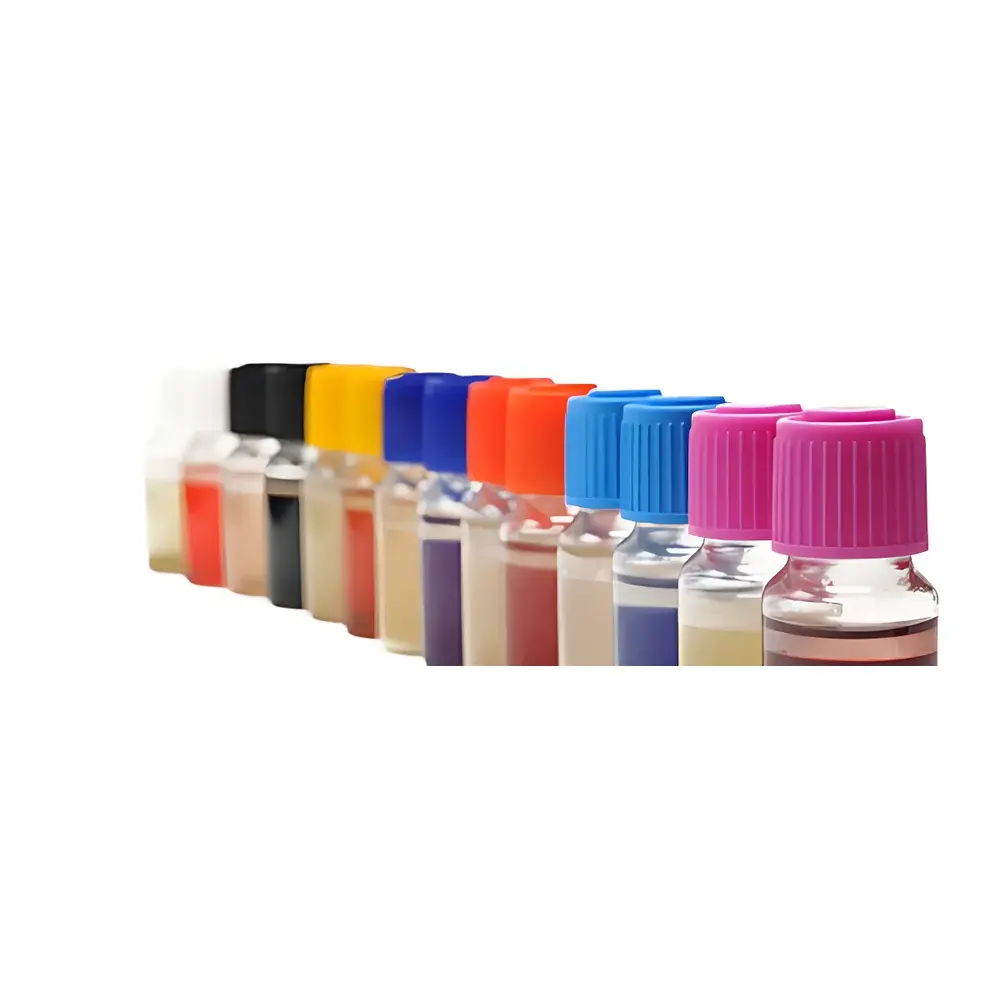
- Proprietary VL detection vials incorporate selective inhibitors, resuscitation nutrients, and redox mediators that support growth and metabolic activity of Enterobacteriaceae while suppressing non-target flora—eliminating need for pre-enrichment or plating.
- Automated temperature profiling per assay protocol: individual channel setpoints range from 30°C to 44.5°C, programmable to match regulatory requirements for coliforms (35°C), E. coli (44.5°C), or fecal coliforms (44.5°C).
- Self-contained biosafety design: all reactions occur within sealed, single-use vials equipped with integrated sterilization functionality (post-assay UV-C exposure), permitting safe operation in non-BSL environments.
- Full audit trail compliance: software records user ID, sample ID, start/end timestamps, calibration logs, raw photometric curves, and final CFU calculations—supporting 21 CFR Part 11 readiness when deployed with validated electronic signatures.
Sample Compatibility & Compliance
The Fitlylab-L03 accommodates direct analysis of unprocessed specimens per internationally recognized sampling protocols: 1 mL liquid (water, milk, broth), 1 g solid (meat, cheese, produce), or surface area equivalent to 10 cm² swabbed with neutralizing buffer. Airborne E. coli is quantified following ISO 14698-1 using impinger-collected bioaerosols transferred into VL vials. All assays conform to ISO 16140:2003 validation criteria for alternative methods in food and feed microbiology, having undergone formal equivalence testing against ISO 16649-2 (E. coli in foods) and ISO 9308-1 (coliforms in water). Internal validation per ISO/IEC 17025:2005 includes uncertainty budgeting, inter-laboratory reproducibility assessment (n=12 sites), and matrix interference studies across 14 food categories. The system meets HACCP prerequisite program requirements for environmental monitoring and raw material release testing, and supports EU Regulation (EC) No 2073/2005 and FDA Bacteriological Analytical Manual (BAM) Chapter 4 equivalency pathways.
Software & Data Management
Fitlylab Control Software (v5.x, English and Chinese localized) provides intuitive workflow navigation, method library management, and automated report generation. Each assay generates a tamper-evident PDF containing sample metadata, instrument configuration, raw kinetic plots, calculated CFU values with 95% confidence intervals, pass/fail status against user-defined action limits, and digital signature fields. Data are stored locally in encrypted SQLite databases compliant with GLP record retention standards (minimum 10-year archival). Optional network deployment enables centralized data aggregation via secure HTTPS API integration with LIMS platforms (e.g., LabWare, Thermo Fisher SampleManager). Audit logs capture all user actions—including method edits, result overrides, and calibration events—with immutable timestamps and operator identifiers.
Applications
- Food safety laboratories performing rapid lot release testing for E. coli O157:H7, generic E. coli, and total Enterobacteriaceae in ready-to-eat meats, dairy, fresh produce, and beverages.
- Environmental monitoring programs in food manufacturing facilities—verifying sanitation efficacy on conveyor belts, cutting boards, and packaging equipment per FDA Food Code Annex 3.
- Drinking water utilities conducting routine coliform surveillance per EPA Method 1603 and WHO Guidelines for Drinking-water Quality.
- Clinical and veterinary diagnostic settings screening for fecal contamination in animal feed, pet food, and pharmaceutical excipients.
- Regulatory agencies executing import inspection protocols for agricultural commodities, seafood, and infant formula under USDA-FSIS Directive 8080.1 and EU Commission Regulation (EU) 2019/627.
FAQ
What regulatory standards does the Fitlylab-L03 satisfy for official microbiological testing?
The system holds ISO 16140:2003 validation for use as an alternative method to ISO 16649-2 (E. coli in foods) and ISO 9308-1 (coliforms in water), with internal accreditation to ISO/IEC 17025:2005 covering measurement uncertainty, traceability, and technical competence.
Can the instrument detect viable but non-culturable (VBNC) E. coli?
No—the assay requires active metabolic respiration; VBNC cells lacking electron transport chain functionality will not generate measurable signal. It detects only culturable and metabolically active populations.
Is method transfer required when switching from traditional plating to Fitlylab-L03?
Yes—users must perform in-house verification per ISO 16140 Clause 7, including precision (repeatability, reproducibility), limit of detection (LoD), and ruggedness testing across representative matrices.
How is data integrity ensured during extended unattended operation?
All photometric acquisitions are time-stamped at millisecond resolution, stored with SHA-256 checksums, and backed up automatically to external drives or network locations—preventing data loss during power interruption.
Are VL vials compatible with other instrumentation?
No—VL vials are engineered exclusively for the MBS-MR optical architecture and thermal control system; their spectral response and kinetic calibration are not interoperable with generic plate readers or spectrophotometers.