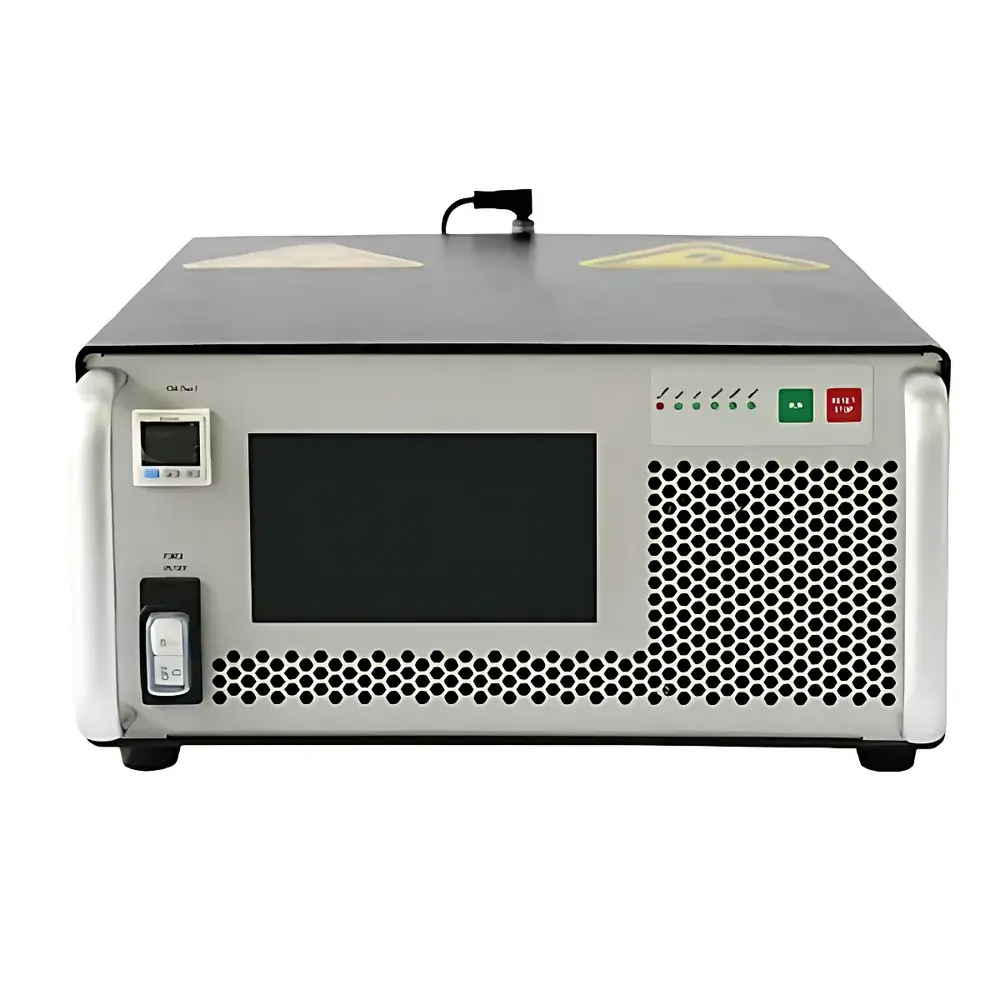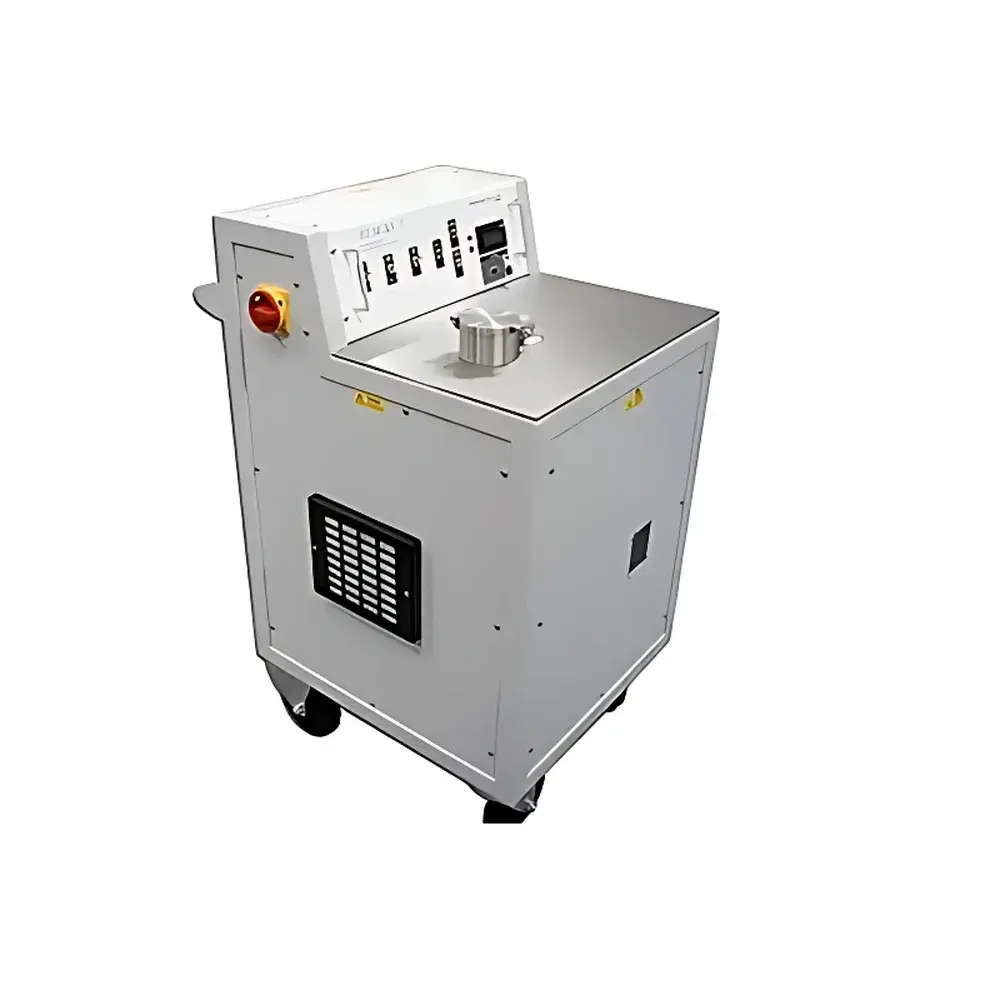
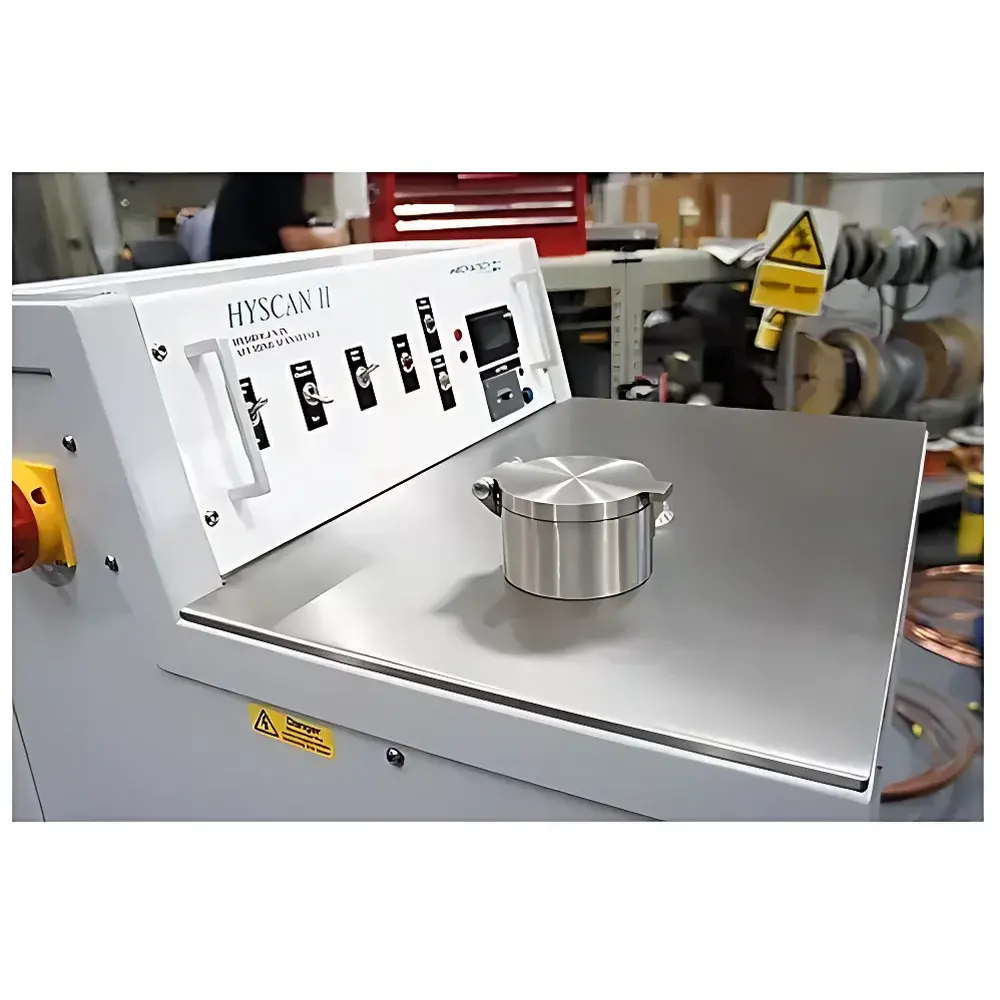
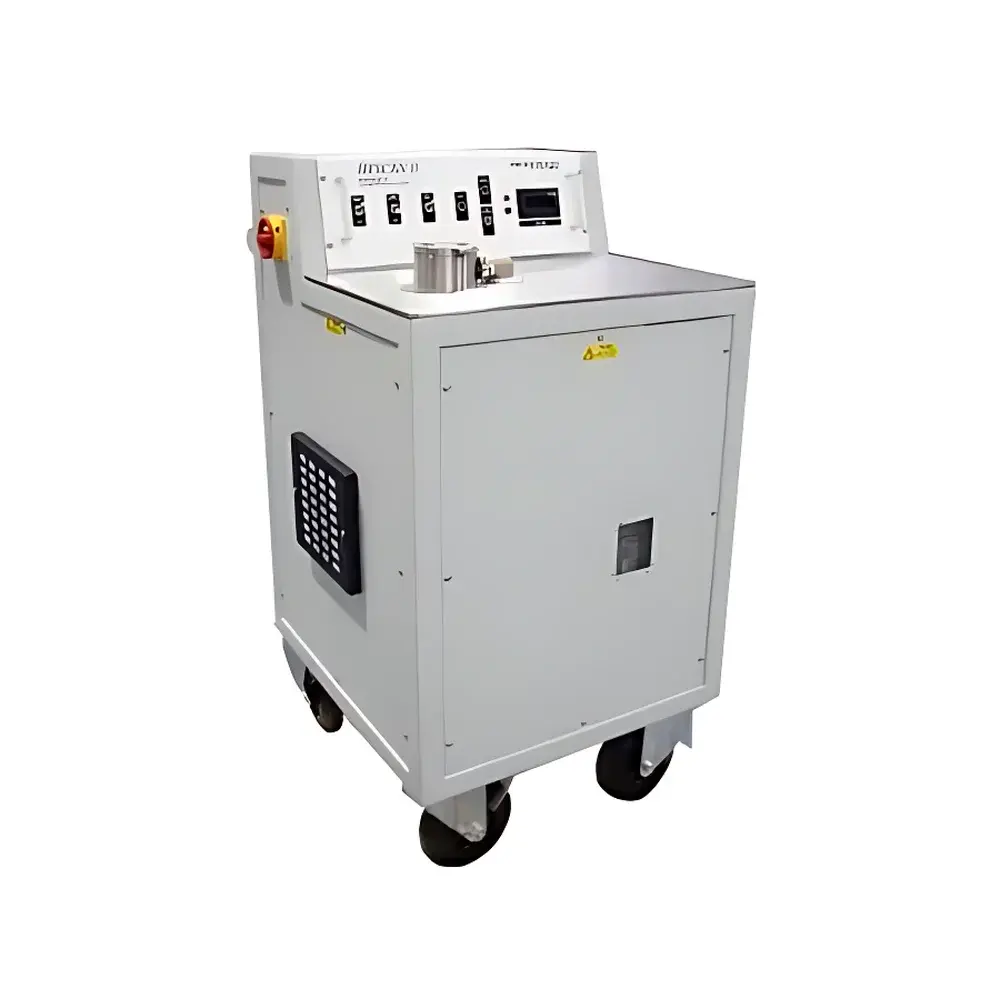
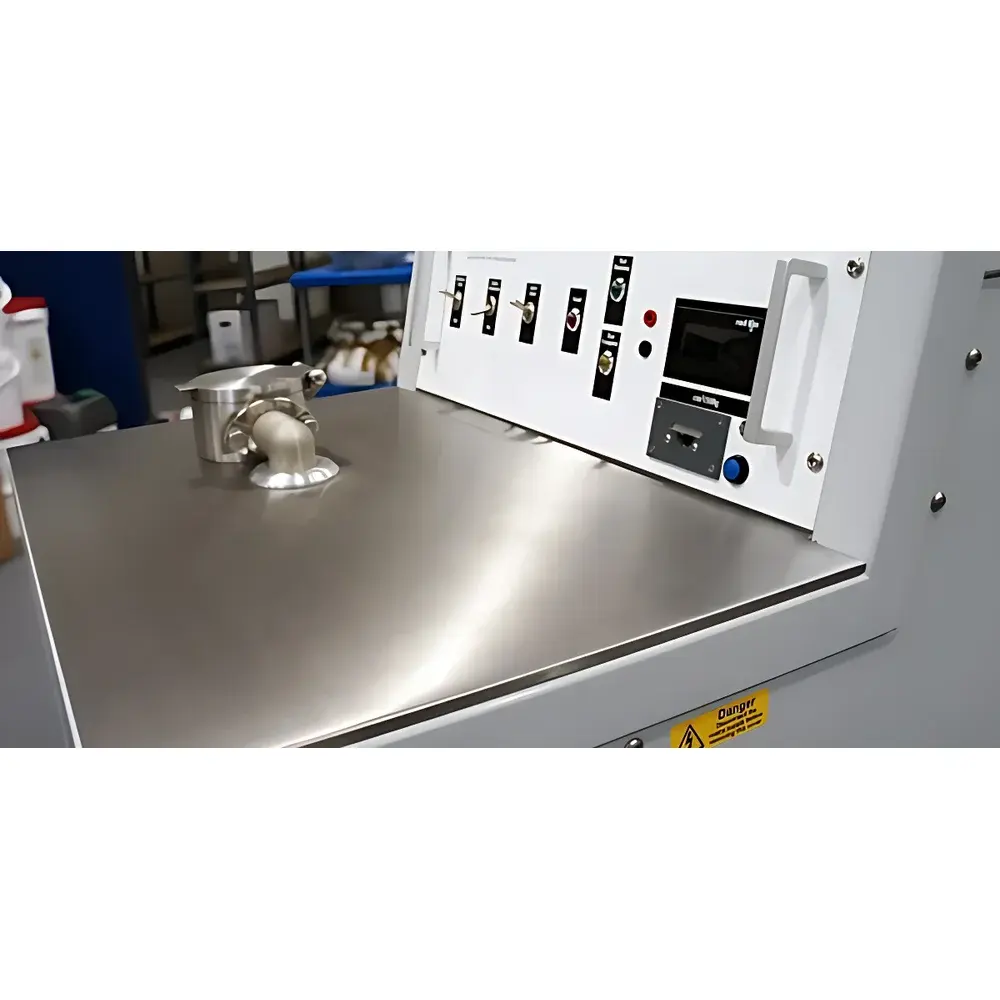
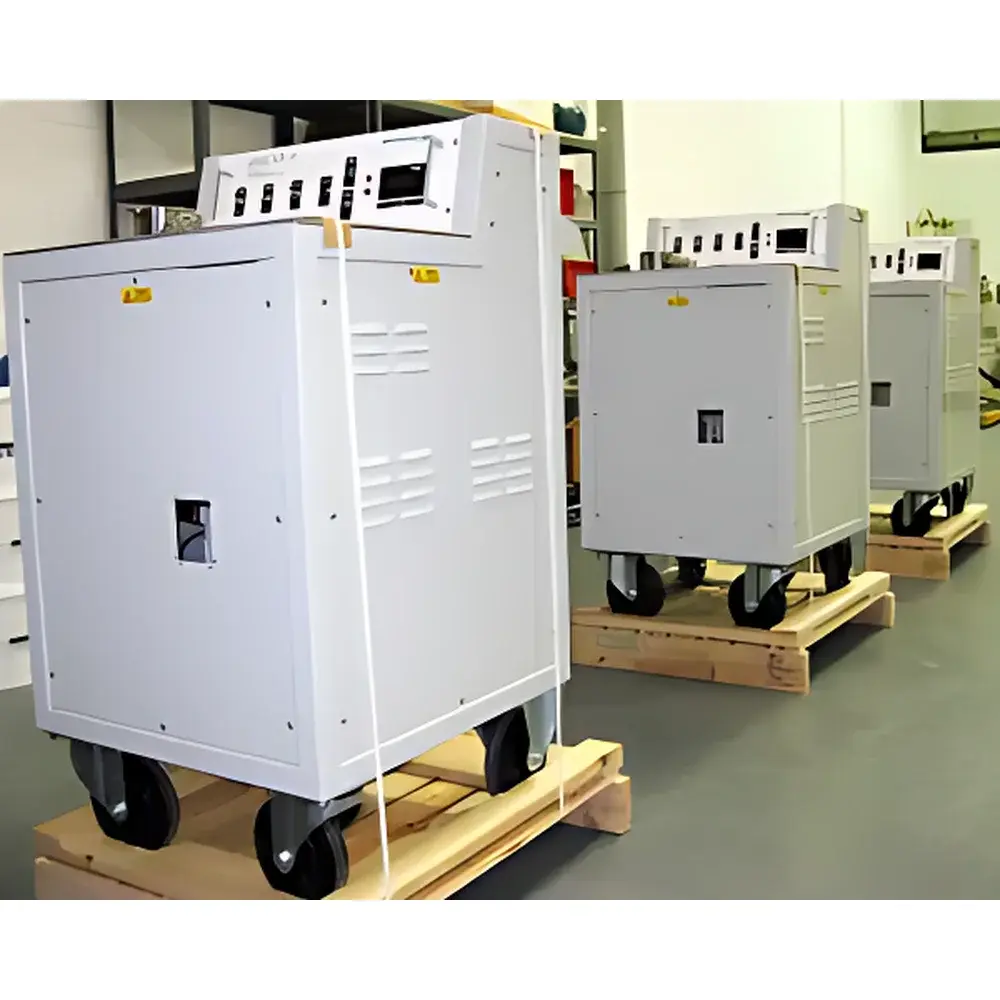
MICHEM Hyscan II Hydrogen Analyzer for Molten Aluminum
| Brand | MICHEM |
|---|---|
| Origin | United Kingdom |
| Manufacturer Type | Authorized Distributor |
| Origin Category | Imported Instrument |
| Model | Hyscan II |
| Price Range | USD 68,000–95,000 |
| Dimensions (W×D×H) | 600 mm × 600 mm × 1000 mm |
| Weight | 120 kg |
| Power Supply | 220 V AC, 50 Hz, armored 5-m power cable |
| Sample Mass | 100 g |
| Measurement Time | < 5 minutes |
| Detection Range | 0.01–1.99 cm³/100 g |
| Sensitivity | 0.01 cm³/100 g |
| Accuracy | ±5% (vs. vacuum fusion reference method) |
| Certification | LMFA (Light Metals Federation of America) Manufacturing License |
Overview
The MICHEM Hyscan II Hydrogen Analyzer is a precision industrial instrument engineered for quantitative determination of dissolved hydrogen concentration in molten aluminum and aluminum alloys. Hydrogen solubility in liquid aluminum is temperature-dependent and critically influences casting integrity—excess hydrogen leads to microporosity, reduced mechanical strength, and surface defects upon solidification. Unlike qualitative or semi-quantitative methods (e.g., visual bubble observation or graphite probe diffusion), the Hyscan II employs a rigorously validated pressure-decay solidification technique grounded in Henry’s law and ideal gas behavior. A representative 100 g sample of molten aluminum is extracted under inert atmosphere, rapidly cooled under controlled vacuum, and allowed to solidify while releasing all dissolved hydrogen. The evolved gas volume is measured via a calibrated Pirani vacuum gauge, with results directly converted to cm³ H₂ per 100 g Al using stoichiometric and thermal expansion corrections. This methodology eliminates operator subjectivity, avoids consumable probes, and delivers traceable, repeatable data suitable for process validation and regulatory documentation.
Key Features
- Quantitative measurement with sensitivity down to 0.01 cm³/100 g and accuracy better than ±5% against vacuum fusion reference standards
- Complete analysis cycle completed in under 5 minutes—optimized for furnace-side deployment in high-throughput foundries
- Robust mechanical architecture: stainless-steel vacuum chamber, heat-resistant sample handling system, and IP54-rated electronics enclosure for foundry floor resilience
- No consumable probes or membranes—eliminates recurring calibration drift and maintenance downtime associated with graphite sensor systems
- On-site verification capability using certified reference samples and internal pressure calibration routines compliant with ISO/IEC 17025 traceability requirements
- Integrated safety interlocks including overpressure relief, thermal cutoffs, and argon purge monitoring to ensure operator protection during molten metal handling
Sample Compatibility & Compliance
The Hyscan II is validated for use with primary aluminum, secondary alloys (e.g., AA1xxx, AA3xxx, AA6xxx series), and master alloys containing up to 12% silicon or 8% magnesium. It accommodates standard ceramic crucibles (Al₂O₃ or MgO-lined) and supports rapid thermal equilibration between sample extraction and analysis initiation. The instrument complies with LMFA (Light Metals Federation of America) manufacturing certification protocols and meets essential requirements of IEC 61000-6-2 (EMC immunity) and IEC 61000-6-4 (EMC emissions). Its measurement methodology aligns with ASTM E855-22 “Standard Test Methods for Determining Hydrogen Content of Aluminum and Aluminum Alloys” and supports GLP/GMP audit trails when paired with optional RS232 data logging.
Software & Data Management
The embedded control unit features a real-time LCD interface with intuitive navigation and password-protected parameter configuration. All measurements are timestamped and stored locally with full metadata (sample ID, operator code, furnace number, ambient temperature, vacuum decay curve). Optional RS232 serial output enables integration with MES or LIMS platforms for automated report generation and SPC charting. When used with the optional thermal printer, hard-copy reports include instrument ID, calibration status, raw vacuum readings, and final H₂ concentration—all formatted to support ISO 9001 clause 8.2.4 (monitoring and measurement traceability). Audit logs record all user actions, parameter changes, and calibration events in accordance with FDA 21 CFR Part 11 principles (when operated in validated mode).
Applications
The Hyscan II serves as a critical quality gate in aluminum casting operations—including gravity die, low-pressure die, and sand casting—where hydrogen-induced porosity directly impacts fatigue life and leak-tightness. It is routinely deployed for: real-time assessment of rotary degassing efficiency; validation of flux-based purification cycles; comparative evaluation of grain refiner and modifier additions; and root-cause analysis of porosity failures in automotive structural components. In R&D environments, it supports alloy development studies, melt conditioning optimization, and inter-laboratory round-robin testing under ISO/IEC 17043 proficiency schemes. Universities and national labs utilize the system for fundamental research on hydrogen trapping mechanisms in intermetallic phases and oxide film rupture dynamics.
FAQ
How does the Hyscan II differ from graphite probe-based hydrogen analyzers?
Unlike probe systems relying on hydrogen diffusion kinetics and Sieverts’ law, the Hyscan II measures total evolved hydrogen via direct volumetric quantification after controlled solidification—eliminating probe fouling, calibration drift, and temperature-dependent response lag.
Is the instrument suitable for continuous operation in a foundry environment?
Yes—the Hyscan II is designed for ambient temperatures up to 45°C, humidity ≤85% RH non-condensing, and vibration levels typical of casting floors. Its sealed vacuum manifold and air-cooled electronics require no external chillers or compressed air.
Can measurement data be exported for statistical process control (SPC)?
Yes—via RS232 interface, raw and processed data streams can be ingested into third-party SPC software (e.g., Minitab, InfinityQS) for real-time X-bar/R charting and Cp/Cpk calculation.
What maintenance is required beyond routine calibration?
Annual verification using NIST-traceable pressure standards and quarterly cleaning of the sample chamber O-rings and crucible holder are the only scheduled maintenance tasks.
Does the system meet requirements for regulated quality systems such as AS9100 or IATF 16949?
Yes—its documented measurement uncertainty, calibration traceability, and electronic record retention support compliance with clause 7.1.5.2 (measurement traceability) and clause 8.5.1.2 (control of production process).
Related Products