
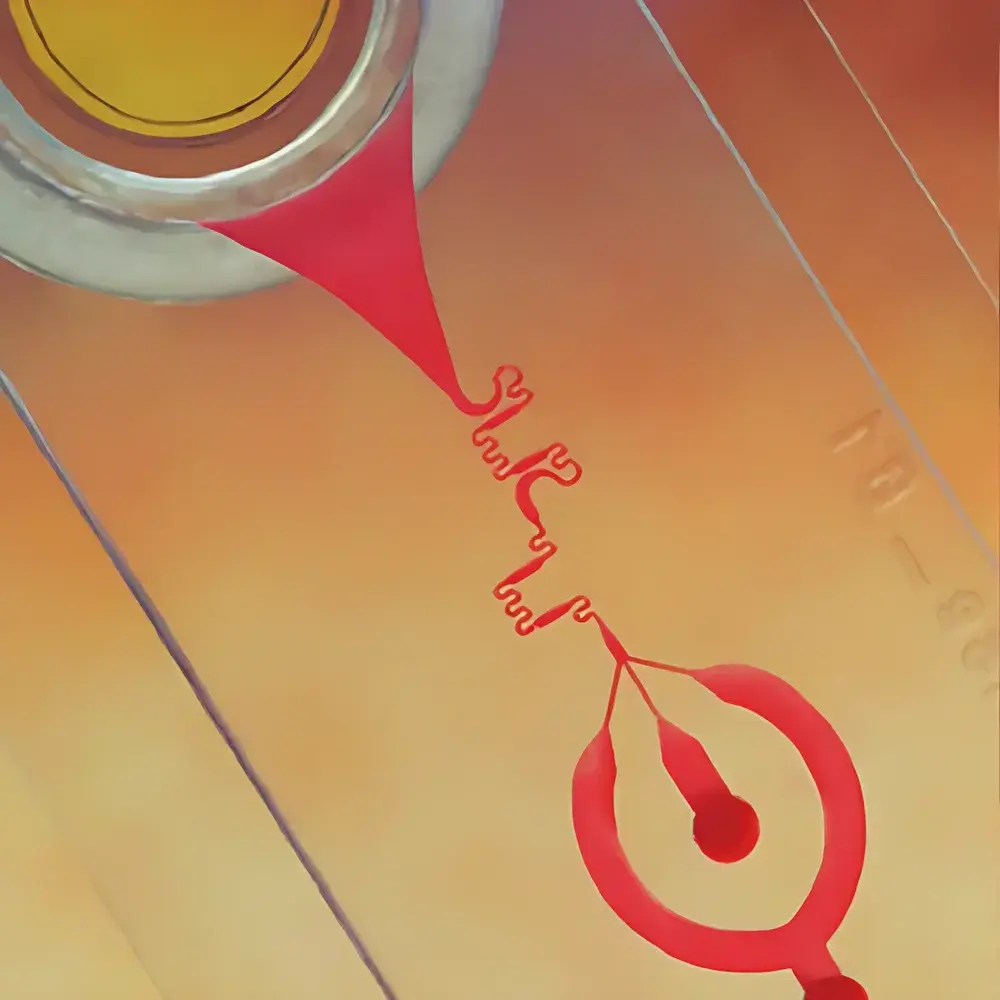
Microblox EasyPDMS PDMS Microfluidic Chip Fabrication System
| Brand | Microblox |
|---|---|
| Origin | Germany |
| Manufacturer Type | Authorized Distributor |
| Product Category | Imported Instrument |
| Model | Microblox-PDMS |
| Chip Material | Polydimethylsiloxane (PDMS) |
| Channel Feature Size | Customizable down to 1 µm |
| System Configuration | Modular, Full Turnkey Lab Integration Supported |
| Compliance | Designed for ISO Class 5–7 cleanroom environments |
Overview
The Microblox EasyPDMS PDMS Microfluidic Chip Fabrication System is an integrated, modular platform engineered for reproducible, lab-scale production of polydimethylsiloxane (PDMS)-based microfluidic devices. Built upon standard soft lithography principles—comprising photomask alignment, spin-coating, UV exposure, solvent-based development, thermal curing, plasma surface activation, and irreversible bonding—the system enables end-to-end fabrication of microstructures with feature sizes customizable down to 1 µm. Designed specifically for academic research laboratories, contract development organizations (CDOs), and early-stage biotech R&D teams, the EasyPDMS system supports rapid prototyping and iterative device validation without reliance on external foundry services. Its architecture prioritizes operational repeatability, process traceability, and compatibility with GLP-aligned documentation workflows—making it suitable for preclinical assay development, organ-on-chip model fabrication, and microscale diagnostic platform qualification.
Key Features
- Modular workflow integration covering all nine critical soft lithography steps: substrate cleaning, photoresist spin-coating, mask alignment & UV exposure, aqueous/organic development, post-bake stabilization, PDMS prepouring & degassing, thermal curing (ambient to 120 °C), oxygen plasma surface activation (RF power up to 100 W), and manual or semi-automated bonding.
- Turnkey cleanroom-ready configuration: includes ISO-compliant laminar flow hoods, vibration-damped optical tables, temperature- and humidity-controlled curing ovens, and plasma treatment stations calibrated per ASTM F2628–20 standards.
- Interchangeable process modules: each subsystem—including spin coater (0–10,000 rpm, ±10 rpm accuracy), UV aligner (365 nm Hg-line, intensity uniformity >95% over 4″ wafer area), and plasma cleaner (parallel-plate electrode design)—is CE-marked and independently validated for metrological stability.
- Digital process logging capability via optional Ethernet-connected controller, supporting timestamped parameter recording (e.g., spin speed, exposure dose, plasma duration) for audit readiness under FDA 21 CFR Part 11 requirements.
- Scalable footprint: base configuration occupies ≤3.5 m²; expandable with additional storage cabinets, solvent recovery units, and automated PDMS dispensing modules for higher throughput.
Sample Compatibility & Compliance
The EasyPDMS system accommodates standard silicon wafers (2″–6″), glass slides (up to 150 × 150 mm), and flexible polymer substrates (e.g., PET, PC) as master mold supports. PDMS formulations from Dow Corning Sylgard 184, KMPR, and Norland Optical Adhesive (NOA) series are fully supported. All wet-processing modules comply with IEC 61000-6-3 (EMC emissions) and IEC 61010-1 (electrical safety). Plasma treatment parameters adhere to ISO 11140-5 for surface energy modification verification. System documentation includes IQ/OQ protocols aligned with ISO/IEC 17025 laboratory accreditation frameworks.
Software & Data Management
While the core hardware operates via tactile interface and analog controls, optional digital control units provide programmable recipe storage (up to 99 protocols), real-time sensor feedback (temperature, pressure, RF power), and CSV export of run logs. Data files include operator ID, date/time stamp, process step sequence, and deviation flags—enabling integration into LIMS platforms compliant with 21 CFR Part 11 electronic signature requirements. No cloud connectivity is embedded by default; local network deployment ensures data sovereignty in regulated environments.
Applications
- Rapid prototyping of microfluidic architectures for cell culture, droplet generation, and gradient-based chemotaxis assays.
- Fabrication of microstructured PDMS membranes for lung-on-chip, blood-brain barrier, and tumor spheroid models.
- Development of point-of-care diagnostic chips requiring high aspect-ratio channels, valve-integrated networks, or multi-layer bonded stacks.
- Teaching laboratories delivering hands-on training in MEMS fabrication, microfabrication metrology, and microsystem packaging techniques.
- Pre-GMP feasibility studies where material biocompatibility (per ISO 10993-5), leachables profiling, and batch-to-batch consistency must be established prior to scale-up.
FAQ
Does the EasyPDMS system support SU-8 master mold fabrication?
Yes—UV exposure and development modules are optimized for SU-8 2000-series resists, including SU-8 2005, 2010, and 2075, with adjustable dose control from 10–2000 mJ/cm².
Can the plasma module bond PDMS to non-silicon substrates such as PMMA or COC?
Yes—oxygen plasma treatment parameters are tunable for polymer surface functionalization; bonding success depends on surface energy matching and requires empirical optimization per substrate pair.
Is cleanroom certification included with turnkey installation?
Microblox provides ISO Class 5–7 cleanroom design schematics and equipment specifications; final certification must be performed by an accredited third-party body per ISO 14644-1.
Are consumables like photoresist, PDMS base/curing agent, and plasma gases supplied by Microblox?
Consumables are available through authorized distribution partners but are not bundled with hardware; full technical datasheets and compatibility matrices are provided upon request.
What maintenance intervals are recommended for the spin coater and UV aligner?
Spin coater bearings require lubrication every 500 operating hours; UV lamp output degrades after ~1,000 hours and should be replaced per manufacturer specifications (typically annually under standard usage).




