
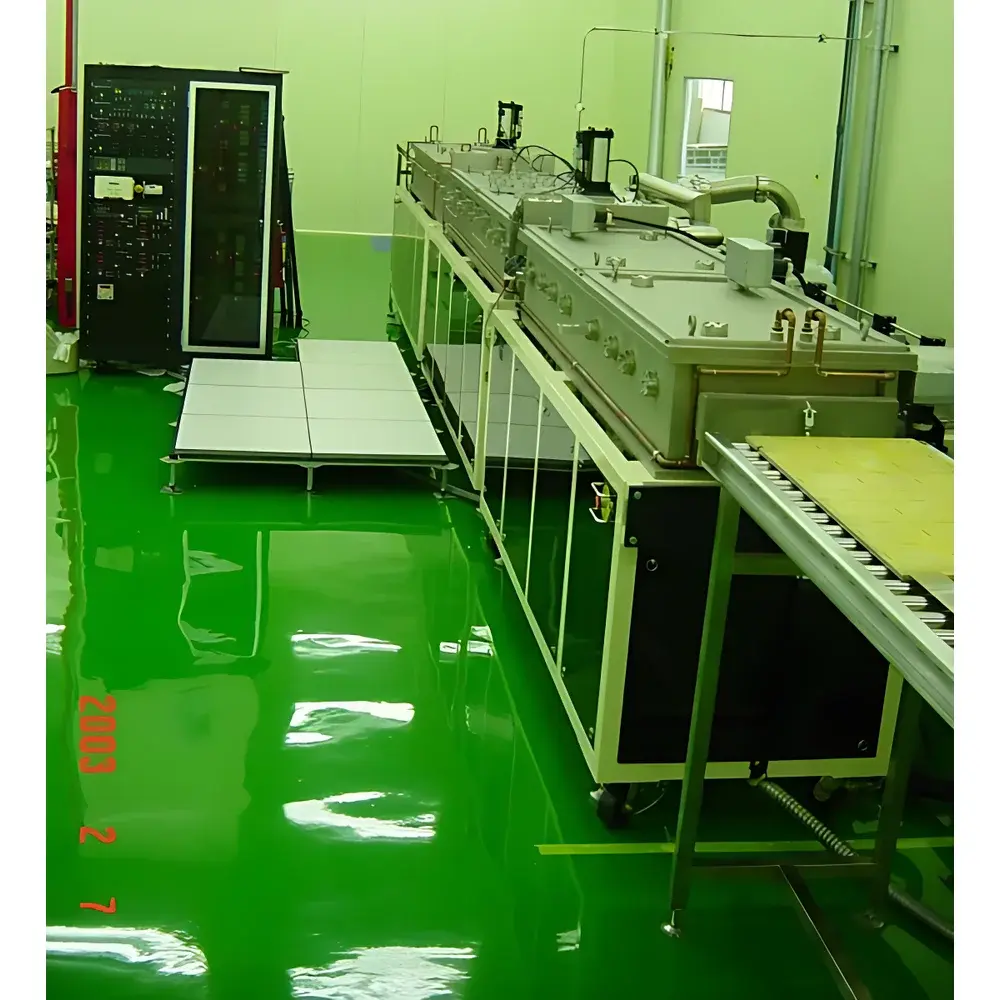
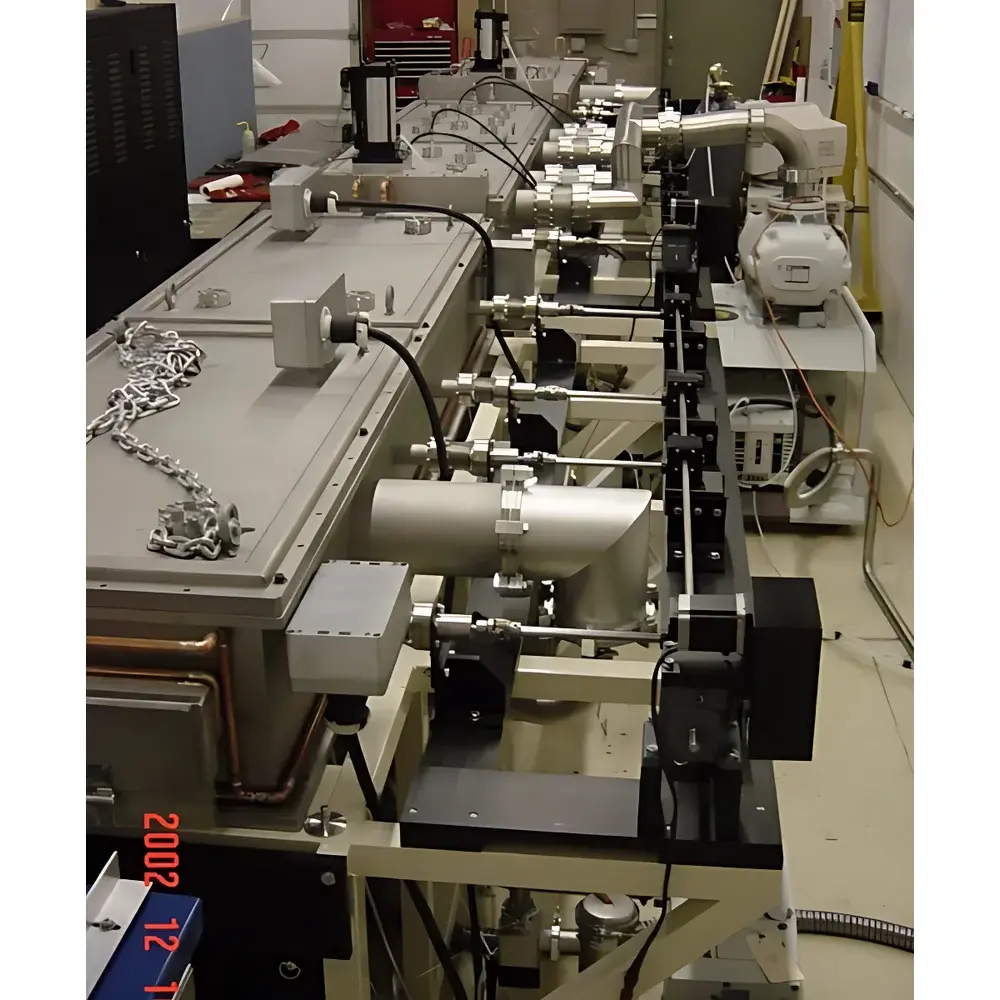
MVSystems SiNx-PECVD Plasma-Enhanced Chemical Vapor Deposition System
| Brand | MVSystems |
|---|---|
| Origin | USA |
| Model | SiNx-PECVD |
| Throughput | >475 wafers/hr |
| SiNx Film Uniformity | <5% (1σ, across 156 mm × 156 mm wafer) |
| Deposition Technology | RF (13.56 MHz) Plasma-Enhanced CVD |
| Precursor Gases | Silane (SiH₄) and Ammonia (NH₃) |
| Substrate Temperature | 200–400 °C |
| Chamber Configuration | Single-wafer, Load-lock compatible |
| Process Control | Fully automated recipe-based operation with real-time RF power, pressure, and gas flow monitoring |
Overview
The MVSystems SiNx-PECVD Plasma-Enhanced Chemical Vapor Deposition System is a laboratory-scale, high-reproducibility thin-film deposition platform engineered for the controlled synthesis of silicon nitride (SiNx) antireflection and passivation layers on multicrystalline silicon (mc-Si) photovoltaic wafers. Operating on the principle of radio-frequency (13.56 MHz) plasma excitation, this system enables low-temperature (<400 °C) decomposition of silane (SiH4) and ammonia (NH3) precursors to form stoichiometric or nitrogen-rich SiNx films with tunable refractive index (1.8–2.1), compressive stress control, and excellent surface passivation quality. Designed specifically for R&D and pilot-line validation in solar cell process development, the system delivers industrial-relevant throughput while maintaining laboratory-grade flexibility in process parameter tuning—enabling systematic study of film composition, hydrogen content, interface defect density (Dit), and optical performance.
Key Features
- Optimized RF plasma source with impedance-matching network for stable, repeatable plasma ignition and uniform power coupling across wafer surfaces
- Integrated mass flow controllers (MFCs) for precise, independent regulation of SiH4 and NH3 gas flows (±0.5% full scale accuracy)
- High-stability vacuum chamber with capacitance manometer pressure control (range: 0.1–10 Torr, resolution: 0.01 Torr)
- Heated susceptor with ±1 °C thermal uniformity over 156 mm × 156 mm active area, supporting both static and slow-rotation substrate configurations
- Real-time monitoring of RF forward/reflected power, chamber pressure, gas flows, and substrate temperature via embedded industrial PLC
- Modular design compliant with Class 1000 cleanroom integration; optional load-lock configuration available for continuous batch processing
Sample Compatibility & Compliance
The SiNx-PECVD system accommodates standard photovoltaic substrates including 156 mm × 156 mm (M2), 166 mm × 166 mm (G1), and 182 mm × 182 mm (M10) mc-Si wafers with thicknesses from 160–220 µm. It supports both bare and textured (acid-etched or alkaline-textured) silicon surfaces. All wet and dry process steps—including pre-deposition native oxide removal via in-situ H2 plasma pretreatment—are fully programmable. The system adheres to IEC 61215-2 (photovoltaic module qualification) requirements for AR coating evaluation and aligns with ASTM F2625-20 (Standard Practice for Measuring Refractive Index and Thickness of Thin Films by Spectroscopic Ellipsometry) for post-deposition metrology. Full audit trails, user-access logs, and electronic signature support are provided to meet GLP and pre-GMP documentation expectations in PV materials R&D labs.
Software & Data Management
Control and data acquisition are managed through MVSystems’ proprietary PECVD-Studio™ software suite, running on a Windows-based industrial PC with deterministic real-time scheduling. The interface supports full recipe management—including step-by-step gas sequencing, ramp/soak temperature profiles, and plasma duty cycling—and enables synchronized logging of >32 analog/digital process variables at 10 Hz sampling rate. Export formats include CSV, HDF5, and XML-compliant reports compatible with MATLAB, Python (Pandas), and JMP for statistical process control (SPC). Raw sensor data and metadata (operator ID, timestamp, wafer ID, lot number) are stored locally with SHA-256 hashing for integrity verification. Optional OPC UA server integration allows seamless connection to enterprise MES or LIMS platforms.
Applications
- Development and optimization of SiNx antireflection coatings for mc-Si solar cells targeting <1.5% weighted reflectance (300–1100 nm)
- Passivation studies correlating SiNx film stoichiometry (Si/N ratio), hydrogen bonding configuration (N–H vs. Si–H), and minority carrier lifetime (via µ-PCD or QSSPC)
- Stress engineering of dielectric stacks (e.g., SiNx/SiOx/AlOx) for front-side passivation and rear-side field-effect passivation
- Process transfer support from lab-scale R&D to pilot-line PECVD tools (e.g., Centrotherm, Roth & Rau, or Von Ardenne systems)
- Accelerated aging tests under damp heat (IEC 61215-2 DH2000) to evaluate coating adhesion, delamination resistance, and interfacial stability
FAQ
What wafer sizes does the SiNx-PECVD system support?
Standard configuration supports 156 mm × 156 mm multicrystalline silicon wafers; custom susceptor inserts are available for 166 mm and 182 mm formats.
Can the system deposit other dielectric films besides SiNx?
Yes—by modifying precursor chemistry and plasma parameters, it can be adapted for silicon dioxide (SiO2), silicon oxynitride (SiOxNy), and aluminum oxide (Al2O3) deposition with appropriate hardware upgrades.
Is remote diagnostics and software update capability included?
Yes—the system includes secure TLS-encrypted remote access via VPN, enabling firmware updates, log analysis, and real-time troubleshooting by MVSystems Field Application Engineers.
Does the system comply with FDA 21 CFR Part 11 for electronic records?
While not a regulated medical device, the software architecture implements core Part 11 elements—including role-based access control, audit trail generation, and electronic signatures—making it suitable for regulated PV materials qualification workflows.
What maintenance intervals are recommended for the RF generator and vacuum pump?
RF matching network calibration is recommended every 500 operational hours; turbomolecular pump oil replacement and bearing inspection are scheduled at 3,000-hour intervals, per manufacturer service bulletins.



