
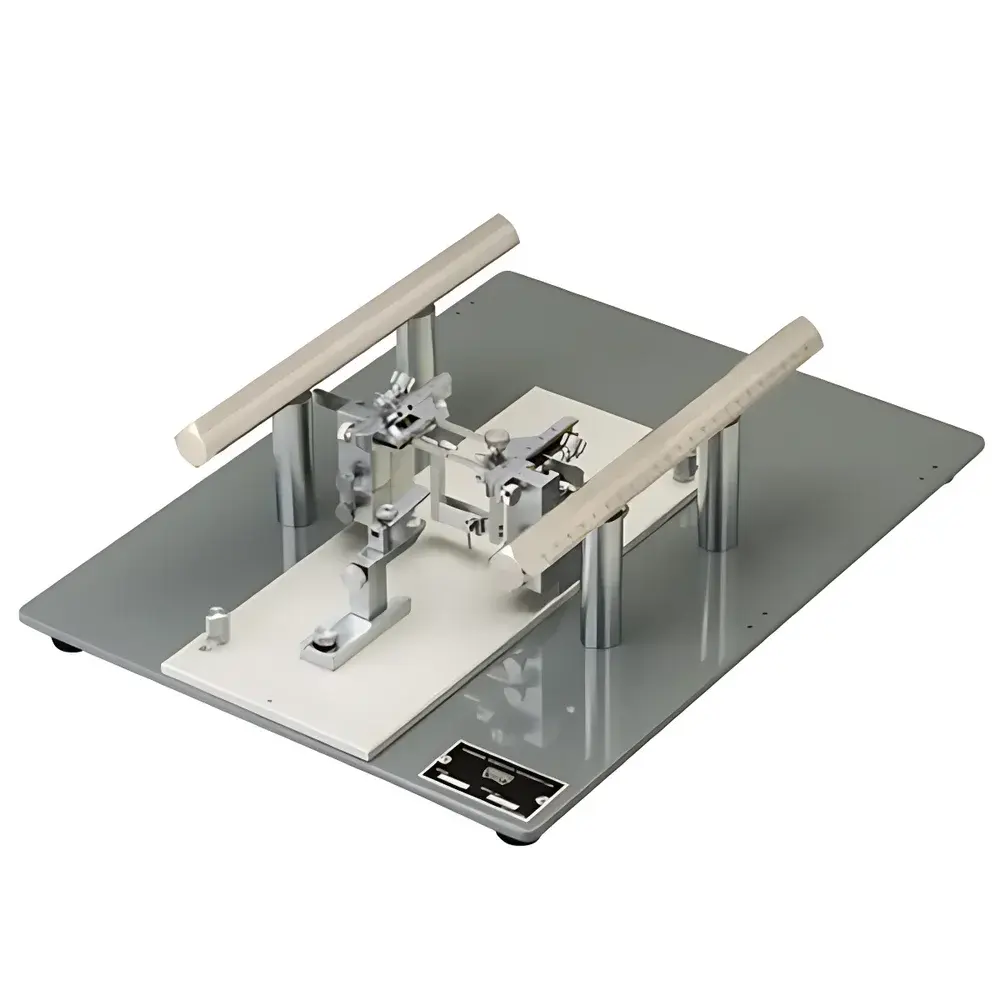
NARISHIGE SR-10R-HT Stereotaxic Instrument for Chronic Rat Studies
| Brand | NARISHIGE |
|---|---|
| Origin | Japan |
| Model | SR-10R-HT |
| Weight | 9.7 kg |
| Base Dimensions (W×D×H) | 400 × 300 × 110–132 mm |
| Compatibility | Rats (with EB-3A ear bars, EB-4N auxiliary ear bars, and CFR-1 stereotaxic chamber frame set of 5) |
| Design | Modular head-fixation assembly detachable for microscope integration |
| Application Scope | Awake chronic electrophysiology, behavioral neuroscience, visual/auditory stimulation paradigms, longitudinal imaging prep |
Overview
The NARISHIGE SR-10R-HT Stereotaxic Instrument is an engineered platform designed specifically for long-term, non-invasive neural and sensory experimentation in rats. Unlike conventional stereotaxic frames optimized solely for terminal or acute surgical procedures, the SR-10R-HT integrates a rigid yet adjustable chamber-based fixation architecture that enables repeated, precise repositioning of the same animal across multiple experimental sessions—without requiring anesthesia or invasive skull-mounted implants. Its operational principle relies on reproducible mechanical alignment via standardized ear bar insertion (EB-3A), auxiliary stabilization (EB-4N), and a modular chamber frame (CFR-1) mounted to a heavy-duty base. This design ensures sub-millimeter positional repeatability across days or weeks, critical for longitudinal studies involving optogenetics, in vivo calcium imaging, auditory evoked potentials, or visually guided behavioral assays.
Key Features
- Chamber-integrated fixation system: Enables stable, stress-minimized head restraint in awake, freely breathing rats—eliminating anesthesia-related confounds in neurophysiological and perceptual measurements.
- Modular head-holder assembly: The complete stereotaxic head-fixation unit detaches seamlessly from the base and can be directly mounted onto upright or inverted microscopes for high-resolution imaging or patch-clamp recordings.
- Adjustable vertical height range: Base column accommodates 110–132 mm vertical travel, accommodating varied rat strains and experimental setups including dual-modality rigs (e.g., simultaneous visual stimulus projection + electrophysiological recording).
- Dual ear-bar compatibility: Supports standard NARISHIGE EB-3A primary ear bars and EB-4N auxiliary ear bars for enhanced lateral stability—particularly essential during prolonged awake recordings or motion-sensitive optical measurements.
- Robust mechanical architecture: Constructed from precision-machined aluminum alloy with hardened steel components; total mass of 9.7 kg provides inherent vibration damping for microelectrode or laser-based applications.
Sample Compatibility & Compliance
The SR-10R-HT is validated for use with adult Sprague-Dawley, Wistar, and Long-Evans rats (250–500 g). Its geometry conforms to widely adopted rat brain atlases (e.g., Paxinos & Watson, 7th ed.) when used with standard bregma-lambda referencing protocols. All contact surfaces are anodized or passivated to meet ISO 10993-5 biocompatibility requirements for repeated non-invasive animal interface. While not a medical device, its mechanical design supports GLP-aligned experimental workflows—traceable positioning, documented setup parameters, and hardware consistency across cohorts facilitate audit readiness for preclinical neuroscience studies conducted under institutional animal care and use committee (IACUC) oversight.
Software & Data Management
The SR-10R-HT operates as a hardware platform without embedded firmware or proprietary control software. Its mechanical repeatability eliminates dependency on digital calibration routines, ensuring deterministic coordinate translation between sessions. Users integrate it with third-party acquisition systems (e.g., Spike2, OpenEphys, MATLAB-based custom pipelines) using standardized stage position logs and timestamp-synchronized stimulus triggers. For regulatory traceability, researchers commonly log setup configurations—including ear bar depth, incisor bar offset, and chamber tilt angle—in electronic lab notebooks compliant with 21 CFR Part 11 when used in FDA-regulated preclinical development contexts.
Applications
- Awake chronic electrophysiology: Stable extracellular or intracellular recordings across days in barrel cortex, hippocampus, or auditory midbrain.
- Longitudinal two-photon imaging: Repeated cranial window access and consistent focal plane registration for dendritic spine dynamics or microglial surveillance studies.
- Sensory coding experiments: Precise delivery of calibrated visual stimuli (via LED arrays or DLP projectors) or controlled auditory tones (using calibrated free-field or ear-coupled transducers) while monitoring neural responses.
- Behavioral pharmacology: Integration with operant chambers or head-fixed locomotion treadmills for drug-effect profiling under fully awake conditions.
- Optogenetic intervention: Co-registration of fiber photometry or multi-color optogenetic actuators with anatomically defined targets across repeated light-delivery sessions.
FAQ
Can the SR-10R-HT be used for mouse studies?
No—it is dimensionally optimized for rats. Mouse-scale stereotaxic work requires smaller ear bar spacing and finer micromanipulator resolution; NARISHIGE offers dedicated platforms such as the SR-10M series for murine applications.
Is anesthesia required during setup?
Not for chronic awake protocols: The chamber-based restraint allows full acclimation over 3–5 days prior to data collection. Acute surgical use remains compatible but requires standard IACUC-approved anesthetic regimens.
What is the tolerance for repeat positioning accuracy?
Based on mechanical repeatability testing under controlled lab conditions, inter-session bregma deviation remains within ±0.15 mm (mean absolute error) when using calibrated ear bar insertion depth and consistent incisor bar pressure.
Are replacement parts available globally?
Yes—EB-3A, EB-4N, and CFR-1 components are stocked by authorized NARISHIGE distributors in North America, EMEA, and APAC regions; lead time for CFR-1 frame sets is typically 2–4 weeks.
Does the base accommodate vibration isolation tables?
Yes—the flat, weight-distributed 400 × 300 mm footprint interfaces directly with standard optical tables and active/passive isolation platforms without adapter plates.



