
NewOpto UVCLEAN High-Power UV LED Light Source
| Brand | NewOpto |
|---|---|
| Origin | Zhejiang, China |
| Model | NewOpto-LEDs |
| Wavelength Range | 225–350 nm |
| Output Power Options | 1–3 mW, 3–5 mW, 10–15 mW, 30–50 mW |
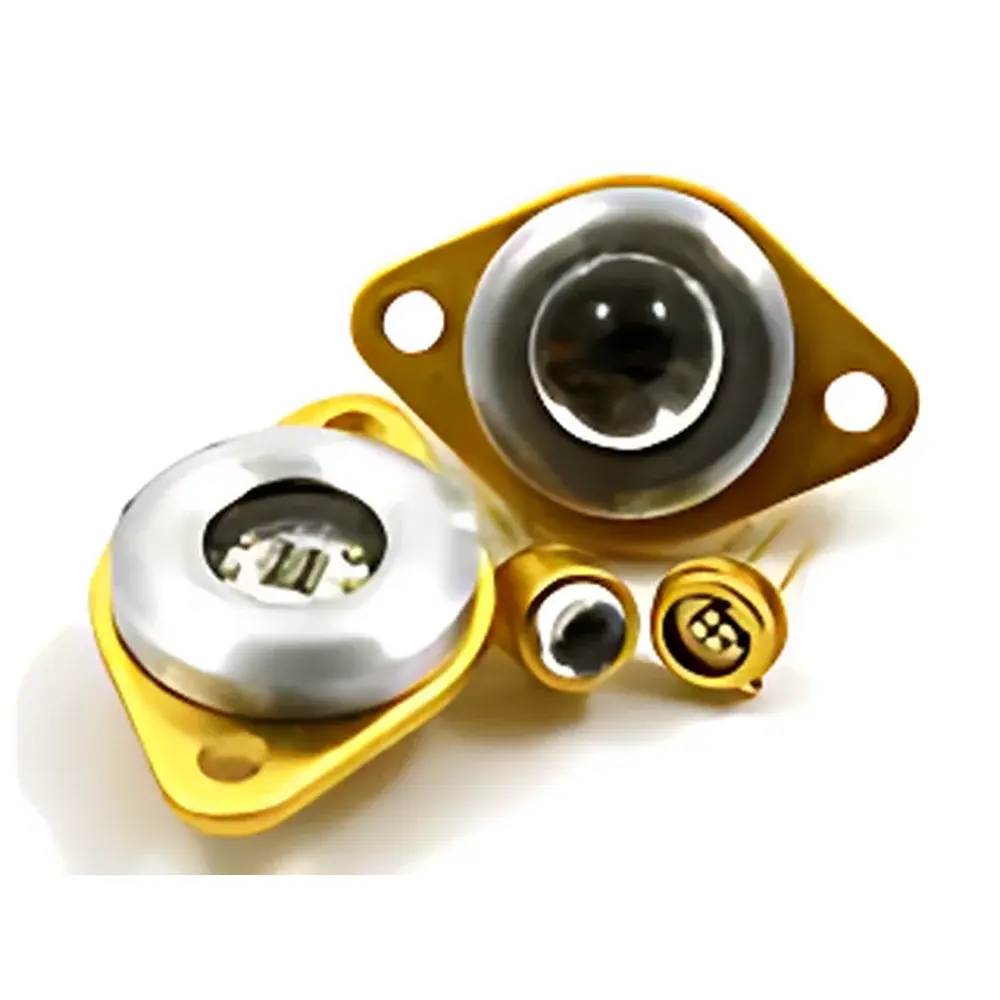
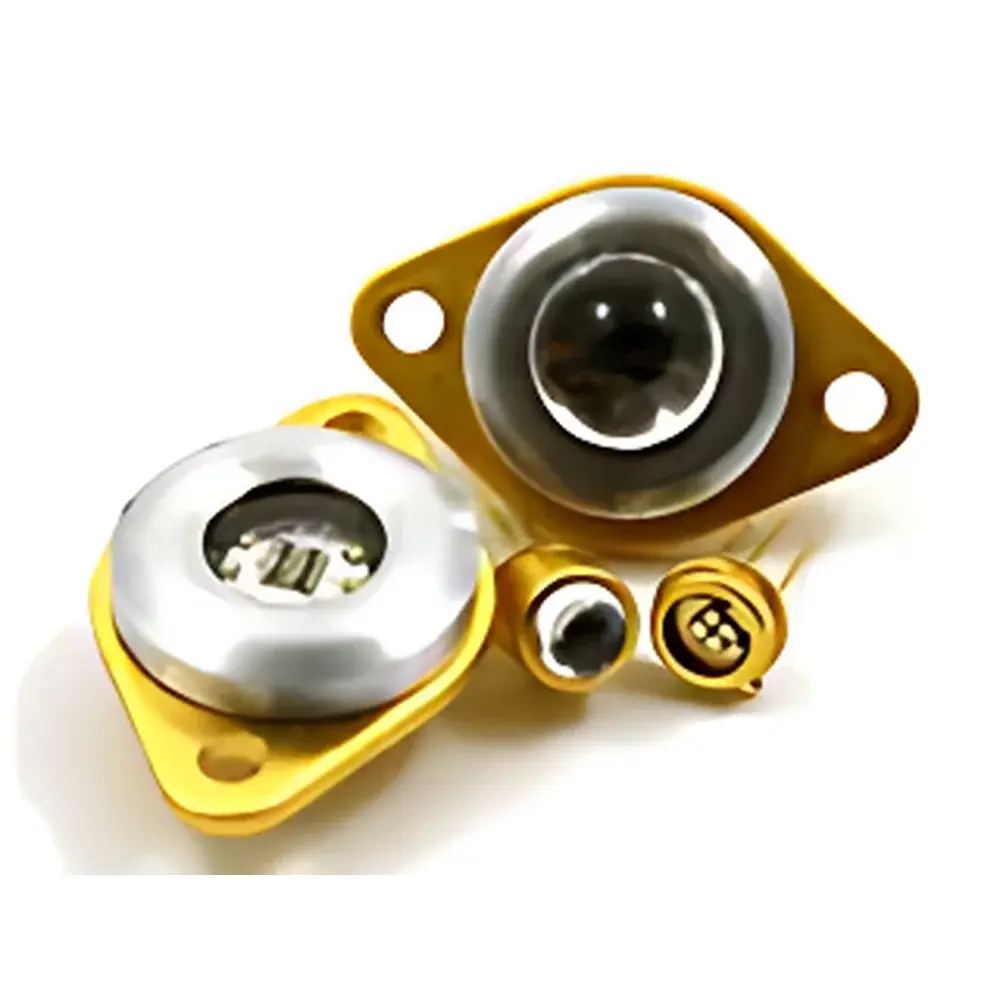
| Emission Window Types | Flat or Hemispherical |
| Spectral FWHM | 12 nm (255 nm), ±5 nm (255–315 nm), ±10 nm (330–350 nm) |
| Package Formats | TO-39, TO-3, LCC |
| Drive Current | 80–900 mA |
| Illumination Mode | External (free-space) |
| Optional Accessories | Constant-current drivers (UVCLEAN-PS-DC-C), pulsed power supplies (UVCLEANPPS1μs/1A, UVCLEANPPS10ns/5.5A), SMA-fiber-coupled and pigtail configurations |
| Multi-wavelength Modules | 8-channel (TO-3), 12-channel (TO-5), 24-channel (LCC) |
Overview
The NewOpto UVCLEAN High-Power UV LED Light Source is an engineered solid-state ultraviolet illumination platform designed for precision optical laboratory applications requiring stable, narrowband UV excitation in the deep-UV to near-UV spectral region (225–350 nm). Unlike broadband arc lamps (e.g., mercury or xenon), these LEDs operate on electroluminescence principles, delivering discrete, thermally stable emission peaks with minimal infrared leakage and negligible ozone generation—critical for sensitive photobiological assays, fluorescence excitation, UV curing validation, and semiconductor inspection. Each device is fabricated using AlGaN-based epitaxial structures optimized for high external quantum efficiency in the UVC and UVB bands. The modular architecture supports both continuous-wave (CW) and pulsed operation via compatible constant-current drivers, enabling precise control of irradiance and duty cycle without spectral shift—essential for time-resolved spectroscopy and photostability testing under GLP-compliant protocols.
Key Features
- Wide spectral coverage from 225 nm to 350 nm, with discrete wavelength options at 255, 265, 275, 280, 290, 300, 315, 330, and 350 nm—each certified to tight tolerances (±5 nm up to 315 nm; ±10 nm beyond)
- Four calibrated output power tiers: 1–3 mW (low-noise reference), 3–5 mW (general lab use), 10–15 mW (high-sensitivity detection), and 30–50 mW (intensity-critical applications such as photochemical reaction initiation)
- Choice of optical window geometry—flat-window devices offer collimated beam profiles ideal for optical alignment; hemispherical-window variants provide enhanced Lambertian emission for uniform sample irradiation
- Standardized hermetic metal-can packages (TO-39, TO-3) ensure long-term stability and thermal management under sustained drive conditions up to 900 mA
- Optional multi-channel modules support simultaneous or sequential excitation at up to 24 discrete wavelengths—enabling rapid spectral scanning without mechanical filter wheels or monochromator realignment
- Compatible with industry-standard DC and pulsed drivers—including nanosecond-pulse capable units (UVCLEANPPS10ns/5.5A) for time-gated fluorescence lifetime measurements
Sample Compatibility & Compliance
The UVCLEAN series is routinely deployed in applications demanding traceable UV irradiance, including ASTM E3083-22 (UV disinfection validation), ISO 15858:2016 (UV-C lamp safety), and USP (photostability testing of pharmaceuticals). Its narrow spectral bandwidth and low thermal drift (<0.02 nm/°C) ensure reproducible excitation of fluorophores such as tryptophan (λex ≈ 280 nm), DAPI (λex ≈ 358 nm), and proprietary UV-sensitive dyes used in microfluidic assay development. All units undergo individual spectral characterization at 25°C ambient, with full calibration reports traceable to NIST-traceable spectroradiometric standards. Devices comply with IEC 62471:2006 (Photobiological Safety) and meet RoHS 2.0 and REACH requirements for laboratory-grade electronic components.
Software & Data Management
While the UVCLEAN LEDs are driver-controlled analog devices, NewOpto provides a suite of programmable DC and pulsed power supplies with RS-232 and USB interfaces. These support integration into automated test benches via LabVIEW, Python (PySerial), or MATLAB environments. Driver firmware logs operational parameters—including forward voltage, junction temperature (via onboard thermistor), and cumulative operating hours—for audit-ready data export compliant with FDA 21 CFR Part 11 when paired with validated acquisition software. For multi-wavelength systems, optional TTL-triggered sequencing enables synchronized wavelength switching with external detectors or shutters—facilitating kinetic absorbance or emission mapping without manual intervention.
Applications
- Fluorescence microscopy excitation (DAPI, Hoechst, UV-excitable GFP variants)
- UV-Vis spectrophotometer source replacement for fixed-wavelength absorbance assays
- Photocatalytic reactor illumination (TiO₂, ZnO activation at ≤350 nm)
- UV-curable adhesive and resin process validation (ISO 11507)
- Microbial inactivation studies (E. coli, S. aureus, MS2 phage) per EPA UV Disinfection Guidance Manual protocols
- Optical sensor calibration (UV photodiodes, SiC detectors)
- Material degradation testing (polymer yellowing, coating adhesion loss) per ASTM G154
- Portable field-deployable UV inspection tools for counterfeit document verification
FAQ
What is the typical lifetime (L70) of UVCLEAN LEDs under rated drive conditions?
L70 lifetime exceeds 5,000 hours at 25°C case temperature and nominal current (e.g., 80 mA for 1–3 mW devices); derating is recommended above 60°C ambient.
Can UVCLEAN LEDs be fiber-coupled for remote delivery?
Yes—SMA-905 and FC/PC pigtail versions are available for direct coupling into silica-core UV-grade fibers (e.g., Ocean Insight QP400-UV-VIS).
Do these LEDs require heat sinking?
Active thermal management is mandatory for >10 mW devices; TO-3 packages include mounting holes for integration with aluminum or copper heatsinks per MIL-STD-750D Test Method 1071.
Is spectral calibration data provided with each unit?
Yes—each shipment includes a NIST-traceable spectral irradiance report (measured with calibrated CCD spectroradiometer) and electrical test sheet.
Are UVCLEAN LEDs suitable for Class 1 laser safety environments?
They are non-laser optical radiation sources classified as Risk Group 2 (RG2) or RG3 per IEC 62471—requiring appropriate interlocks and labeling but no laser safety officer oversight.





