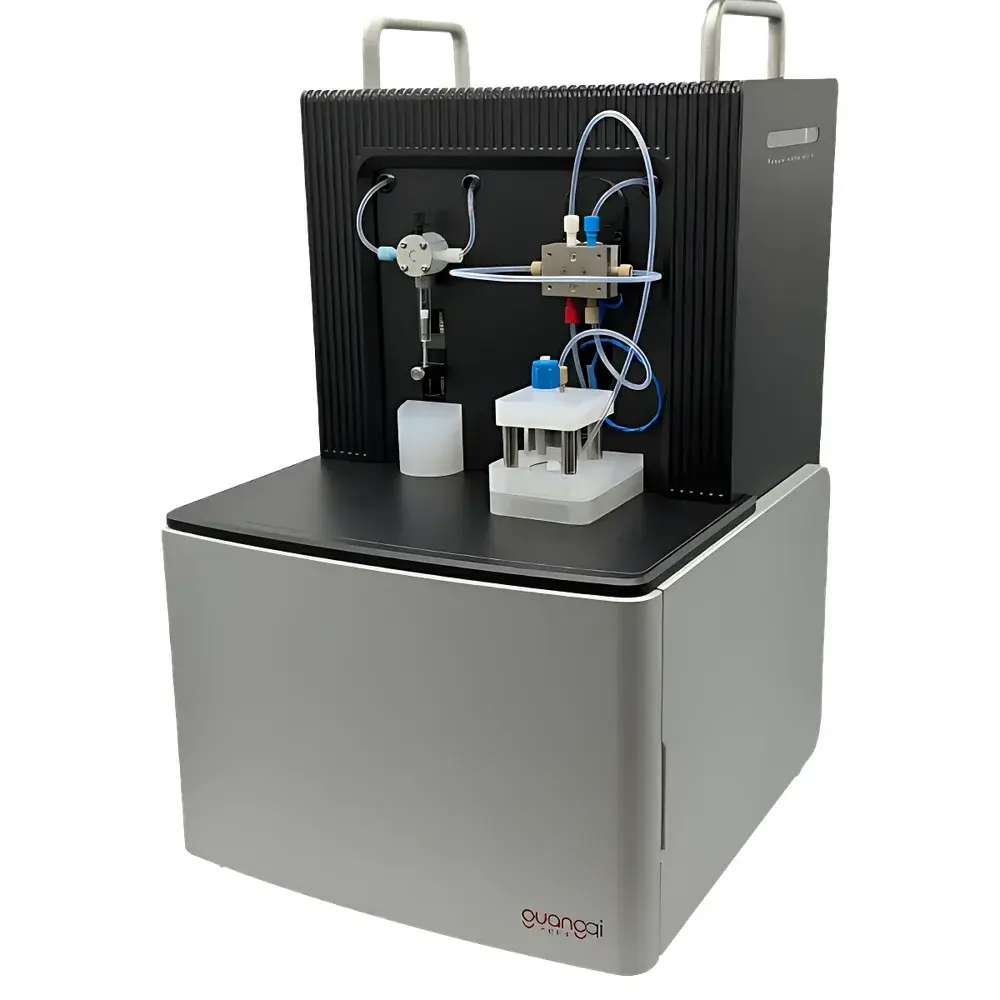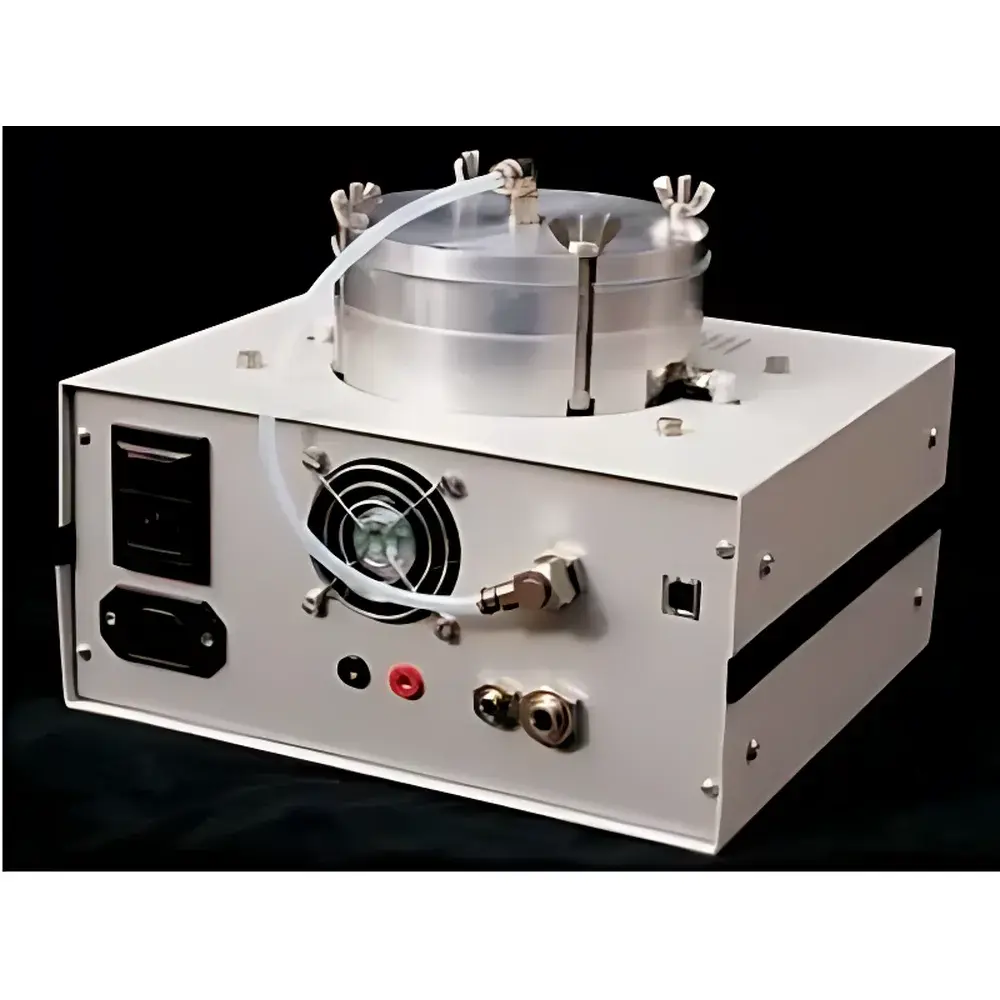
NILT CNI Nanoimprint Lithography System
| Brand | NILT |
|---|---|
| Origin | Imported |
| Manufacturer Type | Authorized Distributor |
| Model | CNI |
| Price Range | USD 42,000–70,000 (FOB) |
| Minimum Feature Size | <20 nm |
| Imprint Area Compatibility | 2-inch to 4-inch wafers (customizable) |
| Heating/Cooling Rate | Rapid thermal cycling (<60 s ramp-up/down) |
| Vacuum Requirement | 0.4–0.8 bar (vacuum flow ≥1 mL/min) |
| Pneumatic Supply | Compressed air or N₂ at 6–10 bar |
| Electrical Input | 110–240 V AC, 50–60 Hz, ≥200 W |
Overview
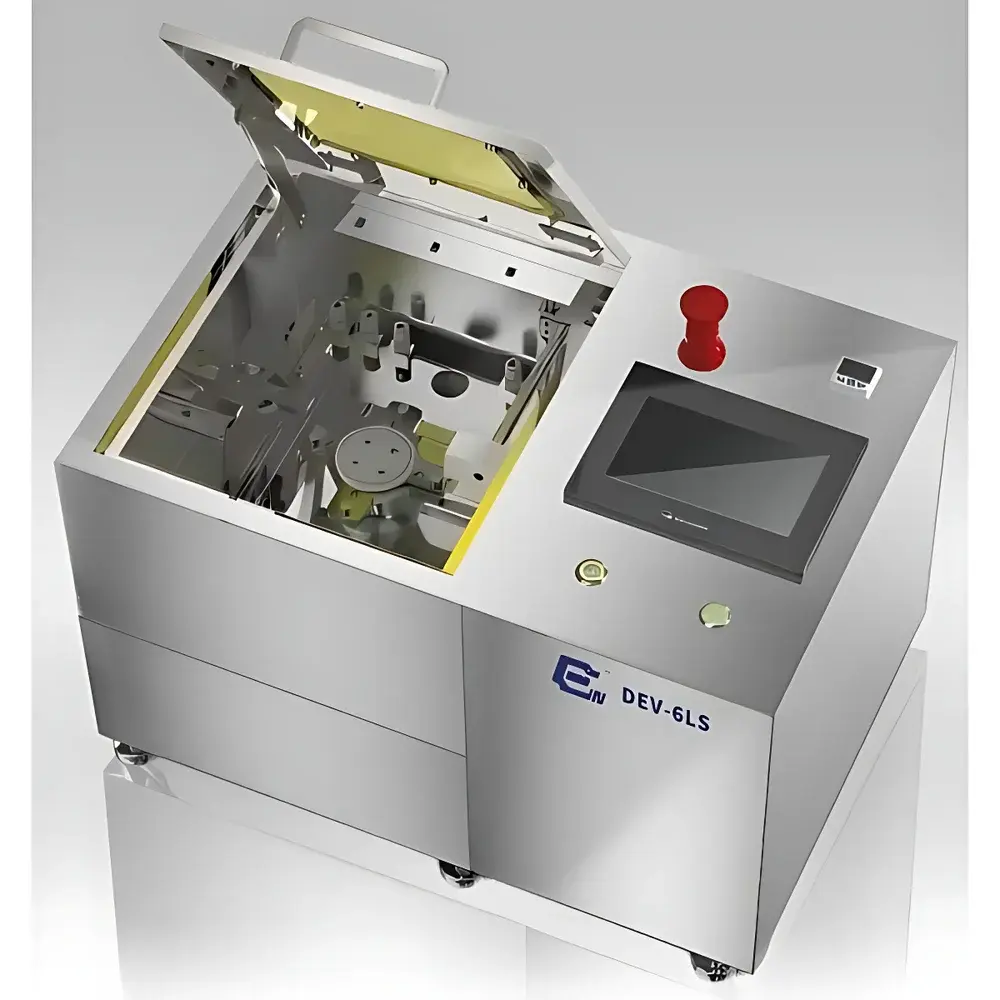
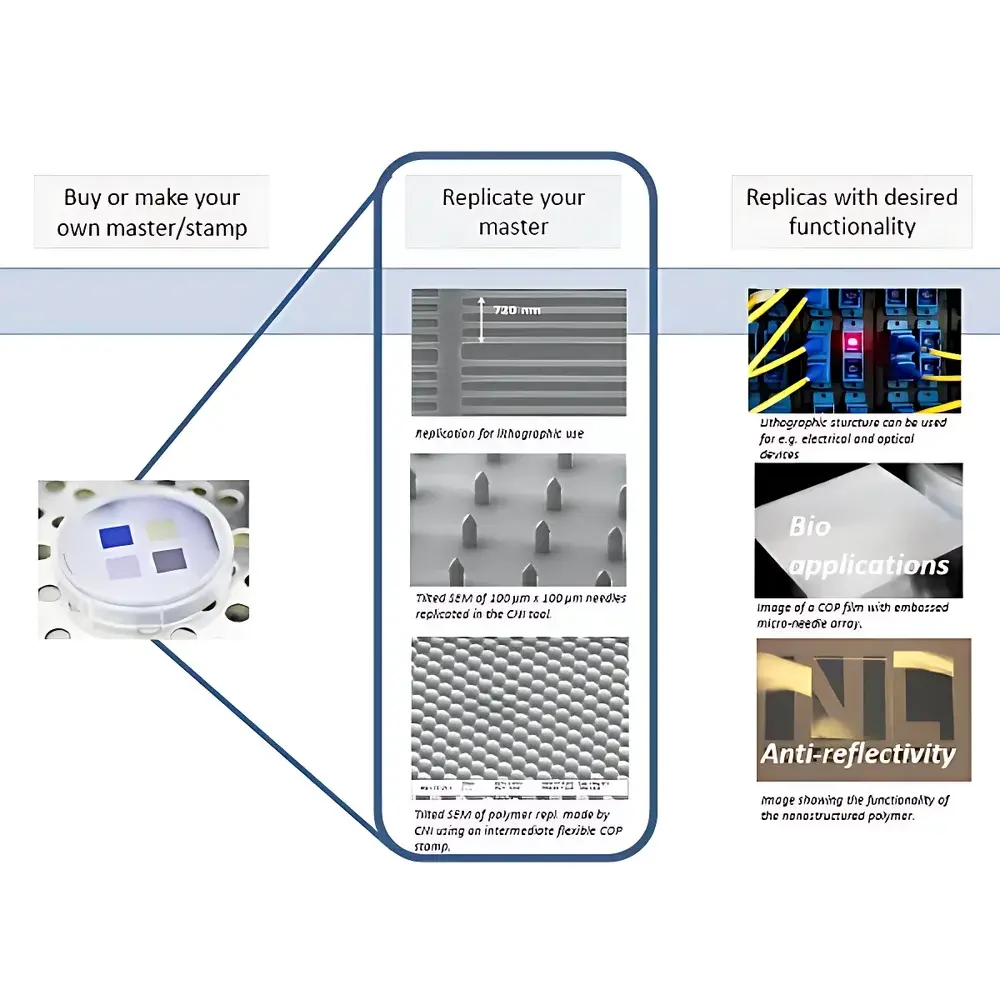
The NILT CNI Nanoimprint Lithography System is a benchtop-scale, dual-mode (thermal and UV-curable) nanoimprint platform engineered for high-fidelity pattern transfer in academic and industrial R&D environments. It operates on the principle of mechanical deformation and polymer replication—where a rigid master template with nanoscale topography is brought into conformal contact with a thermoplastic or photocurable resist layer under controlled temperature, pressure, and environmental conditions. Unlike electron-beam or deep-UV lithography, nanoimprint achieves sub-20 nm feature resolution without reliance on complex optical projection systems or high-energy radiation sources, offering a cost-effective, high-throughput alternative for prototyping photonic crystals, metasurfaces, plasmonic devices, and MEMS/NEMS structures. The system’s architecture integrates precision thermal management, low-force pneumatic actuation, and automated imprint/demolding sequences—enabling reproducible replication across 2-inch to 4-inch substrates with minimal residual layer variation and high overlay fidelity.
Key Features
- Benchtop footprint optimized for university cleanrooms and shared lab facilities—no dedicated vibration isolation or high-power infrastructure required.
- Dual-mode imprint capability: programmable thermal imprint (for thermoplastic polymers such as PMMA or PC) and UV-NIL (for acrylate-based resists), each with independent process parameter control.
- Integrated template temperature control with rapid heating/cooling kinetics—achieves full thermal stabilization in under 60 seconds, reducing cycle time per imprint by >40% versus conventional systems.
- Low-pressure pneumatic actuation (0.4–0.8 bar vacuum assist + 6–10 bar pressurization) ensures uniform force distribution and minimizes template distortion during contact.
- Automated imprint stroke and demolding sequence with real-time force feedback—prevents pattern shearing and improves release yield for high-aspect-ratio features.
- Modular stage design supports standard 2-inch and 4-inch wafers; optional adapters available for non-standard substrates including glass, SiC, and flexible polymer films.
- Compliance-ready control interface with audit trail logging, user access levels, and timestamped parameter recording—aligned with GLP and internal R&D documentation standards.
Sample Compatibility & Compliance
The CNI system accommodates a broad range of substrate materials—including silicon, fused silica, sapphire, quartz, and polymeric films—with thicknesses from 100 µm to 1 mm. Template compatibility extends to quartz, silicon, nickel, and SiC masters fabricated via e-beam lithography or DRIE. All thermal and UV processes are compatible with industry-standard resists (e.g., mr-I T85, NOA61, OrmoStamp). The system meets CE marking requirements for electromagnetic compatibility (EMC Directive 2014/30/EU) and low-voltage safety (LVD Directive 2014/35/EU). While not certified for ISO 13485 or FDA 21 CFR Part 11 out-of-the-box, its software architecture supports configuration for GxP-compliant workflows when deployed with validated SOPs and third-party electronic signature modules.
Software & Data Management
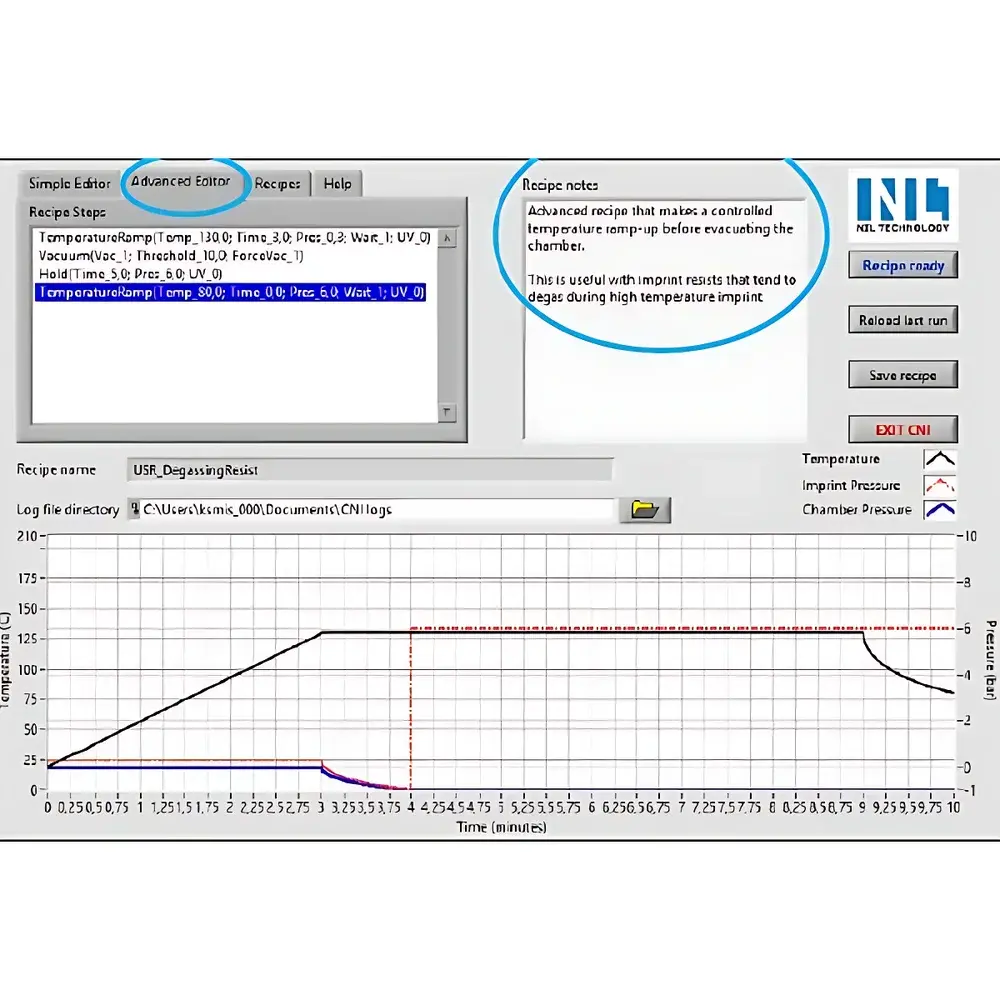
The CNI is operated via a Windows-based GUI with intuitive workflow navigation and real-time parameter visualization. Process recipes—including temperature ramp profiles, dwell times, vacuum sequencing, UV dose (for UV-NIL), and demold velocity—are stored with version control and exportable in CSV/XML formats. The software logs all operational events (start/stop timestamps, sensor readings, error codes) to a local SQLite database with optional network backup. Audit trail functionality records operator ID, parameter changes, and system state transitions—supporting traceability in regulated research settings. Remote monitoring via Ethernet is supported; integration with LabVIEW or Python APIs is available through optional SDK licensing.
Applications
- High-resolution patterning of photonic crystal slabs for integrated optics and biosensing platforms.
- Replication of plasmonic antenna arrays for surface-enhanced Raman spectroscopy (SERS) substrates.
- Fabrication of diffractive optical elements (DOEs) and micro-lens arrays for AR/VR waveguide integration.
- Prototyping of nanofluidic channels and lab-on-chip devices requiring sub-50 nm channel widths.
- Maskless fabrication of calibration standards for SEM/AFM metrology and scatterometry reference gratings.
- Hybrid lithography workflows—e.g., imprint-defined alignment marks for subsequent e-beam or EUV exposure steps.
FAQ
What is the smallest achievable feature size with the CNI system?
Sub-20 nm half-pitch features have been consistently replicated using high-fidelity quartz templates and optimized thermal imprint parameters—verified by cross-sectional SEM and AFM line profiling.
Can the CNI be used for roll-to-roll (R2R) imprinting?
No—the CNI is a batch-mode, flat-panel system designed for wafer-level processing. R2R imprinting requires continuous web handling and tension control not supported by this platform.
Is template cleaning integrated into the system?
Template cleaning is performed externally; however, the system includes a nitrogen purge port adjacent to the imprint zone to minimize particulate contamination during loading.
Does the system support alignment to pre-patterned substrates?
The base CNI model does not include optical alignment capabilities. Overlay alignment requires external microscope-based alignment stages or integration with third-party mask aligners.
What maintenance intervals are recommended?
Vacuum pump oil replacement every 6 months; O-ring inspection and lubrication every 3 months; annual calibration of temperature sensors and pressure transducers per ISO/IEC 17025 guidelines.