
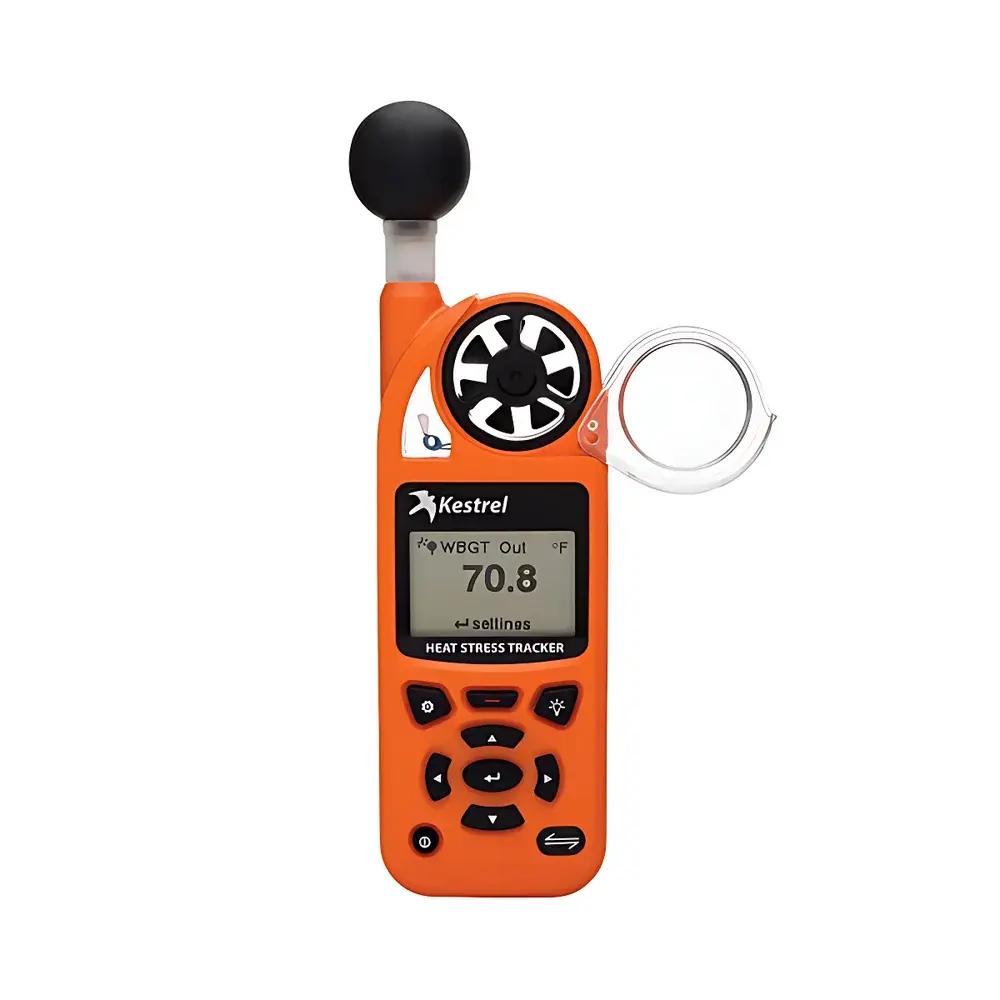
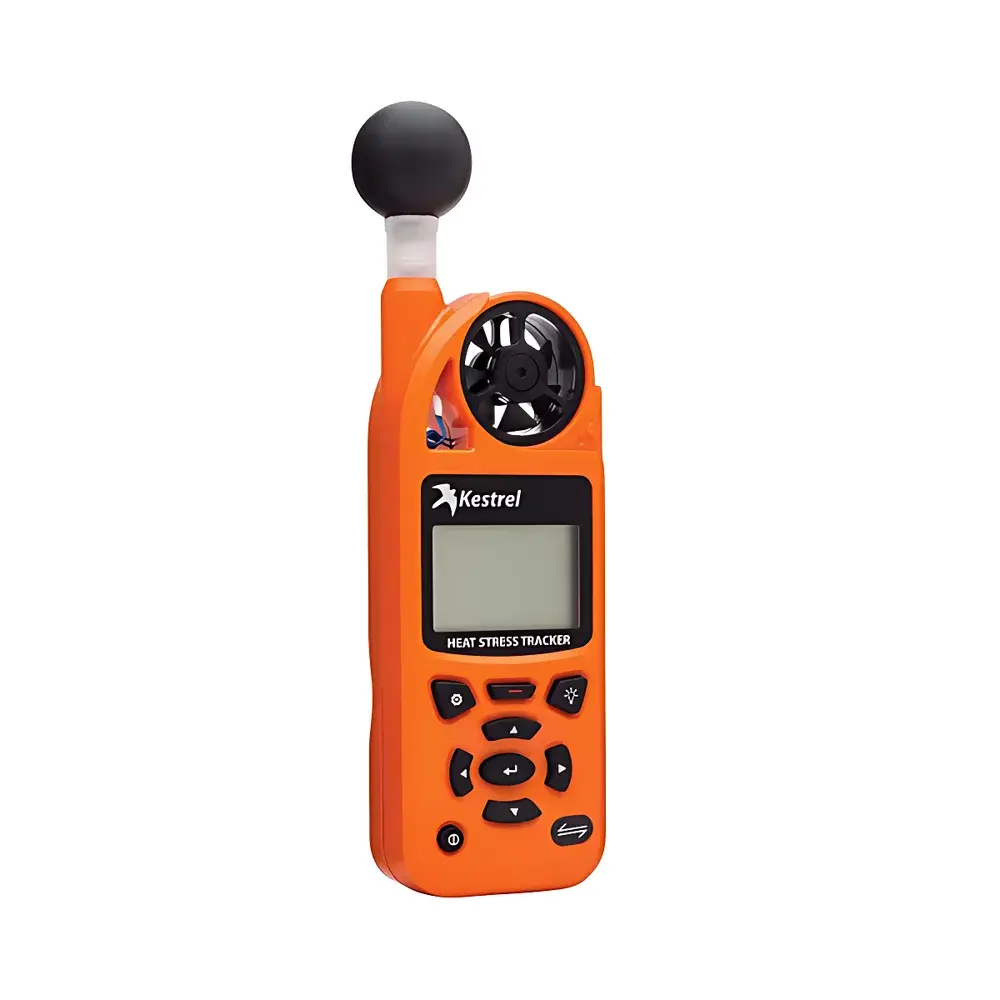
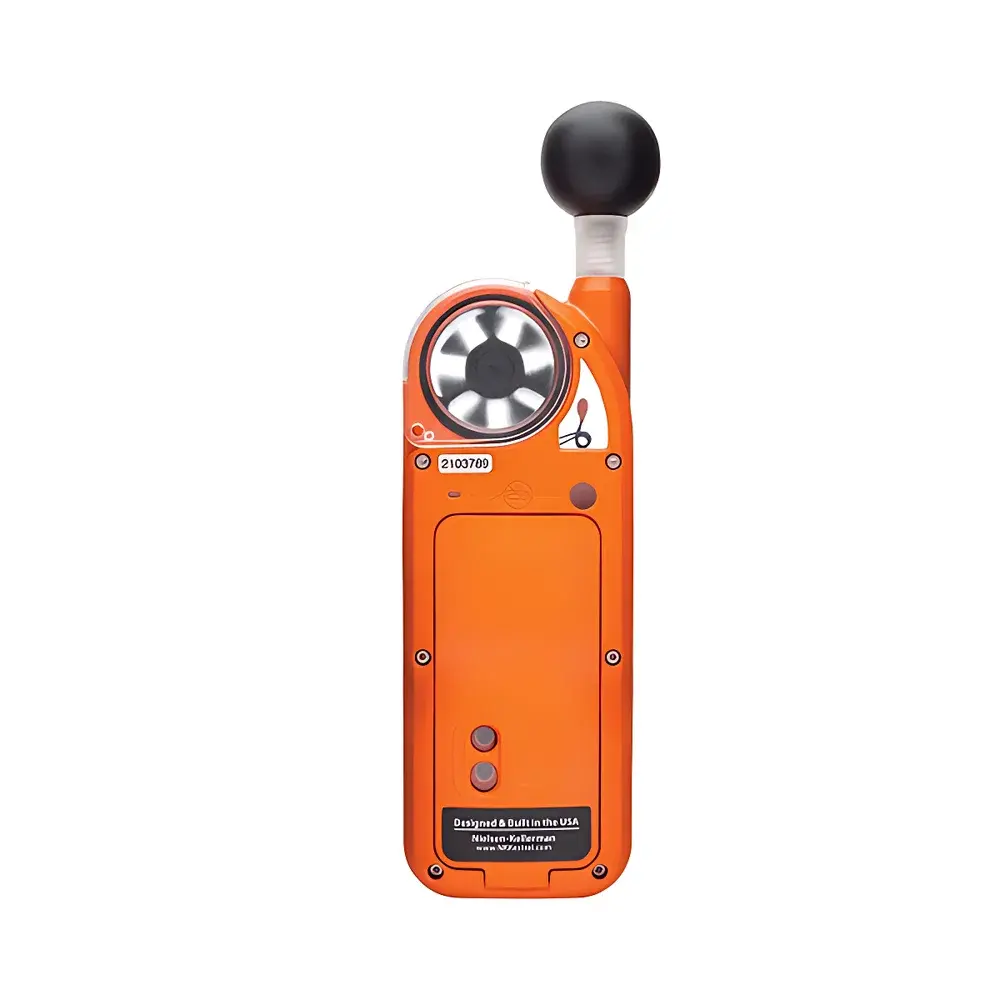
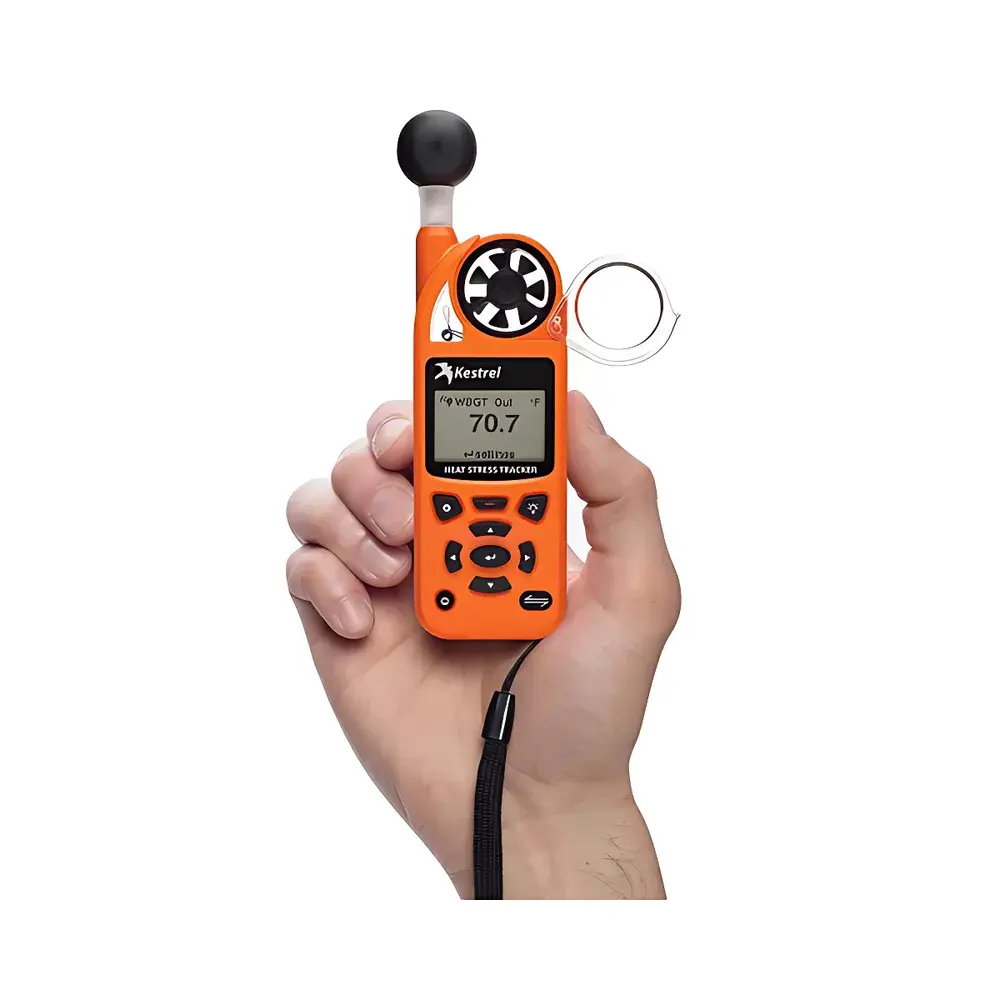
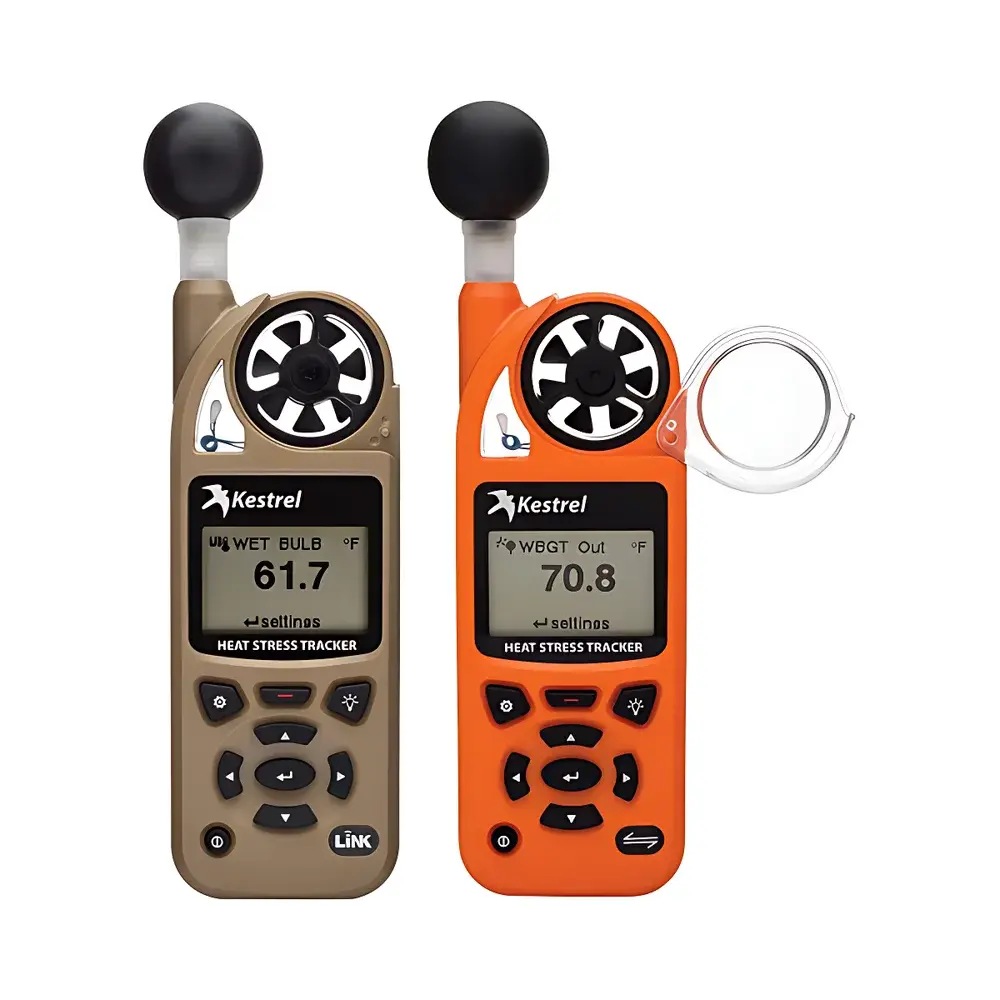
NK Kestrel 5400 Heat Stress Meter
| Brand | NK |
|---|---|
| Origin | USA |
| Model | Kestrel 5400 |
| Instrument Type | Vane Anemometer |
| Resolution | 0.1 m/s |
| Measurement Range | 0.4–60 m/s |
| Accuracy | ±3% |
| Operating Temperature | −10 to 55 °C |
| Operating Humidity | 0–100% RH |
| IP Rating | IP67 |
| Data Logging Capacity | >10,000 timestamped records |
| Power | AA batteries (≈400 h typical life) |
| Wireless Connectivity | Bluetooth Smart® (Kestrel LiNK) |
Overview
The NK Kestrel 5400 Heat Stress Meter is a rugged, handheld environmental monitoring instrument engineered for precise, real-time assessment of heat stress risk in occupational and field settings. Unlike traditional wet-bulb globe temperature (WBGT) meters requiring distilled water and manual calibration, the Kestrel 5400 employs a proprietary dry-sensor algorithm validated against ASTM D7872–19 and ISO 7243 standards to compute WBGT without hygric dependency—enabling rapid, repeatable deployment across construction sites, military training grounds, industrial facilities, and outdoor athletic events. Its core measurement architecture integrates high-stability thermistors, capacitive humidity sensors, and a precision vane anemometer, all housed in a single compact unit that simultaneously quantifies air temperature, relative humidity, wind speed, atmospheric pressure, dew point, heat index, wind chill, natural wet-bulb temperature, globe temperature, and thermal work limit (TWL). Designed as a direct evolution of the Kestrel 4400 and 4600 platforms, the 5400 retains field-proven metrological integrity while introducing enhanced optical readability, extended data logging, and seamless wireless telemetry.
Key Features
- Water-free WBGT calculation compliant with OSHA Technical Manual Section III: Chapter 4 and ACGIH TLV® guidelines for heat stress evaluation
- High-contrast, sunlight-readable monochrome LCD with dual-color backlight (green/red) for low-light or nighttime operation
- Vane anemometer with 0.4–60 m/s range, ±3% accuracy, and 0.1 m/s resolution—optimized for turbulent and laminar airflow profiling
- IP67-rated enclosure: fully dust-tight and submersible to 1 m for 30 minutes; buoyant design enables recovery from accidental water immersion
- MIL-STD-810G certified for shock resistance (2 m drop onto concrete); polycarbonate lens and reinforced polymer chassis ensure long-term mechanical resilience
- Onboard memory stores over 10,000 timestamped measurements with user-configurable logging intervals (1 sec to 12 hrs)
- Bluetooth Smart® (BLE 4.0) connectivity via Kestrel LiNK app for iOS and Android—supports live streaming, remote configuration, and geotagged data export
- Optional USB Data Transfer Cable and Kestrel LiNK Dongle enable direct PC/Mac synchronization and batch CSV export compatible with Excel, MATLAB, and LIMS environments
Sample Compatibility & Compliance
The Kestrel 5400 is intended for ambient air sampling in open and semi-confined environments where convective, conductive, and radiative heat exchange must be quantified per occupational hygiene protocols. It meets the physical and functional requirements of ANSI/ASHRAE Standard 55–2023 for thermal environmental conditions and ISO 7726:2009 for ergonomics of the thermal environment—particularly in its derivation of WBGTindoor and WBGToutdoor. The device’s sensor fusion architecture ensures traceability to NIST-traceable reference standards through factory calibration certificates (COC included). For regulated environments—including GMP-compliant manufacturing, FDA-audited pharmaceutical facilities, and OSHA-enforced worksites—the Kestrel 5400 supports audit-ready data management when used with Kestrel LiNK software configured for 21 CFR Part 11–compliant electronic records (user authentication, audit trail, and electronic signature options available via enterprise license).
Software & Data Management
Kestrel LiNK software provides secure, encrypted bidirectional communication between the meter and mobile/desktop platforms. Logged datasets include full metadata: UTC timestamps, GPS coordinates (when paired with smartphone), battery voltage, and sensor health flags. Export formats include CSV, PDF summary reports, and time-series PNG graphs. The desktop application supports automated folder-based archiving, custom report templates, and integration with third-party analytics tools via API endpoints. All firmware updates are delivered over-the-air and validated cryptographically to maintain measurement integrity. For institutional deployments, Kestrel offers volume licensing with centralized device provisioning, role-based access control, and GLP/GMP-compliant validation documentation packages.
Applications
- Occupational Health & Safety: Real-time WBGT monitoring for compliance with OSHA 29 CFR 1910.142 and EU Directive 2003/10/EC on physical agents
- HVAC Commissioning: Air velocity mapping, duct traverse verification, and thermal comfort validation per ASHRAE Guideline 12–2020
- Military & First Responder Training: Heat acclimatization tracking, exertional heat illness prevention, and mission-readiness assessment
- Sports Science: Environmental load indexing for endurance athletes, race-day heat risk stratification, and venue safety certification
- Environmental Emergency Response: Rapid deployment during wildfire smoke events, chemical release incidents, or post-disaster infrastructure assessments
- Academic Research: Field-based biometeorology studies, urban heat island mapping, and climate adaptation modeling
FAQ
Does the Kestrel 5400 require distilled water for WBGT measurement?
No—it uses a validated dry-sensor algorithm eliminating the need for wet-bulb wicking, reducing maintenance and enabling immediate deployment.
Is the device suitable for underwater or rain-soaked conditions?
Yes—its IP67 rating certifies protection against temporary submersion and full exposure to heavy rainfall without performance degradation.
Can logged data be exported in a format compatible with statistical analysis software?
Yes—CSV exports include ISO 8601 timestamps, SI units, and sensor-specific headers, supporting direct ingestion into R, Python (pandas), SPSS, and JMP.
What is the battery life under continuous logging mode?
With AA alkaline cells and 1-minute logging interval, typical runtime exceeds 300 hours; lithium AA cells extend this to ≈400 hours under identical conditions.
How is measurement traceability ensured for regulatory audits?
Each unit ships with a Certificate of Conformance (COC) referencing NIST-traceable calibration points; optional NIST-certified calibration services are available upon request.







