
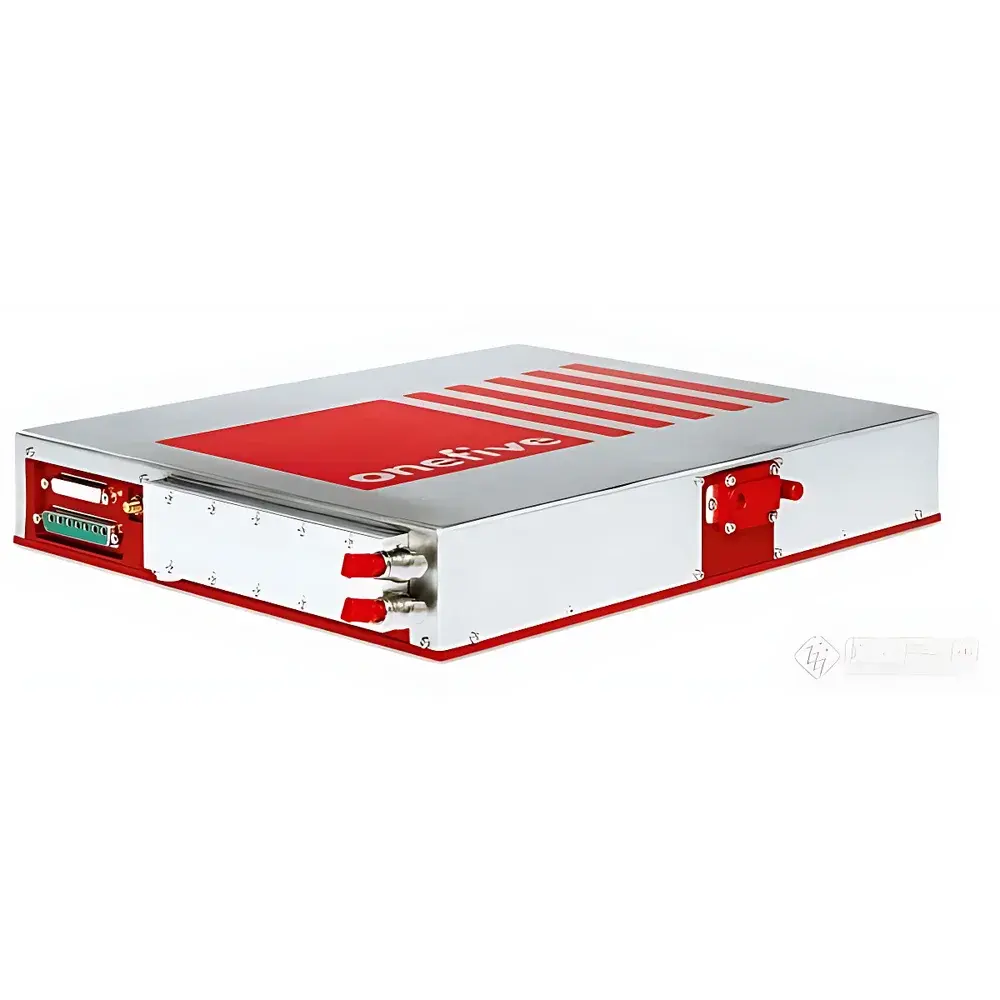
Onefive Origami-HP High-Power Femtosecond Fiber Laser
| Brand | Onefive |
|---|---|
| Origin | Switzerland |
| Model | Origami HP |
| Output Wavelength Options | 514–532 nm, 765–780 nm, 1028–1065 nm, 1530–1560 nm |
| Pulse Width | <70 fs to 1 ps (model-dependent) |
| Average Power | Up to 4 W |
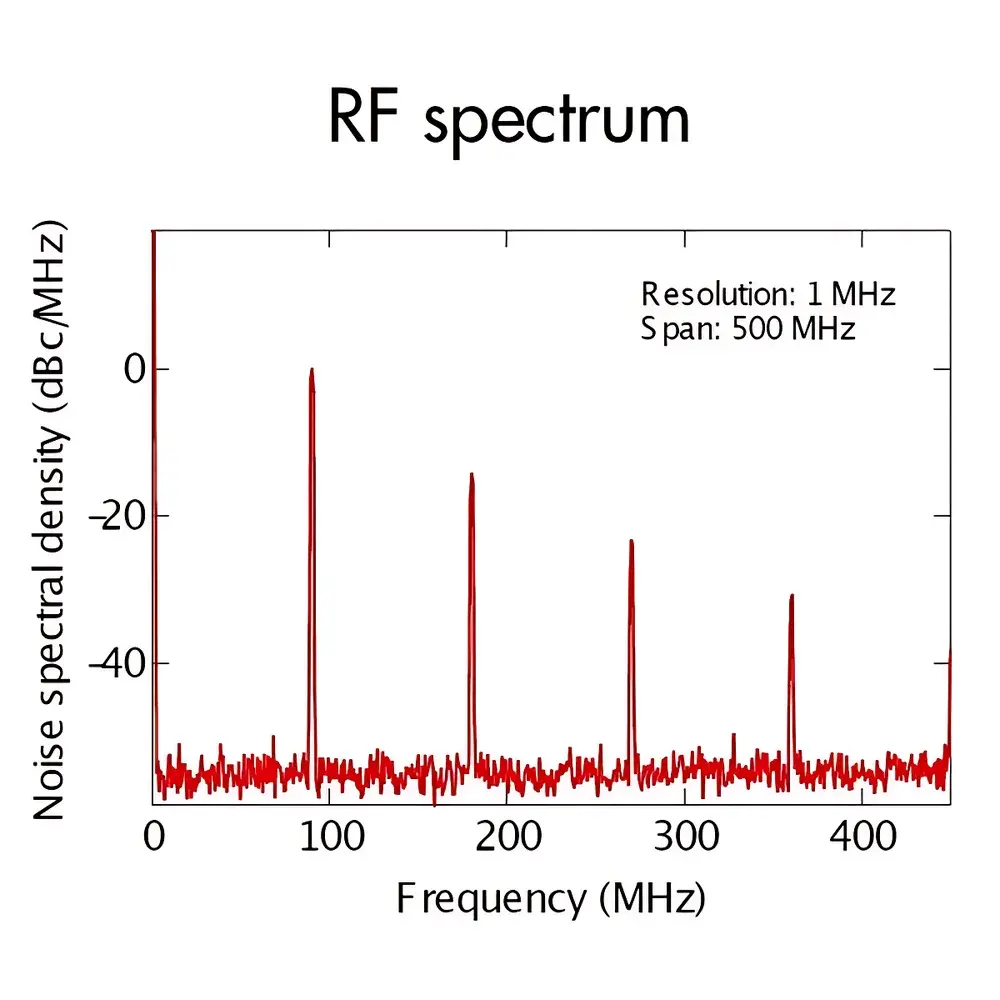
| Repetition Rate | 40–200 MHz |
| Beam Quality | M² < 1.2, TEM₀₀ |
| Amplitude Noise | < 0.5% rms (1 h) |
| Pointing Stability | < 50 µrad rms (12 h) |
| Cooling | Air or Water |
| Operating Temperature | 18–32 °C |
| Enclosure | Sealed OEM housing |
| Compliance | IEC 60068-2-6, -2-27, -2-29 |
Overview
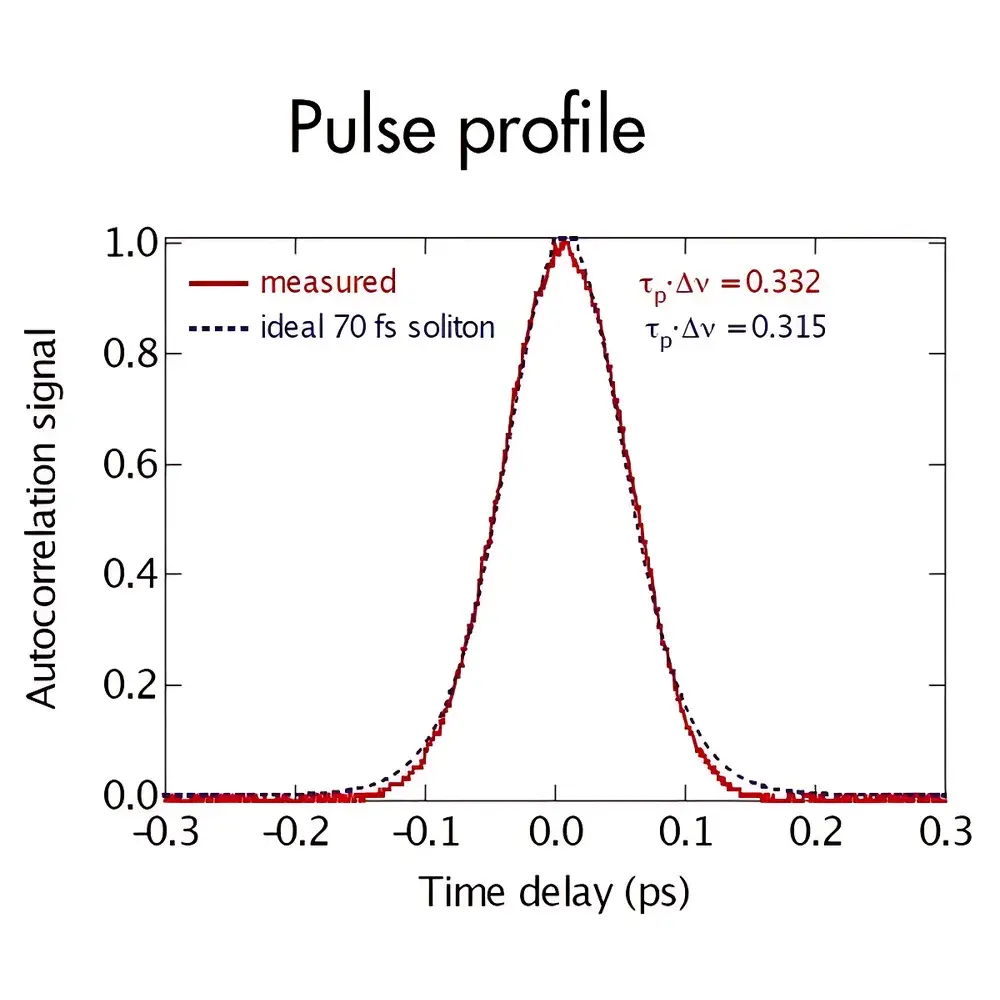
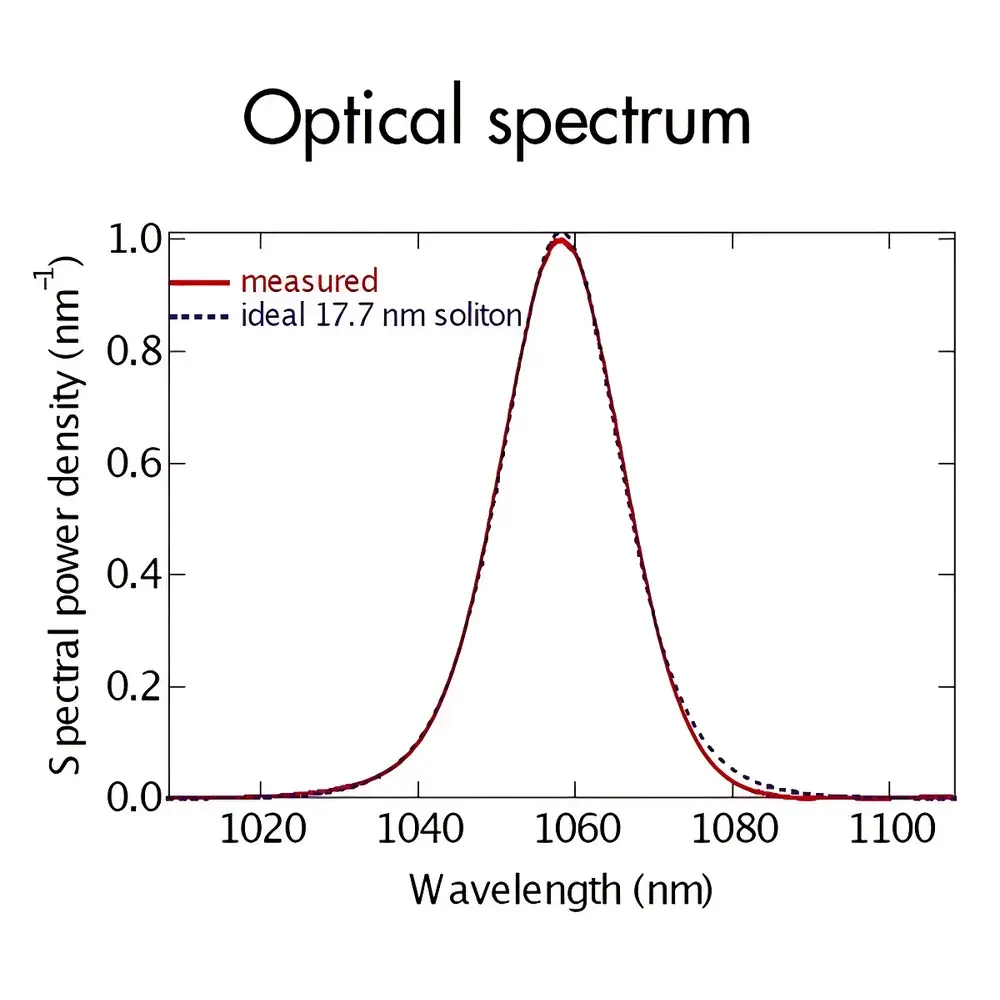
The Onefive Origami-HP High-Power Femtosecond Fiber Laser is an industrial-grade ultrafast laser system engineered for demanding scientific and industrial applications requiring high average power, exceptional pulse fidelity, and long-term operational stability. Built upon a hybrid architecture that integrates the robustness of fiber-integrated design with the beam quality and pulse integrity traditionally associated with solid-state oscillators, the Origami-HP delivers transform-limited soliton pulses without amplification—eliminating amplified spontaneous emission (ASE), Kelly sidebands, and spectral ripple. Its core oscillator operates in a passively mode-locked regime, generating sub-100-fs pulses directly from the cavity without external compression or post-processing. This intrinsic pulse quality ensures high temporal contrast and minimal chirp, making it suitable as a seed source for multi-stage amplifier systems, nonlinear frequency conversion stages, and time-resolved measurement platforms where timing jitter and phase noise critically impact data fidelity.
Key Features
- Direct oscillation at high average power (up to 4 W), avoiding ASE contamination and gain-narrowing effects typical of amplified systems
- Transform-limited pulse generation (τp·Δν ≈ 0.32) across all wavelength variants, verified via autocorrelation and spectral phase characterization
- Diffractive-limited beam profile (M² < 1.2, TEM₀₀) with pointing stability < 50 µrad rms over 12 hours—enabling stable coupling into single-mode fibers and nonlinear crystals
- Low amplitude noise (< 0.5% rms over 1 hour) and minimal center-wavelength drift (< 0.3 nm pk-pk), essential for interferometric and spectroscopic applications
- Hermetically sealed, vibration-resistant OEM enclosure rated to IEC 60068-2 mechanical shock and random vibration standards
- Continuous 24/7 operation capability across ambient temperatures from 18 °C to 32 °C, with no performance degradation or intermittent pulse dropout
- Flexible thermal management: air-cooled configuration standard; optional water-cooling for maximum power stability under extended duty cycles
- Remote control interface (USB, RS-232, analog TTL) supporting pump current modulation, repetition rate tuning, and external clock synchronization for sub-100-fs timing jitter integration
Sample Compatibility & Compliance
The Origami-HP is compatible with a broad range of nonlinear optical materials—including BBO, LBO, BiBO, PPLN, and GaSe—for efficient second-harmonic generation (SHG), optical parametric amplification (OPA), and terahertz (THz) generation. Its narrow spectral bandwidth and high peak power support broadband supercontinuum generation in photonic crystal fibers. From a regulatory standpoint, the system complies with IEC 60068-2 environmental testing standards for mechanical robustness and thermal cycling. While not certified for medical use, its stable output and low timing jitter align with requirements for GLP-compliant multiphoton microscopy setups and ISO/IEC 17025-accredited metrology laboratories performing ultrafast optical characterization. The laser’s electronic interface supports traceable parameter logging, facilitating audit-ready documentation for QA/QC workflows.
Software & Data Management
Onefive provides the Origami Control Suite—a platform-independent application enabling real-time monitoring of laser status, pulse energy estimation, repetition rate adjustment, and thermal feedback diagnostics. All control commands are accessible via SCPI-compatible ASCII protocol over USB or RS-232, allowing seamless integration into LabVIEW, Python (PyVISA), MATLAB, or custom automation frameworks. The system logs timestamped operational parameters—including diode current, thermistor readings, and interlock states—with configurable sampling intervals. While the laser itself does not include FDA 21 CFR Part 11-compliant electronic signatures or audit trails, its deterministic behavior and reproducible startup sequence support validation protocols required in regulated environments when deployed with external data acquisition systems meeting ALCOA+ principles.
Applications
- Amplifier seeding: Low-noise, high-repetition-rate oscillator ideal for Ti:sapphire and Yb-doped fiber amplifier front-ends
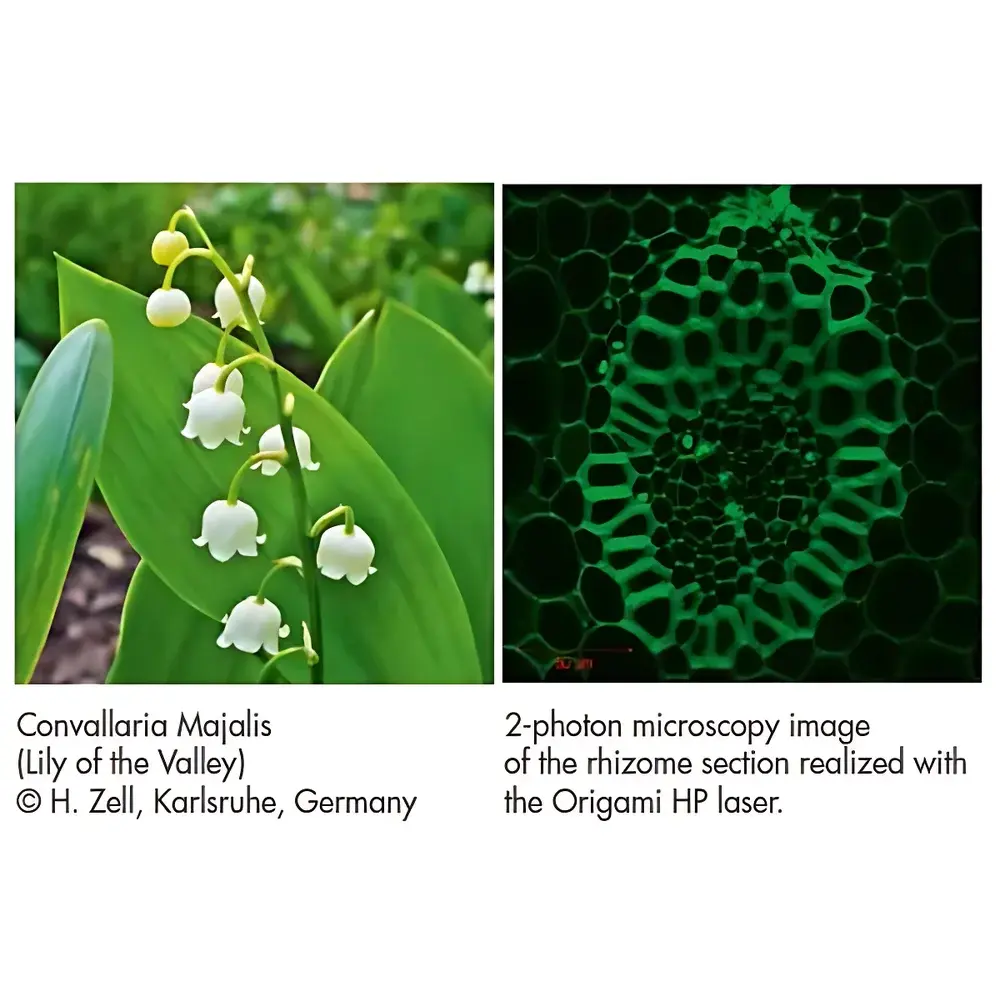
- Multiphoton microscopy: Enables deep-tissue imaging in neuroscience and plant biology with reduced photodamage and improved signal-to-background ratio
- Supercontinuum generation: Efficient white-light spectrum production in nonlinear waveguides and tapered fibers for OCT and spectroscopy
- Two-photon polymerization: Sub-diffraction-limit 3D microfabrication with high voxel resolution and process repeatability
- Terahertz time-domain spectroscopy (THz-TDS): Synchronous dual-comb and photoconductive antenna excitation with sub-100-fs timing precision
- Time-resolved pump-probe experiments: Stable carrier dynamics measurements in semiconductors, perovskites, and 2D materials
FAQ
Is the Origami-HP suitable for integration into OEM instrumentation?
Yes—the laser head and controller are designed as modular subsystems with standardized mechanical interfaces, sealed enclosures, and industrial-grade connectors. Full pinout documentation and SDKs are provided for embedded integration.
Can pulse repetition rate be tuned in real time during operation?
Yes—via analog voltage input (0–5 V) or digital command, enabling dynamic synchronization with scanning stages, detectors, or external RF sources.
What cooling options are available, and how do they affect power stability?
Air cooling supports full rated power up to 32 °C ambient; water cooling extends thermal headroom and improves long-term power stability (±0.3% over 8 h) in high-duty-cycle applications.
Does the system support ultraviolet or deep-ultraviolet wavelength options?
No—UV outputs (e.g., 257–266 nm or 343–355 nm) require external harmonic generation modules; the laser itself operates at fundamental wavelengths only.
How is laser safety implemented for Class 4 operation?
The system includes dual-channel hardware interlocks (key switch + remote enable), emission indicator LED, and integrated shutter control—all compliant with IEC 60825-1:2014 requirements for Class 4 laser products.




