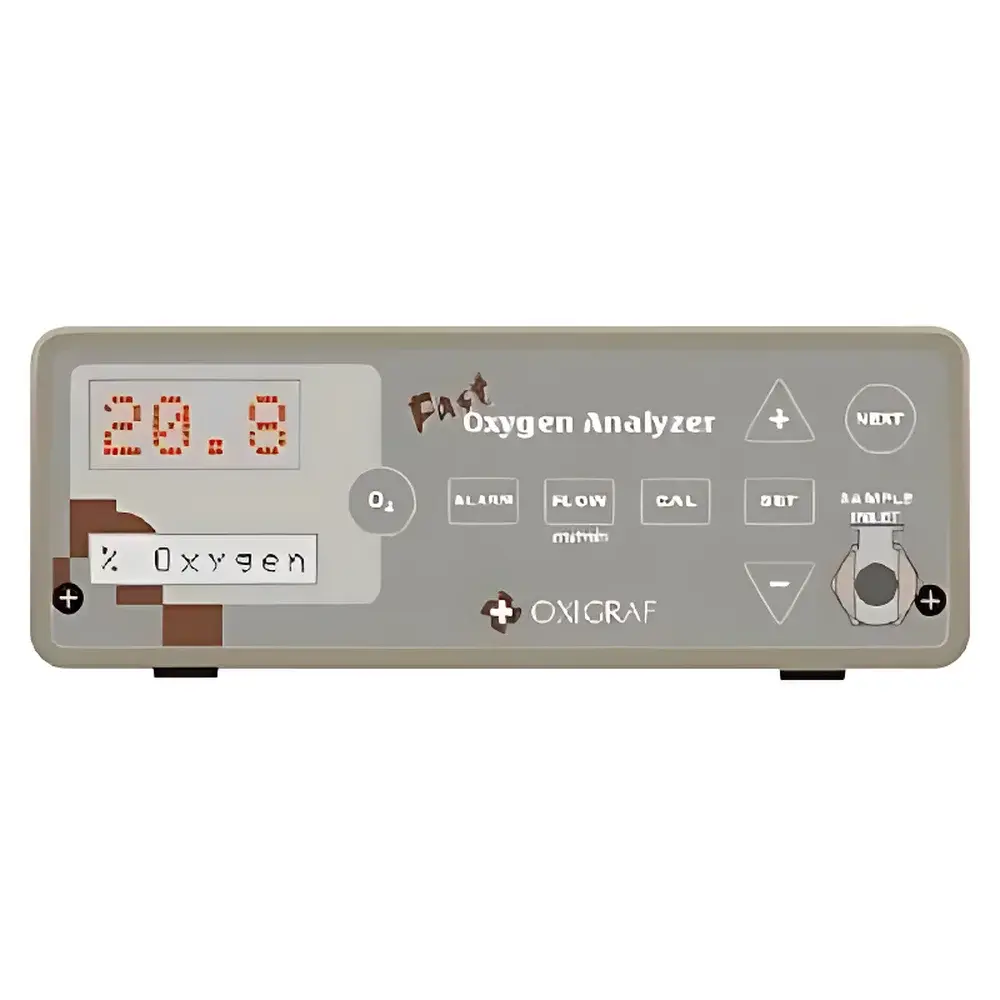
Oxigraf O2L Oxygen Analyzer
| Origin | USA |
|---|---|
| Manufacturer Type | Distributor |
| Origin Category | Imported |
| Model | O2L |
| Pricing | Upon Request |
Overview
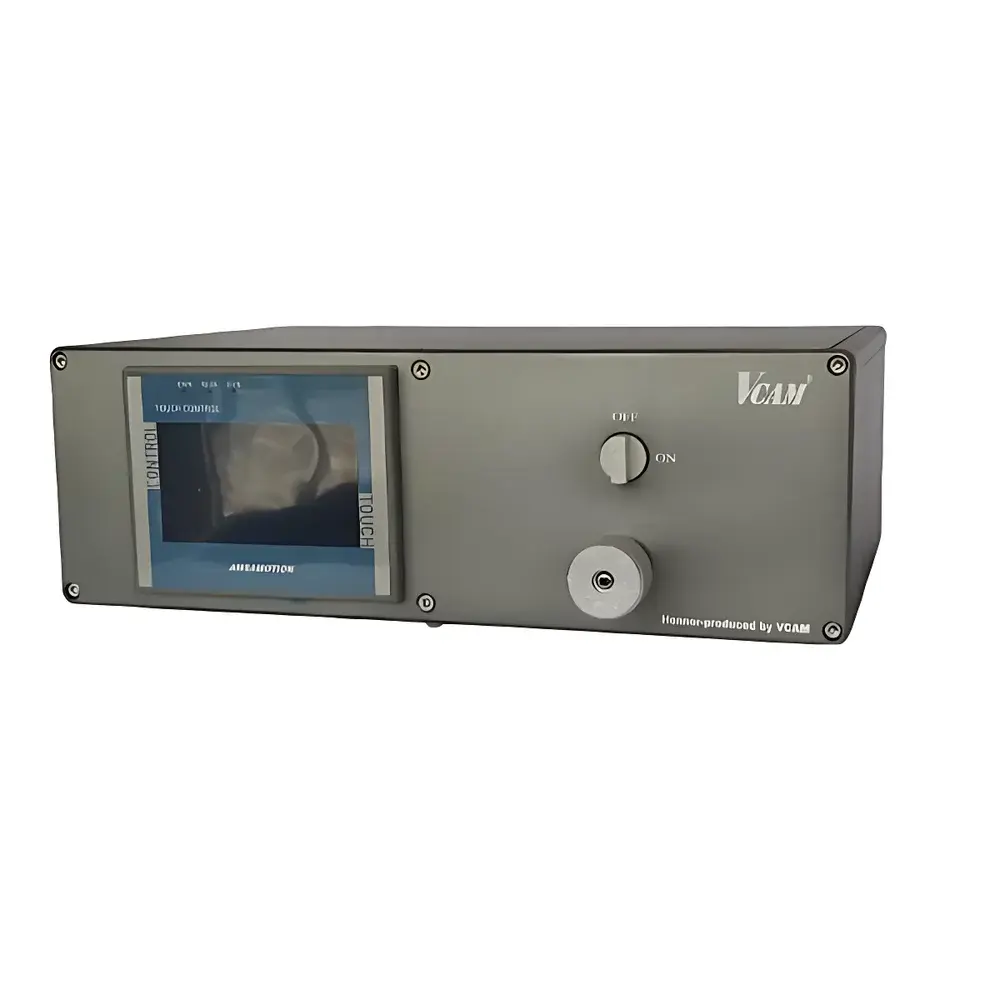
The Oxigraf O2L Oxygen Analyzer is a high-performance, tunable diode laser absorption spectroscopy (TDLAS)-based in-situ oxygen measurement system engineered for continuous, real-time monitoring in demanding industrial process environments. Unlike electrochemical or paramagnetic sensors, the O2L employs near-infrared laser absorption at a specific molecular absorption line of oxygen (typically ~760 nm), enabling selective, interference-free quantification without consumables, drift-prone membranes, or catalytic surfaces. This physics-based detection principle ensures long-term stability, minimal calibration frequency, and immunity to background gas composition shifts—critical for applications where measurement integrity directly impacts safety, product quality, or combustion efficiency. Designed for wall-mount or panel-integrated deployment, the analyzer operates across two fixed ranges—0–10% and 0–100% O2—with user-selectable range configuration prior to commissioning. It is not equipped with automatic range switching; instead, range selection is optimized during setup to match application-specific concentration dynamics and required resolution.
Key Features
- Laser-based TDLAS detection: No sensor poisoning, zero cross-sensitivity to CO2, H2O, CO, or hydrocarbons
- Real-time pressure and temperature compensation: Integrated sensors correct raw absorbance signals using ideal gas law and line-broadening models, ensuring accuracy across variable process conditions
- Fast response time: ≤150 ms (T90) at 200 mL/min sample flow—enabling closed-loop control integration in dynamic systems
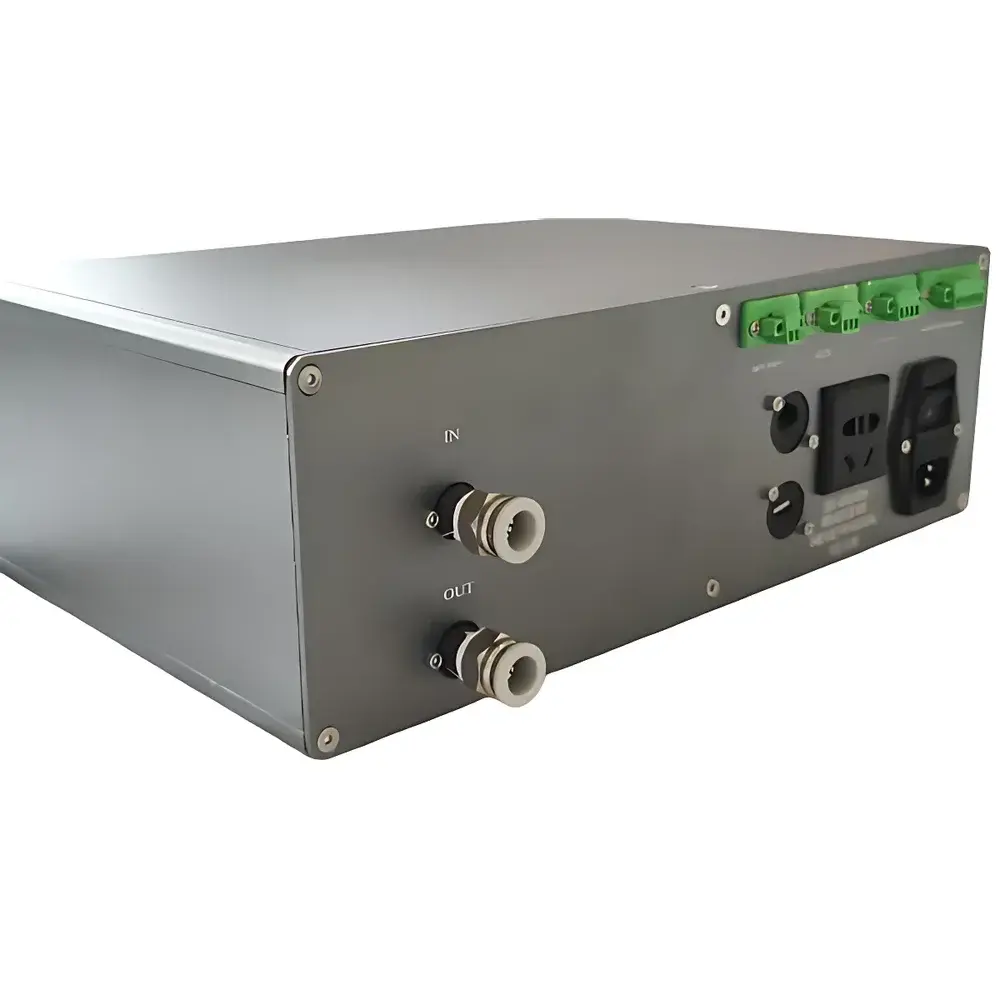
- Integrated sample handling: Built-in diaphragm pump and precision laminar-flow meter (0–250 mL/min, adjustable) eliminate need for external vacuum sources or flow controllers
- Dual analog outputs: Isolated 4–20 mA and 0–10 V DC outputs, each configurable for primary O2 reading or diagnostic parameters (e.g., flow status, lamp intensity)
- Configurable relay outputs: Four SPDT relays (5 A @ 240 VAC), programmable as normally open or normally closed for alarm, fault, or system-ready signaling
- Visual and audible alarm interface: Front-panel LED indicators and buzzer support local operator awareness without SCADA dependency
- Rugged industrial enclosure: IP65-rated housing (190 × 76 × 280 mm, 2.25 kg), suitable for laboratory, boiler room, packaging line, or engine test cell environments
Sample Compatibility & Compliance
The O2L accepts dry or moderately humid sample streams (condensate-free) with particulate filtration recommended upstream. It is compatible with inert carrier gases (N2, Ar), flue gases (up to 50 °C), compressed air, nitrogen-purged enclosures, and modified-atmosphere packaging headspace. While not certified for hazardous area installation (e.g., ATEX/IECEx), its intrinsic safety profile—laser power <1 mW, no high-voltage electrodes, and absence of catalytic elements—makes it suitable for Zone 2 / Class I Div 2 environments when installed per NEC Article 500 guidelines. The analyzer supports compliance with ISO 8573-1 (compressed air purity), ASTM D6299 (precision and bias in gas analysis), and internal QA/QC protocols requiring traceable calibration verification. Optional LabVIEW drivers and DOS/Excel-compatible data logging tools facilitate alignment with GLP/GMP documentation workflows and FDA 21 CFR Part 11 audit-trail requirements when paired with validated host software.
Software & Data Management
The O2L includes embedded firmware with non-volatile parameter storage and password-protected configuration access. Standard communication is via front-panel push buttons and LCD menu navigation. For PC-based integration, optional LabVIEW VIs provide direct readout of O2 concentration, temperature, pressure, flow rate, and diagnostic flags—including lamp health, signal-to-noise ratio, and flow deviation alerts. Legacy DOS and Excel-compatible ASCII log files (comma-delimited, timestamped) are generated via RS232 serial output (optional adapter), supporting offline trend analysis and regulatory submission packages. All calibration events—including date, operator ID (manual entry), span gas value, and post-calibration offset—are stored in internal memory and exportable for audit review.
Applications
- Combustion optimization: Real-time O2 feedback for burner management systems (BMS) in boilers, kilns, and thermal oxidizers
- Modified atmosphere packaging (MAP): In-line verification of residual O2 in food, pharmaceutical, and electronics packaging
- Safety-critical monitoring: Oxygen deficiency detection in gloveboxes, dry rooms, nitrogen-purged enclosures, and confined space entry systems
- Engine exhaust analysis: Transient O2 measurement during dynamometer testing and emissions R&D
- Medical gas production: Purity verification of bulk O2 and N2 supply lines per USP <823> and ISO 8573-7
- Chemical reactor blanketing: Continuous assurance of inert atmosphere integrity during exothermic synthesis
FAQ
Does the O2L support automatic range switching between 0–10% and 0–100%?
No—the O2L is configured for a single fixed range at time of setup. Range selection must be performed manually via firmware menu and requires physical recalibration with appropriate span gas.
What is the maximum allowable sample gas temperature?
The analyzer’s internal sample path is rated for continuous exposure up to 50 °C. For higher-temperature streams, an external cooled probe or dilution system is required.
Is the built-in pump sufficient for extracting samples from pressurized vessels?
Yes—the integrated diaphragm pump delivers up to –60 kPa suction pressure and supports sampling from vessels up to 100 kPa(g) when combined with appropriate pressure relief and filtration.
Can the 4–20 mA output be scaled to represent a custom engineering unit?
Yes—output scaling is fully programmable within the device firmware to match PLC or DCS input expectations, including reverse-acting configurations.
What calibration gases are recommended for routine verification?
Certified NIST-traceable O2/N2 blends matching the selected measurement range (e.g., 1.00% O2 for 0–10%, 20.9% for 0–100%) are required; zero gas is ambient air or high-purity N2.
Related Products