
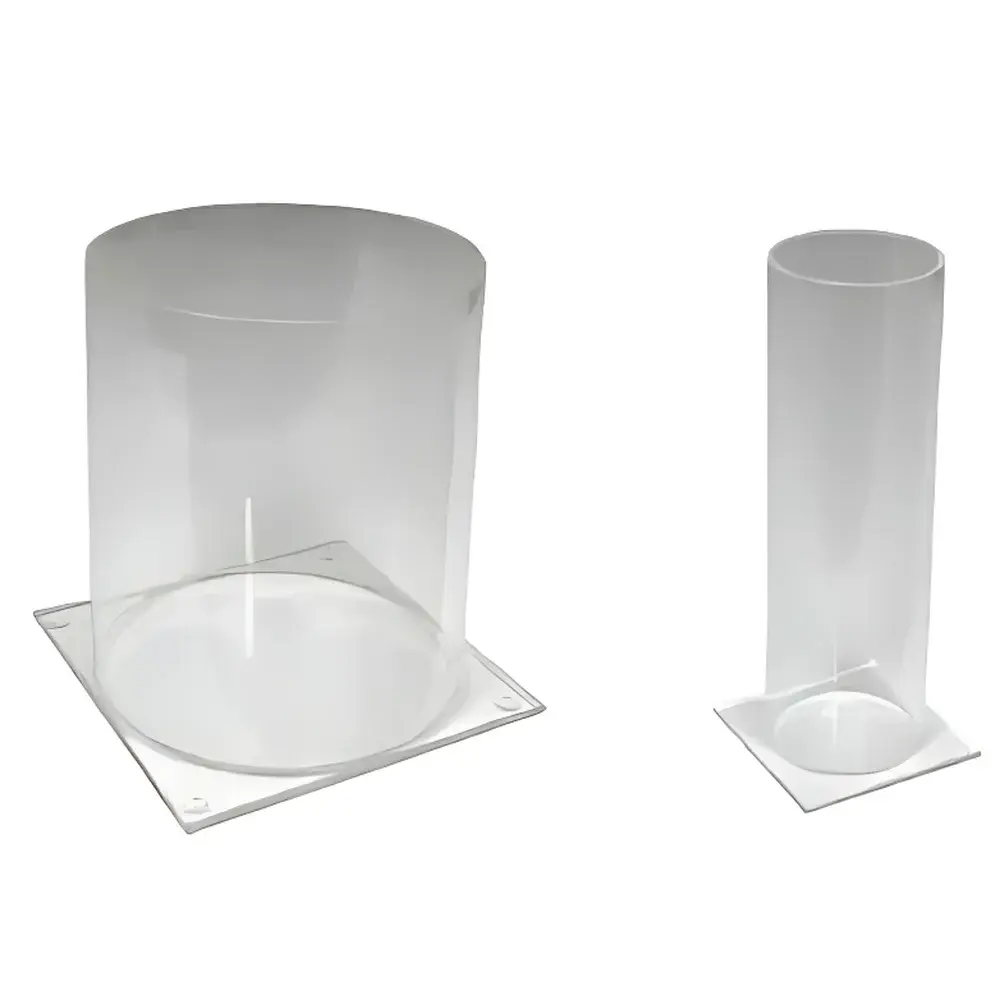
Panlab LE803/LE804 Forced Swim Test System
| Brand | Harvard Apparatus |
|---|---|
| Origin | USA |
| Model | LE803 / LE804 |
| Cup Dimensions (LE804) | 10 cm Ø × 25 cm H |
| Cup Dimensions (LE803) | 20 cm Ø × 50 cm H |
| Cup Dimensions (LE803L) | 30 cm Ø × 50 cm H |
| Behavioral Classification | Immobility, Swimming, Climbing |
| Detection Accuracy | <4% error rate |
| Reproducibility | 100% |
| Camera Configuration | Dual-angle (top-down + side-view) |
| Software | SMART v3.x with GLP-compliant data archiving |
| Throughput | Up to 4 rodents simultaneously |
Overview
The Panlab LE803/LE804 Forced Swim Test (FST) System is a rigorously engineered behavioral phenotyping platform designed for preclinical antidepressant screening and neurobehavioral assessment in rodents. Unlike tail suspension, the FST leverages ethologically relevant immobility responses induced by inescapable water immersion—a paradigm validated across decades of translational neuroscience research. The system operates on standardized hydrodynamic principles: subjects are placed in vertically oriented, transparent cylindrical tanks filled with water maintained at 23–25 °C, where behavioral output is quantified via high-resolution video tracking. Immobility—defined as minimal movement necessary only to maintain head above water—is interpreted as behavioral despair, while swimming and climbing reflect active coping strategies. This tripartite behavioral classification aligns with consensus guidelines from the NIH Behavioral Core Facilities and supports reproducible pharmacological validation under controlled environmental conditions.
Key Features
- Modular, optically transparent acrylic swim chambers engineered for minimal light distortion and consistent illumination—critical for high-fidelity video acquisition and motion contrast detection.
- Dual-camera acquisition architecture: synchronized top-down (overhead) and lateral (side-view) imaging enables unambiguous spatial discrimination between vertical climbing, horizontal swimming, and passive floating—eliminating occlusion artifacts common in single-angle setups.
- LE803 and LE804 chamber variants accommodate species-specific scaling: LE804 (10 cm Ø × 25 cm H) optimized for mice; LE803 (20 cm Ø × 50 cm H) and LE803L (30 cm Ø × 50 cm H) support rat studies with appropriate water depth-to-body-length ratios per OECD TG 425 and APA animal welfare standards.
- SMART v3.x software engine implements adaptive background subtraction, real-time motion vector analysis, and frame-by-frame behavioral state assignment using validated machine-learning classifiers trained on manually annotated ground-truth datasets.
- GLP-compliant data management: all raw video streams, timestamped behavioral logs, session metadata (ambient temperature, humidity, experimenter ID), and algorithm parameters are cryptographically hashed and archived with immutable audit trails—fully compliant with FDA 21 CFR Part 11 requirements for electronic records and signatures.
Sample Compatibility & Compliance
The LE803/LE804 system supports C57BL/6, BALB/c, Sprague-Dawley, and Wistar strains across standard weight ranges (18–35 g for mice; 200–300 g for rats). Chamber geometry adheres to IACUC-recommended water depth thresholds (15 cm minimum for mice; 40 cm for rats) to prevent foot contact with tank bottom during immobility scoring. All components meet UL 61010-1 safety certification for laboratory electrical equipment. Protocol execution conforms to NIH Office of Laboratory Animal Welfare (OLAW) guidelines and supports institutional GLP/GCP documentation workflows—including automated generation of ALF (Animal Lab File) reports for ethics committee submissions.
Software & Data Management
SMART v3.x provides a validated, audit-ready environment for behavioral quantification. Each session generates a structured HDF5 container storing synchronized video frames (1280×720 @ 30 fps), calibrated pixel-to-mm mapping matrices, and behavioral event tables with millisecond precision. Built-in calibration tools support lens distortion correction and dynamic ROI (region-of-interest) definition per chamber. Data export options include CSV (for statistical packages such as R or Python pandas), NIX format (for Neurodata Without Borders integration), and PDF summary reports with embedded thumbnails and timeline heatmaps. Role-based access control (RBAC), electronic signature capture, and full revision history ensure compliance with ISO/IEC 17025 and CAP accreditation requirements for core facility instrumentation.
Applications
- Antidepressant efficacy screening: longitudinal assessment of compound-induced modulation of immobility duration and behavioral transition rates (e.g., immobility → swimming latency).
- Genetic model characterization: phenotype validation in transgenic lines (e.g., BDNF knockout, 5-HTT−/−) under standardized FST protocols aligned with IMPC (International Mouse Phenotyping Consortium) pipelines.
- Neuroinflammatory modeling: quantification of sickness behavior comorbidity in LPS-challenged cohorts via reduced swimming vigor and increased floating episodes.
- Circadian rhythm studies: integration with environmental control systems to assess diurnal variation in coping strategy distribution across light/dark cycles.
- Toxicology endpoints: detection of CNS depressant effects through dose-dependent increases in immobility time, independent of motor impairment confounds (validated via parallel rotarod testing).
FAQ
What is the recommended water temperature range for FST sessions?
Water must be maintained at 23–25 °C using a calibrated digital thermostat; deviations >±0.5 °C significantly alter thermoregulatory stress and compromise immobility interpretation.
Can SMART software distinguish between passive floating and brief grooming bouts?
Yes—via temporal thresholding (minimum 2-sec sustained posture) and multi-axis motion vector filtering; grooming is excluded from immobility scoring by its characteristic high-frequency limb oscillations.
Is remote monitoring supported during long-term experiments?
The system supports secure VNC-based live feed streaming over institutional LAN/WAN with TLS 1.2 encryption; no cloud storage or external vendor servers are involved.
How is inter-rater reliability ensured across multiple operators?
SMART enforces standardized calibration protocols, auto-generates inter-operator concordance metrics (Cohen’s κ >0.92 in validation studies), and archives all user-initiated manual corrections for retrospective review.
Does the system comply with EU Directive 2010/63/EU on animal protection?
Yes—the chamber design, water depth specifications, and maximum session duration (6 min) fully conform to Annex VIII requirements for acute behavioral assays, with integrated fail-safes to terminate trials upon abnormal respiration or prolonged submersion events.




