
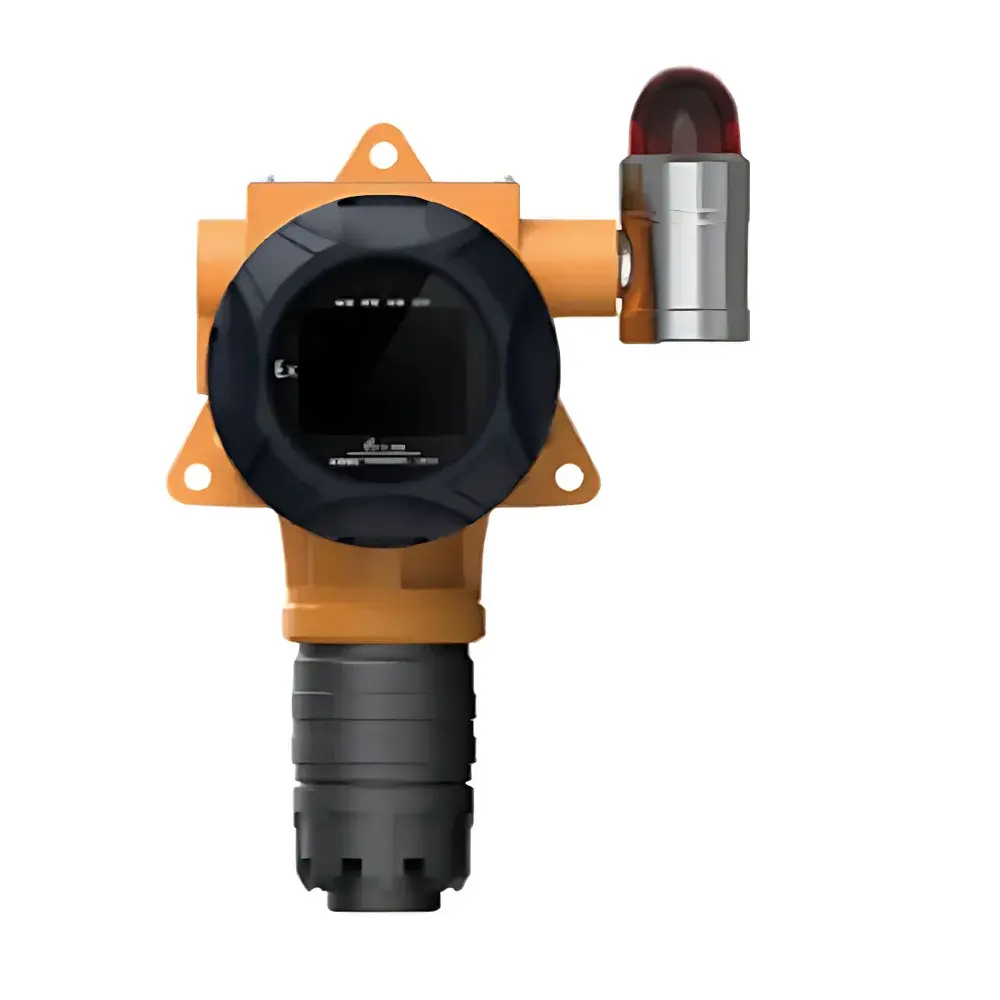
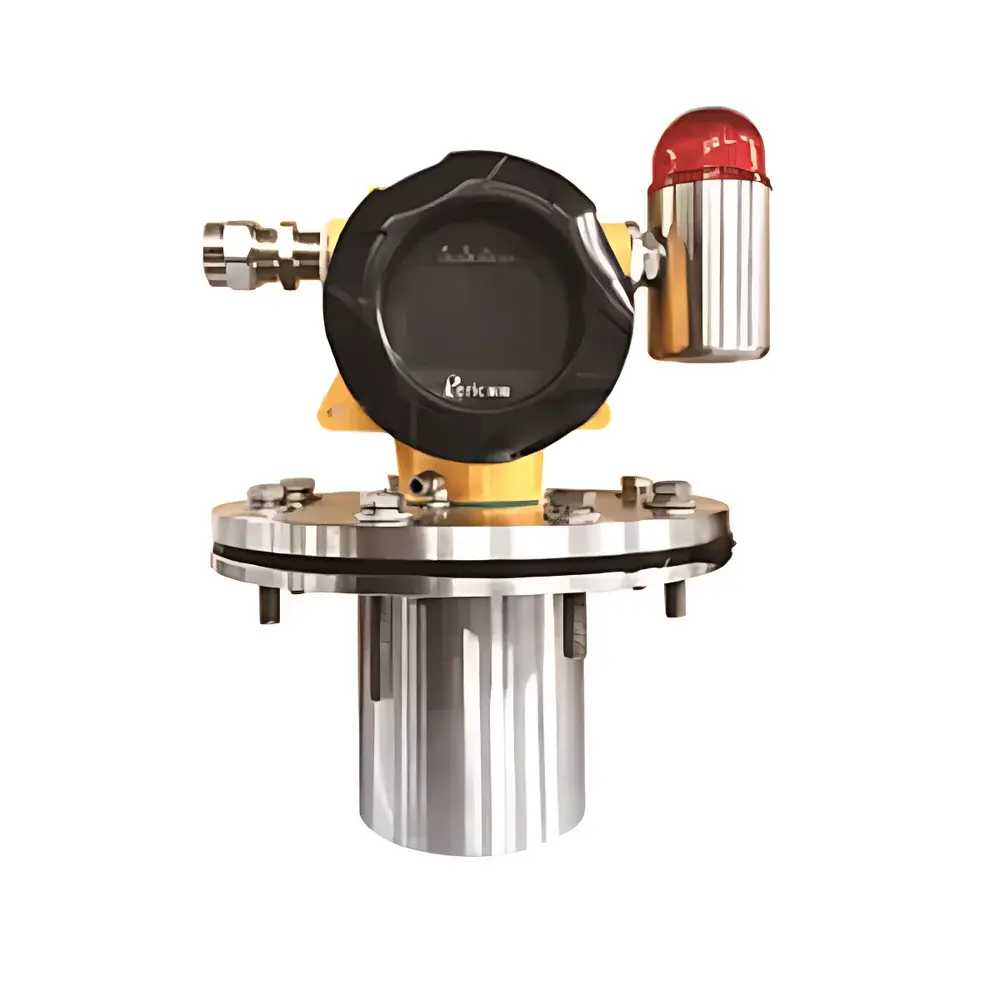
PERIC GX-C100X Point Gas Detector
| Brand | PERIC |
|---|---|
| Origin | Hebei, China |
| Manufacturer Type | Manufacturer |
| Country of Origin | Domestic (China) |
| Model | GX-C100X |
| Pricing | Upon Request |
Overview
The PERIC GX-C100X Point Gas Detector is an intrinsically safe and explosion-proof fixed gas monitoring instrument engineered for continuous, real-time detection of combustible gases (e.g., methane, propane, hydrogen) and toxic gases (e.g., CO, H₂S, NH₃, Cl₂, SO₂) in hazardous industrial environments. It integrates multiple sensing technologies—including Tunable Diode Laser Absorption Spectroscopy (TDLAS), electrochemical cells, and catalytic bead (pellistor) sensors—enabling application-specific configuration for optimal selectivity, stability, and response time. Designed for deployment in Class I, Division 1/Zone 1 hazardous locations, the detector complies with international explosion protection standards including Ex db IIC T6 Gb and Ex db ia IIC T6 Gb per GB/T 3836.1–2021 and GB/T 3836.4–2021. Its operational principle relies on quantitative optical absorption (for TDLAS variants) or controlled electrochemical oxidation/catalytic combustion (for electrochemical and pellistor variants), delivering high reproducibility under variable ambient conditions such as humidity, pressure, and temperature fluctuations.
Key Features
- Explosion-proof enclosure certified to Ex db IIC T6 Gb and Ex db ia IIC T6 Gb, suitable for Zone 1 and Div 1 classified areas
- AMOLED high-contrast display with backlight-independent visibility—optimized for low-light and marine bridge environments
- Dual-stage relay outputs (NO/NC) for independent alarm staging (e.g., pre-alarm and trip-level activation)
- Flexible signal interface: 4–20 mA analog output (HART-compatible) and RS485 Modbus RTU protocol support
- Wireless remote configuration via IR or optional Bluetooth module—enabling zero-entry calibration, span adjustment, and parameter setting without opening the housing
- Triple-status LED indicators (Normal / Alarm / Fault) with audible alarm (85 dB @ 1 m)
- Robust mechanical architecture: IP66-rated aluminum alloy housing with marine-grade corrosion protection
- Integrated diagnostics including sensor drift compensation, self-test routines, and power-fail event logging
Sample Compatibility & Compliance
The GX-C100X supports detection of over 30 target gases across three sensor platforms—catalytic combustion (for hydrocarbons), electrochemical (for toxic species), and TDLAS (for selective, interference-free measurement of CH₄, CO₂, NH₃, HF). It meets statutory requirements for maritime safety systems under SOLAS Chapter II-2 Regulation 4, China Classification Society (CCS) Steel Hull Ship Rules (2018 & Amendments), and IACS URE10 (Rev.8). Regulatory conformance includes IEC 60079-29-1 (flammable gas detectors), IEC 62990-1:2019 (toxic gas detectors), DNV-CG-0339 (2021), and national standards GB 12358–2006, GB 15322.1–2019, and GB 16808–2008. All units undergo type examination per JJF 1368–2012 (combustible gas) and JJF 1369–2019 (H₂S), with full traceability to NIM (National Institute of Metrology, China) reference standards.
Software & Data Management
Configuration and diagnostics are managed via PERIC’s PC-based GCMSuite™ software, supporting firmware updates, sensor calibration history archiving, and alarm log export in CSV/Excel format. The device implements audit-trail functionality compliant with GLP/GMP principles—recording all parameter changes, calibration events, and fault resets with timestamp, operator ID (optional), and action type. When integrated into SCADA or DCS platforms via Modbus RTU or 4–20 mA loops, the GX-C100X enables centralized alarm management, trend analysis, and predictive maintenance scheduling. Optional cloud gateway modules support MQTT-based telemetry for remote fleet monitoring in offshore or distributed plant networks.
Applications
The GX-C100X is deployed in mission-critical gas safety infrastructure across marine vessels (engine rooms, cargo holds, pump rooms), petrochemical refineries (process units, flare stacks, loading docks), LNG terminals, pharmaceutical cleanrooms (solvent vapor monitoring), metallurgical smelters (CO/NOₓ), and municipal gas distribution stations. Its dual-output relays allow seamless integration with fire suppression systems, ventilation interlocks, and emergency shutdown (ESD) logic solvers. In shipboard applications, it satisfies mandatory fixed hydrocarbon gas detection system requirements per IMO MSC.1/Circ.1499 and classification society guidelines for inert gas monitoring and bilge gas surveillance.
FAQ
What gas types can the GX-C100X detect?
It supports configurable sensor modules for combustible gases (CH₄, C₃H₈, H₂), toxic gases (CO, H₂S, NH₃, Cl₂, SO₂, NO₂, O₂ deficiency/enrichment), and specialty gases (HF, CO₂) depending on installed sensor technology.
Is the detector certified for marine use?
Yes—it holds CCS Type Approval and complies with SOLAS II-2/Reg.4, IACS URE10, and DNV-CG-0339 for fixed gas detection systems on seagoing vessels.
Can it be calibrated remotely without opening the enclosure?
Yes—using the included infrared remote control or optional Bluetooth adapter, users can perform zero/span calibration, alarm threshold adjustment, and diagnostic tests without breaching the explosion-proof seal.
Does it support integration with third-party DCS or PLC systems?
Yes—via standard 4–20 mA analog output with HART capability or RS485 Modbus RTU communication, enabling bidirectional data exchange and alarm acknowledgment.
What is the expected service life of the electrochemical and catalytic sensors?
Electrochemical sensors typically operate for 24–36 months; catalytic beads last 3–5 years under normal conditions. Sensor health status is continuously monitored and reported via diagnostic codes.
Related Products







