
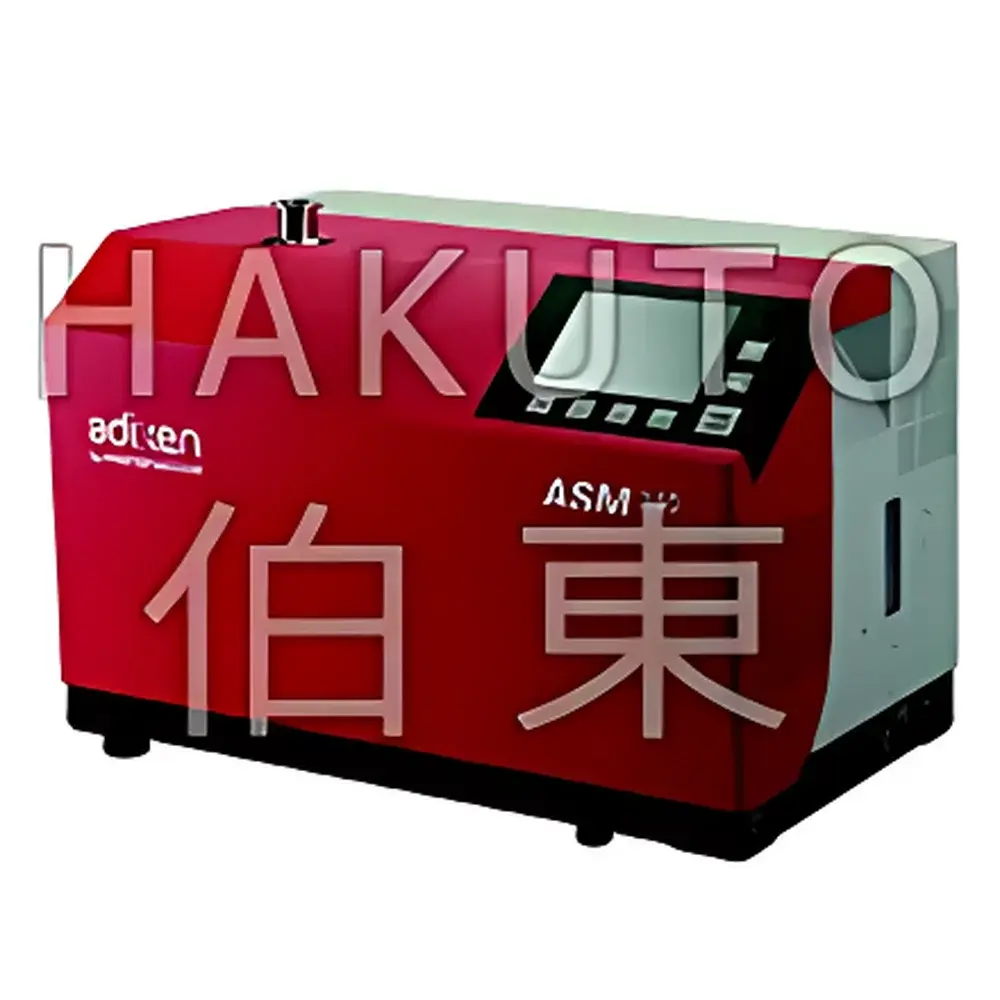
Pfeiffer Vacuum ASM340-W Helium Mass Spectrometer Leak Detector for Prismatic Battery Cover Testing
| Brand | Pfeiffer Vacuum |
|---|---|
| Origin | France |
| Model | ASM340-W |
| Minimum Detectable Leak Rate (Vacuum Mode) | 5×10⁻¹³ Pa·m³/s |
| Detection Gases | ⁴He, ³He, H₂ |
| Inlet Pressure Range (Vacuum Mode) | Up to 25 hPa (operational at 100 hPa for gross leak screening) |
| Helium Pumping Speed | 2.5 L/s |
| Forepump Options | Oil-sealed rotary vane pump (Adixen Pascal 1015i, 15 m³/h) or dry diaphragm pump (ASM340-D variant) |
| Startup Time | ≤3 min |
| Compliance | CE, RoHS, ISO 9001-manufactured |
Overview
The Pfeiffer Vacuum ASM340-W is a high-sensitivity, industrial-grade helium mass spectrometer leak detector engineered specifically for precision leak integrity verification in demanding electrochemical manufacturing environments—particularly for prismatic lithium-ion battery cover plates, module housings, and pack-level enclosures. Operating on the principle of magnetic sector mass spectrometry, the ASM340-W selectively ionizes and separates helium atoms (⁴He⁺) from background gas molecules using a high-resolution mass filter, enabling quantitative detection of helium tracer gas ingress at sub-atomic flow rates. Its robust architecture supports both vacuum-mode (hard-line connection to evacuated test parts) and sniffer-mode (local helium spray + probe aspiration) configurations, delivering traceable, repeatable leak quantification per ASTM E499, ISO 10648-2, and IEC 62660-2 standards for battery cell safety certification.
Key Features
- Ultra-low minimum detectable leak rate of 5×10⁻¹³ Pa·m³/s in vacuum mode—meeting stringent OEM requirements for battery hermeticity validation
- Dual independent filament ion source: Enables continued operation during filament replacement without system shutdown, minimizing production line downtime
- SplitFlow 50 molecular pump with dedicated 2.5 L/s helium pumping speed—optimized for rapid helium transport and signal stability under variable inlet pressures up to 25 hPa (gross leak screening functional at 100 hPa)
- Modular forepump compatibility: Supports oil-sealed Adixen Pascal 1015i (15 m³/h) for high-throughput production lines or dry diaphragm pumps (ASM340-D configuration) for oil-free cleanroom environments
- Integrated SD card logging and real-time data streaming via Ethernet/USB—enabling automated pass/fail reporting aligned with Industry 4.0 MES integration protocols
- Shock- and overpressure-resistant design: Withstands accidental atmospheric break-in and mechanical vibration common in factory-floor deployment, preserving calibration integrity over multi-year service life
- Compact footprint (56 kg, 470 × 520 × 320 mm) optimized for inline integration into automated battery sealing stations and R&D test benches
Sample Compatibility & Compliance
The ASM340-W is validated for direct testing of aluminum and stainless-steel battery cover plates, laser-welded housing seams, pressure-relief valve assemblies, and thermal interface material (TIM) bonded interfaces. It accommodates part geometries ranging from 50 mm × 50 mm up to full 1200 mm × 800 mm prismatic modules via customizable vacuum chambers or open-sniffer fixtures. All measurement outputs comply with ISO/IEC 17025 traceability frameworks when used with certified reference leaks (e.g., VSL or NIST-traceable standard leak devices). The instrument’s firmware supports configurable alarm thresholds, multi-point sequential testing, and automatic report generation compliant with FDA 21 CFR Part 11 electronic record requirements when paired with Pfeiffer’s optional LeakTest Pro software suite.
Software & Data Management
LeakTest Pro (v4.2+) provides full instrument control, real-time spectral visualization, and statistical process monitoring (SPC) dashboards. Raw mass spectra, time-stamped leak rate curves, and environmental sensor logs (temperature, pressure, humidity) are stored in vendor-neutral CSV and XML formats. Audit trail functionality records all user actions—including parameter changes, calibration events, and result overrides—with immutable timestamps and operator ID tagging. Data export supports direct ingestion into LabVantage, Thermo Fisher SampleManager, or custom LIMS platforms via OPC UA or RESTful API. Optional cloud synchronization enables centralized fleet monitoring across global manufacturing sites.
Applications
- Final hermeticity verification of welded aluminum battery cover plates prior to electrolyte filling
- In-process leak screening of laser seam welds on 21700/4680 cylindrical and prismatic cell housings
- Validation of gasket compression integrity in battery module enclosures and junction box lids
- R&D characterization of sealant adhesion performance under thermal cycling (−40°C to +85°C)
- Failure analysis of field-returned battery packs via localized helium probing of suspected breach zones
- Qualification of new joining processes (e.g., ultrasonic metal welding, cold spray coating) against baseline leak rate specifications
FAQ
What is the recommended calibration interval for the ASM340-W in battery production environments?
Pfeiffer recommends quarterly calibration using certified standard leaks (1×10⁻⁹ to 1×10⁻¹² Pa·m³/s) and annual full-system verification per ISO 17025-accredited laboratories.
Can the ASM340-W be integrated into a PLC-controlled automated test cell?
Yes—the instrument features native Modbus TCP and EtherNet/IP communication protocols, enabling seamless handshake with Siemens S7, Rockwell Logix, or Beckhoff controllers for start/stop, pass/fail signaling, and error code retrieval.
Is hydrogen (H₂) detection supported for alternative tracer gas applications?
Yes—firmware v3.8+ enables simultaneous ⁴He and H₂ detection at identical sensitivity, useful for environments where helium supply logistics are constrained or where hydrogen permeation studies are required.
Does the dual-filament design require recalibration after filament replacement?
No—filament swap is a mechanical procedure only; the mass spectrometer’s gain and resolution remain unaffected due to stable magnetic field geometry and fixed electron multiplier alignment.
How does the ASM340-W handle outgassing interference from battery electrolyte residues?
The system employs dynamic background subtraction algorithms and adjustable mass filtering windows (±0.1 amu) to suppress fragment ions from EC/DMC decomposition products, ensuring helium-specific signal fidelity even on non-baked components.
Related Products




