
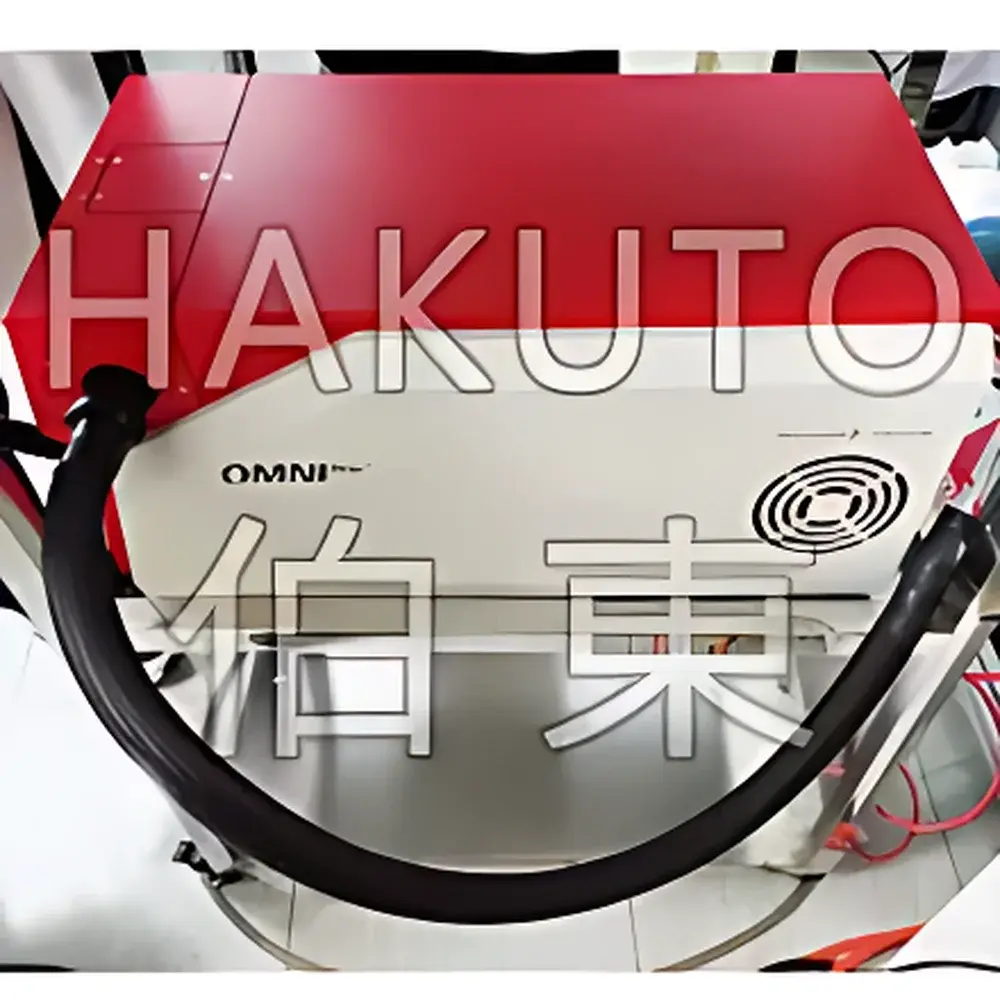
Pfeiffer Vacuum Omnistar GSD350 Online Mass Spectrometer for Thermal Catalytic Gas Analysis
| Brand | Pfeiffer Vacuum |
|---|---|
| Origin | Germany |
| Model | GSD350 |
| Detection Principle | Quadrupole Mass Spectrometry (QMS) |
| Mass Range | 1–300 u (standard configuration) |
| Detection Limit | < 10⁻¹⁴ mbar (partial pressure, typical) |
| Response Time | < 1 s (for 10–90% step change, with optimized inlet) |
| Operating Pressure Range | 10⁻⁵ – 10⁻³ mbar (ion source) |
| Interface Temperature | Up to 200 °C (heated capillary inlet) |
| Data Acquisition Rate | Up to 100 spectra/s (full scan) |
| Compliance | CE, RoHS, ISO 9001 certified manufacturing |
Overview
The Pfeiffer Vacuum Omnistar GSD350 is a high-stability, benchtop quadrupole mass spectrometer engineered for real-time, quantitative gas-phase analysis in dynamic catalytic reaction environments. Designed specifically for process-integrated applications, it enables continuous monitoring of gaseous effluents from thermal catalytic reactors—particularly those operating under mild hydrogenation conditions (≤ 523 K), where CO₂ conversion yields CH₄, NO, CO₂, H₂O, and other light molecular species. Its robust ion optics, temperature-controlled heated capillary inlet (up to 200 °C), and differential pumping architecture ensure stable signal acquisition even in the presence of variable moisture content, trace condensables, or moderate background pressure fluctuations typical of catalytic tail-gas streams. Unlike offline GC-MS systems, the GSD350 delivers sub-second temporal resolution without sample accumulation or cryo-trapping, making it suitable for kinetic profiling, catalyst deactivation studies, and closed-loop process control in research and pilot-scale reactors.
Key Features
- Quadrupole mass analyzer with 1–300 u mass range and unit-mass resolution (FWHM ≤ 0.7 u), calibrated for permanent gases and light organics (e.g., CH₄, CO, CO₂, NO, N₂O, H₂, O₂, Ar, He)
- Heated capillary inlet system (0–200 °C) minimizes condensation and adsorption losses for polar or reactive species such as NO and H₂O
- Dual-stage differential pumping with turbomolecular and backing pumps maintains optimal ion source pressure (10⁻⁵–10⁻³ mbar) independent of process line pressure (up to atmospheric via leak valve or pressure-reducing interface)
- Integrated Faraday cup and secondary electron multiplier (SEM) detectors support wide dynamic range (10⁸) for simultaneous trace and major component quantification
- Real-time spectral acquisition at up to 100 full-scan spectra per second, with configurable dwell times per mass channel for optimized duty cycle
- Rack-mountable 19″ chassis with Ethernet (TCP/IP) and RS-232 interfaces; compatible with LabVIEW, MATLAB, and OPC UA-based SCADA systems
Sample Compatibility & Compliance
The GSD350 is validated for direct coupling to fixed-bed, fluidized-bed, and microreactor effluent lines via heated stainless-steel transfer lines and precision leak valves. It accommodates gas matrices containing up to 50% H₂, ≤ 10% H₂O vapor (with inlet heating enabled), and ppm-level reactive nitrogen oxides without signal drift or detector poisoning. All wetted parts are electropolished stainless steel (316L) or Inconel, ensuring compatibility with reducing atmospheres and low-ppb sulfur tolerance. The instrument meets CE marking requirements per EU Directive 2014/30/EU (EMC) and 2014/35/EU (LVD), conforms to ISO 9001:2015 quality management standards in manufacturing, and supports audit-ready data integrity when operated with compliant software configurations (e.g., 21 CFR Part 11–enabled third-party DAQ platforms).
Software & Data Management
Omnistar Control Software (v6.x) provides intuitive instrument setup, mass calibration (using built-in reference gases or user-defined standards), and real-time peak integration. Quantitative analysis relies on relative sensitivity factors (RSFs) determined during initial calibration with certified standard gas mixtures (e.g., NIST-traceable CH₄/N₂/CO₂/NO in He balance). The software exports time-resolved concentration data in CSV and HDF5 formats, with metadata tagging for GLP/GMP-aligned reporting. For regulated environments, integration with validated third-party data acquisition systems (e.g., NI DIAdem, Siemens Desigo CC) enables electronic signatures, audit trails, and secure user role management—fully compliant with FDA 21 CFR Part 11 and EU Annex 11 requirements.
Applications
- In situ monitoring of CO₂ hydrogenation pathways over Cu/ZnO/Al₂O₃ or Ni-based catalysts, tracking CH₄ formation kinetics and competing NO/CO side-product evolution
- Dynamic assessment of catalyst stability during long-duration thermal cycling (e.g., 100+ h TAP experiments)
- Real-time stoichiometric balancing of multi-component reaction streams in Fischer–Tropsch or methanation pilot units
- Leak detection and residual gas analysis (RGA) in ultra-high-purity synthesis gas lines feeding catalytic reactors
- Method development for ASTM D7260-22 (standard practice for quantitative QMS analysis of permanent gases)
FAQ
What sample introduction options are supported for catalytic reactor coupling?
Heated stainless-steel capillaries (1/8″ OD, 0.020″ ID), temperature-controlled up to 200 °C, with optional pressure-reducing leak valves (10⁻³–10⁻⁶ mbar conductance) or membrane inlet modules for high-humidity streams.
Is helium required as carrier gas for quantification?
Helium is recommended as the balance gas for calibration standards due to its inertness and well-characterized ionization cross-section; however, quantification in H₂- or N₂-rich matrices is achievable using matrix-matched RSFs.
Can the GSD350 detect isotopic species such as ¹³CH₄ or ¹⁵NO?
Yes—the unit-mass resolution and mass accuracy (±0.1 u) enable baseline separation of isotopologues within the 1–300 u range, supporting mechanistic isotope tracing studies.
What maintenance intervals are recommended for continuous operation?
Filament replacement every 6–12 months (depending on total ion dose), quarterly cleaning of the quadrupole rods and detector assembly, and annual recalibration using certified gas standards per ISO/IEC 17025 guidelines.
Related Products







