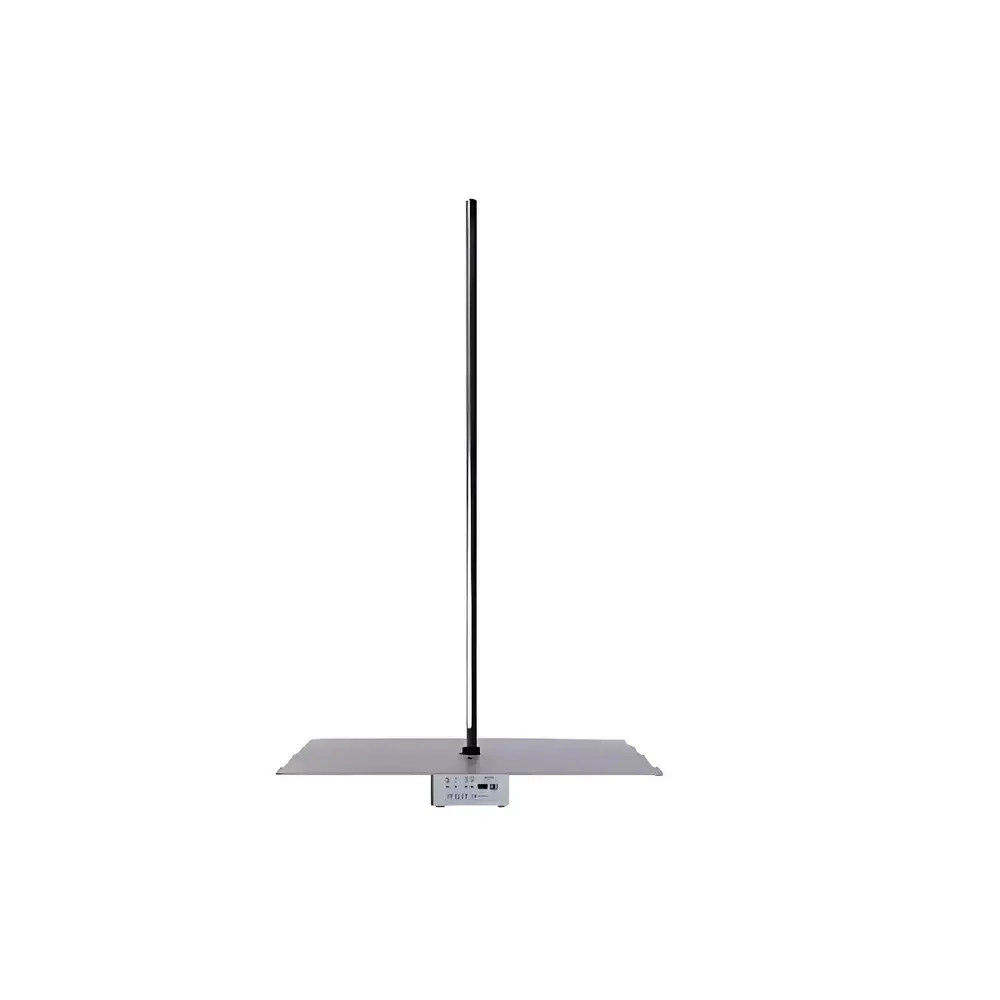
PMM FR4003 EMI Fiber-Optic Integrated Receiver System
| Brand | PMM |
|---|---|
| Origin | Italy |
| Model | FR4003 |
| Frequency Range | 9 kHz – 30 MHz |
| Frequency Resolution | 1 Hz |
| Frequency Accuracy | ±1 ppm |
| Internal Attenuation | 0–30 dB (10 dB steps) |
| Preamp Gain | 20 dB |
| Field Strength Limit | 500 V/m (CW, ATT ≥ 20 dB) |
| Noise Floor | 13 dBμV/m (peak), 2 dBμV/m (average) |
| Spurious Response Suppression | < −10 dBμV (ATT = 0 dB, avg, dwell time 10 ms, auto RBW, 50 Ω port) |
| Measurement Accuracy | ±0.8 dB |
| Compliance | CISPR 16-1-1, CISPR 12/16/25, MIL-STD-461, DO-160 |
Overview
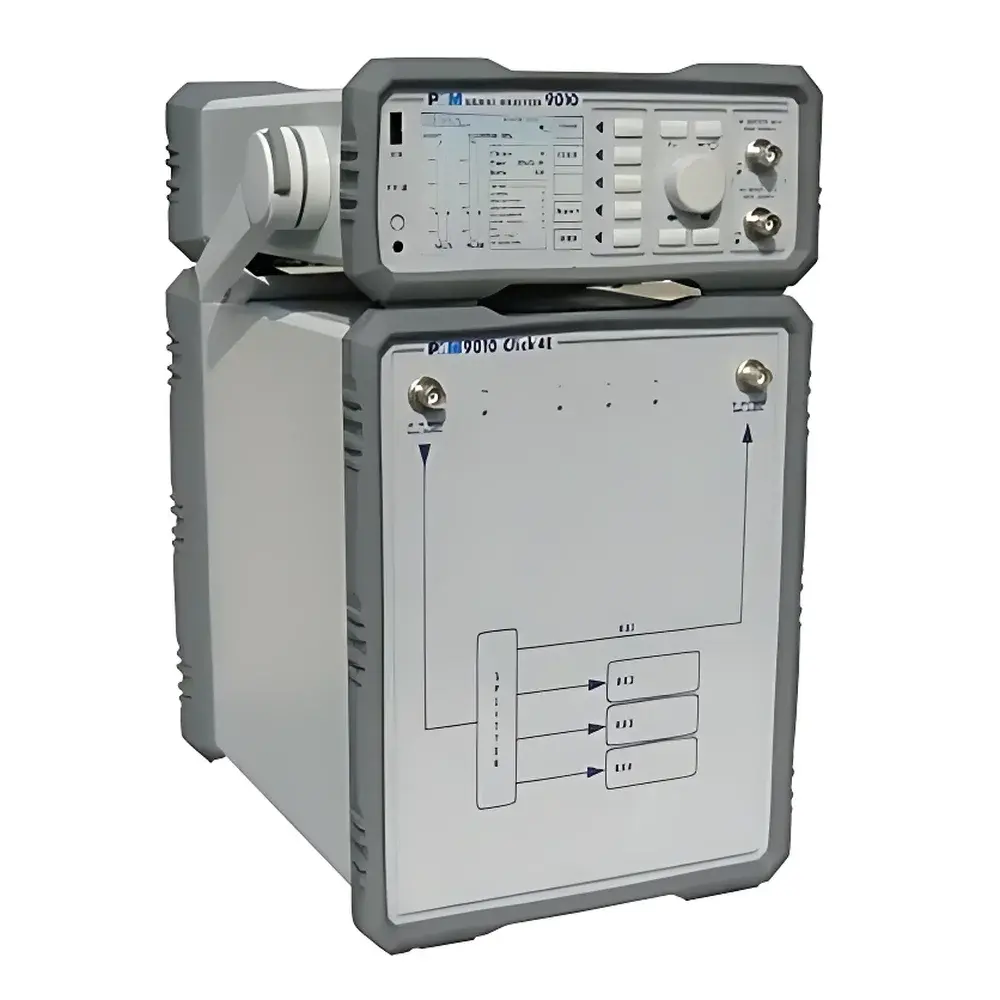
The PMM FR4003 EMI Fiber-Optic Integrated Receiver System is a fully self-contained, portable electromagnetic interference (EMI) measurement platform engineered for precision compliance testing in accordance with international EMC standards. It integrates an active monopole antenna, a calibrated EMI receiver, and fiber-optic data transmission into a single ruggedized enclosure—eliminating signal degradation associated with conventional coaxial cabling over long distances. The system operates on the fundamental principle of quasi-peak and average detection per CISPR 16-1-1, utilizing a swept-tuned superheterodyne architecture augmented by real-time FFT analysis for rapid spectral characterization. Designed specifically for pre-compliance and full-compliance radiated emissions testing in the 9 kHz to 30 MHz frequency band, the FR4003 enables traceable, repeatable measurements under field conditions where ambient noise, ground plane limitations, or cable coupling effects would otherwise compromise data integrity.
Key Features
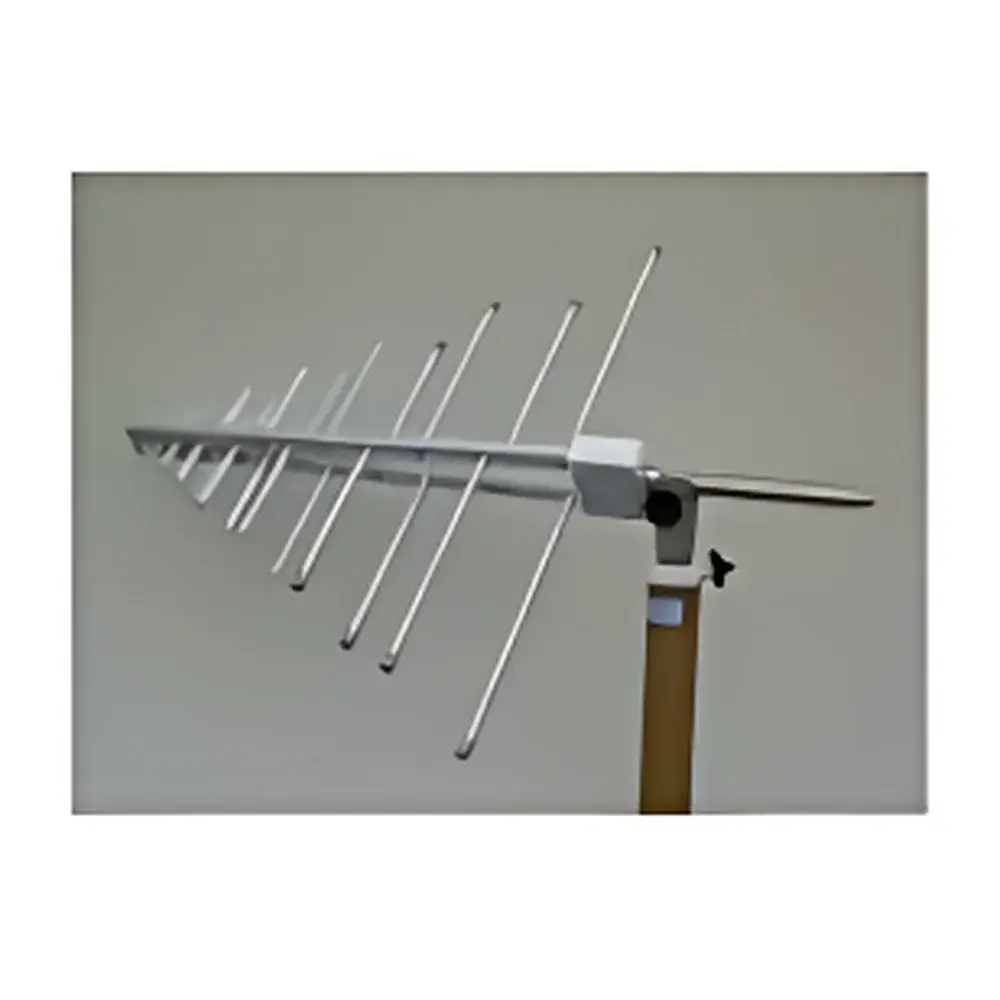
- Integrated active monopole antenna compliant with CISPR 12, CISPR 16-1-4, CISPR 25, MIL-STD-461G (RS103), and DO-160 Section 20 requirements
- Onboard EMI receiver fully certified to CISPR 16-1-1:2023 for amplitude accuracy, bandwidth definition, detector linearity, and pulse response
- Dual-mode operation: high-resolution swept-frequency scanning and real-time FFT-based spectrum analysis with configurable dwell time and resolution bandwidth (RBW)
- Fiber-optic interface supporting galvanic isolation, EMI-immune data transmission up to 2 km, and synchronization with external PMM receivers (e.g., PRM7000 series) for distributed antenna arrays
- Built-in tracking generator and CISPR-standard antenna adapter for end-to-end system calibration and verification of antenna factor uncertainty
- Automatic grounding efficacy assessment via integrated impedance monitoring and capacitance meter (0–100 pF range) for correction of antenna calibration coefficients
- Rechargeable lithium-ion battery pack enabling >4 hours of continuous operation without AC mains—ideal for mobile test sites and vehicle-level emissions surveys
- Diagnostic self-test suite with firmware-upgradable calibration constants and non-volatile memory for audit-trail-capable configuration storage
Sample Compatibility & Compliance
The FR4003 is validated for use with standard 1-m and 3-m horizontal ground planes per ANSI C63.4 and CISPR 16-1-4. Its active antenna design eliminates dependence on counterpoise size, enabling reliable measurements on non-ideal surfaces including asphalt, concrete, or elevated platforms. All measurement modes support CISPR quasi-peak (QP), peak (PK), and average (AV) detectors with standardized IF bandwidths (200 Hz at 9–150 kHz; 9 kHz at 150 kHz–30 MHz). The system meets traceability requirements under ISO/IEC 17025:2017 for accredited laboratories and supports full documentation generation required for FDA 21 CFR Part 11–compliant validation protocols when used with PMM’s PES software.
Software & Data Management
Controlled exclusively via PMM’s PES (Pre-Compliance Evaluation Software) v5.x, the FR4003 supports automated test sequencing, limit line overlay (CISPR, MIL-STD, automotive OEM-specific), margin analysis, and report generation in PDF/XML formats. The software implements full audit trail functionality—including user login, parameter change logging, and electronic signature capture—to satisfy GLP and GMP regulatory expectations. Raw I/Q data export is supported for post-processing in MATLAB or Python environments. Firmware updates are delivered via signed packages with SHA-256 verification to ensure system integrity.
Applications
- Radiated emissions pre-scan and troubleshooting for automotive ECUs, infotainment systems, and ADAS sensors per CISPR 25 Class 3/5 and ISO 11452-2
- Military/aerospace platform certification against MIL-STD-461G RS103 (radiated susceptibility) and DO-160G Section 20 (lightning-induced transient immunity)
- Industrial control system (ICS) and power electronics EMC verification in unshielded factory environments
- Field diagnostics of unintentional radiator sources (e.g., switching power supplies, motor drives, LED drivers) using near-field probe mapping combined with FR4003’s fiber-linked remote antenna mode
- Education and training labs requiring a standards-compliant, transportable EMI measurement reference platform
FAQ
Does the FR4003 require external calibration before first use?
No—the system ships with NIST-traceable factory calibration certificates for both antenna factor and receiver amplitude response. Full system verification can be performed in situ using the built-in tracking generator and antenna adapter.
Can the FR4003 operate as a standalone instrument without a PC?
Yes—local control is available via the front-panel OLED display and rotary encoder for manual sweep setup, detector selection, and basic pass/fail evaluation against stored limit lines.
Is fiber-optic connection mandatory, or can USB or Ethernet be used?
Fiber-optic is the primary and recommended interface for immunity to ground loops and RF pickup; USB and Ethernet are not supported to preserve measurement integrity.
What maintenance is required for long-term accuracy?
Annual recalibration is recommended per ISO/IEC 17025. Battery health monitoring and firmware updates should be performed quarterly using PES software.
How is measurement uncertainty quantified for compliance reporting?
Total expanded uncertainty (k=2) is ≤ ±1.2 dB across the 9 kHz–30 MHz band, incorporating contributions from antenna factor, receiver linearity, connector repeatability, and environmental temperature drift (±0.02 dB/°C).