ISOTECH Model 935 Precision Thermocouple Thermometer
| Brand | ISOTECH |
|---|---|
| Origin | United Kingdom |
| Model | 935- |
| Thermocouple Types | R, S, N |
| Temperature Range | 0 °C to 1300 °C (R/S), 0 °C to 1200 °C (N) |
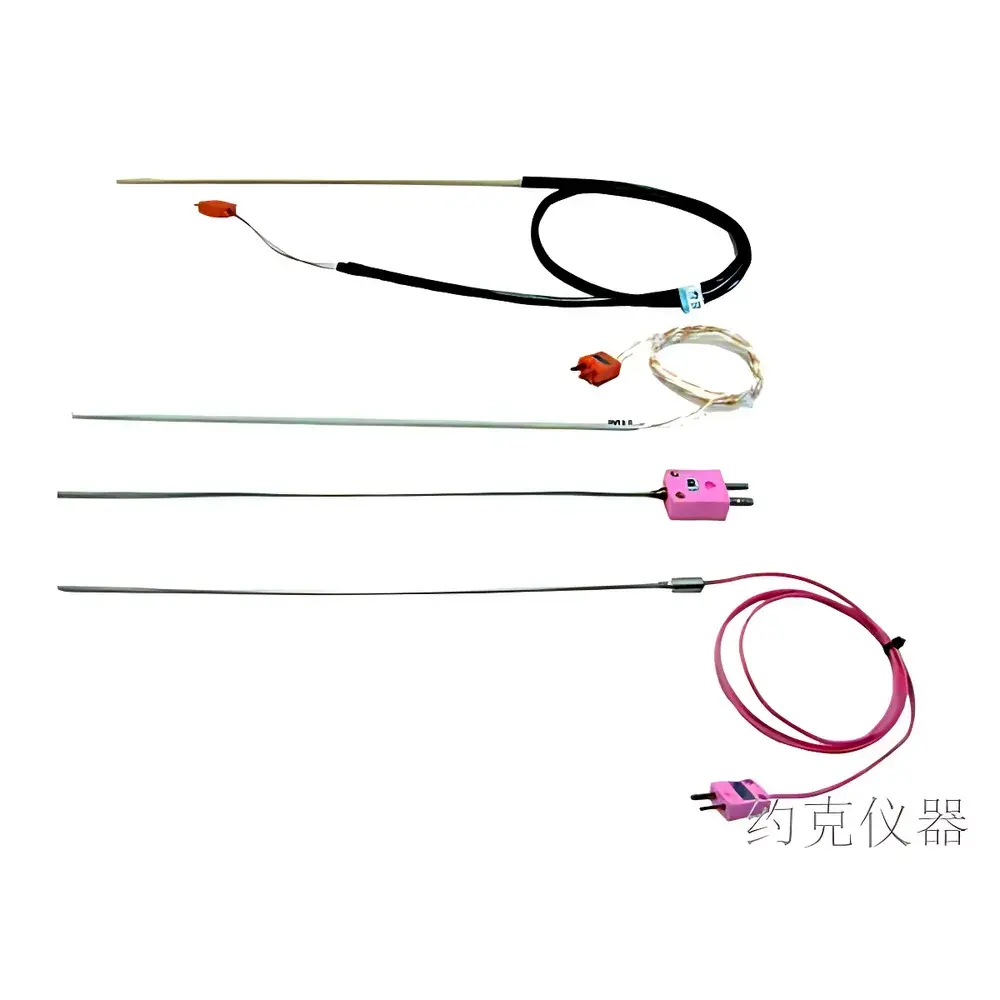
| Probe Diameter | 3 mm or 5 mm |
| Probe Length | 225 mm to 480 mm |
| Application | Reference-grade dry-well calibrator probe |
| Compliance | Designed for ISO/IEC 17025-compliant calibration laboratories |
Overview
The ISOTECH Model 935 is a high-stability, reference-class thermocouple thermometer engineered for use as a precision temperature sensing element in dry-block calibrators and fixed-point calibration systems. Built upon fundamental thermoelectric principles—where temperature differentials generate voltage signals proportional to the Seebeck coefficient of noble-metal (R, S) or base-metal (N) thermocouple alloys—the Model 935 delivers traceable, repeatable measurements across demanding industrial and metrological environments. Its design prioritizes long-term drift resistance, minimal thermal hysteresis, and mechanical robustness under repeated thermal cycling. Unlike general-purpose handheld thermometers, the Model 935 is specified and validated for use as a reference standard in accredited calibration laboratories operating under ISO/IEC 17025 requirements. It is not intended for direct process control but rather for metrological verification, inter-laboratory comparison, and uncertainty budgeting in temperature calibration workflows.
Key Features
- Engineered for metrological stability: Low thermal hysteresis and <0.05 °C long-term drift per year (typical, under controlled storage and usage conditions)
- Multiple thermocouple alloy options: R-type (Pt–13% Rh / Pt) and S-type (Pt–10% Rh / Pt) for high-temperature stability up to 1300 °C; N-type (Ni–Cr–Si / Ni–Si–Mg) for enhanced oxidation resistance and repeatability between 0 °C and 1200 °C
- Probe geometry optimized for dry-well immersion: Standard diameters of 3 mm (for rapid response in narrow wells) and 5 mm (for improved mechanical rigidity and thermal mass consistency)
- Length variants support standardized well depth compliance: Probe lengths range from 225 mm to 480 mm, enabling full immersion in common dry-block calibrators (e.g., Fluke 917X, Hart 91xx, Isotech MTS series) while maintaining axial temperature uniformity
- Hermetically sealed mineral-insulated (MI) cable construction with Inconel 600 sheathing ensures integrity in oxidizing atmospheres and mechanical resilience during insertion/extraction cycles
Sample Compatibility & Compliance
The Model 935 is compatible with all standard thermocouple input modules compliant with IEC 60584-1 (thermocouple EMF tables) and IEC 60751 (RTD/thermocouple interface specifications). It meets mechanical and electrical requirements for use in dry-well calibrators conforming to ASTM E645, ISO 17025 Clause 6.4.3 (equipment suitability), and EURAMET cg-18 (guidelines for temperature calibration). While the instrument itself does not carry CE marking as a standalone measuring device (it functions exclusively as a passive sensor), its materials, construction, and performance documentation support full traceability to NPL (UK) and NIST (USA) primary standards via accredited calibration certificates (e.g., UKAS-certified reports). No intrinsic safety or ATEX certification is provided, as the probe is not rated for hazardous area deployment.
Software & Data Management
The Model 935 operates as a passive transducer and requires connection to a calibrated thermocouple readout or data acquisition system (e.g., Keysight 34970A, Fluke 1550B, or AMETEK TEGAM 9300 series). When integrated into automated calibration platforms—such as those running MET/CAL or COMPASS software—it supports full audit-trail functionality compliant with FDA 21 CFR Part 11 (electronic records and signatures) when paired with appropriate validation packages. Calibration data—including individual probe coefficients, reference junction compensation logs, and uncertainty budgets—is stored externally in accordance with GLP/GMP documentation practices. ISOTECH provides NIST-traceable calibration certificates with expanded uncertainties (k=2) covering the full operational range, including correction tables referenced to ITS-90.
Applications
- Primary reference probe in dry-block temperature calibrators for field and laboratory verification of thermocouples, RTDs, and digital thermometers
- Inter-comparison studies between national metrology institutes and accredited calibration labs
- Temperature uniformity mapping of calibration wells and furnaces (when used with multi-point scanning systems)
- Validation of thermal profiling in heat treatment processes where traceable reference points are required (e.g., aerospace component annealing, medical device sterilization validation)
- Supporting uncertainty analysis in ISO/IEC 17025 scope accreditation for temperature calibration services
FAQ
Is the ISOTECH Model 935 supplied with a calibration certificate?
Yes—each unit is delivered with an optional UKAS-accredited or NIST-traceable calibration certificate, specifying measured EMF values at defined temperature points and associated expanded uncertainties (k=2).
Can the Model 935 be used in vacuum or inert gas environments?
R- and S-type probes with Inconel 600 sheathing are suitable for inert or reducing atmospheres up to 1300 °C; however, prolonged exposure to vacuum below 10⁻² mbar may accelerate Rh diffusion and affect long-term stability.
What is the recommended recalibration interval?
Annual recalibration is recommended for ISO/IEC 17025 compliance; however, interval adjustments may be justified based on usage frequency, thermal cycling severity, and internal quality assurance data.
Does ISOTECH provide repair or re-verification services for the Model 935?
Yes—ISOTECH’s UK service center offers probe inspection, sheath integrity testing, EMF verification, and recalibration against primary fixed points (e.g., Cu, Ag, Au freezing points) upon request.
Are custom probe geometries available?
Limited customization (e.g., non-standard lengths or termination types) is supported under OEM agreement; lead times and minimum order quantities apply.