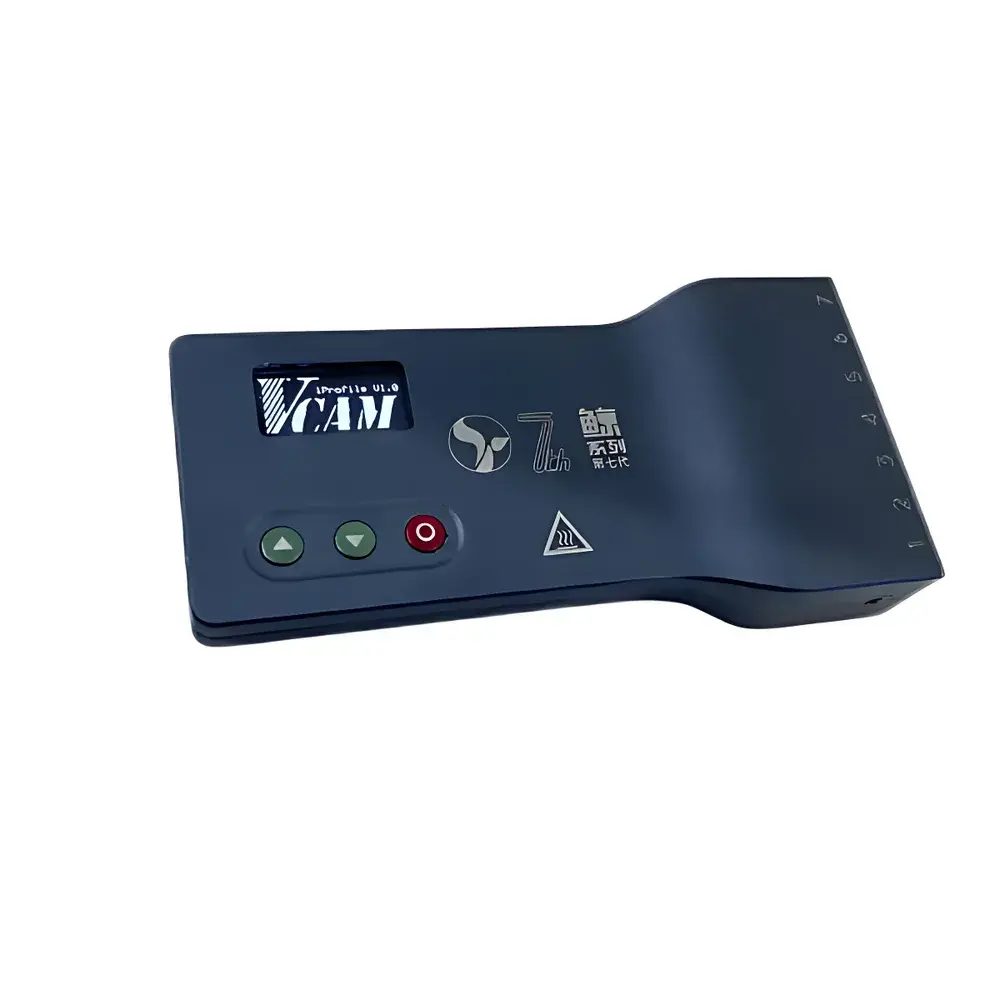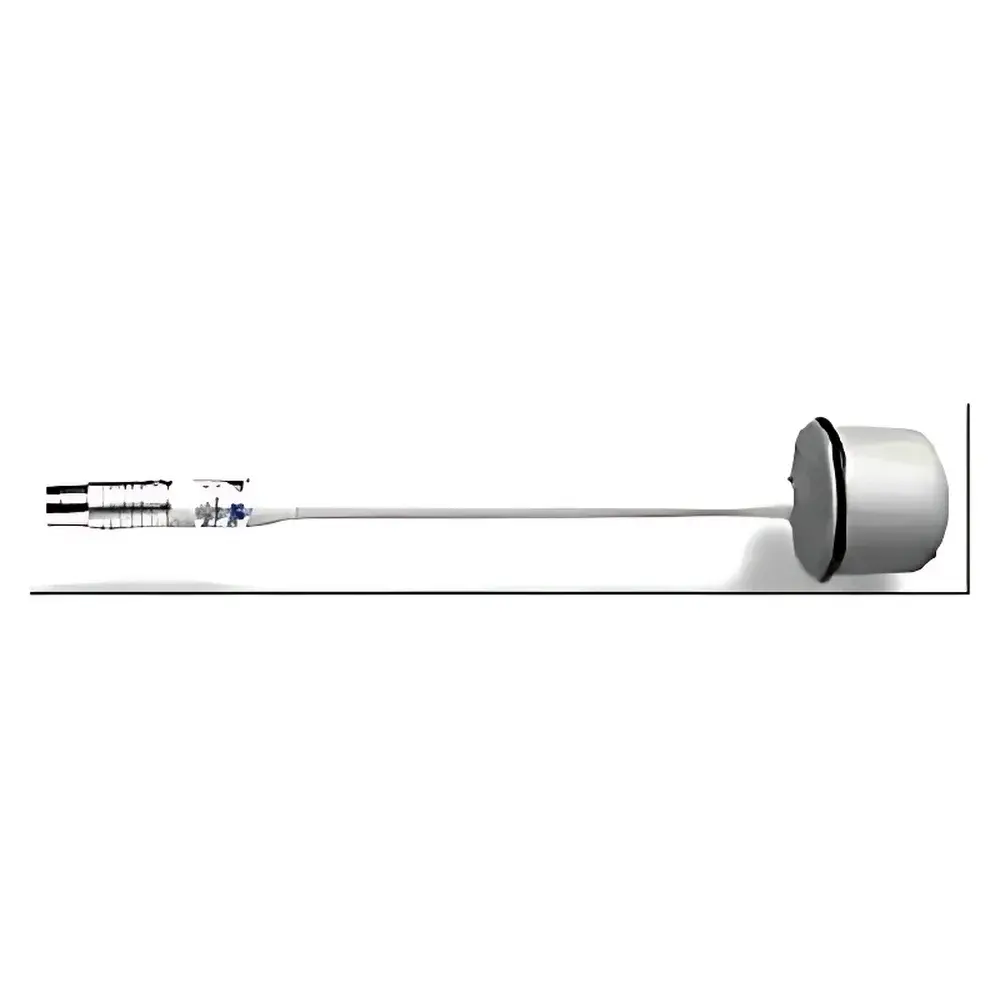
PMM HP-33M Isotropic Electric Field Probe
| Brand | PMM |
|---|---|
| Origin | Italy |
| Model | HP-33M |
| Frequency Range | 700 MHz – 3 GHz |
| Electric Field Range | 0.3 – 300 V/m |
| Overload Protection | > 600 V/m |
| Dynamic Range | > 60 dB |
| Resolution | 0.01 V/m |
| Sensitivity | 0.3 V/m |
| Absolute Accuracy @ 930 MHz (20 V/m) | ±1 dB |
| Frequency Response (900 MHz – 3 GHz) | ±1.5 dB |
| Isotropy @ 930 MHz | ±1 dB |
| H-Field Rejection | > 20 dB |
| Temperature Coefficient | 0.05 dB/°C |
| Calibration | Built-in EEPROM |
| Dimensions | 317 mm × Ø58 mm |
| Weight | 100 g |
Overview
The PMM HP-33M Isotropic Electric Field Probe is a high-fidelity, triaxial E-field sensor engineered for precise, frequency-selective electromagnetic field measurements in RF safety, EMC pre-compliance testing, and environmental exposure assessment. Based on the principle of orthogonal dipole detection with integrated signal conditioning and digital compensation, the HP-33M delivers true isotropic response across its operational bandwidth—enabling accurate vector magnitude reconstruction of incident electric fields regardless of polarization or angle of arrival. Its compact cylindrical form factor (317 mm length, 58 mm diameter) and lightweight design (100 g) facilitate handheld surveys, drone-mounted scanning, and integration into automated measurement rigs. The probe operates without external bias voltage or active cooling, drawing power exclusively from the connected meter or data acquisition system via standard coaxial interface (typically PMM’s EHP-200 or EHP-500 series field analyzers), ensuring robustness in both laboratory and field-deployed configurations.
Key Features
- True three-axis isotropic sensing architecture with orthogonal monopole dipoles, each independently calibrated and temperature-compensated
- Built-in EEPROM calibration memory storing full frequency-dependent correction coefficients, traceable to national metrology institutes (e.g., INRIM)
- High dynamic range (>60 dB) enabling simultaneous detection of weak ambient emissions and strong localized sources without range switching
- Integrated H-field rejection circuitry (>20 dB suppression) minimizing magnetic coupling artifacts in mixed-field environments
- Low temperature drift (0.05 dB/°C) validated over −10 °C to +50 °C, supporting outdoor measurements under variable climatic conditions
- Overload protection up to >600 V/m ensures sensor integrity during transient exposure or proximity to high-power transmitters
- Resolution of 0.01 V/m supports compliance verification against stringent exposure limits (e.g., ICNIRP 2020, IEEE C95.1-2019, EU Council Recommendation 1999/519/EC)
Sample Compatibility & Compliance
The HP-33M is designed for direct measurement of radiated electric fields in free-space, semi-anechoic chambers, and real-world urban or industrial settings. It complies with international standards governing RF field instrumentation, including IEC 62232 (determination of RF exposure from wireless communication base stations), EN 50492 (measurement methods for human exposure to EM fields), and ANSI/IEEE Std 1308-2013 (calibration procedures for E-field probes). Its isotropy performance (±1 dB at 930 MHz) and amplitude accuracy (±1 dB at reference conditions) meet the Class 1 requirements defined in IEC 61786-2:2014 for broadband field probes used in occupational and public exposure assessment. The probe requires no user recalibration between uses; traceable calibration certificates are supplied with each unit and remain valid for 12 months under normal operating conditions.
Software & Data Management
When paired with PMM’s EHP-200 or EHP-500 field analyzers, the HP-33M enables real-time spectral analysis, time-domain logging, and spatial mapping via PMM’s proprietary EHP-View software suite. Data export supports CSV, XML, and S1P formats for post-processing in MATLAB, Python (NumPy/SciPy), or industry-standard EM simulation tools (CST Studio Suite, HFSS). All measurement sessions include embedded metadata: timestamp, GPS coordinates (when enabled), instrument serial number, calibration expiry date, and full audit trail per FDA 21 CFR Part 11 and ISO/IEC 17025 requirements. Firmware updates are delivered via secure USB interface and preserve calibration integrity through cryptographic signature verification.
Applications
- RF safety audits around 4G/LTE, 5G NR (n78, n79), Wi-Fi 6E, and private LTE/5G campus networks
- EMC pre-compliance screening of medical devices, IoT gateways, and automotive telematics modules
- Site surveys for small-cell deployment planning and interference analysis in dense urban RF environments
- Verification of shielding effectiveness in anechoic chambers and shielded rooms
- Academic research in bioelectromagnetics, dosimetry modeling, and antenna near-field characterization
- Regulatory reporting for national communications authorities (e.g., FCC, Ofcom, BNetzA, ANATEL)
FAQ
Is the HP-33M suitable for measuring fields near antennas operating below 700 MHz?
No—the probe’s lower cutoff frequency is 700 MHz; measurements below this threshold are not supported due to reduced sensitivity and uncharacterized isotropy.
Does the probe require periodic recalibration by the end user?
No—recalibration must be performed only by accredited calibration laboratories; the built-in EEPROM retains factory calibration data for the full service interval.
Can the HP-33M be used with third-party analyzers?
Yes, provided the host instrument supplies compatible DC bias (typically 12–24 V) and supports analog output scaling per PMM’s documented transfer function (mV/V/m); full functionality (e.g., auto-recall of calibration) requires native PMM protocol support.
What is the recommended minimum distance from metallic objects during measurement?
Maintain ≥1.5× probe length (≥475 mm) from conductive surfaces to avoid perturbation of the incident field distribution and ensure measurement validity.
How is isotropy verified during calibration?
Using a fully automated spherical coordinate robotic system per IEC 61000-4-3 Annex D, with angular sampling at ≤15° increments across all azimuth/elevation planes at multiple frequencies.