
Polymer Char TGIC-200 Temperature Gradient Interaction Chromatography System for Block Polyolefin Analysis
| Brand | Polymer Char |
|---|---|
| Origin | Spain |
| Manufacturer Type | Authorized Distributor |
| Origin Category | Imported |
| Model | TGIC-200 for Block Polyolefin Characterization |
| Pricing | Available Upon Request |
Overview
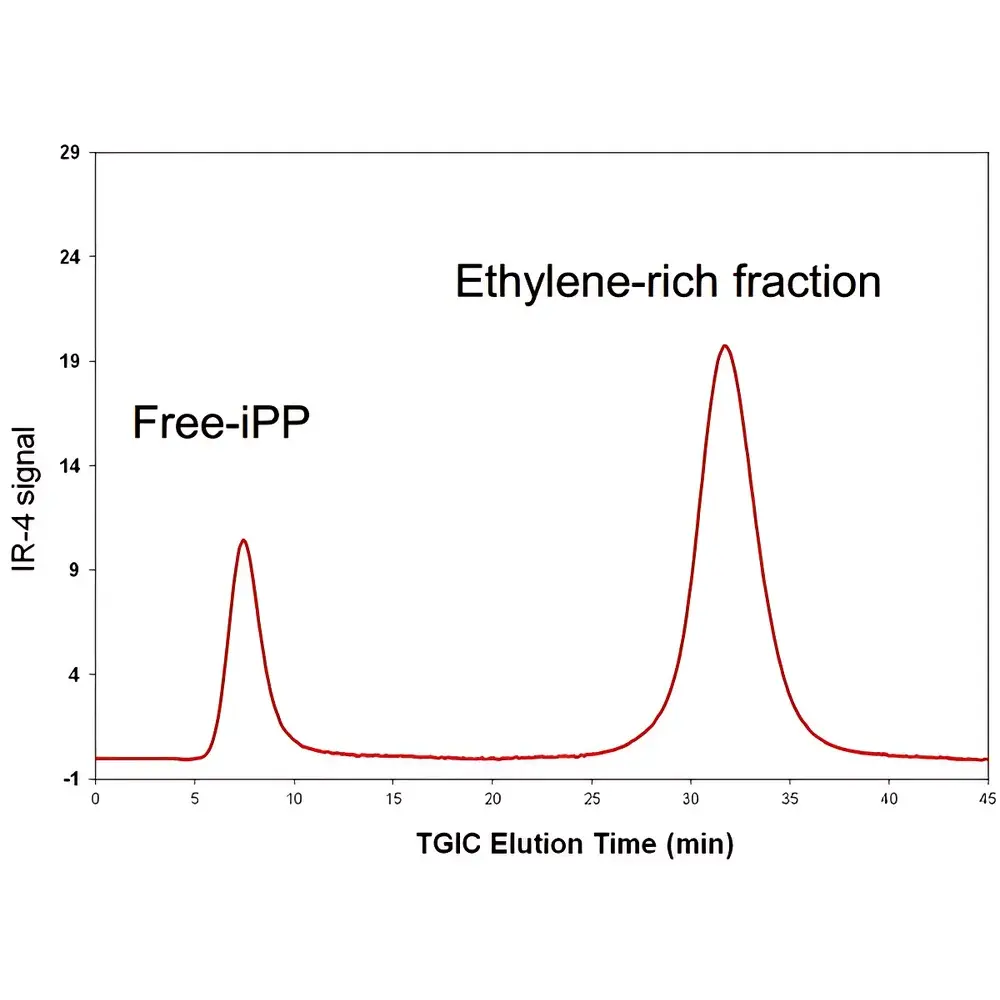
The Polymer Char TGIC-200 is a dedicated temperature gradient interaction chromatography (TGIC) system engineered for the high-resolution separation and quantitative characterization of block polyolefins—particularly ethylene-propylene copolymers where conventional crystallization-based techniques fail. Unlike crystallization analysis (e.g., CRYSTAF or TREF), which separates polymers solely by differences in crystallizability, TGIC exploits orthogonal separation mechanisms: differential adsorption/desorption interactions between polyolefin chains and a thermally stable graphite-based stationary phase, coupled with precise, programmable temperature gradients (typically 30–150 °C). This enables resolution of structural heterogeneity arising from block length, block sequence distribution, and ethylene content—even in materials exhibiting minimal crystallinity variation (e.g., short-ethylene-block EPR or EPDM elastomers). The system operates under inert atmosphere (N₂ or Ar), with solvent compatibility limited to chlorinated hydrocarbons (e.g., 1,2,4-trichlorobenzene, TCB) at elevated temperatures, ensuring polymer solubility and column stability.
Key Features
- Graphite-packed analytical columns (e.g., TGIC-C1, TGIC-C2) with controlled surface chemistry and thermal resilience up to 160 °C
- High-precision oven with ±0.1 °C temperature uniformity and ramp rates adjustable from 0.1 to 5 °C/min
- Integrated high-temperature HPLC pump capable of stable flow delivery (0.1–2.0 mL/min) in TCB at 140 °C
- Refractive index (RI) detector optimized for high-temperature operation with low thermal drift and <0.5 µRIU noise
- Modular architecture supporting optional coupling to high-temperature GPC/SEC detectors (e.g., light scattering, viscometry) for multi-detector analysis
- Fully automated calibration using narrow-distribution polyethylene and polypropylene standards traceable to NIST SRMs
Sample Compatibility & Compliance
The TGIC-200 accommodates solution samples of polyolefins dissolved in TCB (concentration range: 0.5–2.0 mg/mL), including ethylene-propylene diblock/triblock copolymers, EPDM, plastomers, and functionalized olefin block copolymers. Sample injection volumes are typically 100–500 µL. The system complies with ISO 16014-4 (polyolefin characterization), ASTM D6474 (TREF/TGIC methodology), and supports GLP/GMP data integrity requirements through audit-trail-enabled software (see Software section). All wetted parts are chemically resistant to hot TCB; column hardware is constructed from Hastelloy C-276 to prevent corrosion and metal leaching.
Software & Data Management
ChromCal™ v5.2 software provides full instrument control, method development, peak deconvolution, and quantitative block distribution analysis (e.g., blockiness index, cumulative ethylene content vs. elution temperature). Raw chromatograms are stored in vendor-neutral .cdf format. Data processing includes baseline correction algorithms tailored for broad, asymmetric TGIC peaks and integration routines validated per USP guidelines. The software supports 21 CFR Part 11 compliance via electronic signatures, role-based access control, and immutable audit trails—including all parameter changes, calibration events, and report generation timestamps. Export options include CSV, PDF, and XML for LIMS integration.
Applications
- Distinguishing diblock (PE-b-PP) from triblock (PE-b-PP-b-PE) architectures in catalytic olefin block copolymer synthesis
- Quantifying ethylene block length distribution in metallocene-catalyzed polyolefins used in thermoplastic elastomers
- Monitoring batch-to-batch consistency of commercial EPDM grades for automotive sealing applications
- Correlating TGIC elution profiles with mechanical properties (e.g., tensile set, hardness) in vulcanized compounds
- Supporting patent documentation and regulatory submissions requiring microstructural evidence of block formation
FAQ
What distinguishes TGIC from TREF or CRYSTAF?
TGIC separates based on adsorption thermodynamics on graphite—not crystallinity—making it uniquely sensitive to backbone linearity and block continuity, even when crystallinity differences are negligible.
Can TGIC resolve ethylene-propylene random vs. block copolymers?
Yes: random copolymers elute at lower temperatures due to weaker graphite affinity; blocky structures show delayed, broader elution windows reflecting ethylene block length heterogeneity.
Is column regeneration required between runs?
No—graphite columns are highly stable; routine cleaning involves 30-min TCB flushes at 140 °C. Column lifetime exceeds 500 injections under standard operating conditions.
Does the system support method transfer from research to QC labs?
Yes: ChromCal™ supports IQ/OQ/PQ protocols and method validation templates aligned with ICH Q2(R2) and ASTM D7280.
Are reference standards available for TGIC calibration?
Polymer Char supplies certified block polyolefin reference materials (e.g., BR-100 series) with known block content and distribution, traceable to ISO/IEC 17025-accredited testing.
Related Products





