
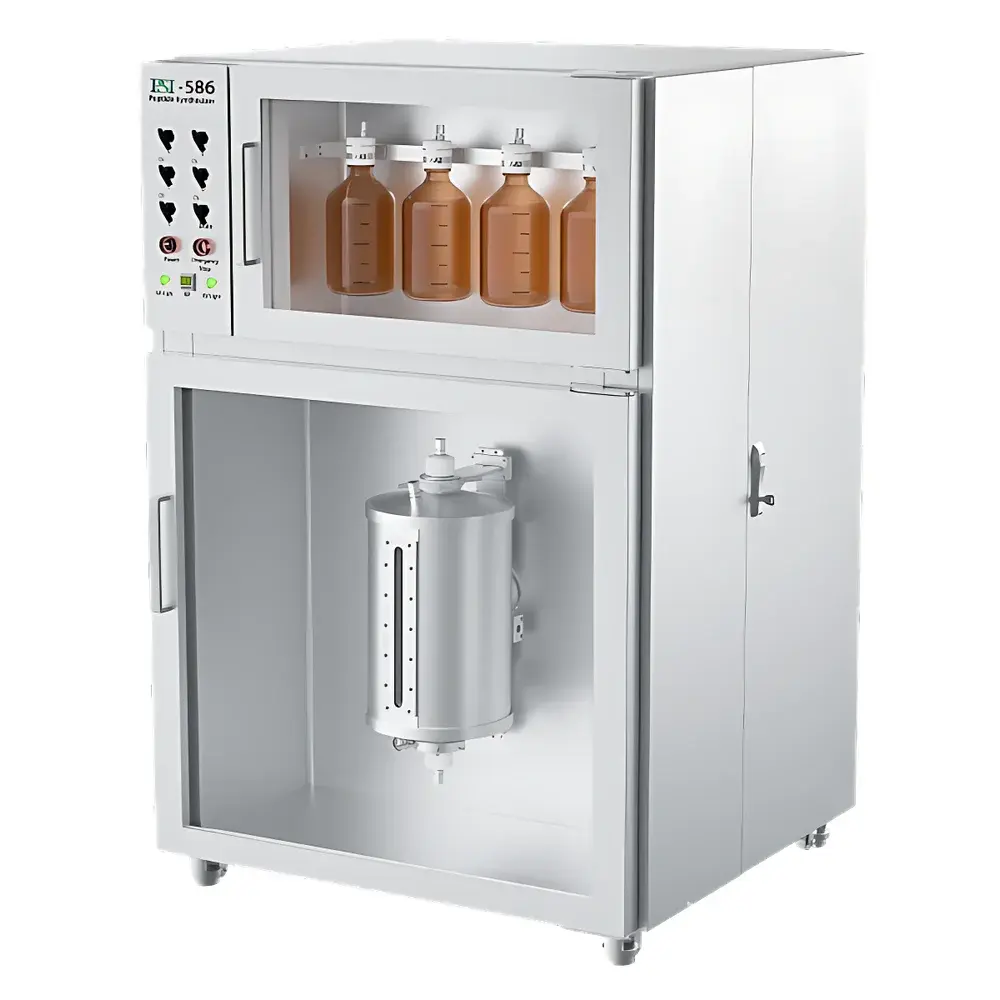
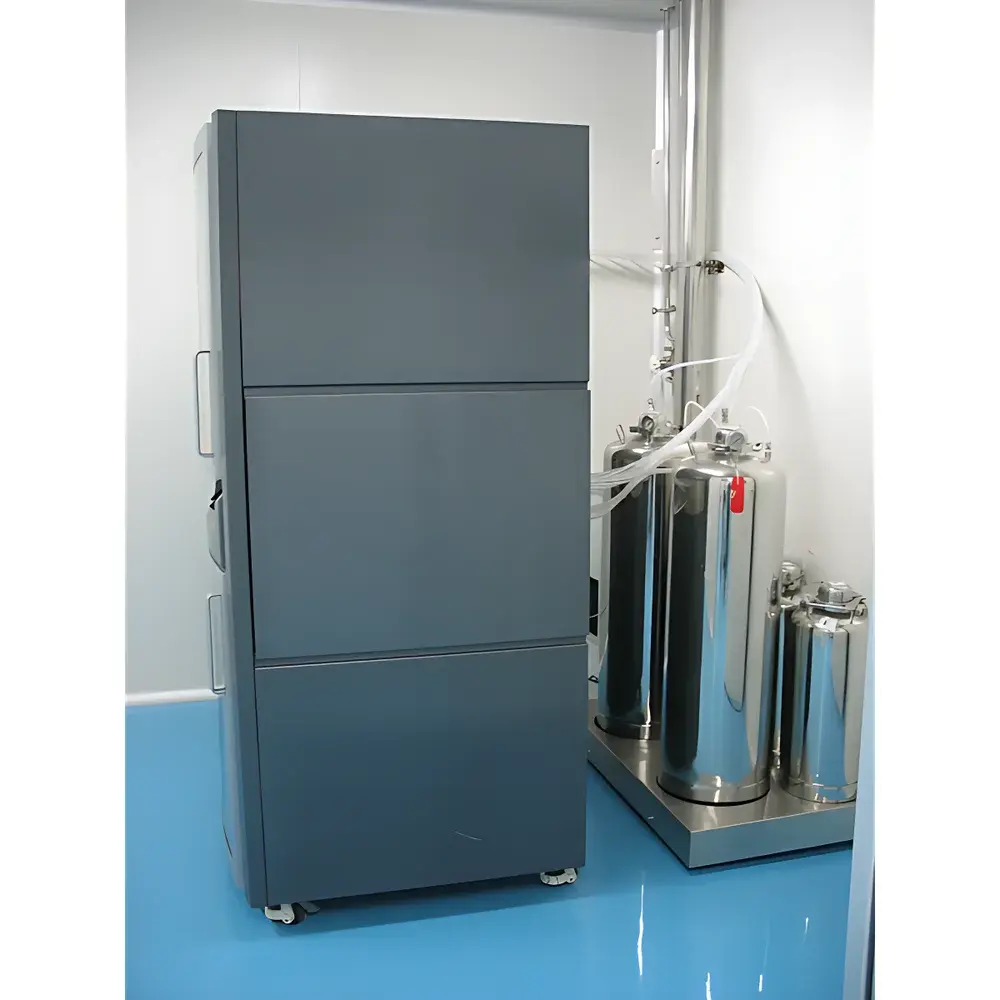
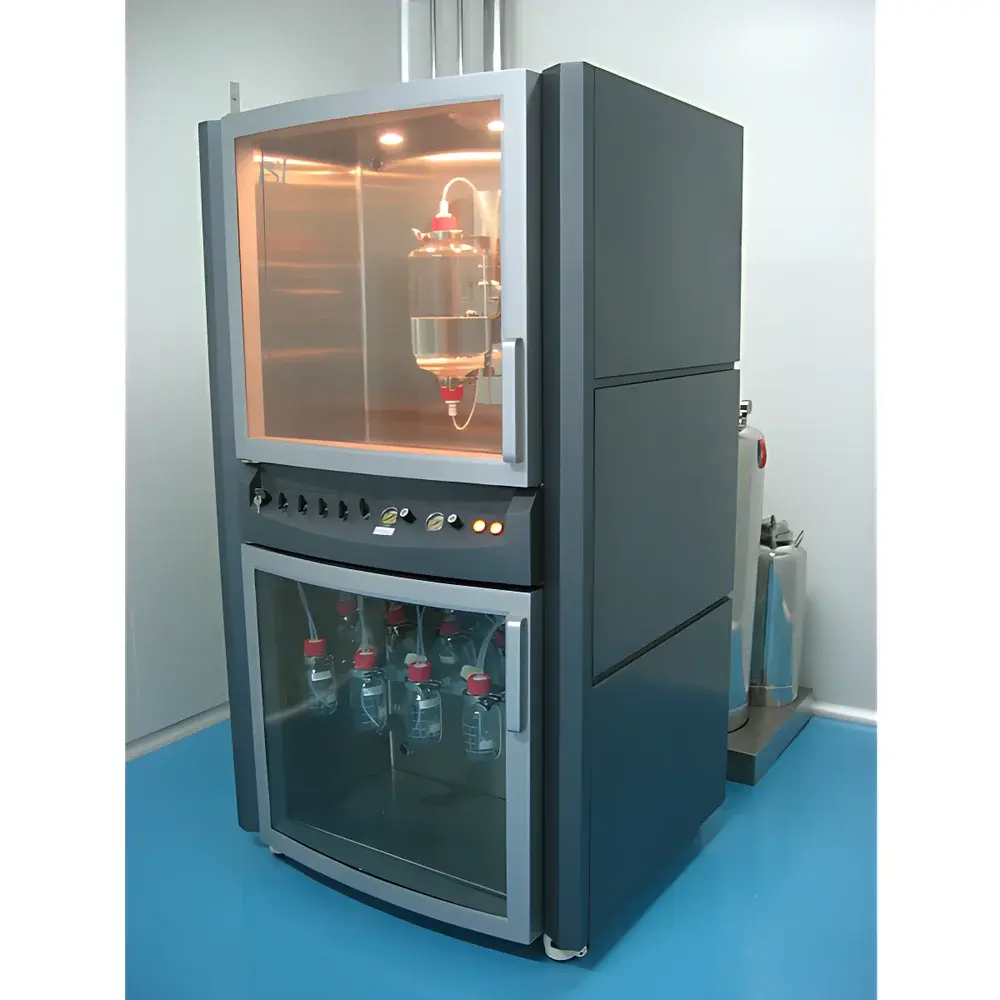
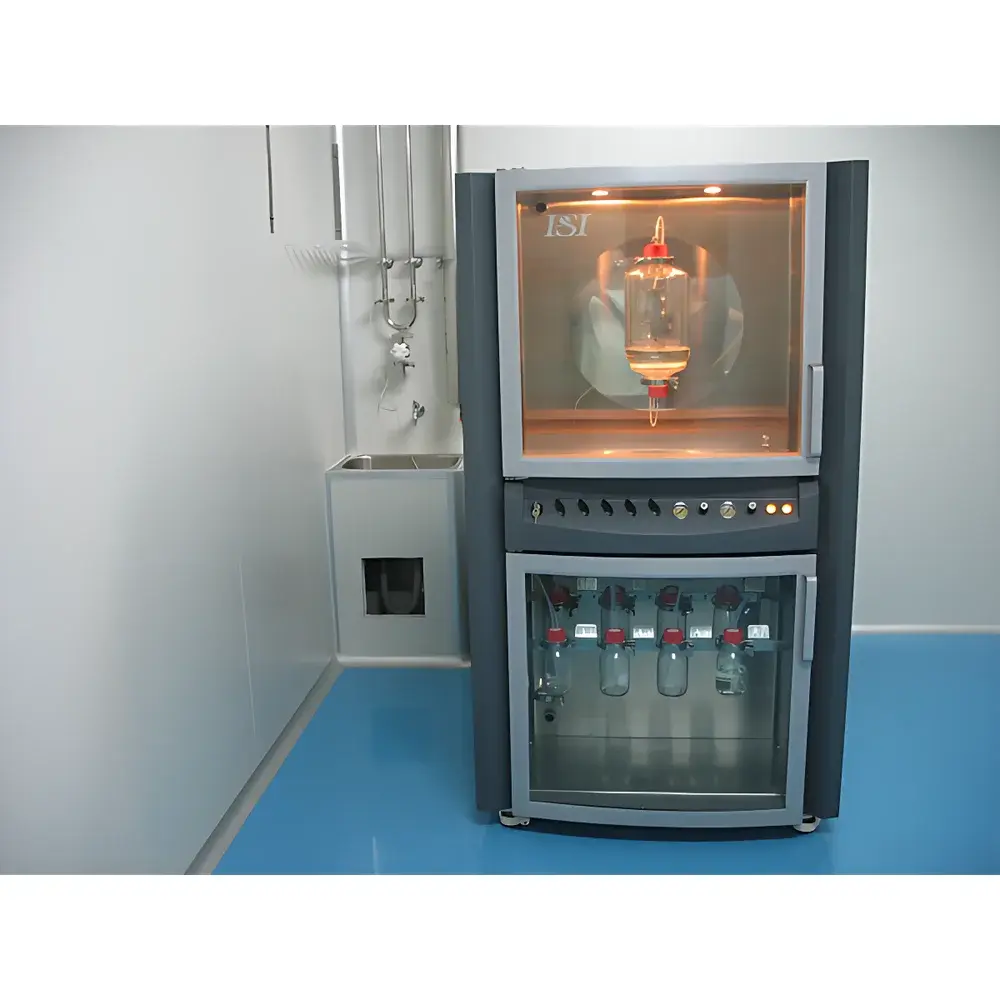
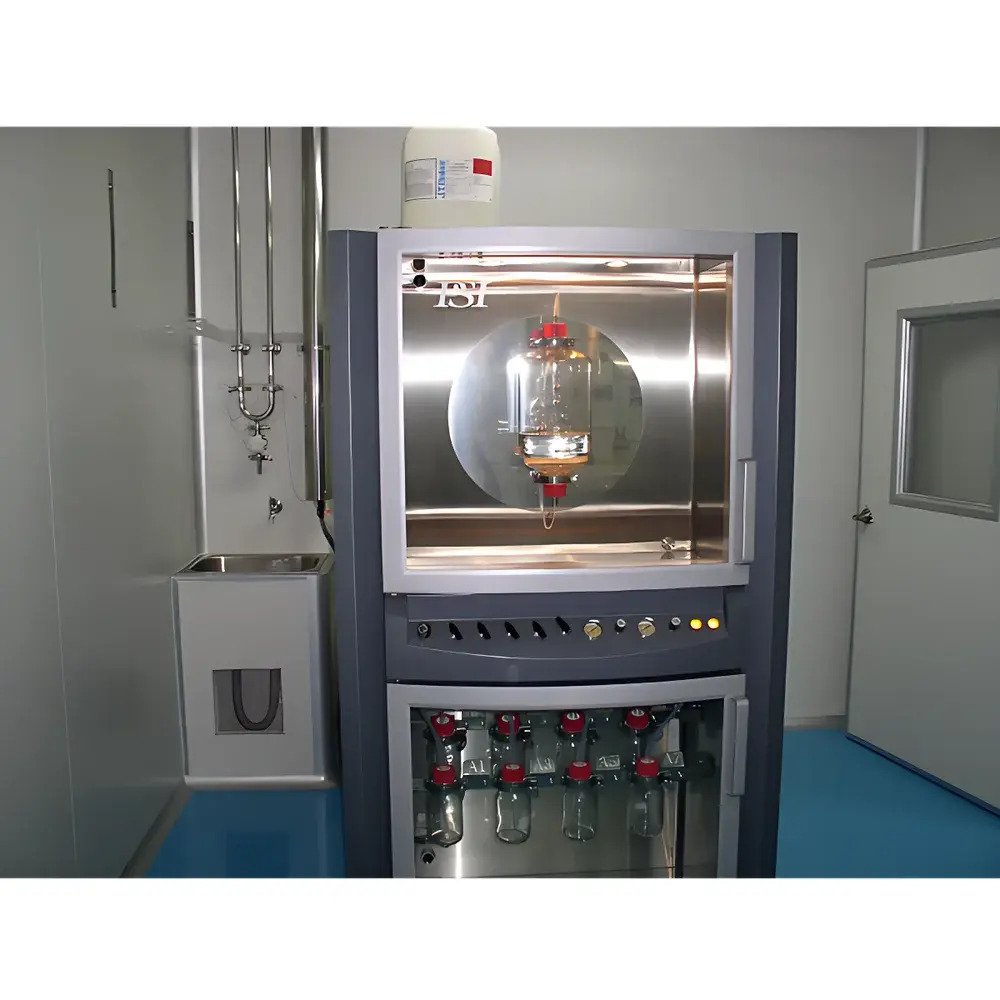
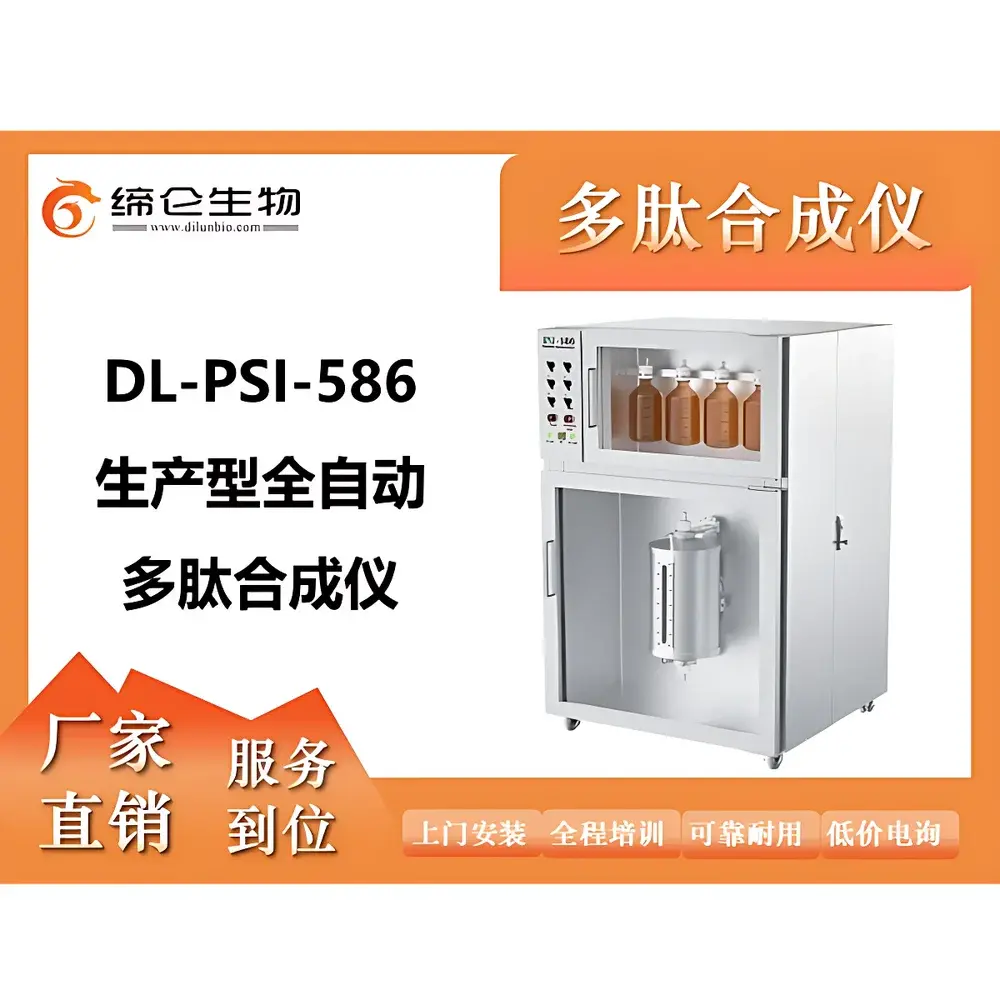
PSI DL-PSI586 Single-Channel Production-Scale Automated Peptide Synthesizer
| Brand | PSI |
|---|---|
| Origin | USA |
| Model | DL-PSI586 |
| Amino Acid Delivery | Automated |
| Reagent Delivery | Automated |
| Synthesis Scale | 5–50 / 10–100 / 25–200 mmol |
| Reactor Count | 1 |
| Reactor Volume Options | 1L & 5L / 2L & 10L / 5L & 20L |
| Syringe Pump Precision | ±1 mL |
| Synthesis Purity | ≥99.5% |
| Solvent Flow Rate | 1–2 L/min |
Overview
The PSI DL-PSI586 is a single-channel, production-scale automated peptide synthesizer engineered for robust, reproducible solid-phase peptide synthesis (SPPS) under Good Manufacturing Practice (GMP)-aligned operational conditions. Unlike conventional synthesizers relying on mechanical stirring blades—which induce resin fragmentation, sieve clogging, and reduced coupling efficiency—the DL-PSI586 implements a patented 180° reactor inversion mixing mechanism. This bladeless agitation method subjects the solid-phase resin to controlled gravitational tumbling and high-impact collision with reaction solution, maximizing mass transfer while preserving resin integrity. Developed from foundational work by Dr. John Ye (1995), this motion-based mixing architecture delivers coupling efficiencies consistently exceeding 99.5% across sequences up to 100+ amino acid residues. The system integrates a dual-solvent recycling system (SRS), reducing solvent consumption and waste generation by 40% versus batch-wash configurations—supporting both environmental compliance (EPA/ISO 14001-aligned workflows) and cost-effective scale-up.
Key Features
- Bladeless 180° reactor inversion mixing: Eliminates resin shear damage, prevents frit blockage, and ensures uniform reagent access across all resin batches.
- Dual-solvent recycling system (SRS): Two independent 316L stainless steel recirculation tanks enable parallel handling of coupling/wash solvents, minimizing total solvent volume per cycle.
- Modular reactor configuration: Three scalable options—(1L + 5L), (2L + 10L), or (5L + 20L)—support flexible batch sizing from pilot (25 mmol) to production (200 mmol) scales.
- Precision fluid handling: Six amino acid reservoirs (expandable to eight), five 316L solvent tanks, and electronically controlled syringe pumps with ±1 mL volumetric accuracy ensure stoichiometric delivery consistency.
- Programmable agitation control: Servo-driven inversion motor with 0–25 rpm continuous adjustment enables optimization for sensitive resins (e.g., Sieber amide, HMBA) or sterically hindered couplings.
- GMP-ready construction: Full 304 stainless steel chassis (450 kg), IP54-rated enclosure, and 2 kW industrial-grade power supply support installation in ISO Class 7/8 cleanrooms or regulated manufacturing suites.
Sample Compatibility & Compliance
The DL-PSI586 accommodates standard SPPS resins—including Wang, Rink amide MBHA, and 2-Cl-Trt—and supports Fmoc/t-Bu, Boc/Bzl, and hybrid protection schemes. It is compatible with common coupling reagents (HBTU, HATU, DIC/Oxyma), deprotection agents (20% piperidine/DMF), and cleavage cocktails (TFA-based with scavengers). All wetted components are fabricated from electropolished 316L stainless steel or chemically resistant fluoropolymers (PFA, ETFE), ensuring compatibility with aggressive solvents (DCM, DMF, NMP, TFA) and eliminating leachables. The system meets mechanical safety requirements per ANSI B11.1 and electrical standards per UL 61010-1. Data audit trails, user-access controls, and electronic signature capability align with FDA 21 CFR Part 11 readiness when integrated with compliant LIMS or ELN platforms.
Software & Data Management
The synthesizer operates via an embedded Linux-based control interface with intuitive touchscreen navigation and password-protected role-based access (Operator, Supervisor, Administrator). All synthesis parameters—including cycle timing, reagent volumes, inversion speed, temperature setpoints (ambient to 50°C optional heating module), and real-time pressure monitoring—are fully programmable and stored with timestamped metadata. Raw process logs (CSV export), method files (.psp), and event-triggered alerts (e.g., low solvent level, pump stall) are automatically archived. Optional OPC UA integration enables bidirectional communication with MES systems (e.g., Siemens Opcenter, Rockwell FactoryTalk) for batch record synchronization and electronic batch record (EBR) generation.
Applications
- Mid-scale GMP-compliant synthesis of therapeutic peptides (e.g., GLP-1 analogs, antimicrobial peptides, cyclic RGD derivatives).
- Process development and tech transfer from lab-scale (0.1–1 mmol) to commercial manufacturing (≥50 mmol/batch).
- Support for regulatory filings: Generates consistent, auditable synthesis records required for IND/IMPD submissions.
- High-fidelity synthesis of long or difficult sequences (e.g., hydrophobic stretches, β-sheet prone motifs) where resin integrity directly impacts crude purity and downstream purification yield.
- Contract manufacturing organizations (CMOs/CDMOs) performing multi-client campaigns with strict change-control and segregation protocols.
FAQ
What synthesis scale ranges does the DL-PSI586 support?
It operates across three configurable reactor pairings: 5–50 mmol (1L + 5L), 10–100 mmol (2L + 10L), and 25–200 mmol (5L + 20L), enabling seamless transition from process validation to commercial lot production.
How does the 180° inversion mixing improve coupling efficiency compared to stirred reactors?
By eliminating mechanical shear, it prevents resin attrition and maintains uniform swelling kinetics—critical for high-yield coupling of sterically hindered or aggregation-prone sequences.
Is the system compatible with FDA 21 CFR Part 11 requirements?
Yes—when deployed with validated software extensions, it provides electronic signatures, audit trails, and role-based permissions meeting Part 11 technical safeguards.
Can solvent recycling be disabled for non-standard chemistries?
Yes—the SRS can be bypassed via software configuration to support single-pass solvent delivery for specialty reagents or orthogonal deprotection steps.
What maintenance intervals are recommended for routine operation?
Preventive maintenance is scheduled every 1,000 synthesis hours or annually, including pump calibration verification, seal inspection, and firmware integrity checks—documented per ISO 9001 internal audit protocols.





