
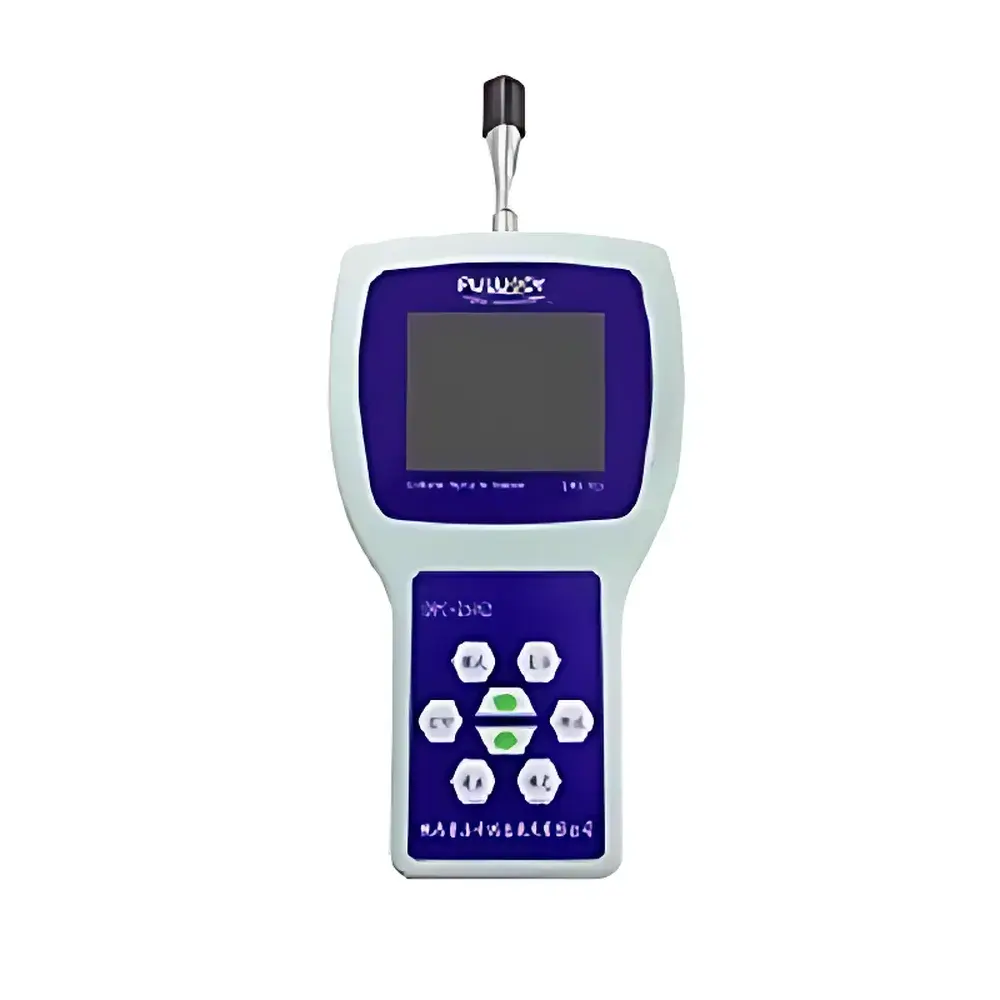
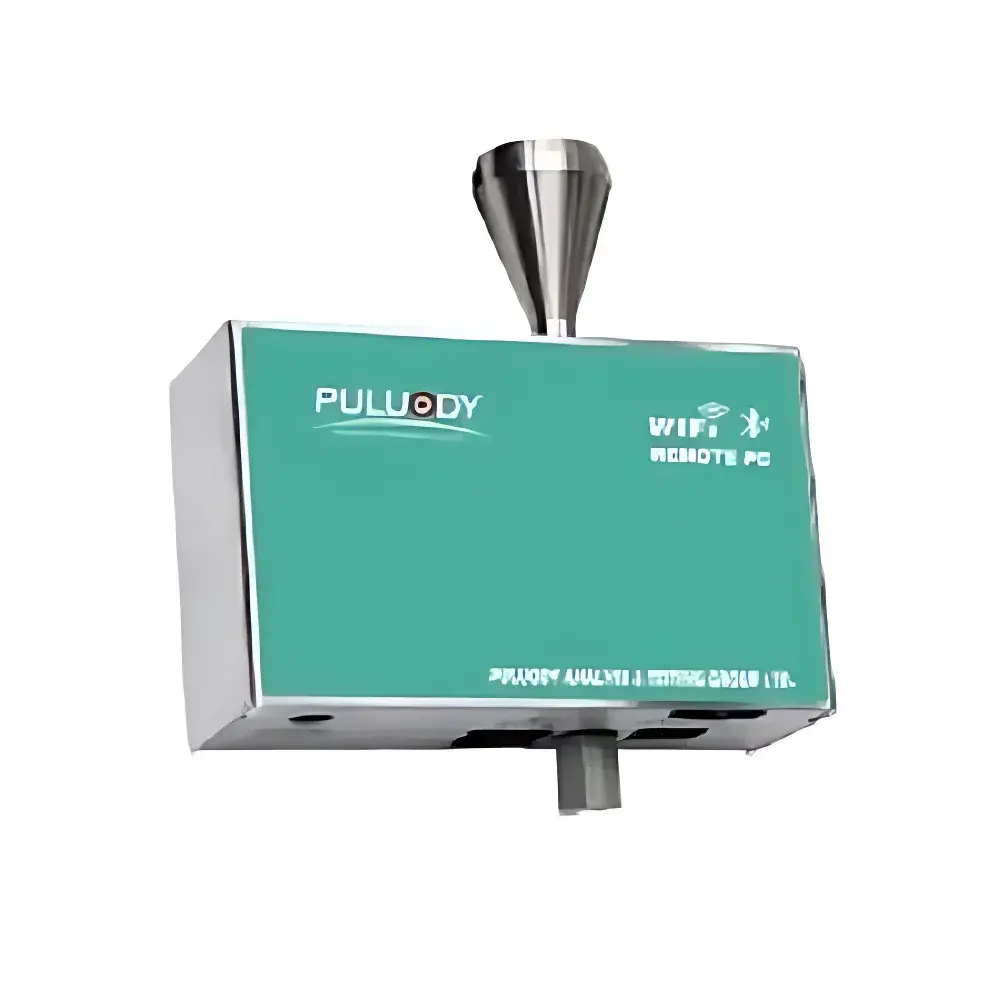
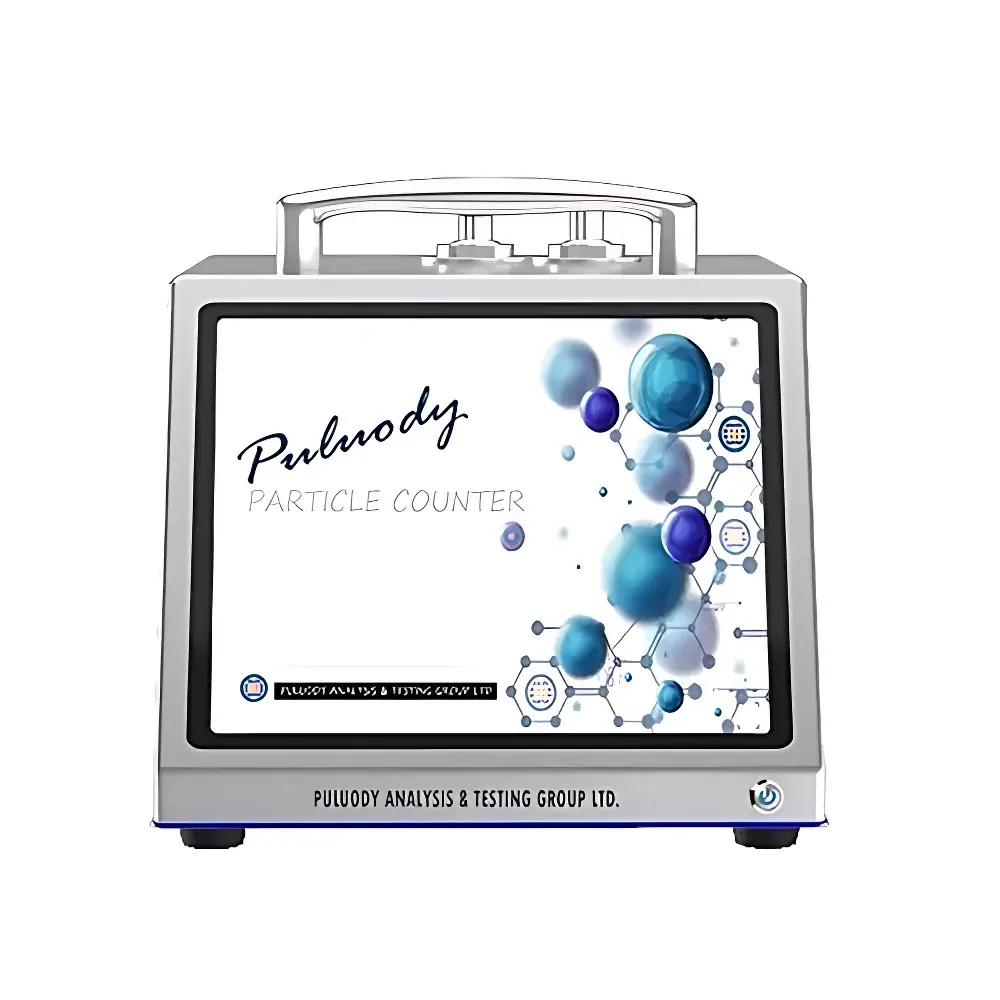
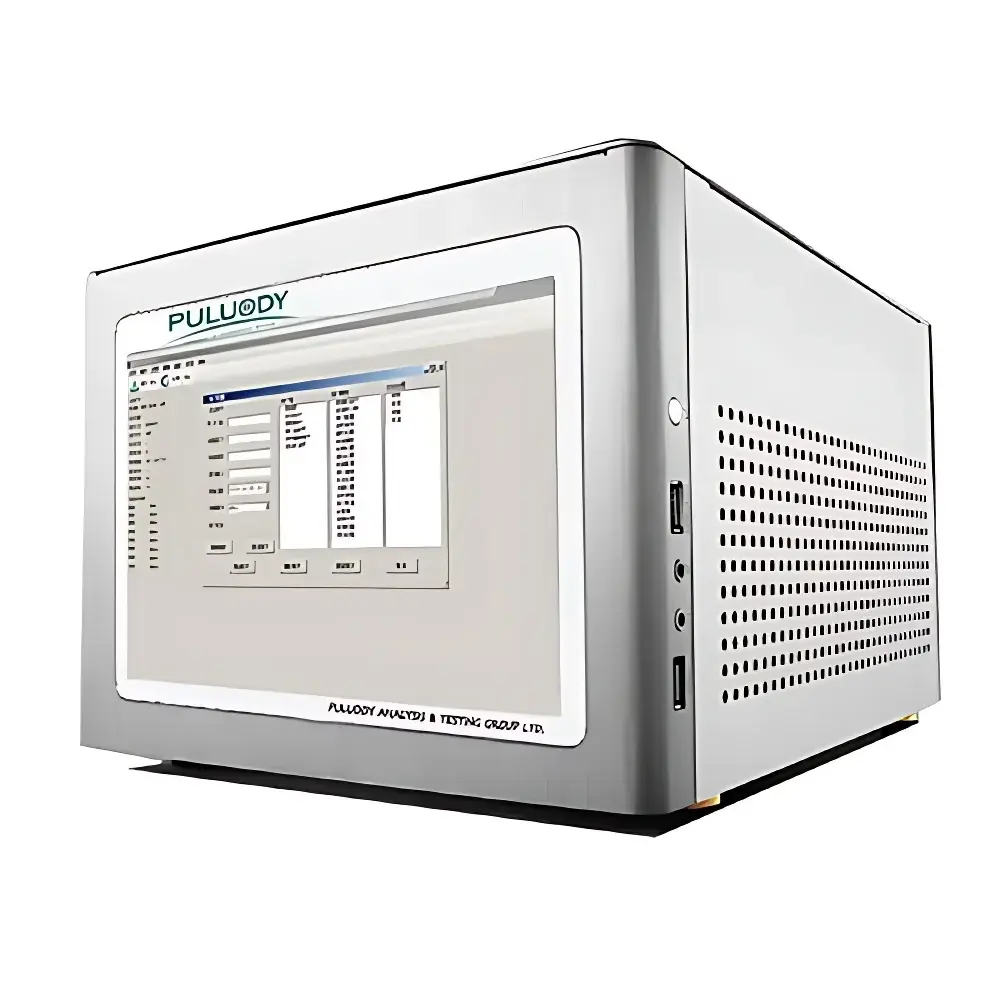
PULUODY DPC-2602 Handheld Optical Airborne Particle Counter
| Brand | PULUODY |
|---|---|
| Origin | Shaanxi, China |
| Manufacturer Type | Authorized Distributor |
| Regional Classification | Domestic (China) |
| Model | DPC-2602 |
| Instrument Type | Optical Particle Counter |
| Detection Principle | Dual-Laser Narrow-Beam Light Scattering |
| Flow Rate | 2.83 L/min (0.1 cfm) |
| Particle Size Channels | Configurable Sets Including 0.3/0.5/1.0/2.5/3.0/5.0/10.0 µm |
| Counting Efficiency | ≥50% at 0.3 µm, ≥98% at ≥0.5 µm (per ISO 21501-4) |
| Coincidence Error | <5% at 2×10⁶ particles/ft³ |
| Data Storage | 10,000 measurement records |
| Battery | 4100 mAh Rechargeable Polymer Li-ion |
| Display | 3.45″ Full-View Industrial Color LCD |
| Operating Temperature | 5–45 °C |
| Operating Humidity | ≤90% RH, non-condensing |
| Compliance | ISO 14644-1:2015, GB/T 16292–1996, ISO 21501-4:2018 |
Overview
The PULUODY DPC-2602 Handheld Optical Airborne Particle Counter is a portable, field-deployable instrument engineered for real-time quantification of airborne particulate matter in cleanrooms, controlled environments, and ambient air applications. It operates on the principle of dual-laser narrow-beam light scattering—where aerosol particles pass through two spatially separated, collimated laser beams, generating time-resolved scattered light pulses that enable high-fidelity particle sizing and counting with minimized coincidence error. This seventh-generation optical detection architecture delivers stable, repeatable performance across PM2.5 and PM10.0 mass concentration estimation modes, as well as discrete channel-based number concentration reporting. Designed to meet the metrological rigor of ISO 14644-1:2015 classification protocols and aligned with GB/T 16292–1996 for pharmaceutical cleanroom validation, the DPC-2602 supports both routine environmental monitoring and critical GMP-compliant qualification activities—including HVAC system verification, filter integrity testing, and bioburden risk assessment in sterile manufacturing zones.
Key Features
- Dual-laser narrow-beam optical sensor with >200,000-cycle operational lifetime and certified counting efficiency per ISO 21501-4:2018
- Configurable multi-channel particle sizing: four preset channel configurations (A–D), supporting simultaneous detection from 0.3 µm to 10.0 µm with selectable intermediate bins (e.g., 0.5/1.0/2.5/5.0 µm)
- Integrated environmental sensing: optional temperature/humidity module with dew point calculation; expandable to up to three electrochemical or NDIR gas sensors (CO, HCHO, etc.)
- High-capacity 4100 mAh polymer lithium-ion battery enabling continuous operation >8 hours at standard flow rate (2.83 L/min)
- 3.45-inch industrial-grade color LCD with full-view angle, intuitive bilingual (English/Chinese) UI, and real-time graphical trend display
- Onboard data management: 10,000-record storage capacity with timestamp, location tag (via optional GPS module), and user-defined sampling interval (1–3600 s)
- Comprehensive electrical protection: overvoltage, overcharge, short-circuit, ESD-hardened circuitry, and magnetic field immunity per IEC 61000-4 series
Sample Compatibility & Compliance
The DPC-2602 is validated for use with ambient air, compressed gases (oil-free, dry), and laminar airflow streams within ISO Class 5–8 cleanrooms. Its 2.83 L/min volumetric flow rate conforms to ISO 14644-1 sampling requirements for ≥0.5 µm particles and enables direct comparison with fixed-site monitoring systems. All particle count reports are traceable to national standards via factory calibration using NIST-traceable PSL reference aerosols. The device satisfies documentation requirements for GLP/GMP audits—including electronic record integrity, operator authentication, and audit trail generation when paired with PULUODY’s compliant data export software. It meets electromagnetic compatibility (EMC) Class B limits (EN 61326-1) and carries CE marking for instrumentation safety (IEC 61010-1). Optional accessories include isokinetic sampling probes, HEPA-filtered zero-air purge kits, and calibrated leak standards for on-site filter challenge testing.
Software & Data Management
Data acquisition and post-processing are supported via PULUODY’s PC-based ParticleView Pro software (Windows 10/11 compatible), which provides FDA 21 CFR Part 11–compliant features including role-based access control, electronic signatures, and immutable audit logs. Raw count data exports in CSV, Excel, and PDF formats—with embedded metadata (GPS coordinates, operator ID, calibration certificate ID). The software enables statistical analysis per ISO 14644-2:2015 (e.g., UCL calculation, trend charts, exceedance alerts) and generates automated compliance reports aligned with EU Annex 1 and USP environmental monitoring templates. Firmware updates are delivered via USB or microSD card with cryptographic signature verification to ensure firmware integrity.
Applications
- Air quality surveillance in public buildings, schools, hospitals, and transportation hubs
- Cleanroom certification and routine monitoring per ISO 14644-1, ISO 14644-2, and FDA Aseptic Processing Guidance
- Filter integrity testing and leak detection for HEPA/ULPA filters in biosafety cabinets and laminar flow hoods
- Environmental monitoring during pharmaceutical aseptic filling, medical device packaging, and semiconductor fabrication
- Occupational hygiene assessments in construction, mining, and spray painting facilities
- Research-grade aerosol characterization in university laboratories and national metrology institutes
- Validation of air purification system efficiency (e.g., CADR verification per AHAM AC-1)
FAQ
Does the DPC-2602 require annual recalibration?
Yes. While the optical sensor maintains stability over >200,000 measurements, annual traceable recalibration against PSL standards is recommended to maintain ISO 14644-1 compliance and support audit readiness.
Can the instrument measure PM1.0 or PM4.0 directly?
No. The DPC-2602 reports discrete channel counts only. PM1.0 and PM4.0 mass concentrations are derived computationally using user-selectable density assumptions and Mie scattering models embedded in ParticleView Pro.
Is the RS232-to-USB interface compatible with modern operating systems?
Yes. The included FTDI-based adapter supports Windows, macOS, and Linux kernels without proprietary drivers. Virtual COM port enumeration is automatic.
What is the minimum detectable particle concentration?
The lower limit of quantitation (LLOQ) is 1 particle per 0.1 ft³ (3.53 particles/L) at 0.3 µm, verified per ISO 21501-4 Annex C protocols.
Can the device operate while charging?
Yes. Continuous operation is maintained during USB-C charging; battery management circuitry prevents thermal runaway and ensures uninterrupted data logging.
Related Products



