
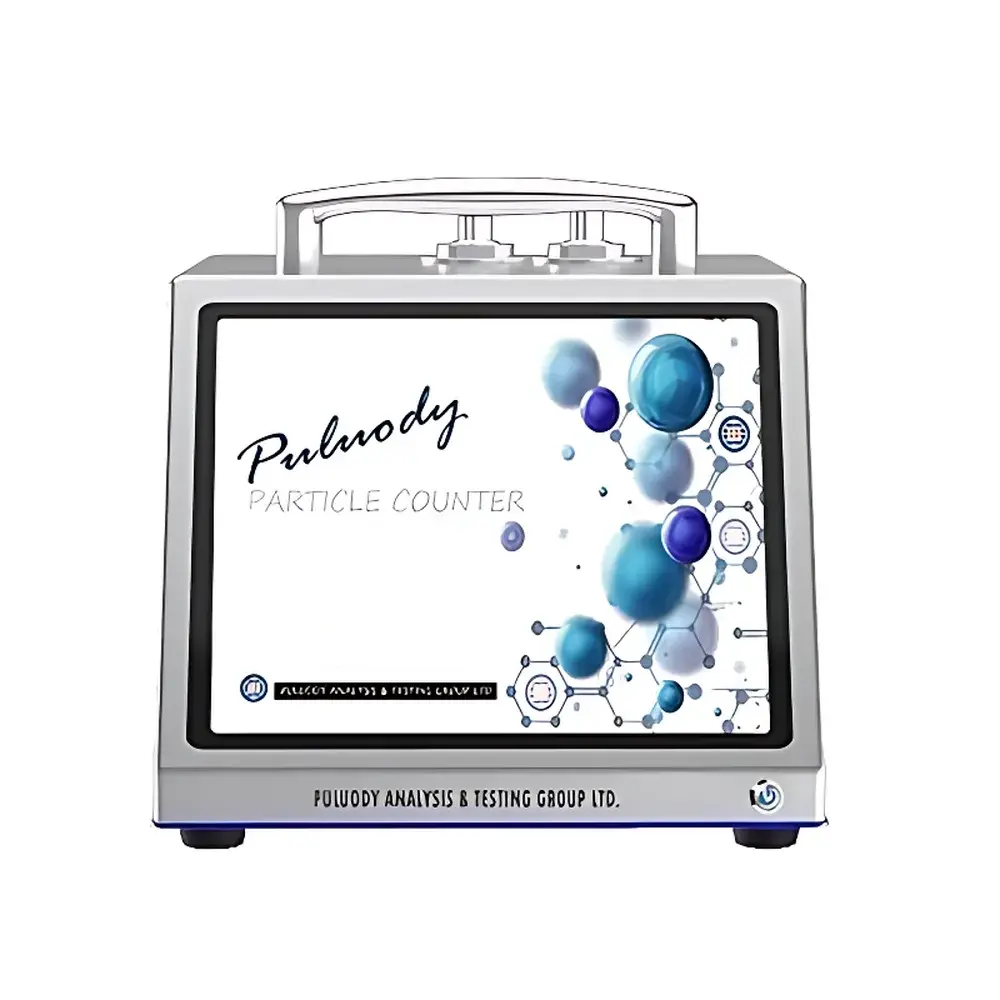
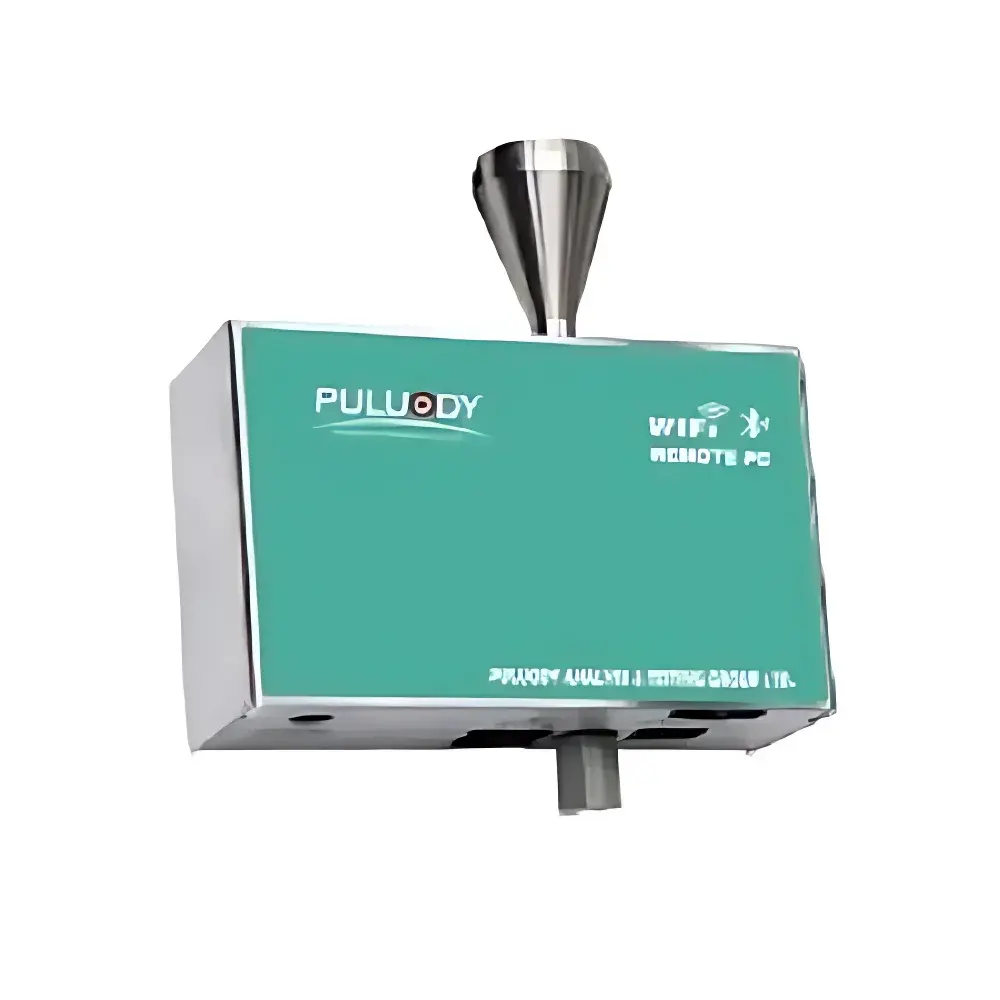
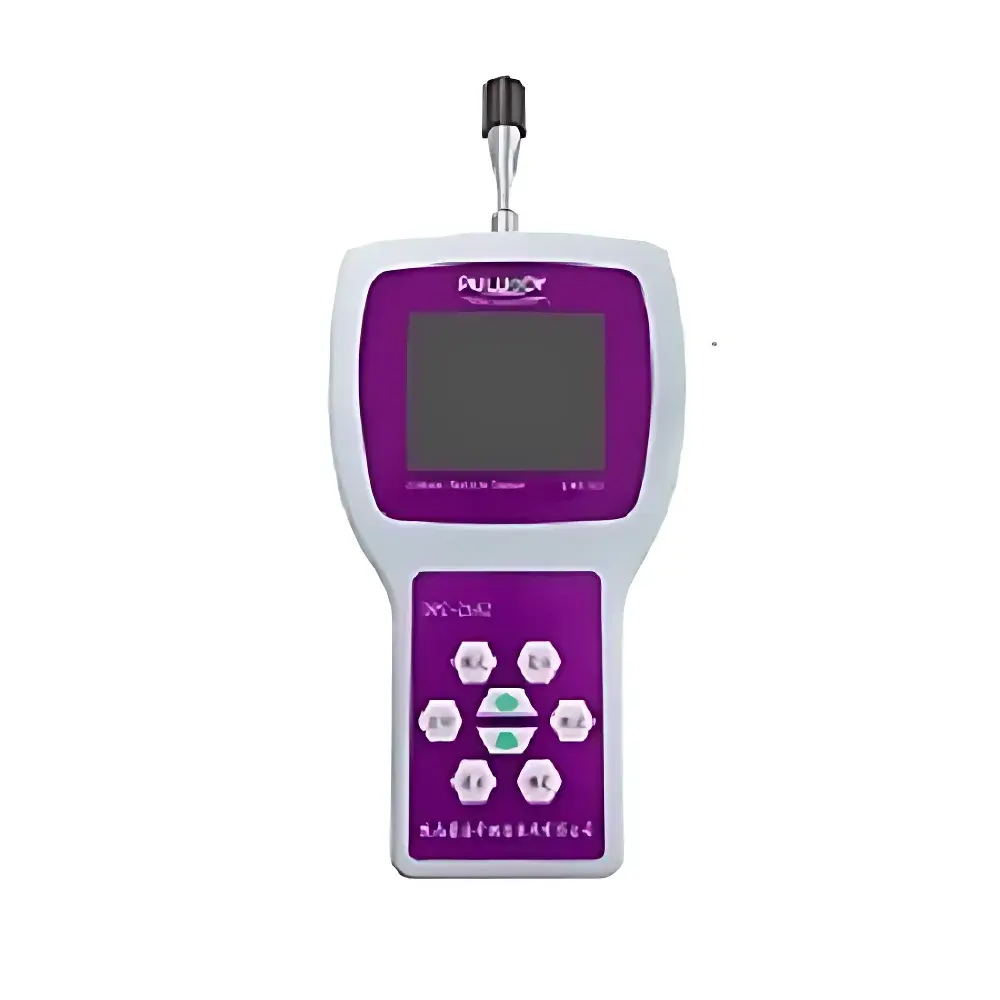
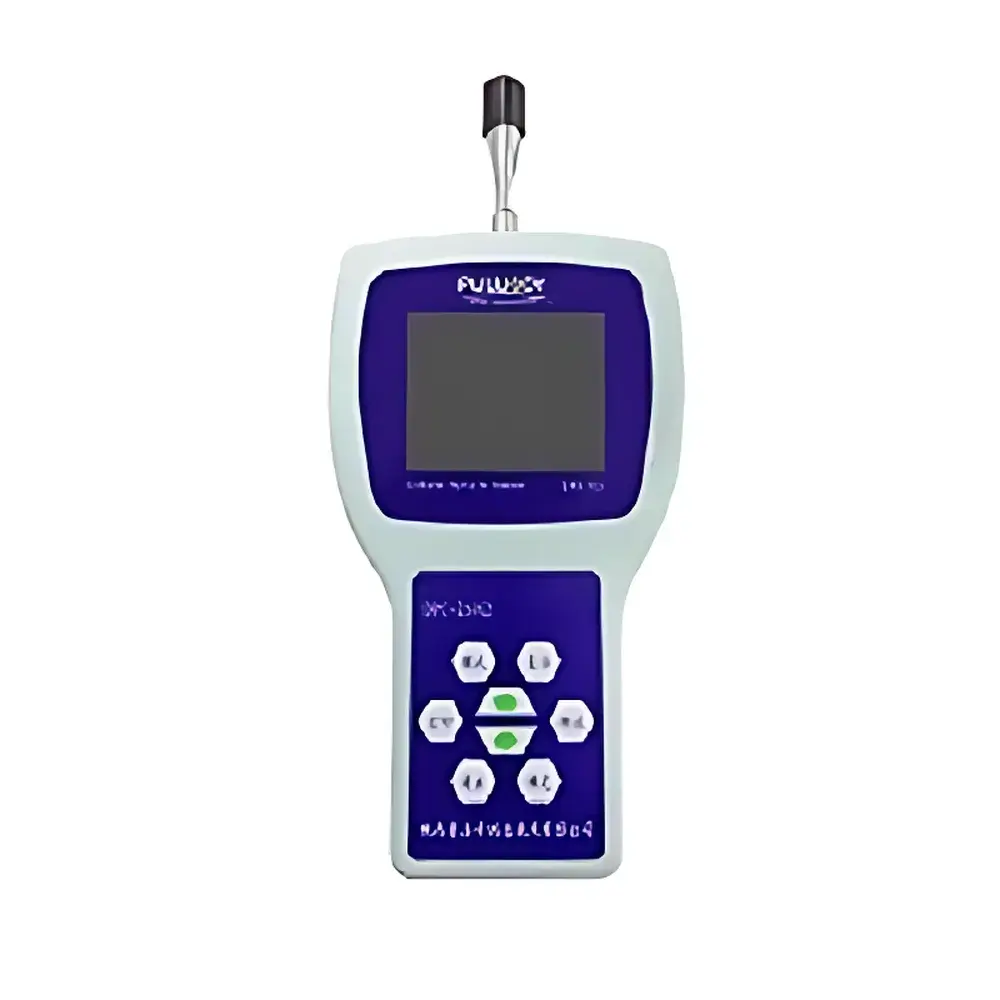
PULUODY DPC-2611 Desktop Laser Particle Counter
| Brand | PULUODY |
|---|---|
| Model | DPC-2611 |
| Instrument Type | Optical Airborne Particle Counter |
| Detection Principle | Light Scattering (Mie Theory) |
| Particle Size Range | 0.10–25.0 µm (configurable channels) |
| Channel Count | 20 user-selectable size bins |
| Counting Accuracy | ≤±30% (per ISO 21501-4) |
| Concentration Accuracy | ≤±30% |
| Repeatability | ≤±10% FS |
| Coincidence Error | <5% at 2×10⁶ particles/ft³ |
| Flow Rate Options | 2.83 L/min, 28.3 L/min, 50 L/min, or 100 L/min |
| Sampling Time | 60 s default |
| Display | 10.0-inch industrial TFT-LCD with full-view angle |
| Data Storage | ≥10,000 test records (expandable via USB) |
| Compliance | ISO 21501-4, ISO 14644-1, GB/T 16292, GB/T 6167, JJF 1190, JIS B9921, CE, 21 CFR Part 11-ready |
| Environmental Monitoring Modes | Particle count (#/L), Mass concentration (µg/m³), Filtration efficiency (%) |
| Integrated Sensors | Ambient temperature (−40–120 °C), Relative humidity (0–100% RH), Optional gas sensors (CO, HCHO, etc.) |
| Power Supply | AC 100–240 V, 50/60 Hz |
| Operating Conditions | 5–45 °C, ≤90% RH (non-condensing) |
| Protection Features | Overvoltage, overcharge, short-circuit, ESD, and EMI shielding |
Overview
The PULUODY DPC-2611 Desktop Laser Particle Counter is a high-precision, multi-parameter airborne particle monitoring system engineered for compliance-driven environments requiring rigorous particulate quantification in air streams. It operates on the principle of single-particle light scattering—specifically Mie scattering theory—wherein incident laser light interacts with suspended particles, generating intensity-modulated scattered signals proportional to particle size and refractive index. The instrument integrates a seventh-generation dual-laser narrow-beam optical detector with enhanced signal-to-noise ratio and extended operational lifetime (>200,000 measurements), enabling stable, reproducible detection across a broad dynamic range from 0.10 µm to 25.0 µm. Designed in alignment with ISO 21501-4 and ISO 14644-1, the DPC-2611 supports real-time classification of cleanroom environments per ISO Class 5–9 or FS209E Class 100–300,000, making it suitable for validation, routine monitoring, and troubleshooting in regulated manufacturing and laboratory settings.
Key Features
- Configurable 20-channel particle sizing matrix with six pre-defined channel sets (A–F), supporting application-specific calibration for pharmaceutical, semiconductor, or HVAC applications.
- Simultaneous measurement of airborne particle concentration (particles per liter), mass concentration (µg/m³), and filtration efficiency (%), all selectable via intuitive touchscreen interface.
- Integrated environmental sensing: factory-calibrated temperature (−40 to 120 °C) and relative humidity (0–100% RH) sensors; optional plug-in gas sensor modules for CO, formaldehyde (HCHO), and other target analytes.
- Modular flow control architecture offering four certified volumetric flow rates (2.83, 28.3, 50, and 100 L/min) to accommodate both standard ISO sampling protocols and high-throughput facility audits.
- 10.0-inch industrial-grade TFT-LCD display with anti-glare coating, wide viewing angle, and dual-language UI (English/Chinese) supporting role-based access control and audit-trail-enabled operation.
- Comprehensive hardware-level protection: overvoltage suppression, battery overcharge management, short-circuit isolation, electrostatic discharge (ESD) hardening, and magnetic field immunity per IEC 61000-4 series standards.
Sample Compatibility & Compliance
The DPC-2611 is validated for use in gaseous media only—primarily ambient air, compressed air, and HVAC-supplied clean air. It is not designed for liquid-phase or aerosolized droplet analysis. Its optical design meets ISO 21501-4 requirements for resolution, counting efficiency, and size calibration traceability. Instrument performance conforms to GB/T 16292 (pharmaceutical cleanroom testing), GB/T 6167 (particle counter verification methodology), and JJF 1190 (calibration specification). For regulatory submissions, raw data files include embedded timestamps, operator ID, instrument serial number, and environmental metadata—enabling full traceability under FDA 21 CFR Part 11 when deployed with validated electronic signature workflows. CE marking confirms compliance with EU EMC and Low Voltage Directives. Routine third-party metrological calibration is supported throughout the instrument’s service life.
Software & Data Management
Data acquisition, visualization, and export are managed through an embedded Linux-based firmware platform supporting real-time graphing, statistical summaries (mean, SD, CV%), and pass/fail trend analysis against user-defined thresholds. All measurements are timestamped and stored locally in non-volatile memory (≥10,000 records); additional storage is enabled via USB mass storage mode. Export formats include CSV, PDF reports (with customizable templates), and XML for LIMS integration. Optional RS232, RS485, and Ethernet interfaces support SCADA-level telemetry and centralized monitoring systems. Audit trails record every parameter change, mode switch, calibration event, and user login—retained for ≥18 months unless manually purged under administrative privilege. Print output is available via optional thermal printer module compliant with ISO/IEC 19794-5 for forensic documentation.
Applications
The DPC-2611 serves as a primary monitoring tool in GMP-regulated facilities including sterile drug manufacturing, biologics fill-finish suites, and medical device packaging lines. It is routinely deployed for: (1) ISO 14644-1 cleanroom certification and requalification; (2) HEPA/ULPA filter integrity testing (e.g., upstream/downstream scanning); (3) HVAC system commissioning and fault diagnostics; (4) contamination investigations in microelectronics fabrication cleanrooms; (5) environmental monitoring in hospital operating theaters and isolation rooms; (6) validation of laminar flow workstations and biosafety cabinets per NSF/ANSI 49; and (7) quality assurance in food and beverage processing environments where airborne particulates impact product shelf life or microbial load.
FAQ
Does the DPC-2611 meet FDA 21 CFR Part 11 requirements for electronic records?
Yes—the instrument supports role-based user authentication, electronic signatures, and immutable audit trails for all critical operations, provided it is deployed within a validated IT infrastructure.
Can the particle size channels be customized beyond the six preset configurations?
Channel binning is fixed per configuration set (A–F); however, users may select any one set during setup and reconfigure between sessions via administrator-mode menu navigation.
Is external calibration required annually, and does PULUODY provide traceable certificates?
Third-party calibration is recommended annually per JJF 1190; PULUODY partners with accredited national metrology institutes to issue ISO/IEC 17025-compliant calibration certificates with NIST-traceable reference standards.
What is the maximum allowable particle concentration before coincidence error exceeds specification?
Per ISO 21501-4, the DPC-2611 maintains <5% coincidence error up to 2×10⁶ particles per cubic foot—equivalent to approximately 7.1×10⁷ particles/m³ for 0.3 µm particles.
How is data integrity ensured during power interruption or unexpected shutdown?
All active measurements are buffered in RAM and committed to flash memory upon successful completion; unsaved buffers are preserved across cold restarts and recovered automatically upon boot.



