
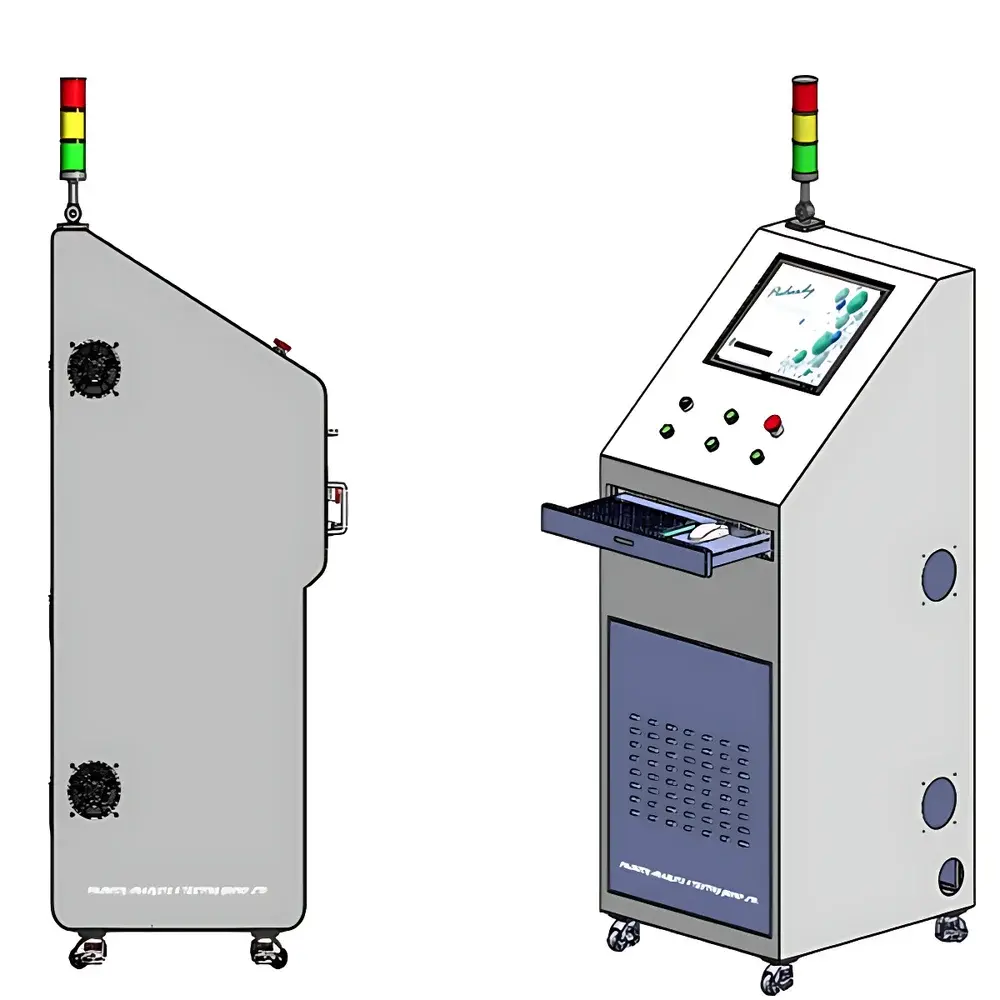
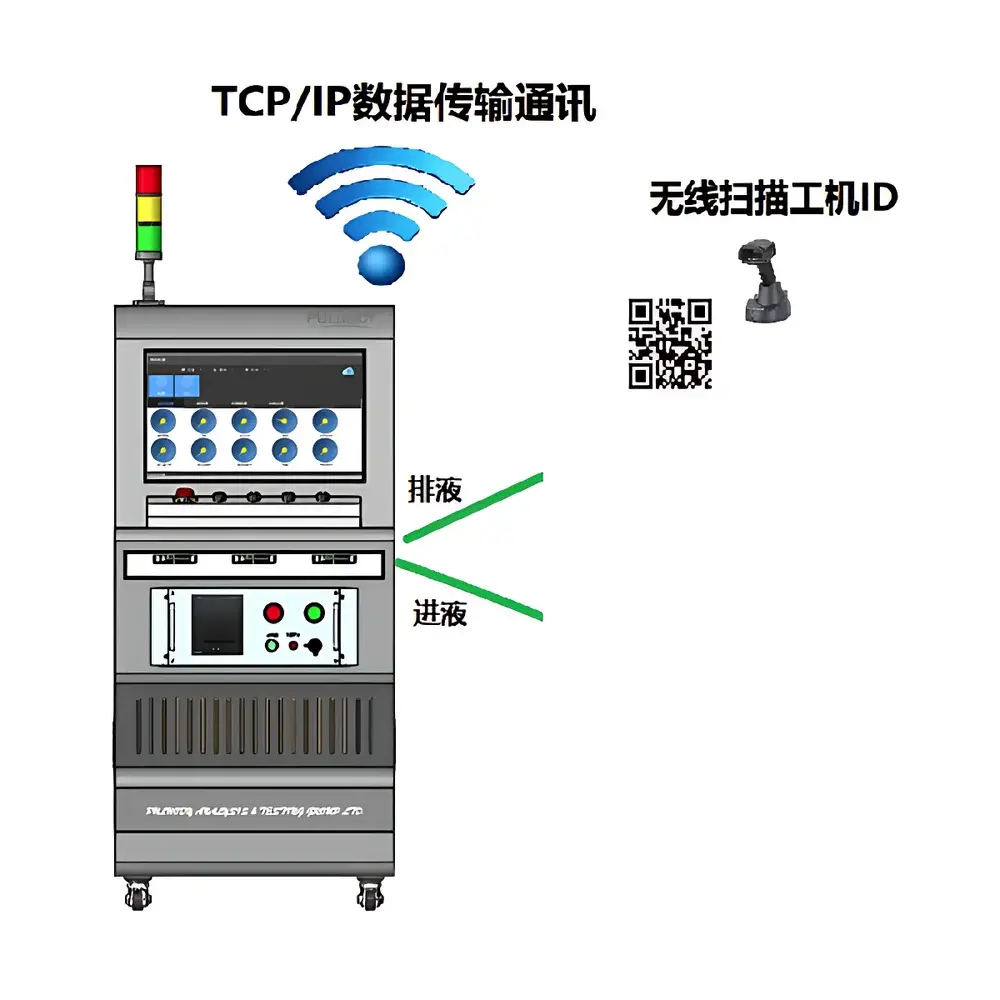
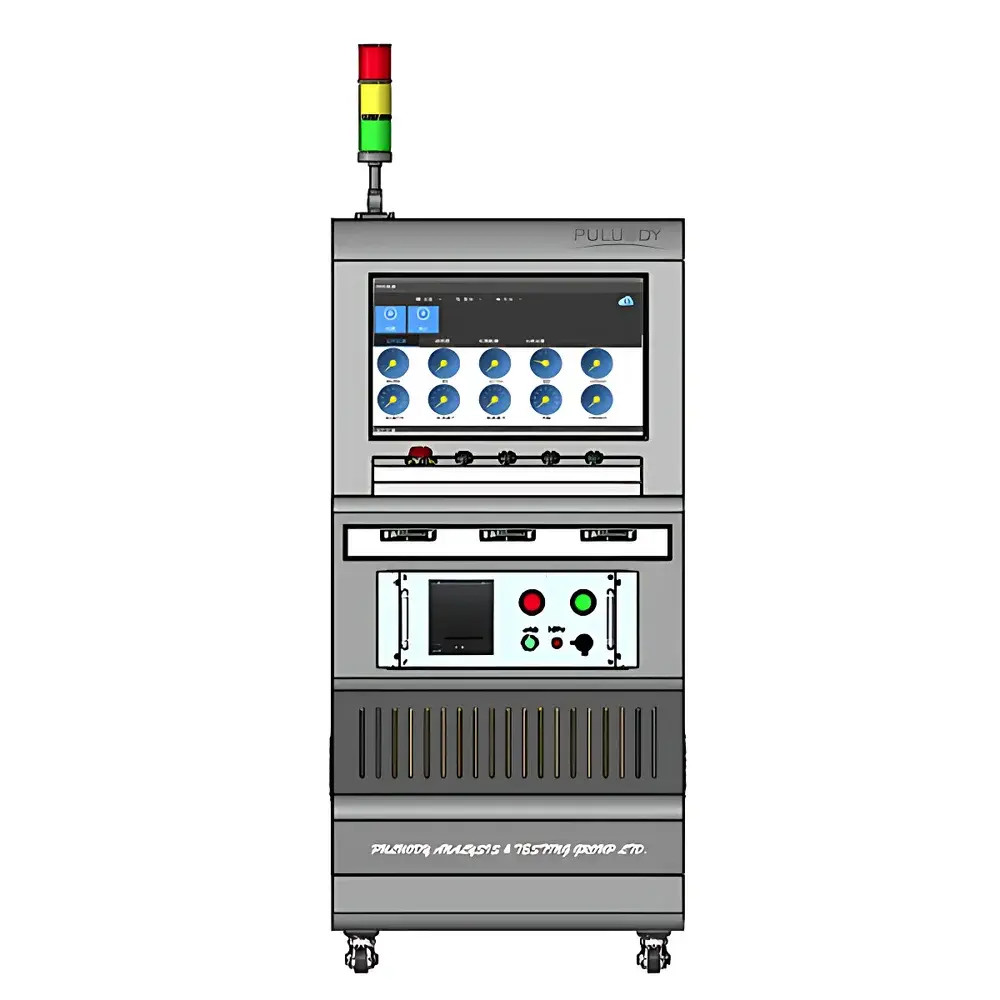
PULUODY OMS-IIA01 Integrated Oil Particle Contamination Monitoring System
| Brand | PULUODY |
|---|---|
| Origin | Shaanxi, China |
| Model | OMS-IIA01 |
| Instrument Type | Optical Liquid Particle Counter (Light Obscuration Principle) |
| Measurement Range | 0.03–3000 µm (configurable) |
| Sensitivity | 1 µm (per ISO 4402) or 4 µm(c) (per ISO 11171 / GB/T 18854) |
| Channel Count | Up to 1000 user-definable size channels |
| Accuracy | <3% |
| Coincidence Limit | 10,000 particles/mL (≤5% coincidence error) |
| Resolution | ≥90% at 60 mL/min |
| Sample Viscosity | Offline ≤99 mm²/s |
| Operating Pressure (Online) | 0–0.6 MPa (standard), up to 31.5 MPa (with pressure regulator) |
| Flow Rate | Sampling 5–60 mL/min |
| Temperature Range | Sample 20–65°C |
| Compliance Standards | ISO 4406, NAS 1638, SAE AS4059F, GJB 420B, DL/T 432, GB/T 18854, ISO 11171, USP <788>, EP 8.0, JP 16, ChP 2015, ISO 16889, GB/T 30176 |
Overview
The PULUODY OMS-IIA01 Integrated Oil Particle Contamination Monitoring System is an industrial-grade optical particle counter engineered for high-reliability, real-time assessment of solid particulate contamination in liquid media—primarily hydraulic oils, turbine oils, aviation lubricants, phosphate ester hydraulic fluids, and other demanding service fluids. It operates on the light obscuration (LO) principle: particles suspended in a laminar-flow stream pass through a focused dual-laser beam; each particle generates a transient pulse proportional to its cross-sectional area. The seventh-generation dual-laser narrow-beam sensor enhances signal stability, reduces noise-induced false counts, and improves sizing resolution across ultra-fine (0.03 µm) to coarse (3000 µm) ranges. Designed for both online process integration and offline laboratory analysis, the OMS-IIA01 delivers continuous, unattended monitoring capability with embedded compliance logic for ISO 4406, NAS 1638, GJB 420B, and pharmacopeial standards (USP , EP 8.0, ChP 2015). Its architecture supports long-term deployment in harsh environments—including high-pressure hydraulic circuits, aerospace ground support systems, naval propulsion plants, and power generation turbine lube oil loops—without degradation in counting fidelity or calibration traceability.
Key Features
- Seventh-generation dual-laser narrow-beam optical sensor with enhanced signal-to-noise ratio and sub-micron sizing repeatability
- 1000 programmable particle size channels; user-selectable configurations (8/16/32/64/128 bins) aligned with ISO, NAS, SAE, and military grading schemes
- Integrated industrial control unit with color LCD touchscreen interface, onboard OS, and thermal micro-printer for immediate report generation
- Real-time analog outputs (4–20 mA, 0–5 V) and digital interfaces (RS232, RS485, MODBUS RTU) compatible with DCS, SCADA, and PLC-based asset monitoring systems
- Automatic self-cleaning cycle post-analysis; programmable cleaning flow rate (5–150 mL/min) and duration
- Wide operational viscosity range: up to 500 mm²/s for online applications and 99 mm²/s for offline benchtop use
- Pressure-rated inline sampling module supporting up to 31.5 MPa (with integrated pressure regulation)
- Calibration traceable to national metrology institutes (e.g., NWMC, China; DL/T 432, GB/T 18854, ISO 11171); optional NIST-traceable PSL calibration certificate available
Sample Compatibility & Compliance
The OMS-IIA01 accommodates a broad spectrum of liquid matrices without pre-filtration or dilution: mineral- and synthetic-based lubricants, aviation fuels (Jet A-1, JP-5), phosphate ester hydraulic fluids (e.g., Skydrol®), transformer insulating oils, gear oils, greases (in carrier solvent), ultrapure water, aqueous cleaning solutions, and pharmaceutical-grade solvents. It meets stringent regulatory and industry-specific requirements including ISO 4406:2021 (hydraulic fluid cleanliness), NAS 1638 Class 00–12, SAE AS4059F (aerospace fluid cleanliness), GJB 420B (Chinese military specification), DL/T 432 (power plant turbine oil), and pharmacopeial methods for particulate matter in injectables (USP , EP 8.0, ChP 2015). For filter performance evaluation, it complies with ISO 16889, GB/T 30176, and GB/T 18853. All measurement data are generated under conditions compliant with GLP principles; audit trails, user access logs, and electronic signatures may be enabled per FDA 21 CFR Part 11 when integrated with validated software platforms.
Software & Data Management
The system runs P6.4 Analysis Software (integrated firmware + PC version), offering modular workflows for calibration, validation, testing, and reporting. Calibration modules support MTD/ISO 11171, ACFTD/ISO 4402, and PSL sphere reference standards (ASTM F658-87). Validation protocols include linearity, limit of detection (LOD), precision (RSD <3%), and carryover assessment. Data output includes raw pulse histograms, cumulative/differential distribution curves, ISO 4406 code assignment, NAS class, and custom grading tables. Results are exportable as CSV, PDF, or XML; stored locally (up to 6,000 test records) or transmitted via RS232/USB to LIMS or CMMS. Software supports multi-user role-based access control, electronic signature capture, and full audit trail logging—including parameter changes, calibration events, and report generation—to satisfy GMP/GLP documentation requirements.
Applications
The OMS-IIA01 serves critical functions across sectors where fluid integrity directly impacts safety, reliability, and lifecycle cost. In aerospace, it monitors hydraulic fluid cleanliness in flight control systems and ground test rigs; in power generation, it tracks turbine oil degradation and wear debris accumulation in real time. Defense applications include wear particle trending in armored vehicle transmissions, filtration efficiency testing of NBC filters, and fuel purity verification for missile guidance systems. In semiconductor manufacturing, it quantifies sub-100 nm contaminants in CMP slurries and ultrapure rinse water. Pharmaceutical users deploy it for particulate monitoring in sterile filling lines and final container inspection. Additional use cases span wind turbine gearbox oil health management, marine engine lube oil surveillance, hydraulic system commissioning verification, and R&D-level evaluation of filter media, additive packages, and synthetic base stocks.
FAQ
What particle detection principle does the OMS-IIA01 employ?
It uses the light obscuration (LO) method per ISO 11171 and ISO 4402, with dual-laser excitation to improve signal fidelity and reduce coincidence error.
Can the instrument be used for both online and offline analysis?
Yes—its modular design supports permanent inline installation (with pressure-rated flow cell) and portable benchtop operation using the integrated sample chamber.
Is calibration traceable to international standards?
Calibration follows GB/T 18854-2002 (equivalent to ISO 11171), with optional third-party certification from NWMC or defense metrology institutes.
Does the system support pharmacopeial compliance for injectable solutions?
Yes—it fully implements USP , EP 8.0, and ChP 2015 requirements for particle count in parenterals, including flow rate control, sample volume accuracy (<±1%), and reporting of ≥10 µm and ≥25 µm particles.
How is data integrity ensured for regulated environments?
When configured with P6.4 software, the system provides 21 CFR Part 11-compliant features: electronic signatures, immutable audit trails, user authentication, and secure data export protocols.
What maintenance is required for long-term operational reliability?
Routine tasks include quarterly sensor verification with ISO 11171 reference material, annual recalibration, and periodic cleaning of the flow cell and optical windows using manufacturer-specified solvents.



