
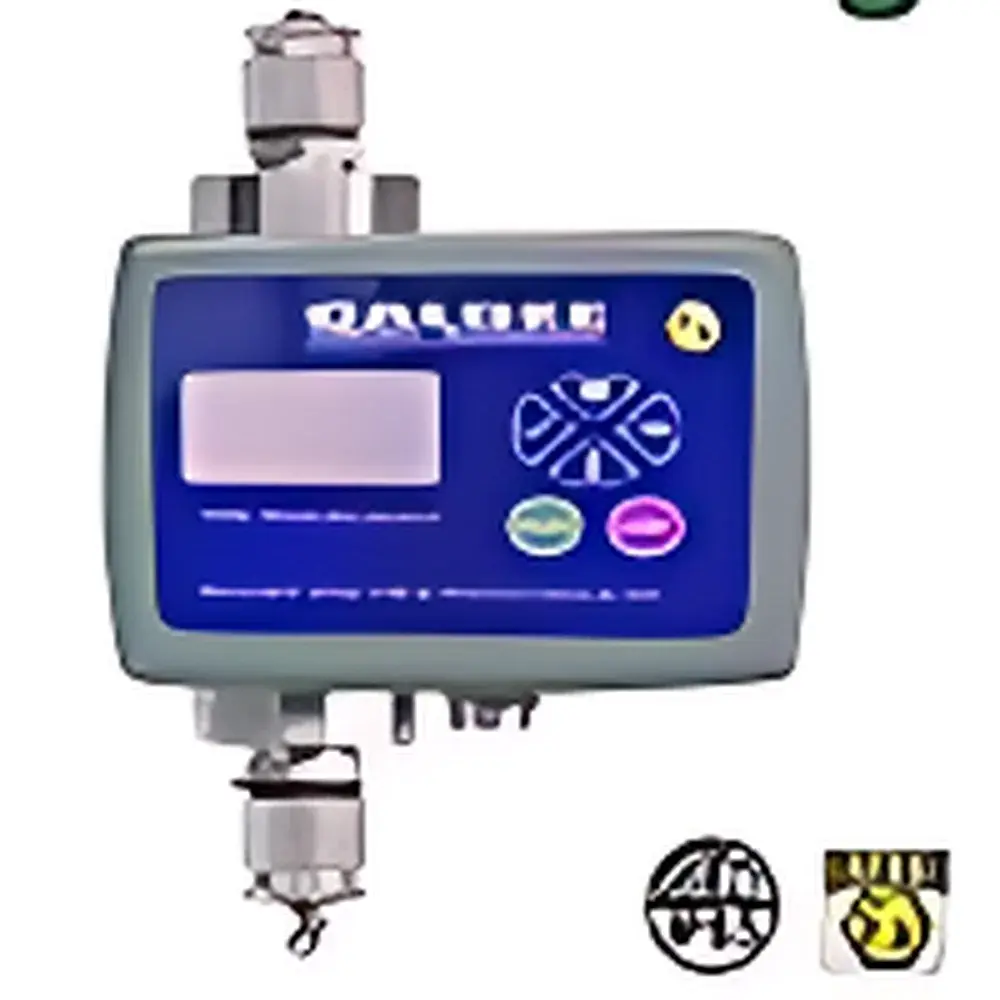
PULUODY OPC-Ex Intrinsically Safe Optical Particle Counter
| Brand | PULUODY |
|---|---|
| Origin | Shaanxi, China |
| Model | OPC-Ex |
| Instrument Type | Optical Particle Counter |
| Explosion Protection | Intrinsic Safety (Ex ia IIC T4 Ga) |
| IP Rating | IP40 to IP65 |
| Detection Principle | Light Obscuration (LO) with Dual-Laser Narrow-Beam Technology |
| Measurement Range | 1–150 µm |
| Channel Configurations | Fixed 8-channel or 16-channel (customizable 1–100 µm) |
| Calibration Standards Supported | NAS 1638 (00–>12), ISO 4406 (00–>28), GJB 420B (00–>12), GOST 17216 (00–>17), GB/T 14039, ISO 11171, MIL-STD-1246, SAE AS4059, IP 564/565, DL/T 432 & 1096, JB/T 9737, GB/T 18854 |
| Operating Pressure | 0–1.0 MPa (standard), up to 31.5 MPa (with integrated pressure-reduction valve) |
| Flow Rate | 15–500 mL/min |
| Fluid Temperature Range | −10 °C to +80 °C |
| Viscosity Range | 0–500 cSt (online) |
| Analog/Digital Outputs | RS232, RS485, 4–20 mA, 0–5 V (customizable with alarm relay) |
| Power Supply | 9–30 VDC |
| Reporting | Particles per mL + ISO/NAS/GJB-based contamination grade |
| Compliance | Meets IEC 60079-0/-11 for intrinsic safety |
| aligned with ISO 4402 (historical) and ISO 11171 | 2010 reference calibration protocols |
Overview
The PULUODY OPC-Ex is an intrinsically safe, IP-rated optical particle counter engineered for continuous, real-time monitoring of particulate contamination in pressurized oil and hydraulic fluid systems operating in hazardous environments. Based on fifth-generation light obscuration (LO) principles refined over five decades by the UK-based Particle Measuring Systems (acquired by PULUODY Group), the OPC-Ex implements dual-laser narrow-beam detection — a design optimized to minimize coincidence error and improve counting accuracy across broad particle size distributions (1–150 µm). Unlike conventional benchtop counters, this device integrates directly into fluid circuits without bypass loops, enabling true online measurement under dynamic flow conditions. Its core architecture adheres to IEC 60079-0 and IEC 60079-11 standards for equipment protection in explosive atmospheres (Zone 0/1, Group IIC, T4 temperature class), making it suitable for offshore drilling platforms, aviation fuel handling facilities, military mobile hydraulics, and solvent-cleaning systems where ignition risk prohibits standard instrumentation.
Key Features
- Intrinsically safe design certified to Ex ia IIC T4 Ga (IEC 60079-11), eliminating spark or thermal ignition hazards in flammable vapor environments.
- Robust mechanical housing rated IP40 to IP65, supporting operation in high-humidity, dust-laden, or washdown-prone industrial settings.
- Dual-laser narrow-beam optical sensor with temperature-stabilized photodetectors, delivering stable baseline performance across fluid temperatures from −10 °C to +80 °C.
- Wide operational pressure range: 0–1.0 MPa (direct-mount configuration); extended to 0–31.5 MPa via integrated, field-serviceable pressure-reduction valve assembly.
- Adjustable volumetric flow control (15–500 mL/min) ensures compatibility with low-viscosity solvents (<50 cSt) and high-viscosity turbine oils (up to 500 cSt).
- Multi-standard compliance engine supporting 14 international cleanliness grading schemes — including NAS 1638, ISO 4406:2017, GJB 420B, and GB/T 14039 — with on-device grade assignment and traceable reporting.
- Configurable analog and digital interfaces: RS232, RS485 Modbus RTU, 4–20 mA current loop, and 0–5 V DC output — all supporting real-time alarm thresholds and DCS integration.
Sample Compatibility & Compliance
The OPC-Ex is validated for use with mineral oils, synthetic esters, phosphate esters, aviation fuels (Jet A-1, JP-5), hydrocarbon solvents, and aqueous cleaning agents — provided fluid clarity permits optical transmission at 650 nm and 780 nm wavelengths. It complies with ISO 11171:2010 for sensor calibration traceability using NIST-traceable PSL standards, and supports third-party verification per ISO/IEC 17025 requirements. The instrument’s firmware embeds full audit trails for calibration events, parameter changes, and report generation — satisfying GLP and GMP documentation expectations where applicable. All electrical interfaces meet EMC Directive 2014/30/EU (EN 61326-1) and RoHS 2011/65/EU restrictions.
Software & Data Management
The embedded firmware includes a local display interface for immediate grade readout, trending graphs, and alarm status. For centralized deployment, the OPC-Ex communicates via RS485/Modbus to SCADA or CMMS platforms. Optional PC-based software (PULUODY CleanTrack™ v7.2) provides raw pulse data export (CSV), statistical process control (SPC) charting, historical trend overlays, and automated report generation compliant with ISO 4406 Annex B and NAS 1638 Appendix A. All data logs retain timestamps, operator IDs, and system configuration metadata — fulfilling FDA 21 CFR Part 11 requirements when deployed with electronic signature modules.
Applications
- Real-time wear debris monitoring in military vehicle hydraulic power units and naval propulsion systems.
- Contamination control during aviation fuel transfer and storage at airbases and refueling depots.
- Filter efficiency validation on test benches per ISO 16889 and ISO 11171.
- Condition-based maintenance of offshore drilling mud pumps and subsea control systems.
- Quality assurance of ultrapure solvents used in semiconductor wafer cleaning lines.
- Field calibration verification of portable particle counters against primary reference instruments.
FAQ
Does the OPC-Ex require external calibration certification to maintain traceability?
Yes — annual calibration against ISO 11171-compliant reference particles is recommended. The device supports on-site verification using certified PSL suspensions and includes built-in zero-check and sensitivity verification routines.
Can the instrument be installed directly in high-pressure hydraulic manifolds without auxiliary plumbing?
Yes — with the optional pressure-reduction valve kit, it operates continuously at up to 31.5 MPa. Mounting follows ISO 4405 port specifications and requires proper isolation valves and pulsation dampeners.
Is firmware update capability available remotely?
Firmware updates are performed via USB or RS232 using signed binary packages. Remote update over Modbus is not supported for security and functional integrity reasons.
What particle size standards does the optical sensor reference?
The dual-wavelength detector is calibrated using polystyrene latex (PSL) spheres traceable to NIST SRM 1960 and ISO 11171:2010 Annex A. Equivalent spherical diameter (ESD) reporting is applied across all output modes.
How is data integrity ensured during power interruption or network dropout?
All measurement data is buffered in non-volatile memory (EEPROM) with timestamped records. Upon recovery, buffered logs auto-transmit to the host system without loss.



