
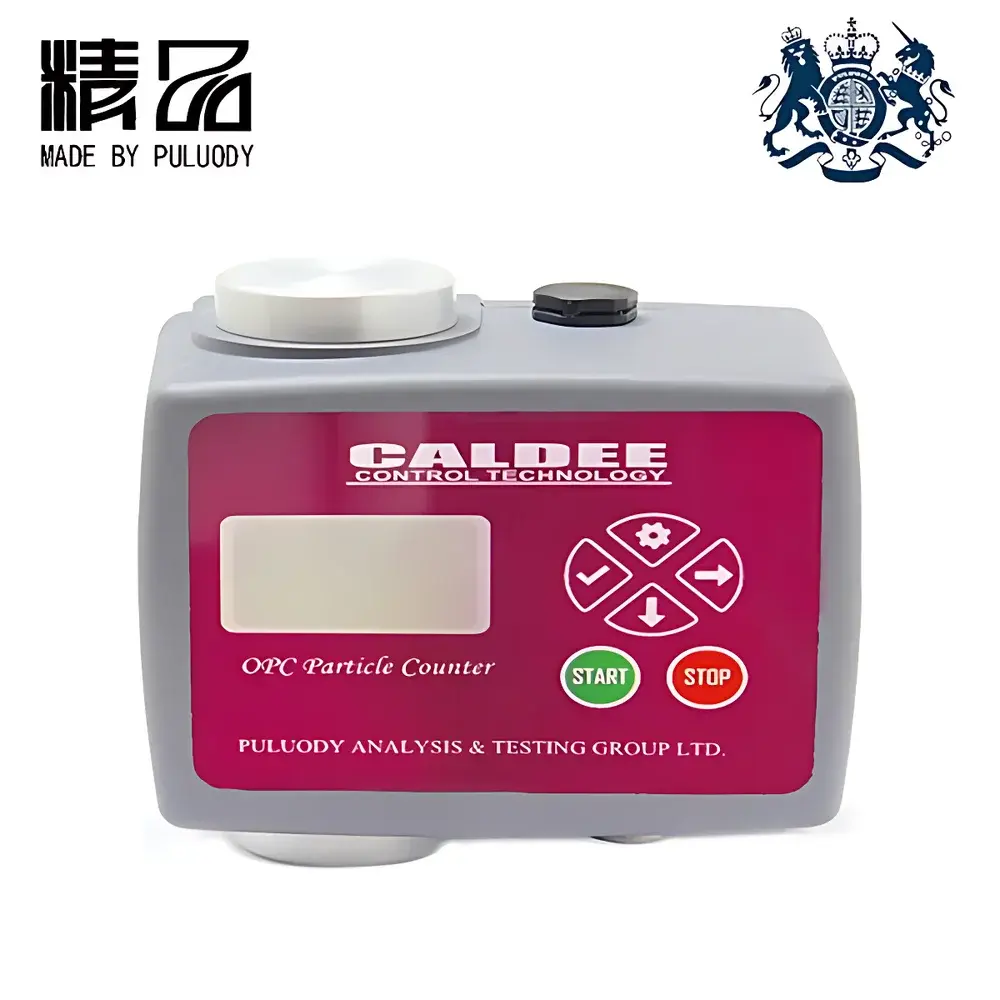
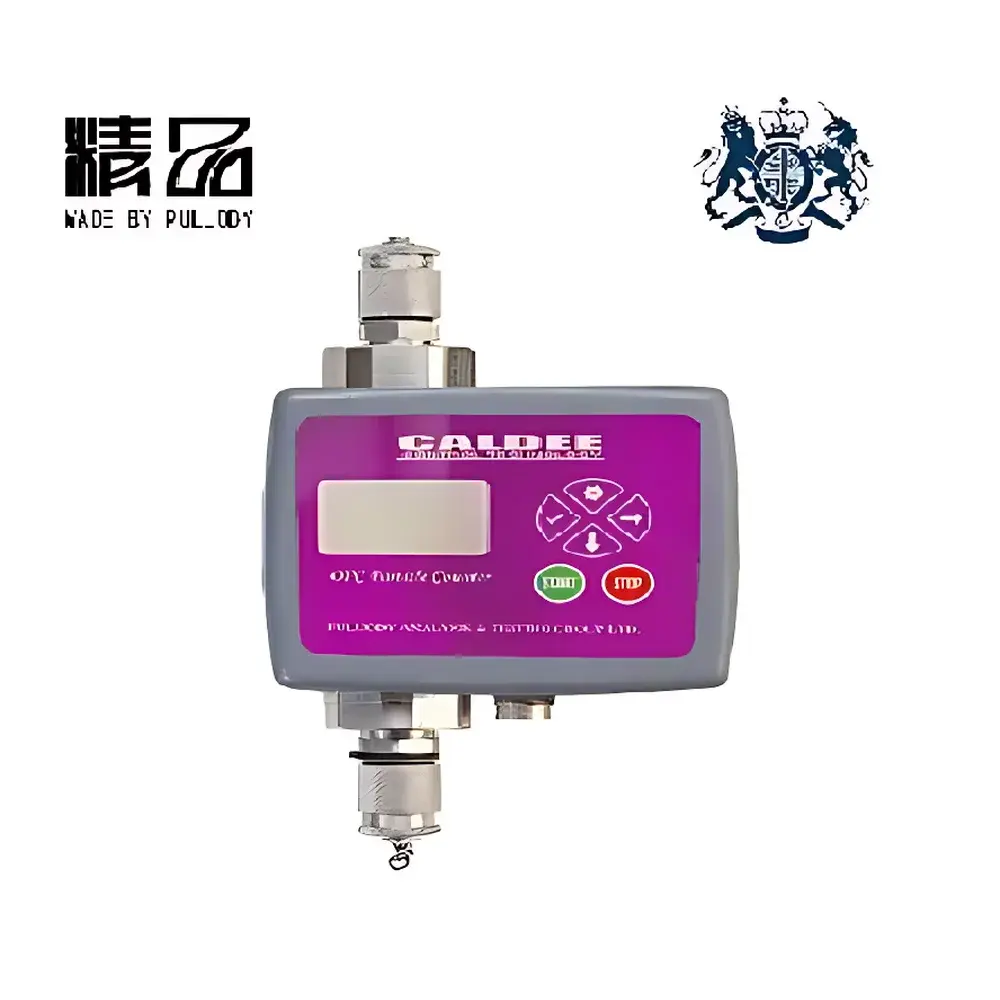
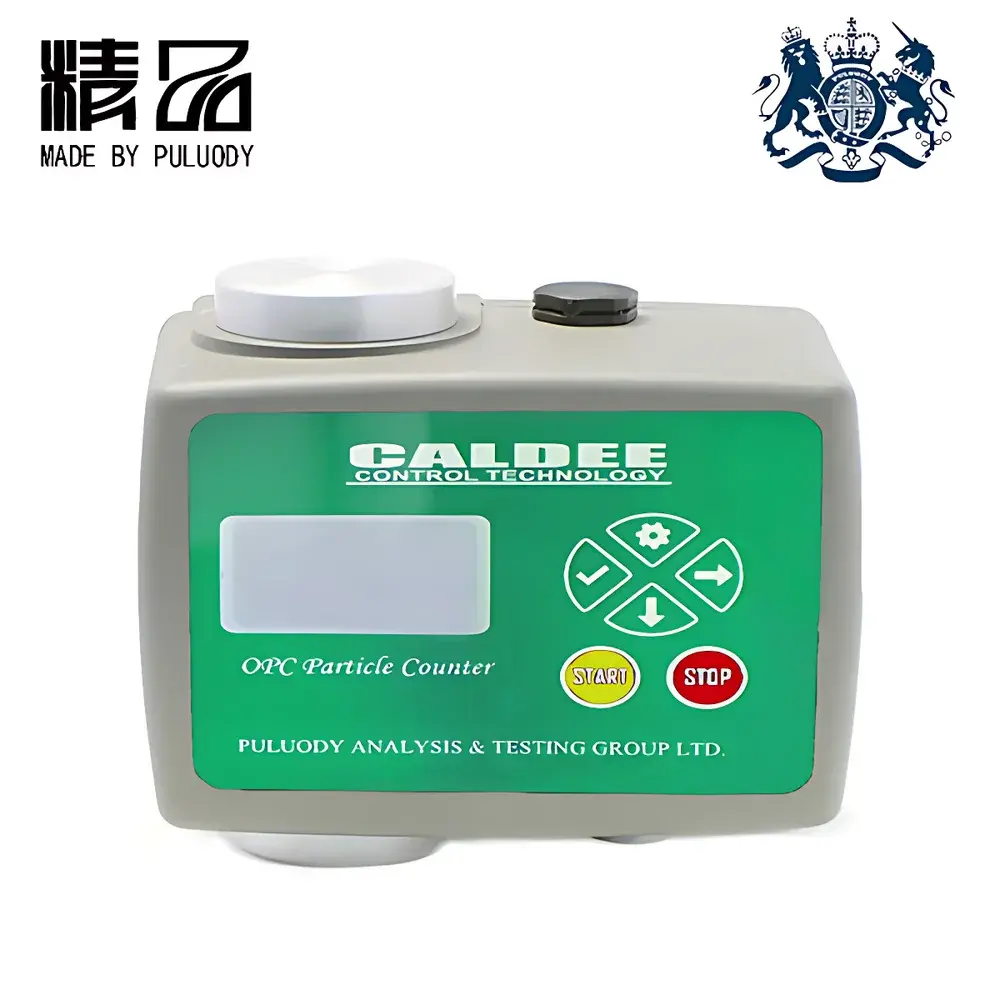
PULUODY OPC Online Particle Counter
| Brand | PULUODY |
|---|---|
| Origin | Shaanxi, China |
| Manufacturer Type | Authorized Distributor |
| Country of Origin | China |
| Model | OPC |
| Instrument Type | Optical Particle Counter |
| Detection Principle | Dual-Laser Narrow-Beam Light Scattering |
| Measurement Range | 1–150 µm |
| Channels | 8 |
| Calibration Standards | ISO 11171, ISO 4406, NAS 1638, GJB 420B, GOST 17216, GB/T 14039, SAE AS4059, IP 564/565 |
| Pressure Rating | 0–1.0 MPa (standard), up to 31.5 MPa (with pressure reducer) |
| Flow Rate | 15–500 mL/min |
| Fluid Temperature Range | −10 °C to +80 °C |
| Viscosity Range | 0–500 cSt |
| Output Interfaces | RS232, RS485, 4–20 mA, 0–5 V |
| Power Supply | 9–30 VDC |
| Reporting | Particles per mL + Contamination Code (e.g., ISO 4406:2017) |
Overview
The PULUODY OPC Online Particle Counter is an industrial-grade optical particle counter engineered for continuous, real-time monitoring of particulate contamination in liquid systems—primarily hydraulic oils, turbine oils, lubricants, and ultra-pure process fluids. It operates on the principle of dual-laser narrow-beam light scattering, a seventh-generation detection architecture developed by PULUODY Analytical Testing Group (UK). This method enables high-sensitivity, low-noise particle enumeration across eight user-configurable size channels (1–150 µm), with traceable alignment to ISO 11171:2010 calibration protocols. Unlike offline laboratory counters, the OPC integrates directly into pressurized fluid loops—supporting online operation at pressures up to 31.5 MPa (with integrated pressure reduction)—and delivers statistically robust data without manual sampling or system shutdown. Its design targets predictive maintenance workflows in critical infrastructure, where early detection of abnormal particle generation correlates strongly with incipient component wear, filter breakthrough, or ingress contamination.
Key Features
- Dual-laser narrow-beam optical sensing architecture ensures superior signal-to-noise ratio and long-term measurement stability under variable flow and temperature conditions.
- Eight programmable detection channels (1, 2, 3, 4, 5, 6, 10, 15, 25, 50, 100, and 150 µm thresholds configurable per standard) support simultaneous compliance reporting against multiple international grading schemes.
- Wide operational envelope: compatible with fluid viscosities up to 500 cSt, temperatures from −10 °C to +80 °C, and flow rates adjustable from 15 to 500 mL/min—enabling deployment across gearboxes, servo-valve circuits, and offshore hydraulic manifolds.
- Integrated analog and digital outputs—including isolated 4–20 mA current loop, RS232/RS485 serial interfaces, and optional voltage output—allow seamless integration with DCS, PLC, SCADA, and HMIs without external signal conditioning.
- Ruggedized stainless-steel housing rated for IP65 environmental protection; designed for mounting in high-vibration, high-EMI industrial zones including marine platforms, mining equipment, and aerospace ground test stands.
- Onboard contamination grading engine supports real-time calculation and display of ISO 4406:2017, NAS 1638, GJB 420B, SAE AS4059, and GB/T 14039 codes—each traceable to primary reference standards.
Sample Compatibility & Compliance
The OPC is validated for use with mineral oils, synthetic esters, phosphate esters, water-glycol fluids, and deionized water—provided refractive index differences between particles and carrier fluid exceed Δn ≥ 0.05. It complies with core metrological requirements of ISO 21501-4:2018 (calibration of liquid-borne particle counters), and its counting accuracy meets ±0.8 code level uncertainty when referenced to NIST-traceable latex sphere suspensions. All internal calibration routines adhere to ISO 4402 and ISO 11171:2010 methodologies. For regulated environments—including defense logistics, nuclear auxiliary systems, and pharmaceutical clean utilities—the instrument supports audit-ready operation via optional GLP-compliant logging (time-stamped event records, operator ID tagging, and change history).
Software & Data Management
The embedded firmware includes a deterministic real-time operating system (RTOS) with non-volatile memory for storing >10,000 timestamped measurement records. Optional PC-based software (PULUODY ParticleView™) provides advanced trend analysis, alarm thresholding (configurable per channel or cumulative count), statistical process control (SPC) charting, and automated report generation compliant with ISO 55001 asset management frameworks. Data export formats include CSV, PDF, and XML—structured to align with enterprise CMMS platforms such as SAP PM and IBM Maximo. For FDA-regulated applications, optional 21 CFR Part 11 compliance packages are available, featuring electronic signatures, audit trails, and role-based access control.
Applications
- Continuous monitoring of hydraulic fluid cleanliness in military vehicle power transmission systems (per MIL-STD-1246C and GJB 420B).
- Real-time assessment of filter performance during qualification testing (ISO 16889, ISO 4572).
- Wear debris trending in wind turbine gearboxes and hydroelectric governor systems.
- In-line verification of cleaning validation for semiconductor tool coolant loops (per SEMI F57).
- Condition-based maintenance of marine diesel engine lubrication circuits aboard offshore drilling rigs.
- Monitoring of transformer oil particulate load in substation assets (DL/T 432, IEC 60422).
FAQ
Does the OPC require periodic recalibration?
Yes. Annual recalibration against ISO 11171-compliant reference materials is recommended and supported by accredited third-party providers including Zhongte Metrology & Testing Institute (CNAS-certified).
Can the instrument be installed upstream of a filter?
Yes—provided system pressure is reduced to ≤1.0 MPa using the optional integrated pressure regulator. For unregulated high-pressure lines (>10 MPa), installation downstream of the filter is advised to avoid sensor damage.
Is remote firmware update supported?
Firmware updates are performed via USB or RS232 using PULUODY’s certified configuration utility; over-the-air (OTA) updates are not implemented for security and integrity reasons.
What documentation is provided for regulatory audits?
Each unit ships with a Factory Calibration Certificate (traceable to UKAS-accredited labs), Declaration of Conformity (CE/ROHS), and full technical file including optical schematic, mechanical drawings, and EMC test reports.
How is particle size resolution verified?
Resolution is verified using monodisperse polystyrene latex (PSL) standards (NIST SRM 1960 series) at 3, 5, 10, and 25 µm—measuring channel edge sharpness and inter-channel cross-talk per ISO 21501-4 Annex B.



