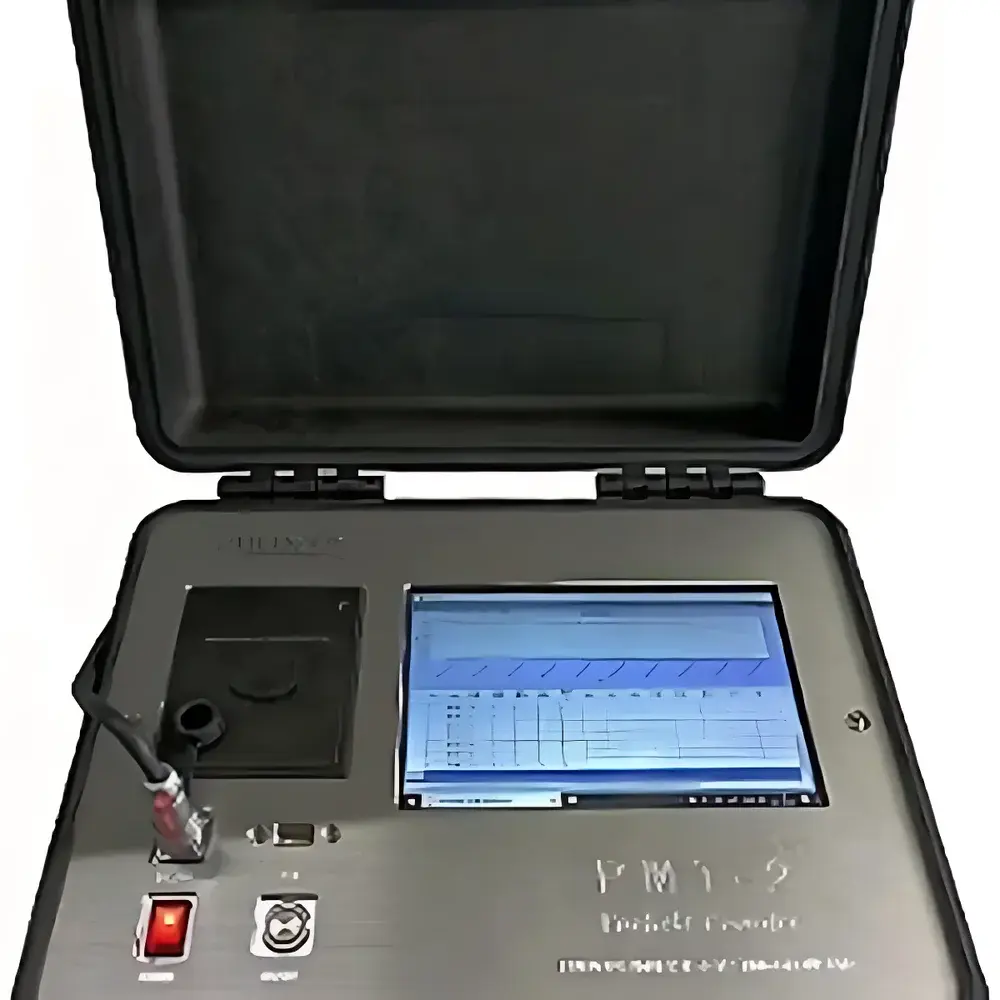
PULUODY OPC-VI Integrated Oil Condition Monitoring System
| Brand | PULUODY |
|---|---|
| Origin | Shaanxi, China |
| Manufacturer Type | Authorized Distributor |
| Country of Origin | China |
| Model | OPC-VI |
| Price | USD 40,200 (FOB) |
| Core Principle | Light-Blocking (Obscuration) Particle Counting |
| Compliance Standards | ISO 11171:1999, ISO 4406:2023, NAS 1638, GB/T 18854–2002, GB/T 14039, MIL-STD-1246C, GJB 420B, DL/T 432 |
| Detection Channels | User-Configurable, up to 24 size thresholds (e.g., ≥4 µm(c), ≥6 µm(c), ≥14 µm(c), ≥21 µm(c), ≥38 µm(c), ≥70 µm(c)) |
| Output Signal | 4–20 mA analog per sensor channel |
| Communication Interface | RS232, optional RS485/Modbus RTU |
| Operating Temperature | –20 °C to +70 °C |
| Fluid Compatibility | Mineral oils, synthetic lubricants, phosphate ester hydraulic fluids, aviation fuels, transformer oil, turbine oil, gear oil, hydraulic fluid (water-glycol & water-oil emulsions), ultra-pure water, aggressive solvents (pH 2–12) |
| Sensor Modules | Particulate (light-blocking), ferrous/non-ferrous wear debris (inductive), water activity (capacitive), viscosity (oscillating piston), density (vibrating U-tube), dielectric constant, pressure, flow rate, temperature |
Overview
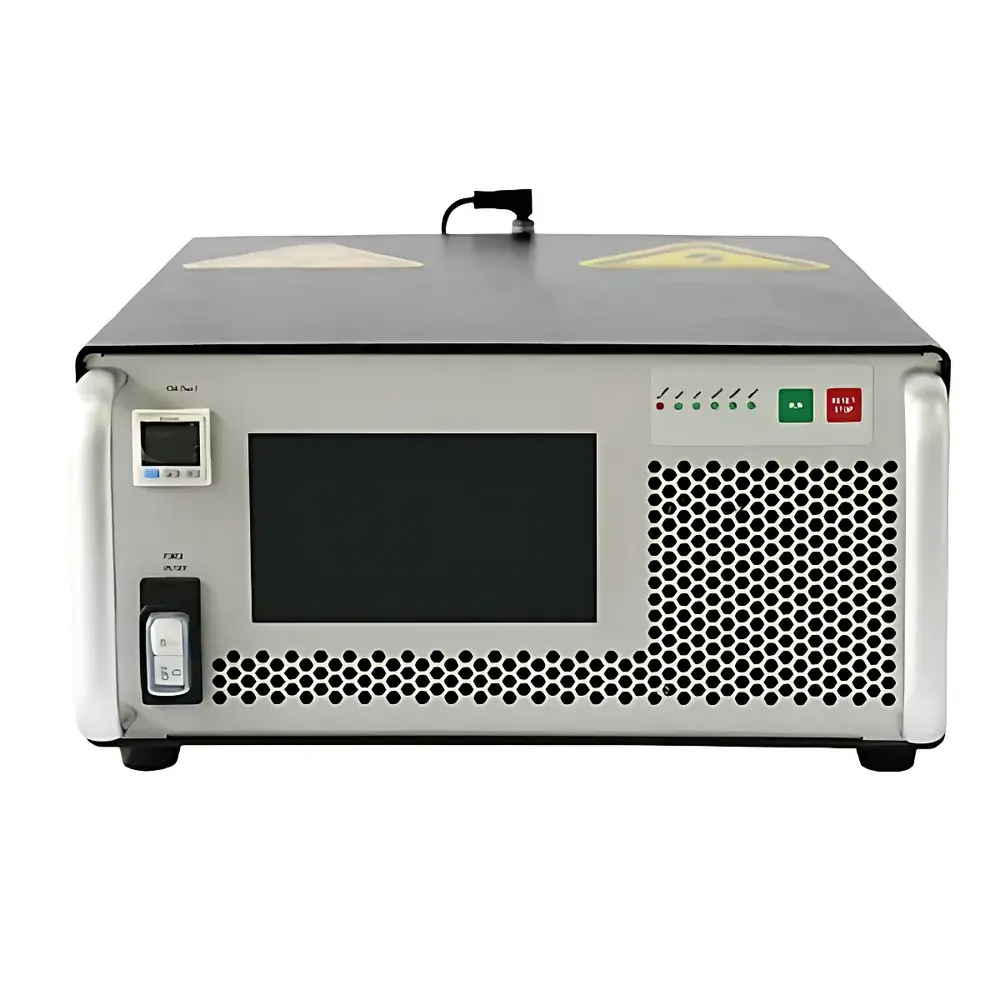
The PULUODY OPC-VI Integrated Oil Condition Monitoring System is an industrial-grade, real-time in-line analytical platform engineered for continuous assessment of fluid health in critical rotating and hydraulic machinery. It operates on the internationally standardized light-obscuration (photometric blocking) principle per ISO 11171:1999 and ASTM D7647, enabling quantitative particle counting and sizing across user-defined thresholds from 4 µm(c) to 1000 µm(c). Unlike offline laboratory particle counters, the OPC-VI integrates nine synchronized sensor modules—particulate, ferrous/non-ferrous wear debris, water activity, kinematic viscosity, density, dielectric constant, pressure, volumetric flow, and temperature—within a single ruggedized housing. This multi-parameter architecture supports predictive maintenance strategies by correlating particle contamination trends with tribological degradation signatures, moisture ingress, oxidative aging, and fluid rheological drift. Designed for deployment in harsh environments—including aerospace ground support equipment, naval propulsion systems, power generation turbines, and heavy-duty mobile hydraulics—the system meets IP65 ingress protection and EMC Class A industrial immunity requirements.
Key Features
- Modular sensor architecture: Nine independent detection units—particulate (ISO 11171-compliant light-blocking), ferrous wear debris (ISO 16232 magnetic chip detection), non-ferrous particulates (inductive sensing), water activity (0.01–1.00 aw, ±0.02 aw), dynamic viscosity (0.5–1000 cSt, ±1.5% FS), density (0.6–2.0 g/cm³, ±0.001 g/cm³), dielectric constant (1–100, ±0.5%), pressure (0–40 bar, ±0.25% FS), flow (0.1–20 L/min, ±1.0% FS), and temperature (–20–120 °C, ±0.3 °C)—all calibrated traceably to NIST-traceable reference materials.
- Embedded real-time OS with 7-inch high-brightness TFT LCD, onboard thermal printer, and dual-mode operation: standalone mode (local display/print) or networked mode (RS232/optional RS485 Modbus RTU) for SCADA integration.
- Configurable particle counting logic: Supports single-threshold, multi-channel cumulative/differential counting, worst-case/best-case multi-size classification per ISO 4406:2023 and NAS 1638 Annex B algorithms.
- Calibration traceability: Delivered with certificate of conformance to GB/T 18854–2002 (equivalent to ISO 11171), accompanied by certified calibration particles (GBW(E) 130241, ISO MTD), and optional third-party verification report from CNAS-accredited National Particle Metrology Center.
- Ruggedized process interface: 316L stainless steel wetted parts, 1/2″ NPT or SAE 100R2A flanged inlet/outlet, operating pressure rating up to 40 bar, and chemical resistance validated for phosphate ester fluids (MIL-PRF-87257), jet fuel (JP-8), and inhibited transformer oil (IEC 60296).
Sample Compatibility & Compliance
The OPC-VI is validated for use with mineral-based, synthetic, and bio-based lubricants; aviation hydraulic fluids (MIL-PRF-5606, MIL-PRF-83282, MIL-PRF-87257); turbine oils (ASTM D4378); insulating oils (IEC 60429, DL/T 1096); and aggressive media including high-acid cleaning solutions (pH 2.0), alkaline degreasers (pH 12.0), and ultra-pure water (UPW, resistivity >18.2 MΩ·cm). All measurements comply with regulatory and industry frameworks governing asset integrity: ISO 4406:2023 (fluid cleanliness coding), ISO 16232:2018 (road vehicle component cleanliness), MIL-STD-1246C (contamination control levels), GJB 420B–2015 (Chinese military hydraulic fluid standards), and DL/T 432–2018 (power plant oil supervision). Data acquisition supports FDA 21 CFR Part 11–compliant audit trails when integrated with validated LIMS or CMMS platforms.
Software & Data Management
The seventh-generation PULUODY OIL17 software suite provides full lifecycle data governance—from automated sensor initialization and zero-point validation to statistical trend analysis (CUSUM, Shewhart X-bar/R charts) and ISO cleanliness code generation. Raw pulse data (amplitude vs. time) is stored with timestamp, temperature-compensated viscosity, and water activity metadata. Export formats include CSV, PDF test reports (with embedded digital signature), and XML for ERP/MES integration. The system logs all operator actions, calibration events, and firmware updates with immutable timestamps—enabling GLP/GMP-aligned traceability. Optional cloud gateway enables secure TLS 1.2 transmission to centralized fleet monitoring dashboards with configurable alert thresholds (SMS/email/webhook).
Applications
The OPC-VI serves as the primary condition-monitoring node in mission-critical fluid circuits: real-time contamination surveillance of aircraft hydraulic reservoirs (per FAA AC 120-95B); wear debris trending in main gearbox sumps of wind turbines (IEC 61400-25); moisture and particle accumulation in nuclear power plant turbine lube oil systems (ANSI/ISA-84.00.01); cleanliness verification during semiconductor fab tool coolant flushing (SEMI F21); and corrosion risk assessment in marine diesel engine crankcase oils (ISO 8502-9). It is also deployed in military logistics depots for rapid certification of stored aviation fuels per MIL-STD-1246C Level 100, and in rail traction motor oil systems to detect early-stage bearing spalling via ferrous debris morphology analysis.
FAQ
Does the OPC-VI meet ISO 11171:1999 calibration requirements for light-obscuration particle counters?
Yes. Each unit ships with a full ISO 11171:1999 calibration certificate referencing NIST-traceable PSL standards and includes GBW(E) 130241 calibration suspensions. Annual recalibration is supported via PULUODY’s CNAS-accredited service center.
Can the system differentiate between ferrous and non-ferrous wear particles in real time?
Yes. Dual-sensor fusion combines inductive wear debris detection (per ISO 16232 Annex D) with light-obscuration sizing to classify particles by magnetic susceptibility and morphology—enabling distinction between fatigue spalls (ferrous), cutting wear (non-ferrous), and environmental dust (silica/alumina).
Is the OPC-VI suitable for online monitoring of phosphate ester hydraulic fluids used in power plant control systems?
Yes. All wetted materials—including the optical flow cell, pressure transducer diaphragm, and viscosity sensor piston—are chemically resistant to triaryl phosphate esters (e.g., Firetrol LFP) at temperatures up to 70 °C, with long-term stability verified per ASTM D4768.
What data security and audit trail capabilities does the system provide?
All measurement records, calibration logs, and user actions are cryptographically timestamped and stored in a write-once-read-many (WORM) partition. When connected to validated enterprise software, it supports electronic signatures, role-based access control (RBAC), and 21 CFR Part 11 audit trails.
How is sensor drift compensated during extended unattended operation?
Each module performs automatic baseline correction every 24 hours using internal reference channels and temperature-compensated signal conditioning. Viscosity and density sensors include built-in zero-drift compensation algorithms compliant with ISO 291.
Related Products