
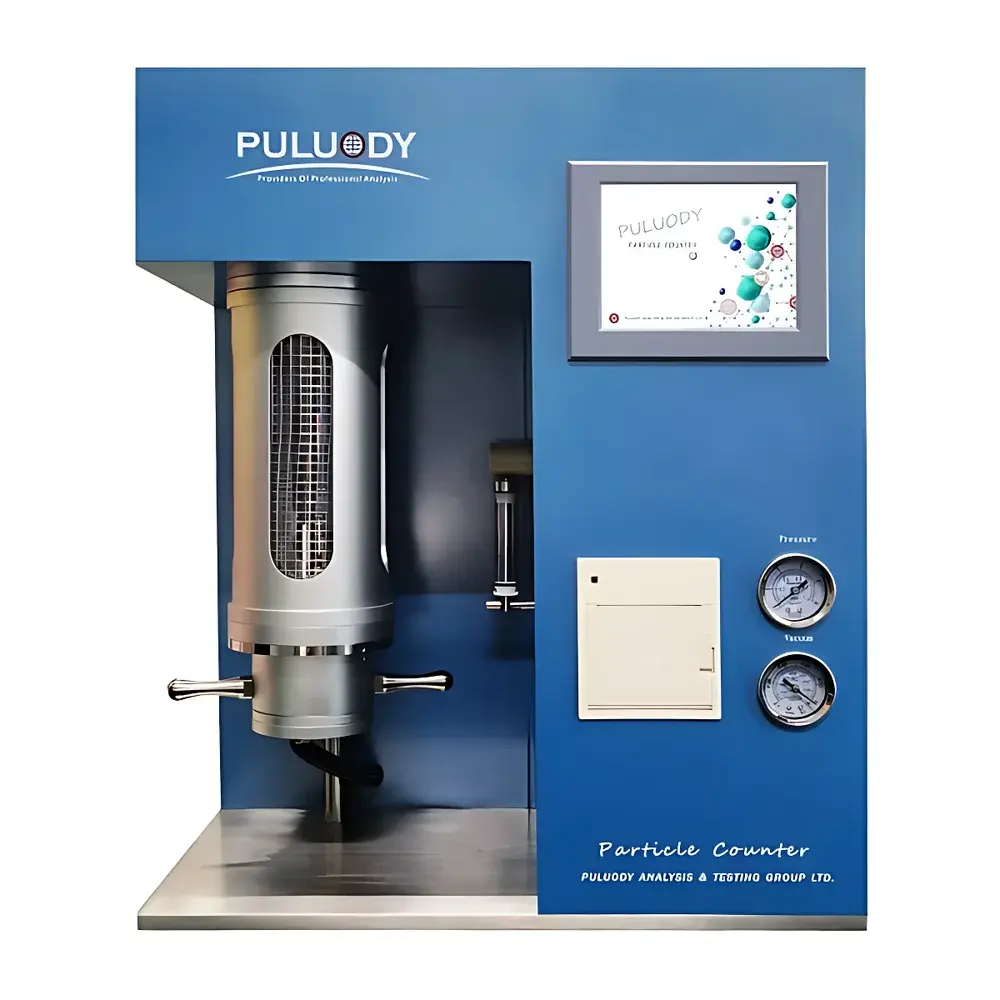
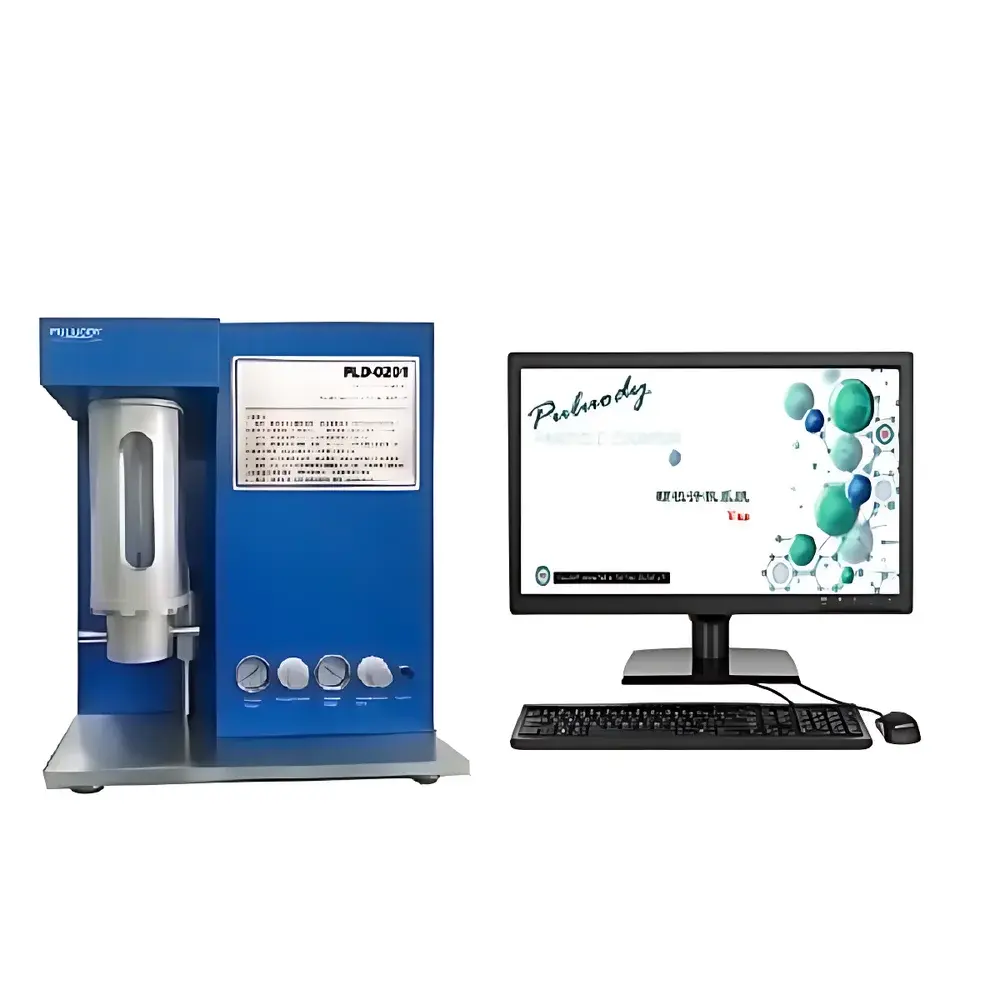
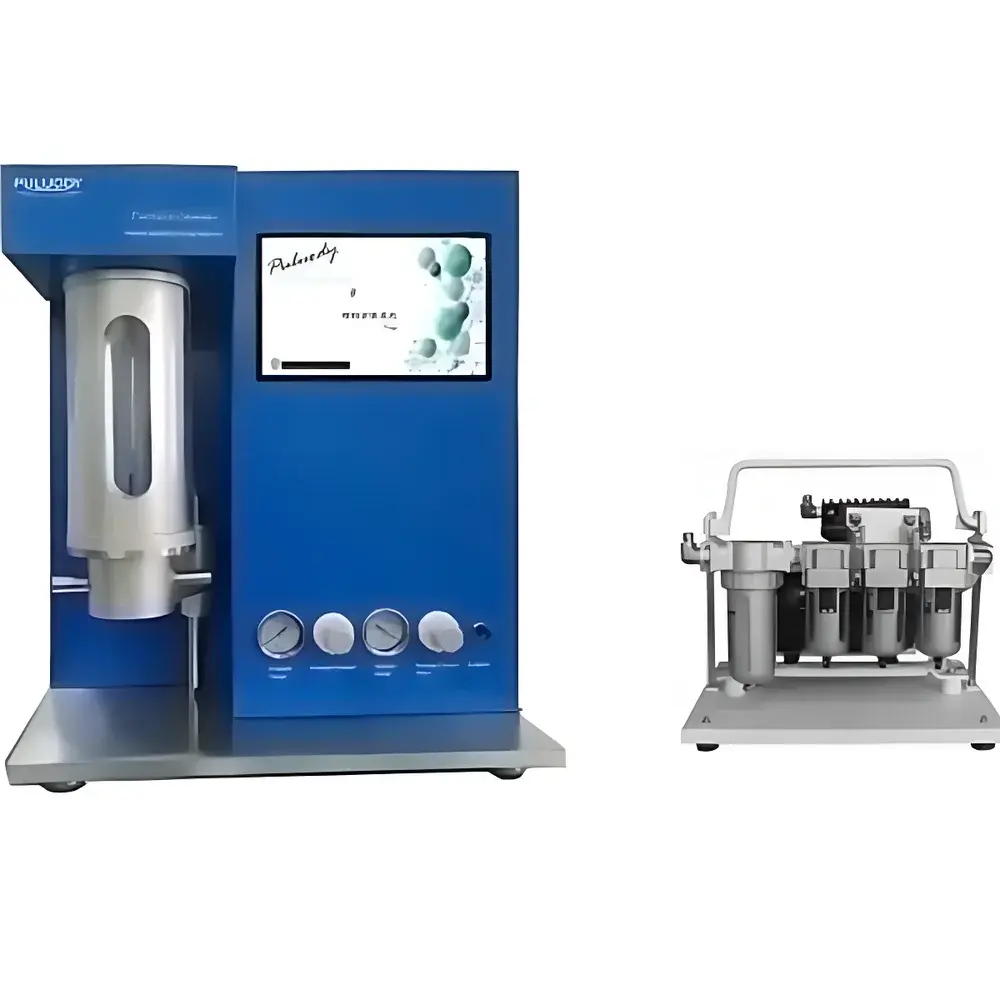
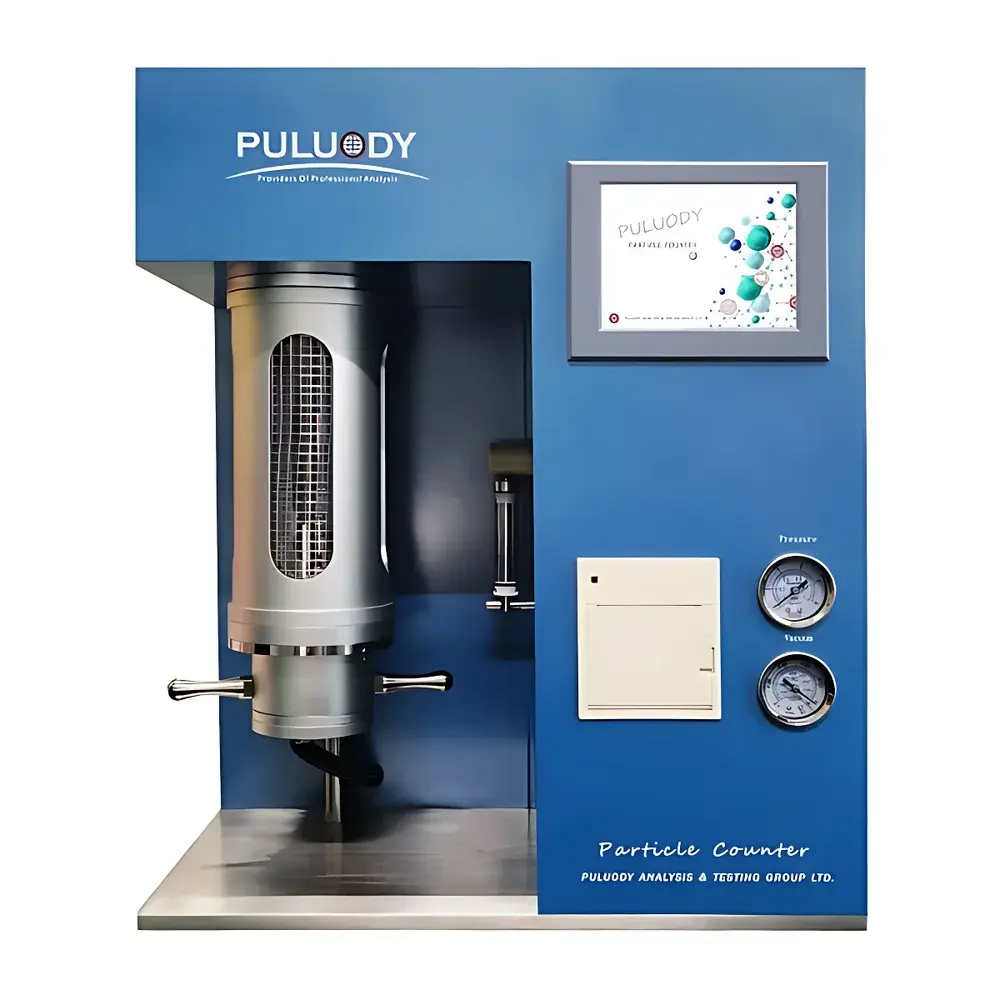
PULUODY PLD-0201-8 Benchtop Optical Particle Counter for Oil Contamination Analysis
| Brand | PULUODY |
|---|---|
| Origin | Shaanxi, China |
| Model | PLD-0201-8 |
| Instrument Type | Optical Particle Counter |
| Detection Principle | Light Obscuration (LO) |
| Measurement Range | 1–1000 µm (sensor-dependent) |
| Channel Resolution | 1000 channels |
| Minimum Detectable Size | 0.01 µm (nano-range mode) |
| Counting Accuracy | ≤5% coincidence error at 10,000 particles/mL |
| Compliance Standards | ISO 4406, ISO 11171, ISO 11500, NAS 1638, ASTM D6786, DL/T 432, DL/T 1096, GJB 380, GJB 420A/B, MIL-STD-1246, GB/T 14039, GB/T 18854 |
| Software | P6.4 Integrated Analysis Suite (PC & embedded versions) |
| Data Storage | 3,000 tests (embedded industrial PC) |
| Interface | RS232 |
| Output | Particle count per mL, size distribution histogram, contamination grade (ISO/NAS), printable reports |
Overview
The PULUODY PLD-0201-8 Benchtop Optical Particle Counter is a high-resolution, light obscuration (LO)-based instrument engineered for quantitative solid particle contamination analysis in liquid media—primarily hydraulic fluids, lubricants, insulating oils, turbine oils, and other hydrocarbon- or synthetic-based operational fluids. It operates on the principle of single-particle optical sensing: as particles suspended in a laminar-flow stream pass through a precisely collimated laser beam, they generate transient shadows proportional to their projected area. These pulses are captured by a dual-wavelength, eighth-generation narrow-beam laser detection system, enabling stable, low-noise signal acquisition across an ultra-wide dynamic range—from sub-100 nm nanoparticles to 1000 µm macro-agglomerates. Unlike generic particle counters, the PLD-0201-8 integrates configurable detection algorithms aligned with internationally recognized contamination grading frameworks, allowing direct conversion of raw pulse data into standardized reporting units (e.g., ISO 4406:2021 code, NAS 1638 class). Its architecture supports both routine QC screening and R&D-grade multi-channel spectral profiling, making it suitable for laboratories requiring trace-level particulate monitoring under GLP, ISO/IEC 17025, or aerospace-grade fluid certification protocols.
Key Features
- Eighth-generation dual-laser narrow-beam optical sensor with enhanced signal-to-noise ratio and thermal drift compensation
- 1000 programmable size channels spanning 0.01 µm to 1000 µm—supporting simultaneous nano-, micro-, and macro-particle resolution
- Configurable detection modes: light obscuration (LO), light scattering (LS), and eddy current (EC) evaluation logic per application-specific standards
- Integrated industrial control unit with real-time data processing, onboard storage for 3,000 test records, and RS232 serial interface for external PC synchronization
- P6.4 Analysis Software Suite: compliant with FDA 21 CFR Part 11 requirements for electronic records and signatures; includes audit trail, user role management, and report templating
- Calibration traceability to ISO 11171:2010 and GB/T 18854–2002 using NIST-traceable polystyrene latex (PSL) reference standards
- Automatic coincidence error correction up to 10,000 particles/mL (±5% deviation threshold)
Sample Compatibility & Compliance
The PLD-0201-8 is validated for use with a broad spectrum of organic and inorganic liquids, including but not limited to mineral and synthetic hydraulic oils, aviation turbine fuel (Jet A-1), transformer oil (IEC 60296), gear oils, refrigeration lubricants, water-glycol emulsions, and polymer solutions. It meets the physical and metrological requirements of ISO 4402:1991 (for calibration verification), ISO 11500:2019 (for automatic particle counting in oils), and ASTM D6786–22 (Standard Test Method for Determination of Particulate Contamination in Aviation Turbine Fuels). The instrument’s firmware embeds over 380 preconfigured standard templates—including ISO 4406:2021, NAS 1638 Class, MOOG Code, and DL/T 1096–2009—enabling direct compliance reporting without post-processing. For regulated environments, its software supports 21 CFR Part 11-compliant electronic signatures, time-stamped audit logs, and locked result archives—fully auditable during GMP, ISO 9001, or AS9100 assessments.
Software & Data Management
The P6.4 Analysis Software provides unified control, visualization, and export functionality across embedded and desktop platforms. It delivers real-time particle histograms, cumulative distribution curves, and statistical summaries (mean, median, mode, standard deviation). All measurement sessions are timestamped and linked to operator ID, sample ID, and method template. Data exports support CSV, PDF, XML, and proprietary .p6d formats—compatible with LIMS integration via ODBC or HL7 interfaces. The software includes built-in validation tools for linearity verification, repeatability assessment (per ISO 4406 Annex B), and inter-instrument correlation checks. Calibration history, maintenance logs, and sensor health diagnostics are stored within the database and accessible via administrator view—ensuring full traceability from measurement to regulatory submission.
Applications
This instrument serves critical roles across multiple high-reliability sectors: in aerospace maintenance depots, it validates hydraulic fluid cleanliness prior to aircraft component reinstallation per MIL-STD-1246C Level I/II specifications; in power generation facilities, it monitors turbine oil degradation and filter performance against DL/T 1096–2009 thresholds; in semiconductor manufacturing, it verifies ultrapure solvent particulate loadings below ISO Class 5 (≤100 particles/m³ ≥0.1 µm); and in automotive R&D labs, it quantifies wear debris morphology in engine oil samples per ASTM D7690. Additional applications include qualification of filtration media efficiency (per ISO 16889), validation of cleanroom fluid transfer systems, and stability testing of nanoparticle suspensions in pharmaceutical excipients.
FAQ
What particle sizing principles does the PLD-0201-8 support?
It primarily uses light obscuration (ISO 11500), with optional firmware-enabled interpretation modes for light scattering and eddy current detection—configurable per standard-specific requirements.
Can the instrument be calibrated to international reference standards?
Yes—calibration follows ISO 11171:2010 and GB/T 18854–2002 using NIST-traceable PSL standards; certificate of calibration includes uncertainty budget and traceability chain documentation.
Is the P6.4 software compliant with FDA 21 CFR Part 11?
Yes—the software implements electronic signature workflows, audit trail logging, and role-based access control required for regulated pharmaceutical and medical device manufacturing environments.
What is the maximum particle concentration the system can measure without dilution?
Up to 10,000 particles/mL with ≤5% coincidence error; higher concentrations require automated dilution or manual pre-dilution per ISO 4406 Annex C guidelines.
Does the system support custom reporting formats for internal QA protocols?
Yes—users may define custom report templates, including company logos, approval workflows, and field-specific metadata fields via the P6.4 Report Designer module.



