
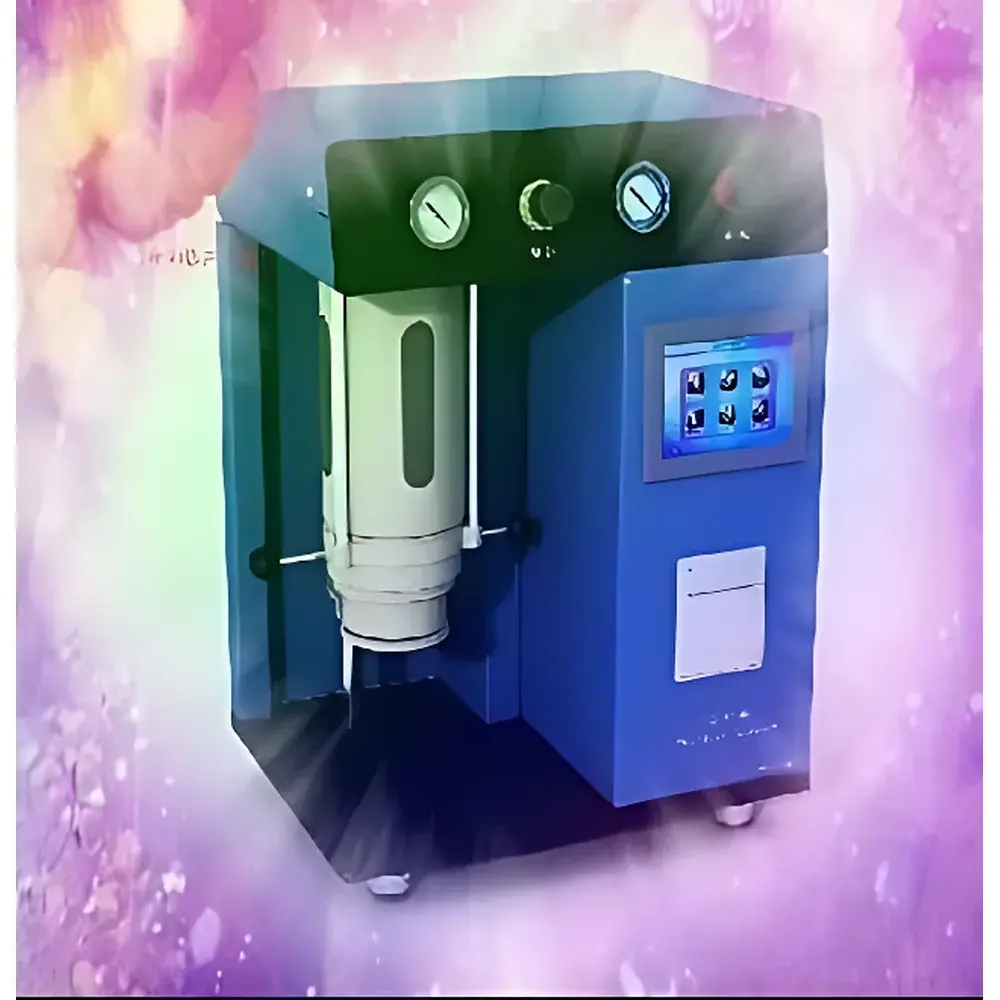


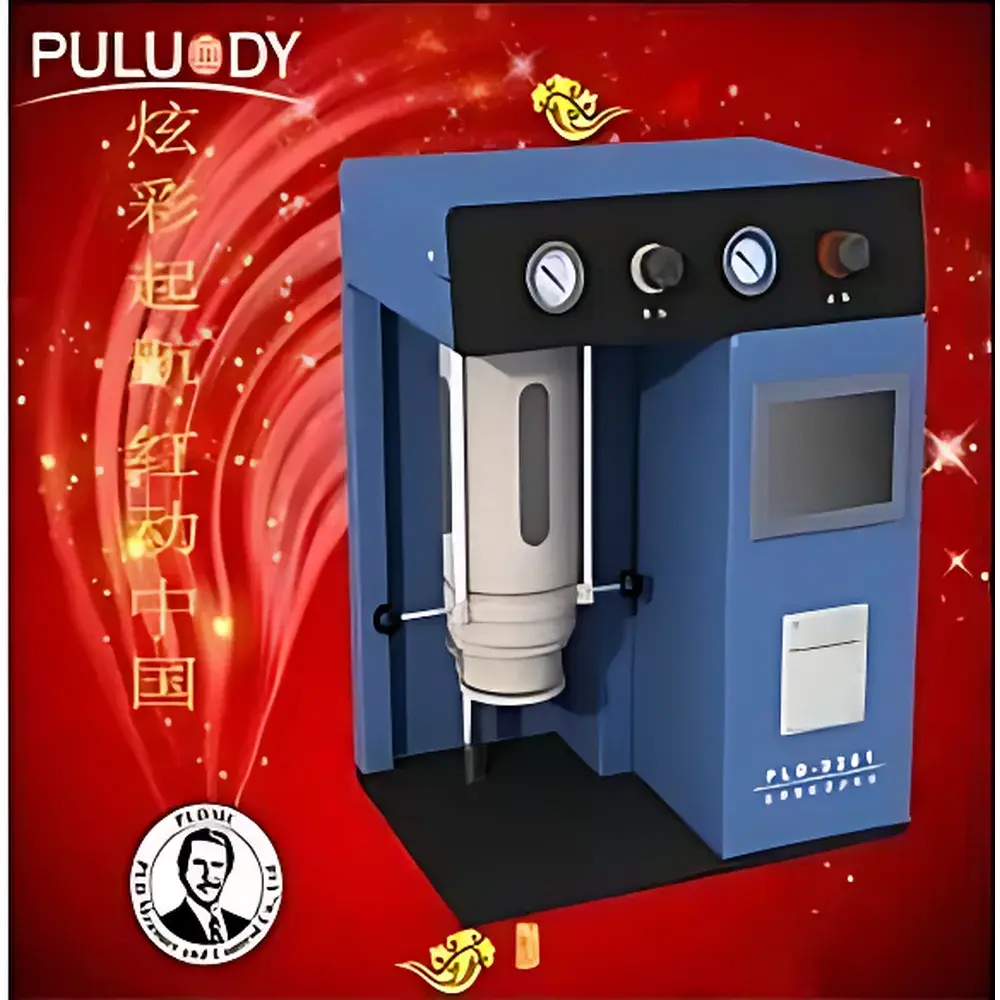
PULUODY PLD-0201 Automated Laboratory Particle Counter
| Brand | PULUODY |
|---|---|
| Model | PLD-0201 |
| Type | Optical (Light Obscuration) Particle Counter |
| Measurement Principle | Light Obscuration (LO) / Single-Particle Optical Sizing (SPOS) |
| Detection Range | 1–450 µm |
| Sensitivity | 1 µm (per ISO 4402) or 4 µm(c) (per ISO 11171 / GB/T 18854) |
| Channels | 8 user-configurable size channels |
| Coincidence Limit | ≤5% error at 10,000 particles/mL |
| Sample Volume Accuracy | ±1% |
| Flow Rate | 5–60 mL/min |
| Test Duration | Adjustable, down to 12.5 s |
| Viscosity Limit | ≤350 cSt |
| Operating Temperature | Ambient to 65°C |
| Pressure Range | −0.6 to +0.7 kPa (integrated dual-pressure pretreatment system) |
| Compliance Standards | ISO 4406, NAS 1638, GJB 420B, GJB 380, GB/T 14039, GB/T 18854, ISO 11171, ASTM D6786 |
| Calibration Traceability | Certified by China National Defense Science & Technology Commission Level-1 Particle Metrology Station No. 116 |
| Data Output | Real-time particle count per channel, size distribution histogram, contamination grade assignment, RS232 interface, built-in thermal printer |
| Software | P6.4 Analysis Suite (PC & embedded industrial control versions) |
| Control Interface | Integrated capacitive touchscreen LCD |
| Auto-Cleaning Function | Yes |
| Power | 220 VAC, 50 Hz, <80 W |
Overview
The PULUODY PLD-0201 Automated Laboratory Particle Counter is a precision optical particle counter engineered for quantitative analysis of insoluble particulate contamination in liquid media—primarily hydraulic fluids, lubricants, insulating oils, turbine oils, and polymer solutions. It operates on the light obscuration (LO) principle—also known as single-particle optical sizing (SPOS)—where particles suspended in a laminar-flow stream pass through a focused laser beam; each particle generates a transient reduction in detected light intensity proportional to its cross-sectional area. This analog signal is digitized and classified into user-defined size channels, enabling statistically robust enumeration and size distribution profiling. Designed for laboratory environments requiring traceable, repeatable, and standards-compliant particle quantification, the PLD-0201 supports full compliance with international fluid cleanliness assessment frameworks—including ISO 4406:2017, NAS 1638, and GJB 420B—making it suitable for quality control laboratories in aerospace, power generation, defense, and heavy machinery manufacturing sectors.
Key Features
- Optical detection architecture based on sixth-generation narrow-beam laser sensor, delivering high signal-to-noise ratio and long-term baseline stability
- Eight fully programmable size channels (configurable from 1 µm to 450 µm), supporting custom threshold definitions aligned with application-specific cleanliness thresholds
- Integrated dual-pressure (positive/negative) sample conditioning module to ensure consistent flow dynamics across viscous and low-surface-tension liquids
- Precision piston-driven sampling pump with volumetric accuracy better than ±1%, enabling reproducible 1–100 mL sample draws without manual dilution or pre-filtration
- Real-time coincidence correction algorithm validated to ≤5% counting error at concentrations up to 10,000 particles/mL
- Embedded 7-inch capacitive touchscreen interface with intuitive menu navigation, eliminating external PC dependency for routine operation
- Onboard thermal printer for immediate hardcopy output of particle counts, size histograms, and assigned contamination grades per ISO/NAS standards
- RS232 serial interface compliant with SCPI command set for integration into LIMS or automated test benches
Sample Compatibility & Compliance
The PLD-0201 accommodates a broad range of non-aqueous and low-conductivity liquids—including mineral-based and synthetic hydraulic oils, transformer oil (IEC 60296), aviation turbine fuel (Jet A-1), gear oils (AGMA 9005), and polymer solutions—without requiring filtration, centrifugation, or solvent dilution. Its optical path design minimizes bubble interference and accommodates viscosities up to 350 cSt at operating temperatures between ambient and 65°C. All calibration procedures adhere strictly to GB/T 18854–2002 (equivalent to ISO 11171:1999 and JJG 066–95), with traceability certified by the National Defense Science & Technology Commission’s Level-1 Particle Metrology Station (No. 116). The instrument satisfies GLP-relevant data integrity requirements through time-stamped audit logs, operator ID tagging, and uneditable raw data storage—supporting regulatory readiness for ISO/IEC 17025-accredited labs and FDA 21 CFR Part 11-aligned workflows where electronic records are mandated.
Software & Data Management
The P6.4 Analysis Software Suite—available in both embedded industrial PC and Windows-compatible desktop editions—provides comprehensive post-acquisition processing capabilities. Users can generate ISO 4406 code assignments (e.g., 18/16/13), NAS 1638 class ratings, cumulative/differential histograms, and statistical summaries (mean, median, mode, standard deviation). Raw pulse data is retained in binary format with metadata (date/time, operator ID, sample ID, calibration ID, environmental conditions). Export options include CSV, PDF, and XML formats compatible with enterprise LIMS platforms. Software validation documentation—including IQ/OQ protocols and change control records—is available upon request to support regulated environments governed by GMP, AS9100, or IEC 61508.
Applications
- Routine monitoring of hydraulic fluid cleanliness in aerospace component test rigs and ground support equipment maintenance facilities
- Acceptance testing of new lubricants prior to commissioning in wind turbine gearboxes or nuclear plant coolant systems
- Root-cause analysis of wear debris in engine oil samples from marine diesel propulsion systems
- Validation of filter performance (β-ratio testing) per ISO 16889 using challenge suspensions
- Quality release testing of insulating oils for high-voltage transformers per IEC 60429 and IEEE C57.106
- Batch consistency verification of polymer dispersions used in pharmaceutical excipient manufacturing
FAQ
What particle detection principle does the PLD-0201 use?
It employs light obscuration (ISO 11171), where individual particles passing through a collimated laser beam attenuate transmitted light proportionally to their projected area.
Is calibration traceable to national standards?
Yes—calibration is performed using NIST-traceable reference materials and certified by the China National Defense Science & Technology Commission Level-1 Particle Metrology Station (No. 116).
Can the instrument measure particles below 1 µm?
No—the lower detection limit is 1 µm per ISO 4402 or 4 µm(c) per ISO 11171, depending on the selected calibration protocol.
Does the system support multi-user access control and electronic signatures?
The P6.4 software supports role-based login, audit trail generation, and electronic signature capture when deployed in a validated Windows environment meeting 21 CFR Part 11 requirements.
How is sample carryover prevented between analyses?
An automated rinse cycle—using designated cleaning solvent—flushes the fluidic path for ≥30 seconds post-analysis, verified via blank run validation before subsequent sample introduction.



