
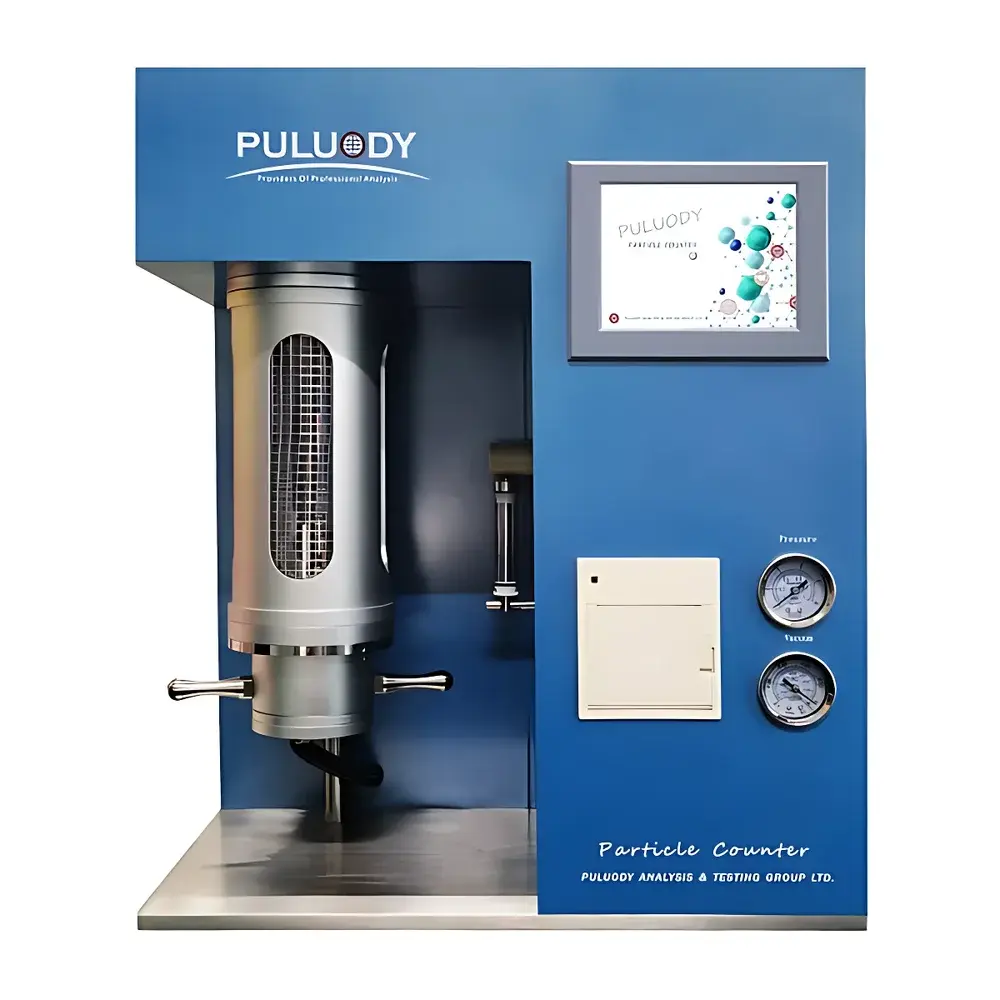
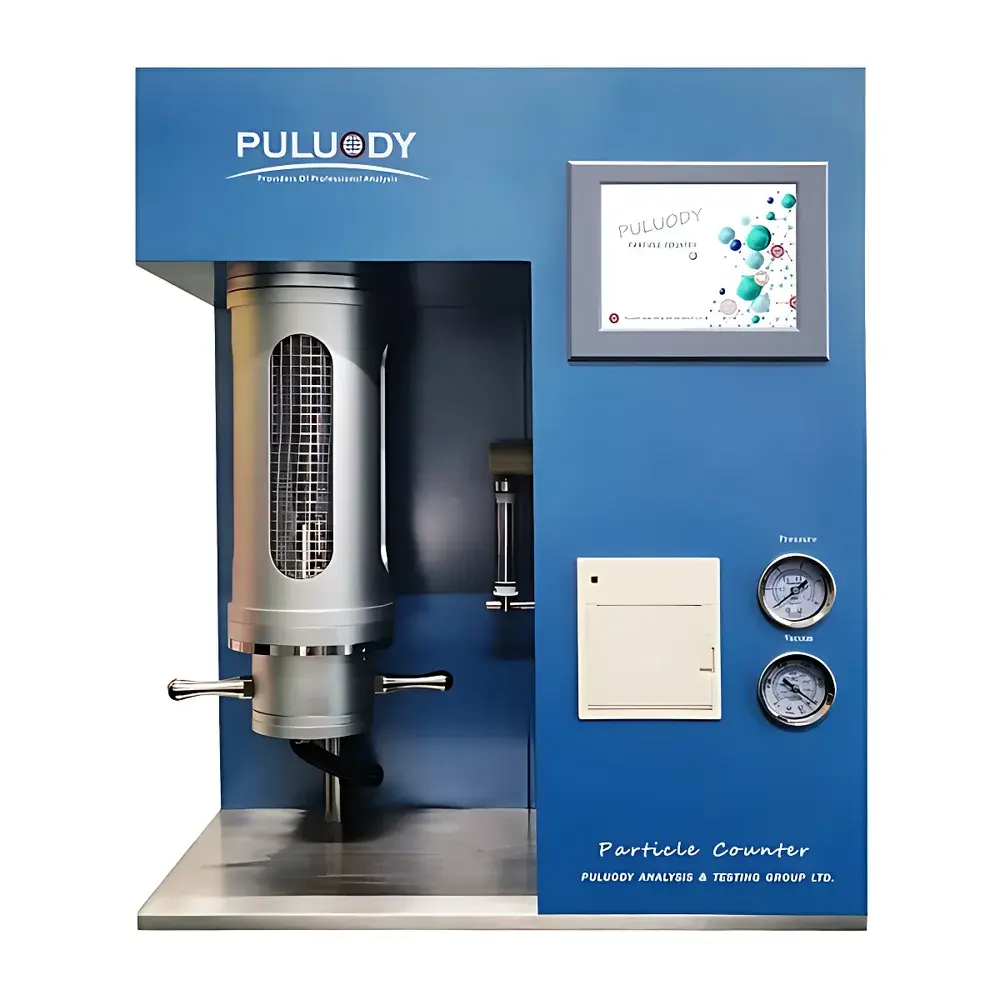
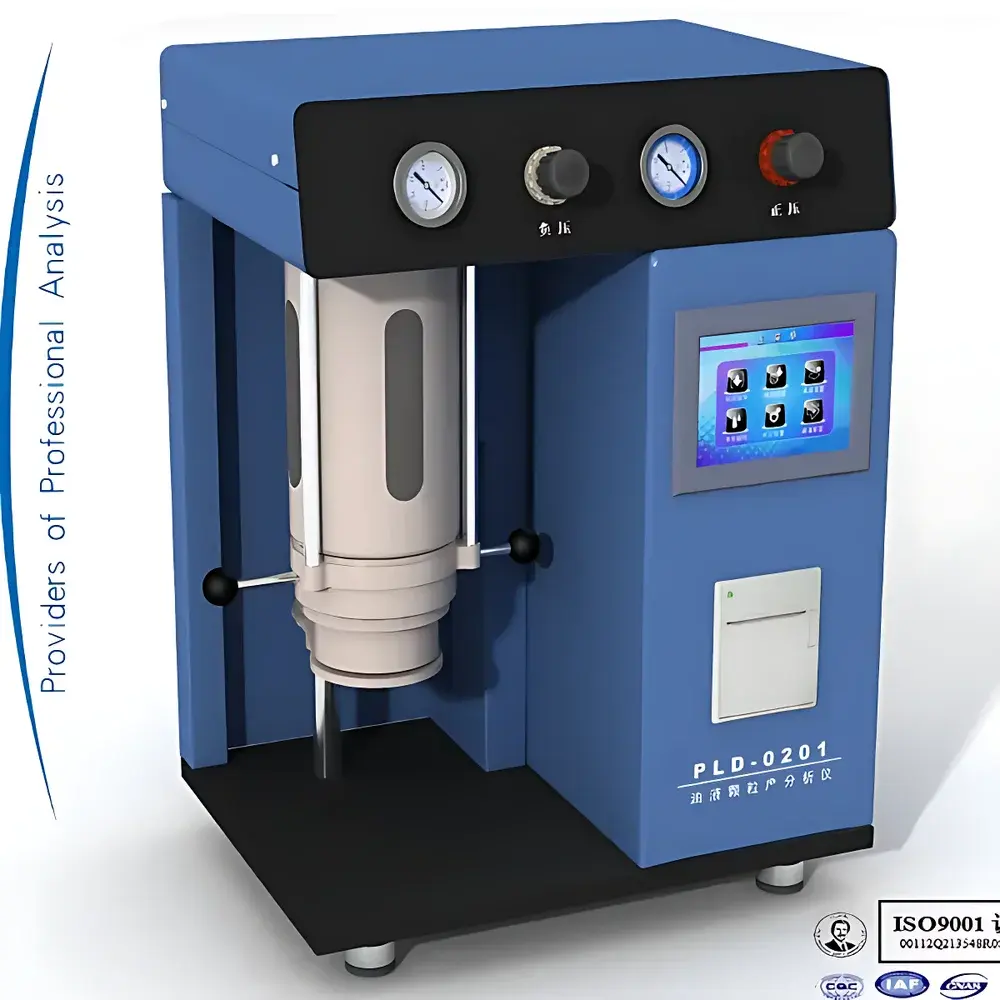
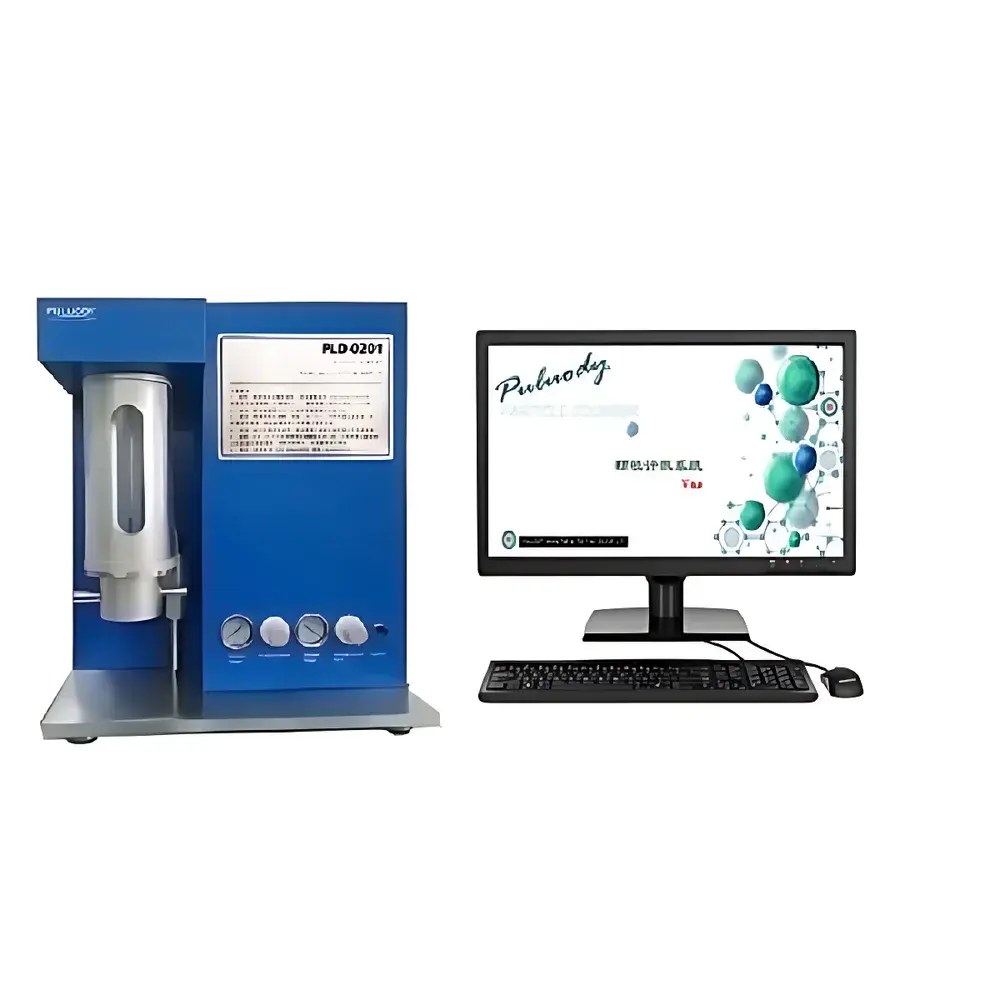
PULUODY PLD-0201 Desktop Laser Oil Particle Counter
| Brand | PULUODY |
|---|---|
| Origin | Shaanxi, China |
| Model | PLD-0201 |
| Instrument Type | Optical Particle Counter |
| Detection Principle | Light Obscuration (LO) |
| Calibration Standards | ISO 11171, ISO 4402, GB/T 18854 |
| Measuring Range | 0.5–1000 µm (sensor-dependent) |
| Compliance Standards | ISO 4406, NAS 1638, MOOG, DL/T 1096, GJB 380, DL/T 432, ISO 11500 |
| Control System | Integrated Industrial PC or Embedded Controller |
| Sample Volume | 1 mL to unlimited (programmable) |
| Flow Control | Precision Plunger Pump + Electromagnetic Flow Regulation |
| Display | Touchscreen LCD with Dual Input (Touch + Keypad) |
| Data Output | RS232 Serial Interface |
| Built-in Printer | Yes |
| Software | P6.4 Particle Analysis Suite (Embedded & PC Versions) |
Overview
The PULUODY PLD-0201 Desktop Laser Oil Particle Counter is an industrial-grade optical particle counter engineered for precise, repeatable quantification of particulate contamination in lubricating oils, hydraulic fluids, turbine oils, and other hydrocarbon-based operational fluids. It operates on the well-established light obscuration (LO) principle—also known as the optical blockage or photometric shadowing method—in accordance with ISO 11500 and ASTM D7647. When particles suspended in a fluid pass through a collimated laser beam, they temporarily reduce the transmitted light intensity; this transient signal is converted into pulse amplitude, which correlates directly to particle cross-sectional area and, by calibration, to equivalent spherical diameter. The PLD-0201 integrates eighth-generation dual-laser narrow-beam sensing technology, delivering improved signal-to-noise ratio, enhanced detection stability across viscosity gradients, and faster response times compared to conventional single-source configurations. Designed for laboratory, maintenance, and quality control environments, the instrument supports full compliance with international cleanliness grading standards—including ISO 4406:1999/2017, NAS 1638, MOOG Code 00–12, and DL/T 1096—enabling direct reporting of particle counts per milliliter across user-defined size channels.
Key Features
- Light obscuration detection system with dual-laser narrow-beam optics for high-resolution particle sizing (0.5–1000 µm, dependent on sensor configuration)
- Precision plunger pump combined with electromagnetic flow regulation ensures constant volumetric flow rate and accurate sample aspiration (1 mL to unlimited volume, programmable in 0.1 mL increments)
- Integrated sample handling module featuring vacuum-assisted degassing, magnetic stirring, and pressure-controlled dispensing—enabling reliable analysis of viscous, aerated, or heterogeneous oil samples
- Embedded industrial control architecture with real-time OS, touchscreen LCD interface, and dual-input operation (touch + physical keypad) for standalone use without external computing resources
- Built-in thermal printer for immediate hardcopy output of test reports, histograms, and pass/fail assessments against selected cleanliness codes
- RS232 serial port for bidirectional communication with LIMS, ERP, or enterprise data management systems; supports automated report export and audit-trail logging
- Comprehensive calibration traceability aligned with ISO 11171 (primary calibration standard), ISO 4402 (secondary reference), and national metrological protocols (GB/T 18854, JJG/T 066, JJG 1061)
Sample Compatibility & Compliance
The PLD-0201 is validated for use with mineral oils, synthetic lubricants, phosphate esters, polyalkylene glycols, and other non-aqueous, optically transparent fluids commonly found in aerospace, power generation, hydraulics, and heavy machinery applications. Its fluid-handling design accommodates kinematic viscosities up to 450 cSt at 40 °C when equipped with optional high-viscosity sampling accessories. All reported particle count data comply with ISO 4406:2017 coding conventions and may be cross-referenced to NAS 1638 classes, MOOG severity levels, or custom internal specifications. The instrument’s firmware allows simultaneous application of multiple grading algorithms within a single measurement cycle, facilitating comparative analysis across regulatory frameworks. Calibration verification can be performed in-house using certified ISO MTD (Medium Test Dust) suspensions or externally accredited via the AVIC Particle Metrology Testing Station or the National Northwest Metrology Center (CNAS-accredited facilities under China’s State Administration for Market Regulation).
Software & Data Management
The embedded P6.4 Particle Analysis Software Suite provides full-cycle data acquisition, visualization, and reporting functionality. Users may define custom channel thresholds (e.g., ≥4 µm(c), ≥6 µm(c), ≥14 µm(c), ≥21 µm(c)), generate cumulative/differential histograms, calculate beta ratios (βx), and export tabular results in CSV or PDF format. The software maintains full audit trail capability—including operator ID, timestamp, calibration status, and parameter revision history—supporting GLP and GMP documentation requirements. Optional PC-based version enables advanced statistical process control (SPC), trend analysis over time-series datasets, and integration with FDA 21 CFR Part 11-compliant electronic signature modules when deployed in regulated pharmaceutical or biotech manufacturing settings.
Applications
- Routine monitoring of turbine and compressor lubricants in power plants per ISO 4406 and DL/T 1096
- Acceptance testing of new oil batches prior to commissioning in aviation hydraulic systems (per NAS 1638 Class 5–7)
- Root-cause analysis of wear debris in gearboxes, servo-valves, and electro-hydraulic actuators
- Verification of filter efficiency and integrity during offline filtration campaigns
- Supporting predictive maintenance programs through longitudinal particle count trending and alarm thresholding
- Calibration and validation of field-deployable particle counters using reference samples traceable to ISO 11171
FAQ
What particle size ranges does the PLD-0201 support?
The standard configuration covers 0.5–1000 µm, with resolution and lower detection limit determined by the installed sensor module. Sensor options include 0.5–25 µm (high-sensitivity), 2–100 µm (general-purpose), and 5–1000 µm (coarse debris) variants.
Can the instrument analyze water-glycol or phosphate-ester-based fluids?
Yes—provided the fluid exhibits sufficient optical clarity and refractive index contrast relative to the carrier medium. Validation testing is recommended for non-hydrocarbon fluids prior to routine deployment.
Is the PLD-0201 compliant with FDA 21 CFR Part 11 requirements?
The embedded OS does not natively support Part 11 controls; however, the PC-based P6.4 software offers optional electronic signature, audit trail, and role-based access modules that may be configured to meet Part 11 expectations in validated environments.
How often must the system be recalibrated?
Annual recalibration against ISO 11171-certified reference materials is recommended. More frequent verification (e.g., daily or per-shift) using check standards is required in GMP/GLP contexts.
Does the device support network connectivity (Ethernet/Wi-Fi)?
No—communication is limited to RS232 serial interface. Ethernet or USB-to-serial adapters may be used externally, but are not supplied or validated by PULUODY.



