
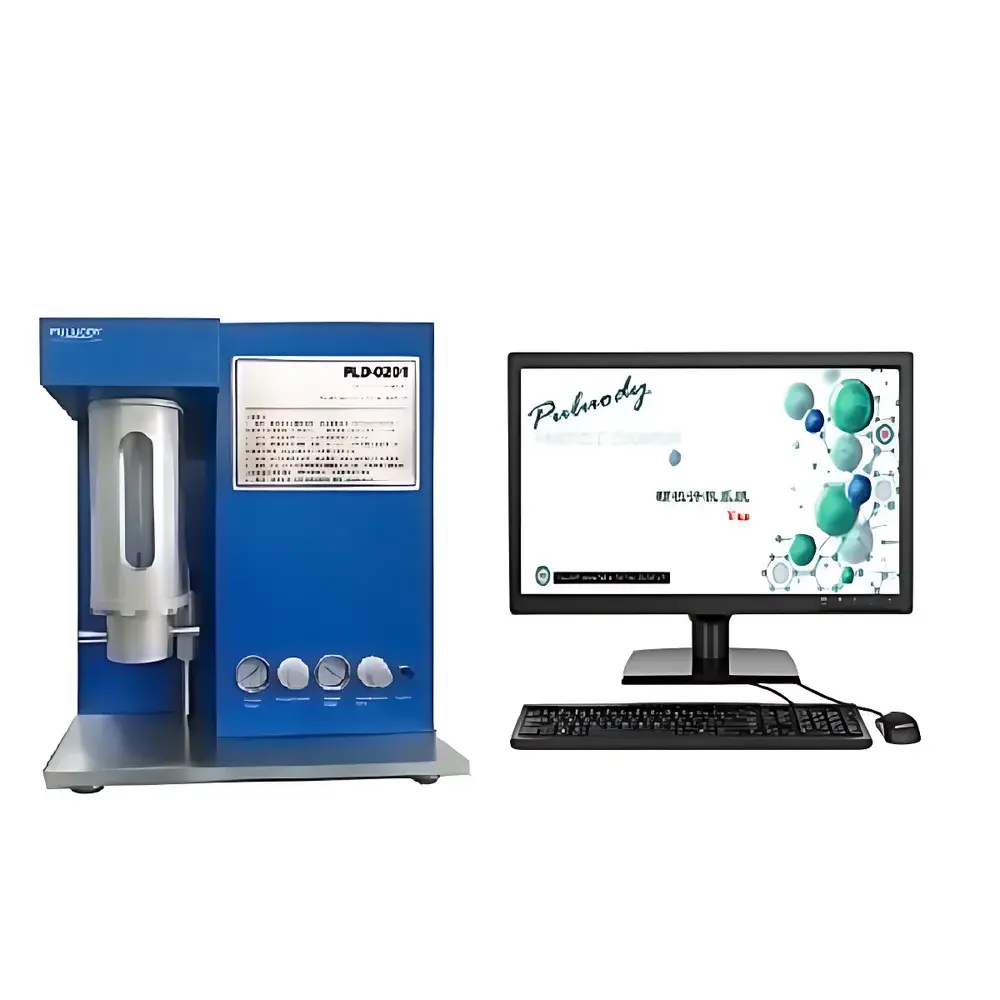
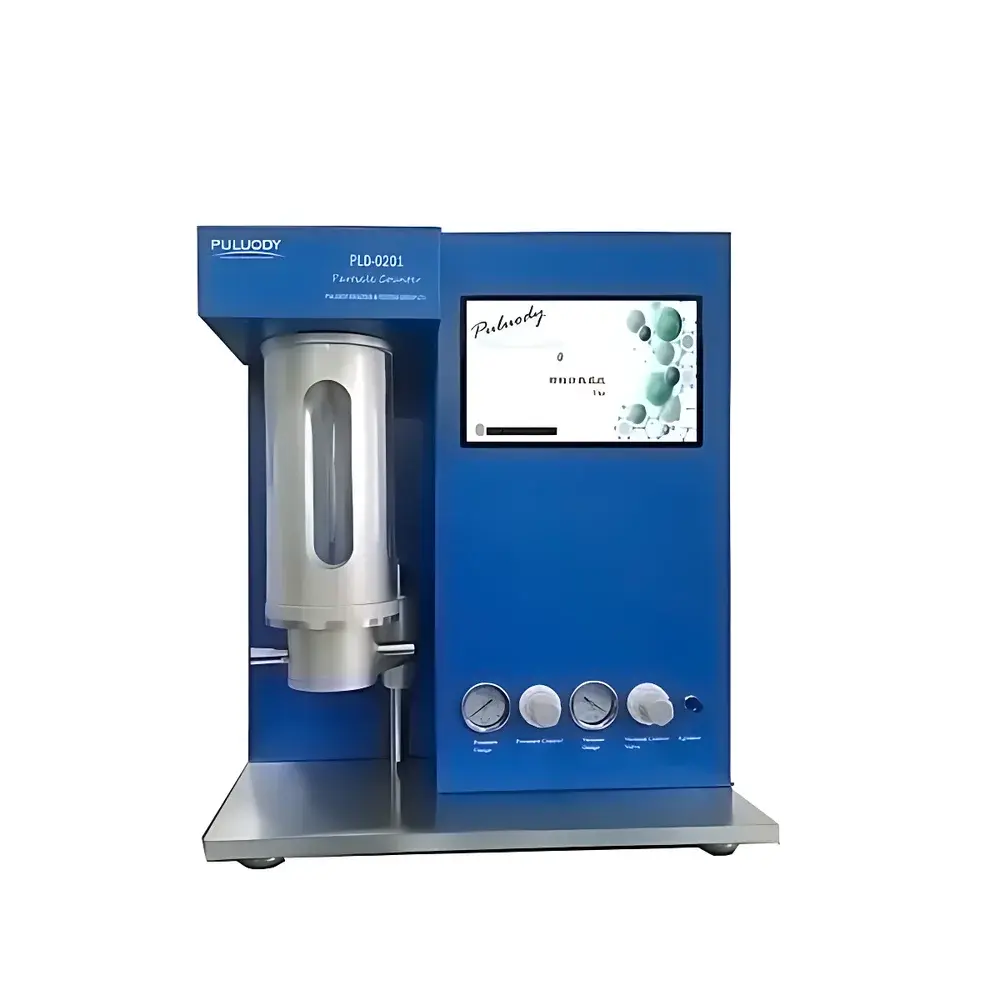
PULUODY PLD-0201-DL Desktop Optical Particle Counter for Power Plant Oil Contamination Analysis
| Brand | PULUODY |
|---|---|
| Origin | Shaanxi, China |
| Model | PLD-0201-DL |
| Instrument Type | Optical Particle Counter |
| Detection Principle | Light Obscuration (LO) |
| Calibration Standards | ISO 11171, ISO 4402, GB/T 18854 |
| Sensitivity | 1 µm (per ISO 4402) or 4 µm(c) (per ISO 11171) |
| Measurement Range | 1–1000 µm (sensor-dependent) |
| Channel Resolution | 1000 channels |
| Sample Volume Accuracy | ±1% |
| Flow Rate | 5–60 mL/min (sampling), 10–100 mL/min (flushing) |
| Viscosity Limit | ≤450 mm²/s |
| Operating Temperature | Ambient to 65 °C |
| Pressure Range | −0.08 to 0.8 MPa |
| Data Storage | 3000 tests (onboard industrial PC) |
| Interface | RS232 |
| Compliance | ISO 4406, NAS 1638, DL/T 432, DL/T 1096, GJB 420B, ASTM D6786, MIL-STD-1246, MOOG, ISO 11218 |
Overview
The PULUODY PLD-0201-DL Desktop Optical Particle Counter is an engineered solution for quantitative particulate contamination analysis in turbine oils, hydraulic fluids, and lubricants used across thermal power generation, nuclear plant auxiliary systems, and high-reliability rotating equipment. It operates on the light obscuration (LO) principle—where particles suspended in oil pass through a precisely collimated laser beam, generating transient reductions in photodetector signal proportional to cross-sectional area. This method delivers traceable, repeatable particle counts per unit volume (particles/mL) across 1000 user-configurable size channels from 1 µm to 1000 µm. Designed specifically for power industry compliance workflows, the instrument supports direct assignment of contamination codes per ISO 4406:2021 (0–28 code scale), NAS 1638 (00–12 scale), and GJB 420B (000–12 scale), enabling immediate assessment against maintenance thresholds defined in DL/T 1096-2018 and IEC 60296.
Key Features
- Integrated dual-laser narrow-beam sensor (8th-generation optical architecture) delivering enhanced signal stability, reduced noise floor, and improved discrimination of sub-5 µm particles in viscous base oils.
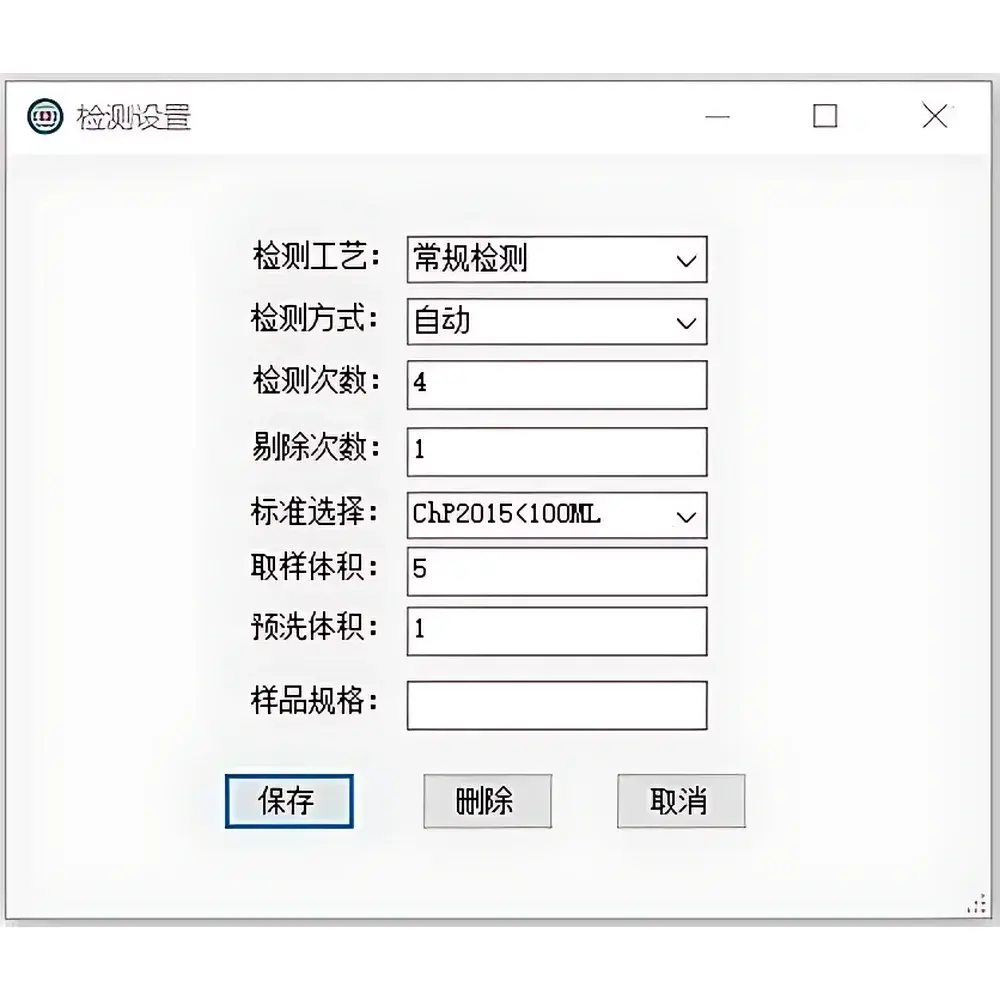
- Programmable volumetric sampling (1 mL to unlimited volume) with piston-driven precision metering pump and closed-loop electromagnetic flow control—achieving ±1% volumetric accuracy per ISO 11171 Annex B.
- Onboard pressure-assisted sample conditioning system: includes vacuum degassing (−0.08 MPa), mechanical stirring, and positive-pressure injection (up to 0.8 MPa) to ensure homogenization and bubble-free analysis of high-viscosity (>320 mm²/s) or aged turbine oils.
- Full-spectrum data acquisition: real-time pulse height analysis, raw count histograms, cumulative/differential distribution curves, and statistical summaries (e.g., particles >4 µm(c), >6 µm(c), >14 µm(c), >21 µm(c), >38 µm(c)).
- Self-contained operation: integrated industrial-grade touchscreen controller (10.1″ color LCD), embedded Windows-based OS, and thermal micro-printer—enabling standalone testing, report generation, and audit-ready printouts without external PCs.
- Automated post-test fluidic purge cycle with adjustable flush rate (10–100 mL/min), minimizing carryover and ensuring inter-sample integrity per ASTM D6786 Section 8.3.
Sample Compatibility & Compliance
The PLD-0201-DL is validated for use with mineral-based, synthetic, and phosphate-ester turbine oils; fire-resistant hydraulic fluids (e.g., FR-3, Skydrol); and gear oils conforming to ISO VG 32–680. It accommodates samples up to 450 mm²/s kinematic viscosity at 40 °C without dilution or pre-filtration. The system meets calibration traceability requirements under GB/T 18854-2002 (equivalent to ISO 11171:2010) and supports verification using certified reference materials (CRM) including NIST-traceable GBW(E) 130201–130204. All measurement protocols align with internationally recognized standards: ISO 4406:2021 (fluid cleanliness coding), ISO 11500:2019 (optical particle counting methodology), DL/T 432-2018 (power plant oil condition monitoring), and MIL-STD-1246C (contamination control for defense systems). Optional factory calibration certificates are available from accredited national metrology institutes—including the Aviation Industry Particle Metrology Center (Xi’an) and Northwest National Metrology Center (CNAS ISO/IEC 17025 accredited).
Software & Data Management
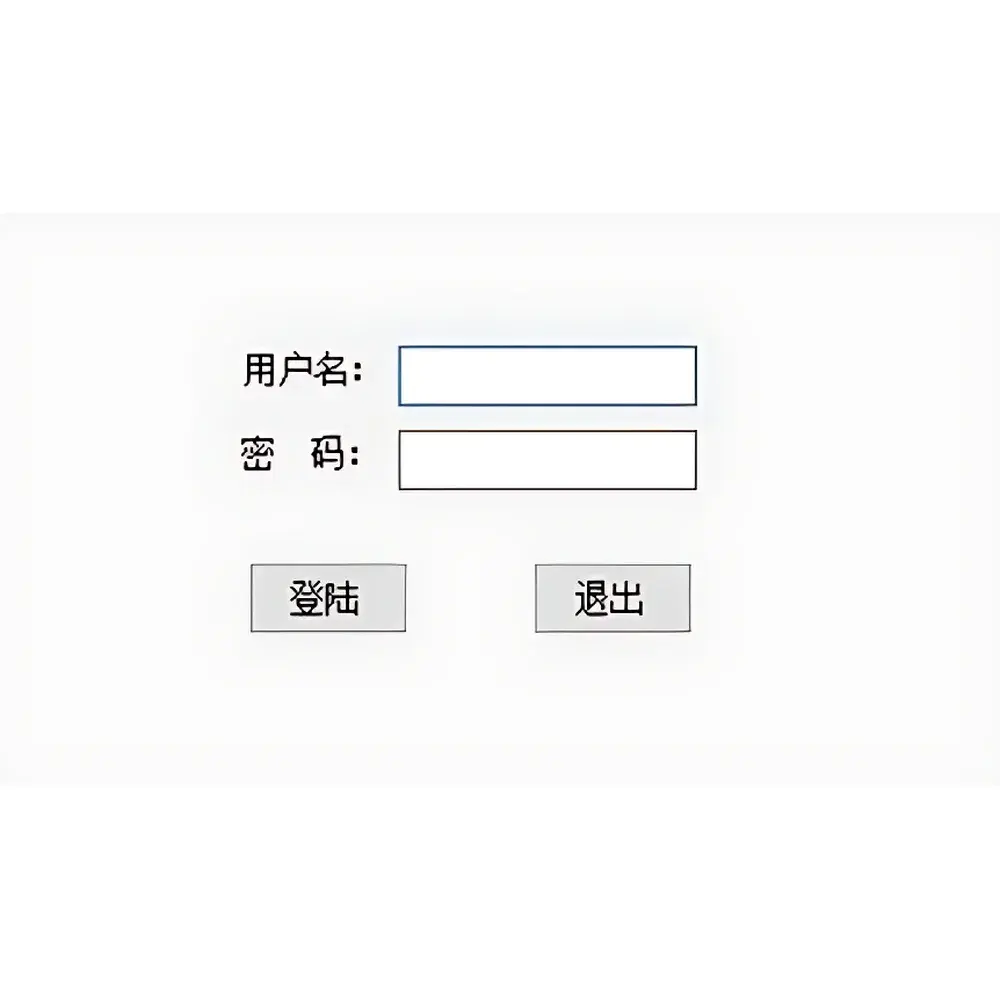
The instrument runs P6.4 Particle Analysis Software (integrated and PC-deployable versions), compliant with FDA 21 CFR Part 11 requirements for electronic records and signatures when operated in networked environments. Audit trails log all user actions—including method changes, calibration events, and result modifications—with timestamped, non-erasable entries. Data export supports CSV, PDF, and XML formats; reports include raw channel counts, ISO/NAS/GJB-coded contamination grades, distribution plots, and pass/fail flags relative to configurable alert limits. Onboard storage retains 3000 test records with metadata (date/time, operator ID, sample ID, method name); external PC synchronization enables centralized database management, trend analysis, and integration with CMMS platforms via RS232 or optional USB-to-Ethernet bridge.
Applications
- Routine monitoring of steam turbine lube oil cleanliness during commissioning, scheduled maintenance, and outage inspections.
- Verification of filtration efficiency for offline kidney-loop systems and online bypass filters in generator bearing circuits.
- Root-cause analysis of abnormal wear in hydroelectric governor systems and gas turbine fuel conditioning modules.
- Acceptance testing of new oil batches per DL/T 571-2018 and ISO 8502-3 prior to system filling.
- Supporting predictive maintenance programs aligned with ISO 55001 and IEEE Std 930 reliability growth models.
- Third-party certification for OEM equipment qualification per GEK 32568, Siemens TLV 9000, or Mitsubishi MHI-SPEC-1000.
FAQ
Does the PLD-0201-DL comply with ISO 11171:2010 for sensor calibration?
Yes—the instrument accepts ISO 11171-compliant calibration latex standards (e.g., NIST SRM 2806) and supports full multi-point verification per Annex C of the standard.
Can it measure particles below 4 µm(c) with metrological confidence?
It achieves 1 µm sensitivity per ISO 4402 using ACFTD calibration fluid; however, for regulatory reporting under ISO 11171 or GJB 420B, the 4 µm(c) threshold remains the validated minimum reporting size.
Is GLP-compliant data archiving supported?
When deployed with P6.4 PC software under controlled IT infrastructure, the system provides full ALCOA+ compliant data handling—including electronic signatures, version-controlled methods, and immutable audit logs.
What maintenance intervals are recommended for long-term operational reliability?
Optical path cleaning every 200 tests; pump seal replacement annually or after 5000 mL total fluid throughput; biannual verification using GBW reference materials per JJG/T 066-2020.
Does the system support custom particle count reporting formats for enterprise ERP integration?
Yes—XML schema definitions and API documentation are provided for seamless integration with SAP PM, IBM Maximo, or Infor EAM via RS232 or Modbus TCP (optional module).



