
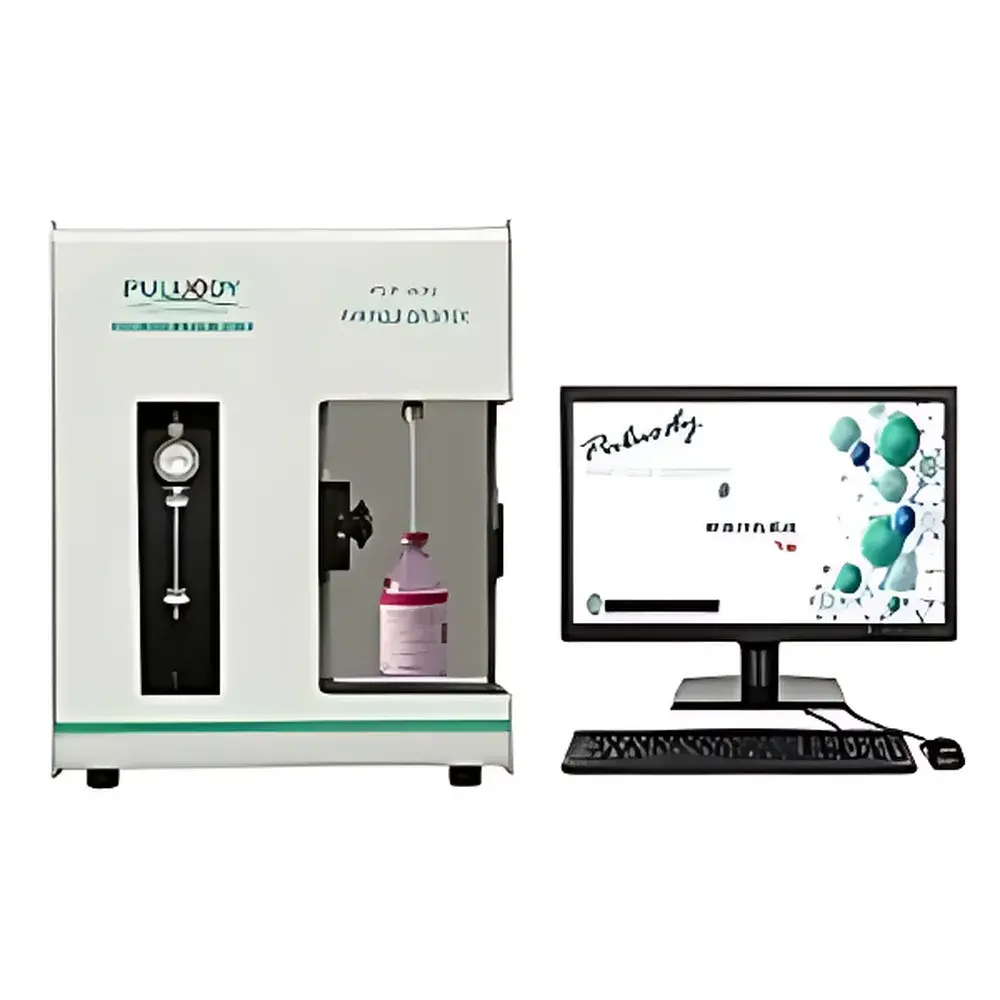
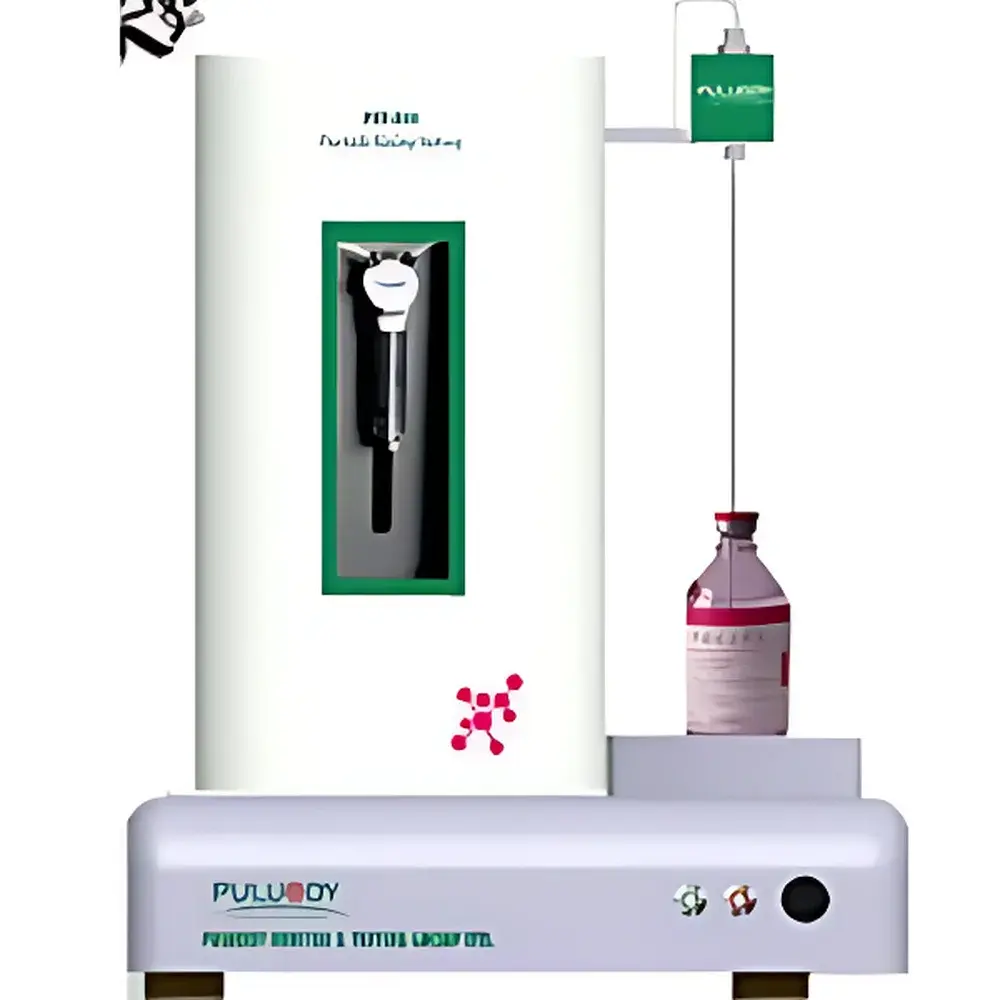
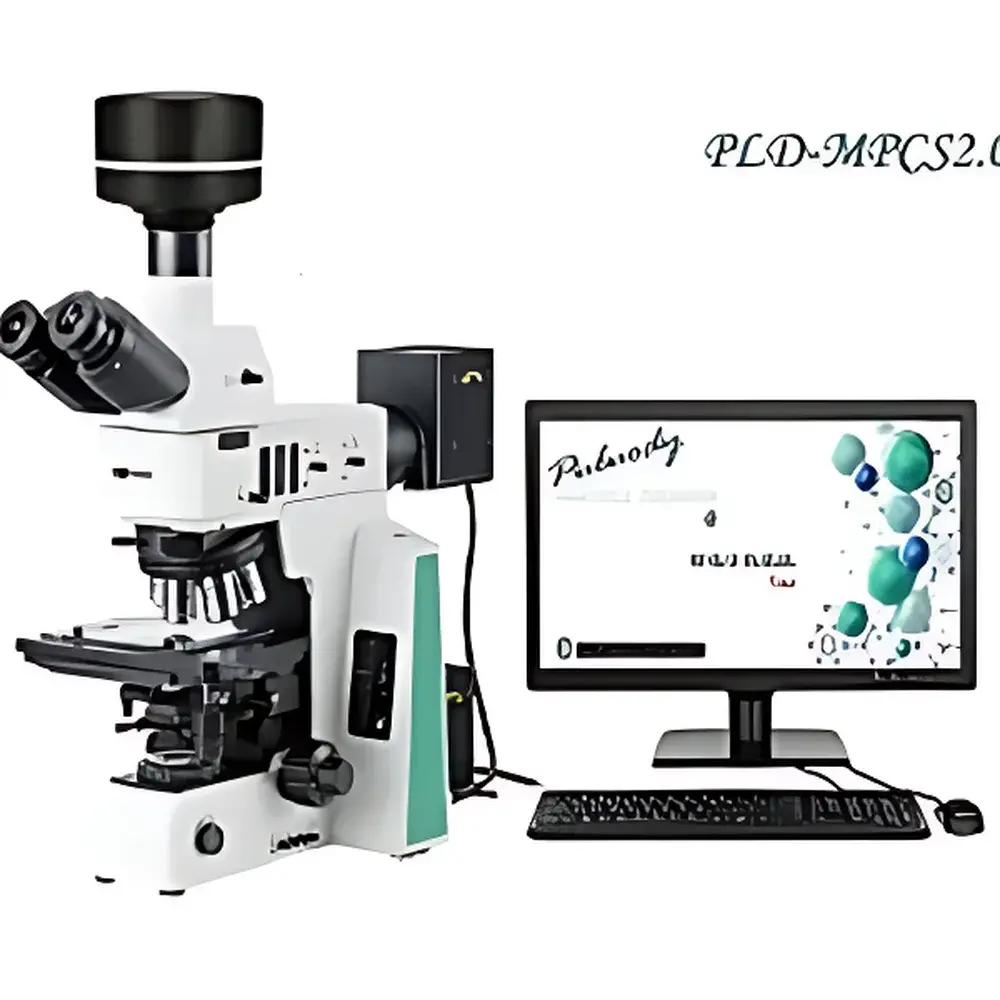
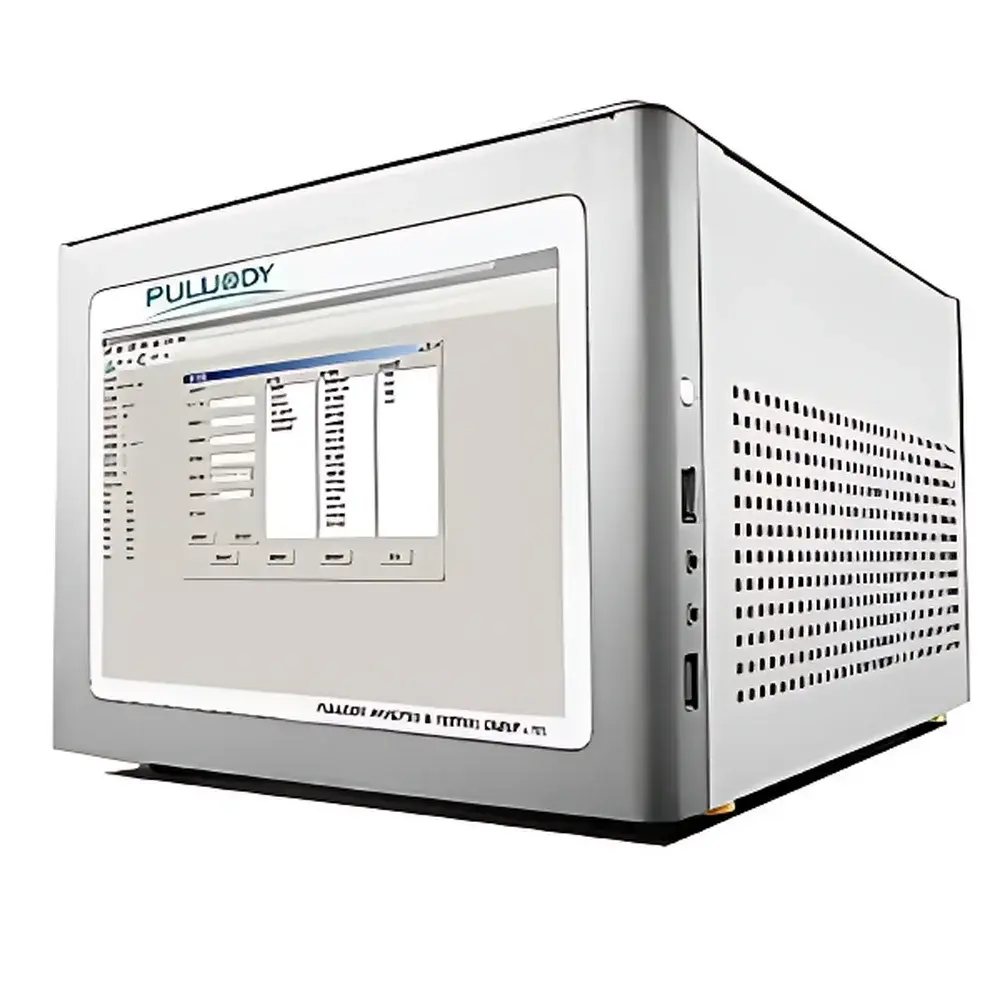
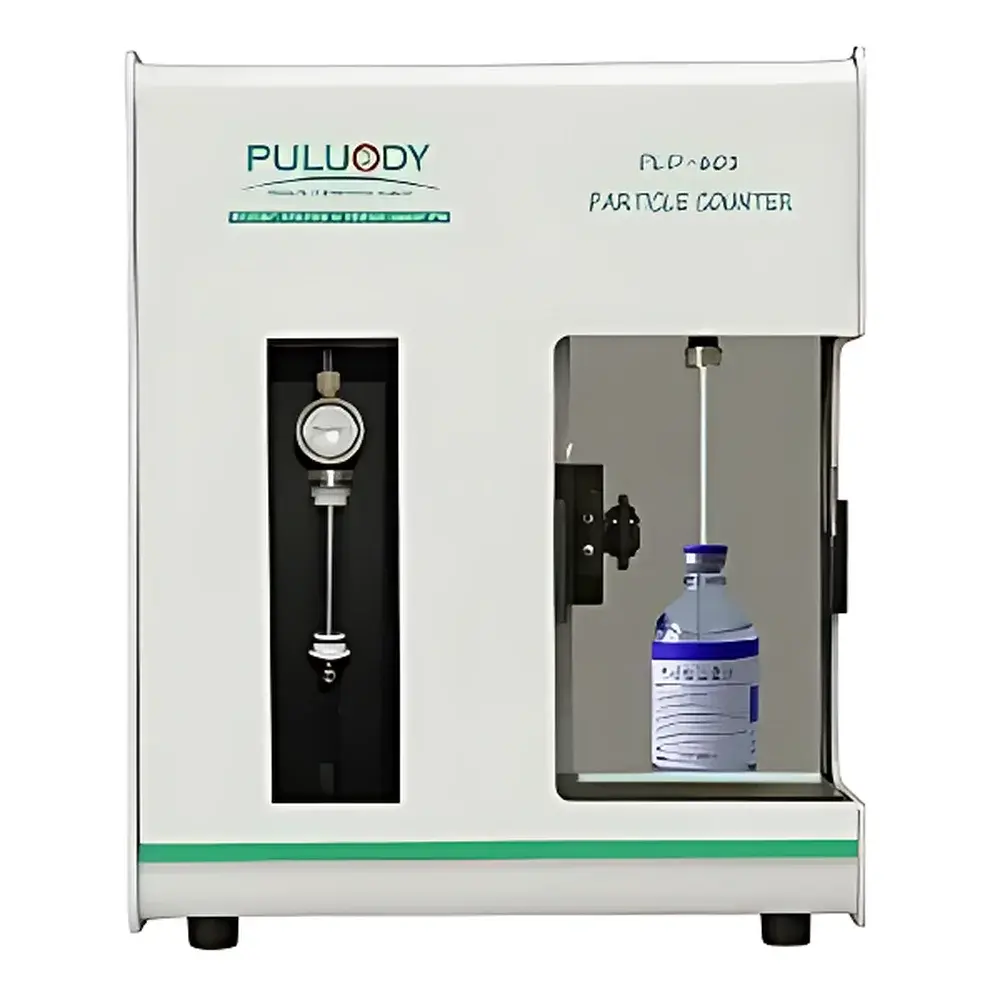
PULUODY PLD-601 Intelligent Human Serum Protein Insoluble Particle Analyzer
| Brand | PULUODY |
|---|---|
| Origin | Shaanxi, China |
| Model | PLD-601 |
| Detection Principle | Light Obscuration (LO) with Dual-Laser Narrow-Beam Sensor |
| Measurement Range | 1–500 µm (optional 0.03–3000 µm) |
| Channel Resolution | 1000 customizable channels (down to 0.01 µm bin width) |
| Sample Flow Rate | 5–150 mL/min |
| Rinse Flow Rate | 5–500 mL/min |
| Accuracy | ±3% typical (per ChP 2020 & USP <788>) |
| Coincidence Limit | ≤2.5% at 1000 particles/mL |
| Temperature Range (Fluid) | 0–80 °C |
| Compliance | ChP 2020 <0903>, USP <788>/<789>/<797>, EP 10.0, BP 2019, JP 17, ISO 21501-2, ISO 11171, GB/T 11446.9–2013, GB 8368, FDA 21 CFR Part 11 (audit trail, e-signature, role-based 5-level access), GLP/GMP-ready software architecture |
Overview
The PULUODY PLD-601 Intelligent Human Serum Protein Insoluble Particle Analyzer is a regulatory-grade light obscuration (LO) instrument engineered for quantitative detection and size-resolved enumeration of insoluble particulate matter in biopharmaceutical formulations—particularly human serum protein solutions, monoclonal antibody therapeutics, vaccine suspensions, and other high-value parenteral products. It operates on the principle of single-particle optical sensing: as particles suspended in liquid pass through a precisely collimated dual-laser narrow-beam detection zone, each particle generates a transient pulse proportional to its cross-sectional area. The eighth-generation dual-laser sensor eliminates signal drift and improves signal-to-noise ratio across the full 1–500 µm dynamic range, enabling trace-level detection of submicron aggregates critical to protein stability assessment and immunogenicity risk evaluation.
Key Features
- Patented eighth-generation dual-laser narrow-beam particle sensor with real-time baseline compensation and thermal drift correction.
- Dual-precision fluidic control system: high-accuracy metering piston pump (±1% volumetric repeatability) coupled with ultra-stable electromagnetic flow regulation for consistent sample delivery across variable viscosity matrices.
- 1000-channel high-resolution spectral analysis engine—configurable channel boundaries from 0.01 µm upward—supports simultaneous compliance with ChP 2020 , USP , EP 10.0, and ISO 21501-2 without hardware modification.
- FDA 21 CFR Part 11-compliant V8.9 software suite featuring five-tier user permission architecture, immutable audit trail with timestamped operator actions, electronic signatures, and encrypted data backup/recovery protocols.
- Integrated thermal management system maintains fluid temperature stability between 0–80 °C, ensuring measurement integrity for thermosensitive biologics including cryopreserved plasma derivatives and lyophilized reconstitutes.
- Automated calibration validation via NIST-traceable polystyrene latex standards (PSL) or ISO 21501-2 reference materials; optional JJG 1061-certified verification by NWMS (National Institute of Metrology Northwest Center) or DFKW Level-1 Particle Calibration Station #116.
Sample Compatibility & Compliance
The PLD-601 is validated for direct analysis of undiluted and diluted samples across multiple pharmaceutical dosage forms: sterile aqueous injectables, lyophilized powders (post-reconstitution), ophthalmic solutions, intravenous infusion concentrates, vaccine adjuvant suspensions, and excipient-grade water for injection (WFI). It meets compendial requirements for filter challenge testing—including terminal sterilizing filter efficiency quantification per USP Annex 3—and supports extractables/leachables assessment of polymer-based primary packaging (e.g., elastomeric stoppers, IV bags, prefilled syringes) per YBB 00272004–2015. All test methods align with ICH Q5A(R2) guidance on viral and particulate contaminants, and support GMP Annex 1 (2022) requirements for particulate monitoring in aseptic processing environments.
Software & Data Management
The embedded V8.9 analytical platform provides full lifecycle data governance: raw pulse data logging, automatic threshold optimization per ISO 21501-2, configurable reporting templates (PDF/CSV/XLSX), and batch-level statistical process control (SPC) charts. Audit trails record every parameter change, result override, calibration event, and user login/logout—exportable in tamper-evident format for regulatory inspection. Data integrity safeguards include write-once-read-many (WORM) storage options, role-based export restrictions, and synchronized time-server authentication. Software architecture conforms to ALCOA+ principles (Attributable, Legible, Contemporaneous, Original, Accurate, Complete, Consistent, Enduring, Available) and facilitates seamless integration into LIMS and MES systems via ASTM E1482-compliant API.
Applications
Beyond pharmacopeial compliance testing, the PLD-601 serves critical roles in formulation development (e.g., aggregation kinetics under stress conditions), process validation (fill-finish line particle load monitoring), container closure integrity verification, and root-cause analysis of visible/subvisible particle events. It is routinely deployed in QC labs supporting biosimilar comparability studies, gene therapy vector purity profiling, and mRNA-LNP nanoparticle characterization (with appropriate dilution and surfactant stabilization). Cross-industry applications include semiconductor slurry cleanliness verification (per SEMI F63), ultrapure water qualification in microelectronics fabs (per SEMI F63 and ASTM D5127), and CMP slurry particle stability assessment.
FAQ
Does the PLD-601 comply with FDA 21 CFR Part 11 for electronic records and signatures?
Yes. The system implements full Part 11 functionality—including role-based 5-level access control, cryptographic audit trail, electronic signature workflows, and data immutability protocols—validated per internal IQ/OQ documentation and third-party verification reports.
Can the instrument measure particles below 1 µm, such as protein submicron aggregates?
The base configuration detects down to 1 µm per pharmacopeial mandates; however, optional high-sensitivity optics and optimized fluidics enable reliable quantification from 0.03 µm when configured per ISO 21501-2 Annex C for submicron bioparticulates.
Is method transfer supported between PLD-601 and legacy light obscuration systems?
Yes. The 1000-channel architecture allows exact replication of channel definitions used on HIAC, Liquid Particle Counter (LPC), or Beckman Coulter Multisizer platforms—ensuring continuity during lab modernization or multi-site harmonization projects.
What calibration standards are accepted for routine verification?
Certified NIST-traceable PSL spheres (e.g., Duke Scientific 3000 series), ISO 21501-2 reference materials, or in-house qualified secondary standards per JJG 1061. Calibration frequency follows risk-based assessment per ICH Q2(R2) and internal SOPs.
How is instrument qualification performed for GMP environments?
Comprehensive IQ/OQ/PQ protocols aligned with ASTM E2500 and EU Annex 15 are provided. Installation includes on-site verification by PULUODY-certified engineers, with optional participation by client QA or third-party auditors.





