
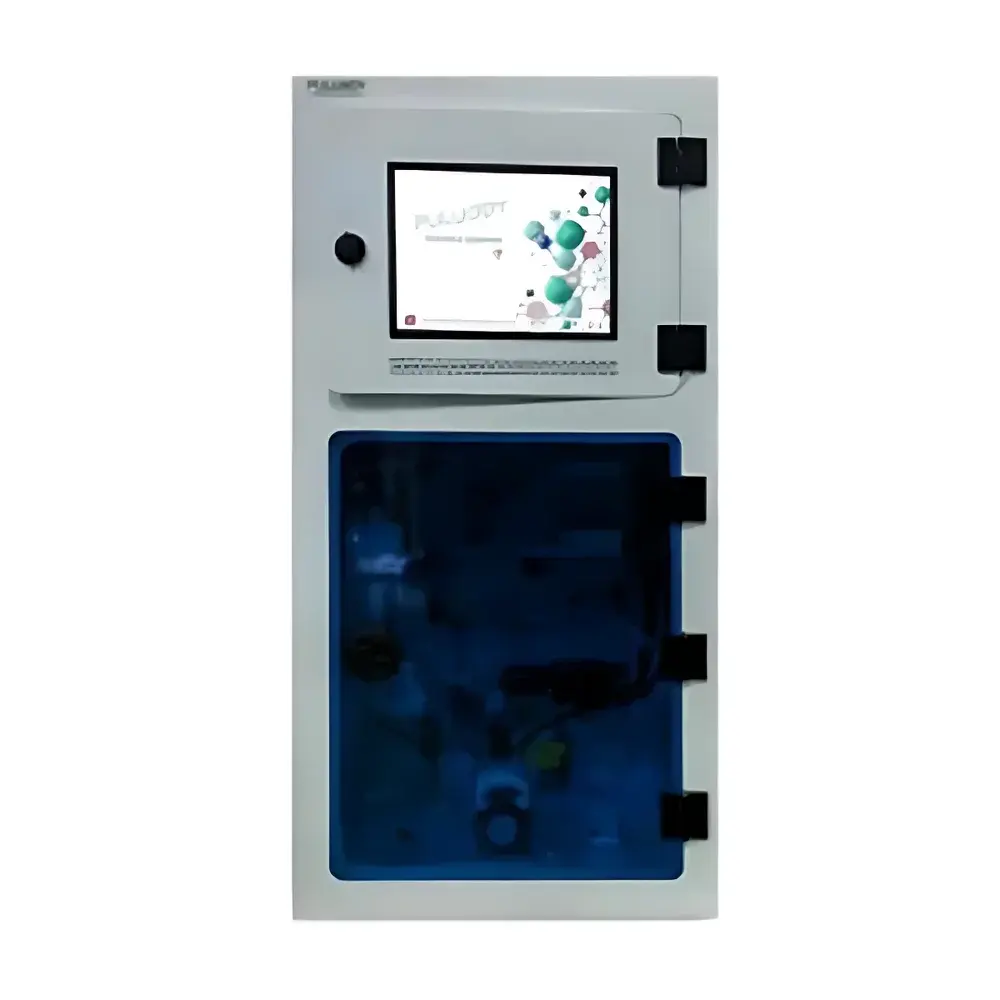
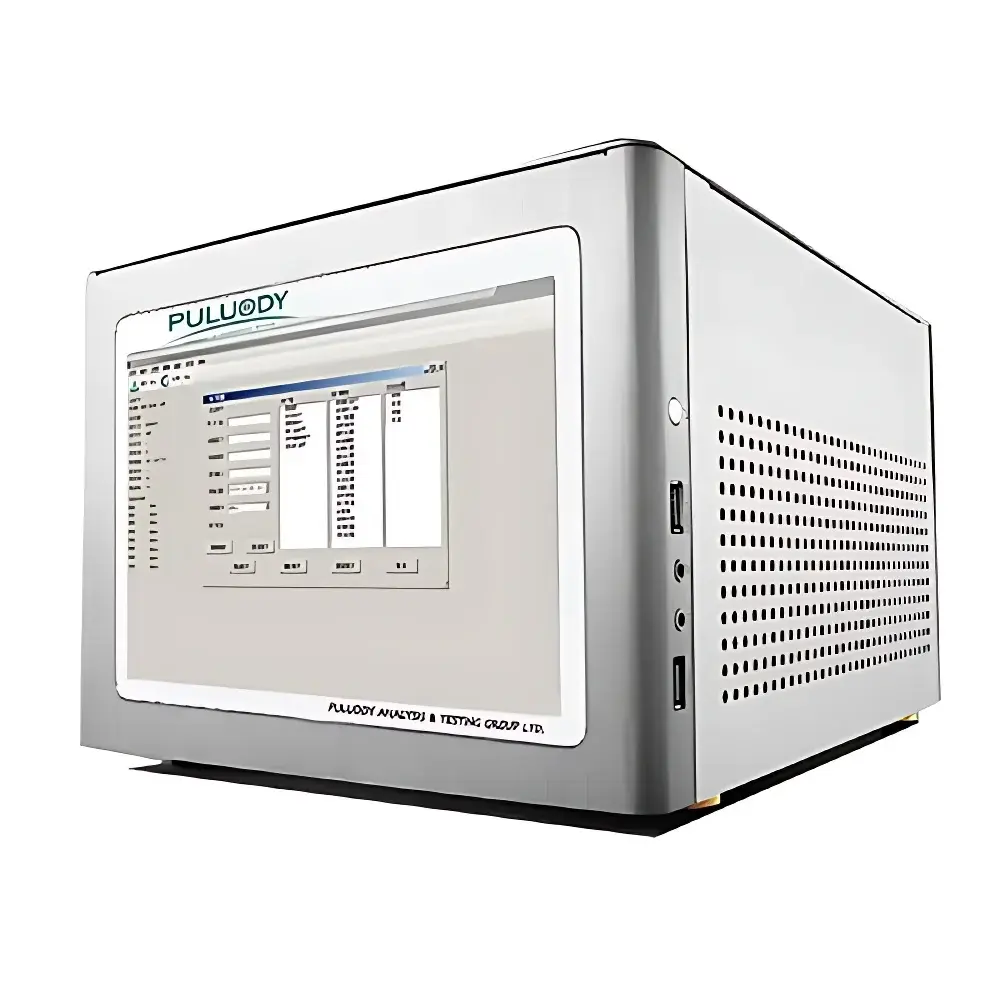
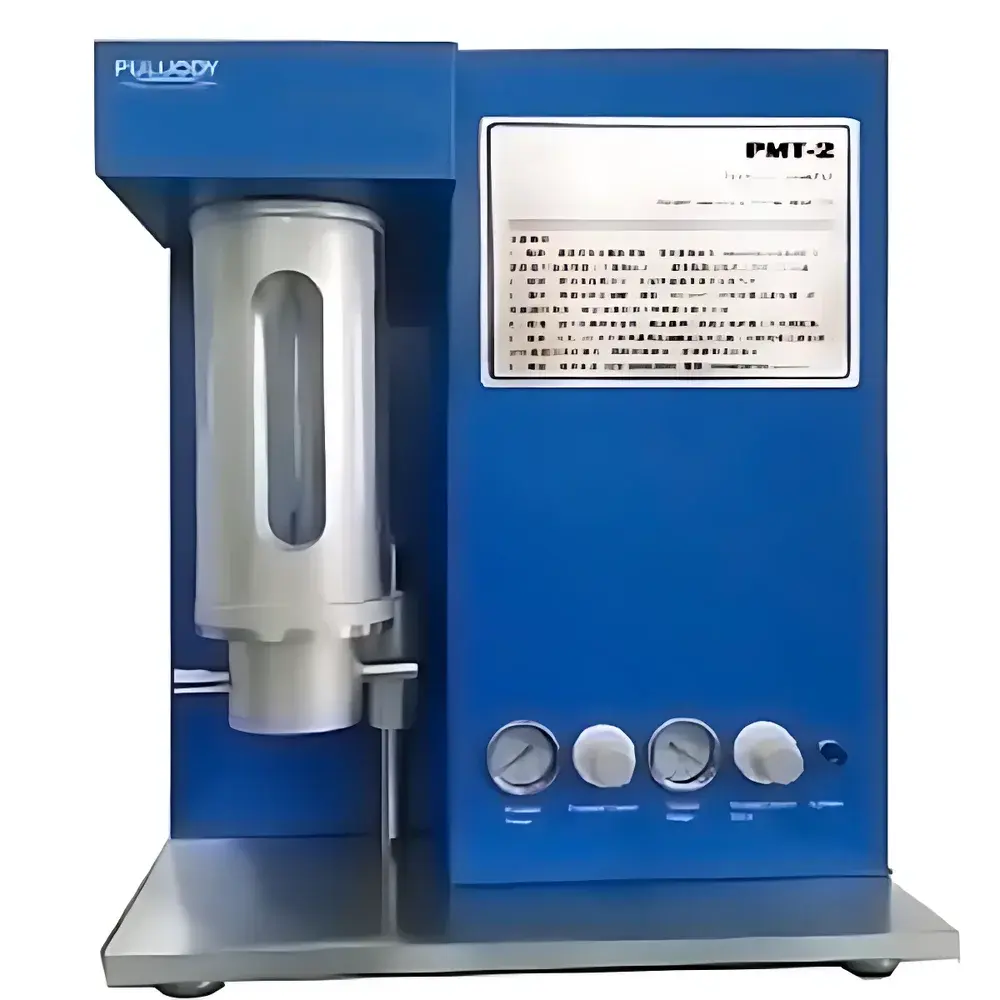
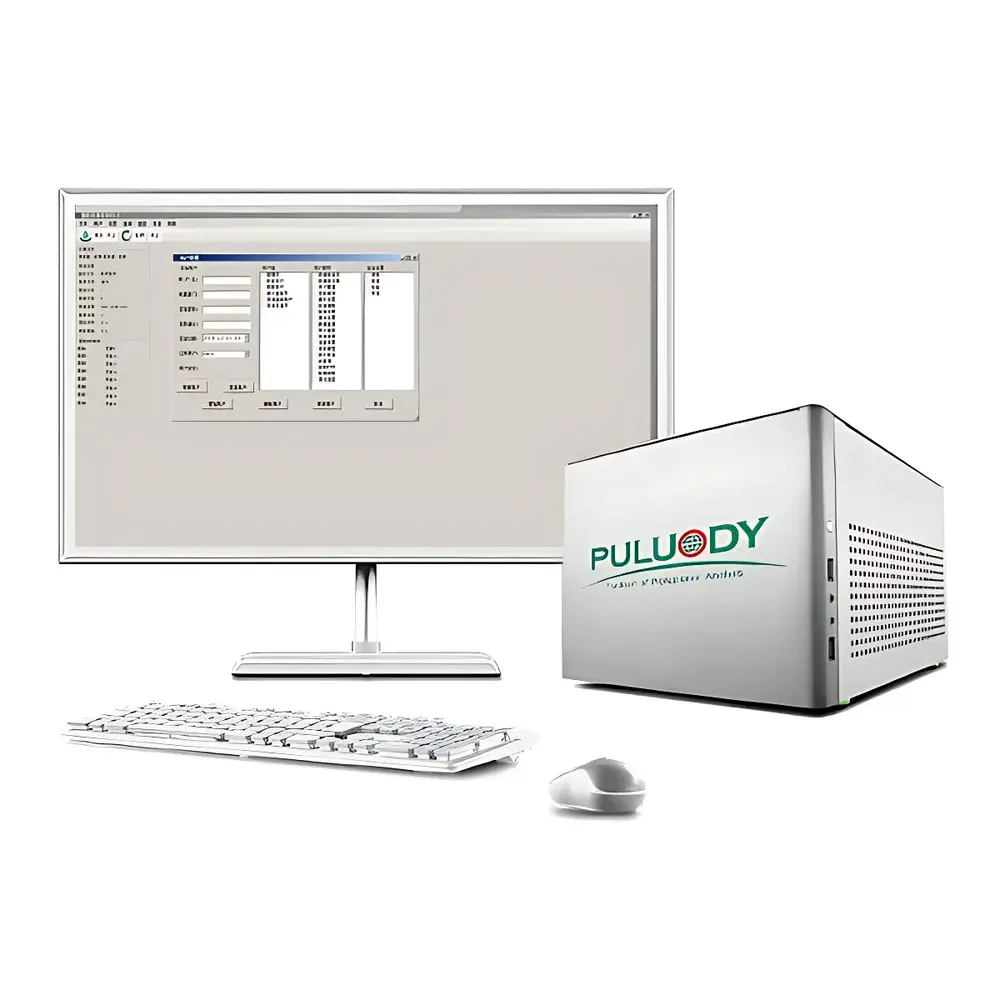
PULUODY PLD-FX-801 Dual-Mode Optical Liquid Particle Counter
| Brand | PULUODY |
|---|---|
| Origin | Shaanxi, China |
| Model | PLD-FX-801 |
| Instrument Type | Optical Particle Counter (Light Obscuration & Light Scattering Dual-Mode) |
| Detection Range | 0.5–100 µm |
| Channel Resolution | Up to 1000 user-configurable size channels (16 standard) |
| Sampling Flow Rate | 5–150 mL/min |
| Counting Accuracy | ±3% |
| Sizing Accuracy | ≥90% |
| Sample Volume Precision | ±1% |
| Measurement Time | 5 s to user-defined |
| Calibration Standard | NIST-traceable latex spheres |
| Operating System | Windows-based control software |
| Communication Interface | Standard TCP/IP |
Overview
The PULUODY PLD-FX-801 Dual-Mode Optical Liquid Particle Counter is engineered for high-sensitivity, quantitative analysis of suspended particulate contamination in ultra-pure process liquids—particularly chemical mechanical planarization (CMP) slurries used in semiconductor wafer fabrication. It employs a rigorously validated dual-detection principle combining light obscuration (LO) and light scattering (LS) within a single flow cell architecture. LO detection quantifies particles ≥2 µm by measuring transient attenuation of a collimated laser beam as particles traverse the optical path; LS detection captures sub-2 µm particles via angular scattering intensity profiles collected at optimized collection angles. This hybrid methodology enables continuous, real-time discrimination and counting across a calibrated dynamic range of 0.5–100 µm—covering both defect-inducing large particles (LPCs) responsible for micro-scratches on silicon wafers and submicron contaminants affecting slurry stability and surface finish uniformity.
Key Features
- Dual-mode optical sensor: Eighth-generation dual-laser narrow-beam detection system with independent LO and LS signal acquisition paths, minimizing cross-talk and enhancing signal-to-noise ratio.
- Precision volumetric sampling: Electromechanically regulated peristaltic pump with closed-loop flow feedback ensures stable delivery at 5–150 mL/min, critical for reproducible particle concentration reporting (particles/mL).
- On-line and off-line operational flexibility: Integrated auto-dilution module supports direct analysis of high-concentration slurries (up to 10⁶ particles/mL) without manual pre-treatment, reducing operator error and contamination risk.
- High-fidelity size resolution: 1000-channel digital pulse height analyzer allows customizable binning—standard configuration includes 16 user-defined size thresholds aligned with SEMI F39, ISO 21501-4, and USP requirements.
- NIST-traceable calibration: Factory-calibrated using certified polystyrene latex (PSL) standards; full calibration certificate provided with each instrument, compliant with ISO/IEC 17025 documentation practices.
- Robust system architecture: All-wetted-path components constructed from chemically inert, low-particulate-elution materials (e.g., fused silica flow cell, PTFE/PFA tubing), validated for compatibility with aqueous and organic CMP slurries (e.g., SiO₂, Al₂O₃, CeO₂ dispersions).
- Real-time trend monitoring: Embedded time-series analysis engine logs particle counts, size distribution evolution, and cumulative event rates—enabling root-cause correlation with filter change events or slurry batch transitions.
Sample Compatibility & Compliance
The PLD-FX-801 is validated for use with deionized water, dilute acid/base solutions, and common organic solvents employed in electronic-grade chemical handling (e.g., IPA, EG, glycol ethers). Its fluidic design meets ASTM F329-22 criteria for particle counter suitability in semiconductor manufacturing environments. Data integrity complies with FDA 21 CFR Part 11 requirements through audit-trail-enabled software, electronic signature support, and secure user-role management. The instrument satisfies key elements of ISO 14644-9 (cleanroom monitoring) and SEMI C113 (slurry purity specification), and supports GMP/GLP-aligned workflows via configurable report templates and raw data export in CSV/CSV-UTF8 formats.
Software & Data Management
Control and analysis are executed via Windows-based PULUODY ParticleView™ v5.x software—a deterministic, deterministic real-time acquisition platform with deterministic latency (<10 ms per pulse). The interface provides synchronized visualization of raw pulse trains, histogrammed size distributions, and temporal concentration plots. Data export supports automated integration into MES/SCADA systems via OPC UA (optional) or native TCP/IP socket communication. All measurement sessions generate immutable metadata including timestamp, operator ID, sample ID, calibration status, and environmental conditions (temperature, pressure)—ensuring full traceability for internal QA audits or external regulatory review.
Applications
- CMP slurry qualification at point-of-use (POU): Monitoring LPC events upstream of polishing tools to prevent wafer-level defects (scratches, pits, haze).
- Slurry lot release testing: Discriminating “good” vs. “bad” batches based on statistically significant deviations in >1.0 µm particle counts per ASTM F329 Annex A3.
- Filtration validation: Quantifying log-reduction values (LRVs) across membrane filters (e.g., 10 nm, 20 nm, 50 nm pore ratings) in accordance with ISO 13322-2.
- Electronic chemical purity assurance: Routine surveillance of photoresist developers, etchants, and cleaning agents per JEDEC J-STD-025B specifications.
- Ultrapure water (UPW) monitoring in fab utilities: Continuous compliance verification against SEMI F63 Class 1–5 particle limits.
- Industrial process water management: Slag removal verification in steel mill recirculation loops and membrane integrity testing in municipal drinking water treatment plants.
FAQ
What particle detection principles does the PLD-FX-801 employ?
It utilizes simultaneous light obscuration and light scattering detection in a single flow cell, enabling accurate sizing and counting from 0.5 µm to 100 µm.
Is the instrument suitable for organic solvent-based slurries?
Yes—wetted materials are chemically compatible with common semiconductor-grade organics; compatibility verification for specific solvents is recommended prior to deployment.
How is calibration traceability maintained?
Calibration uses NIST-traceable PSL standards; certificates include uncertainty budgets and are issued per ISO/IEC 17025 requirements.
Can the system operate in fully automated, unattended mode?
Yes—scheduled sampling, auto-dilution, and pass/fail decision logic can be programmed for 24/7 operation with remote alarm notification.
Does the software support electronic records for FDA-regulated environments?
Yes—ParticleView™ implements full 21 CFR Part 11 functionality including audit trails, role-based access, and electronic signatures.



