
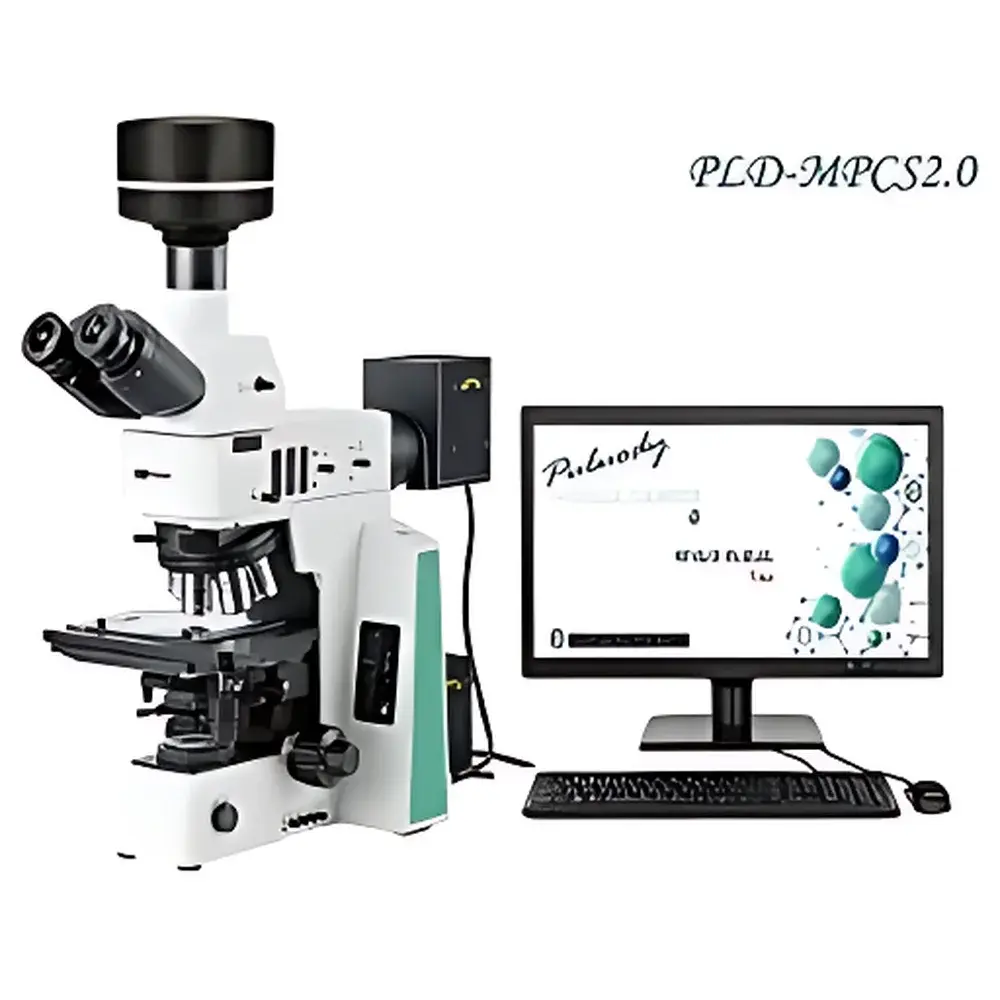
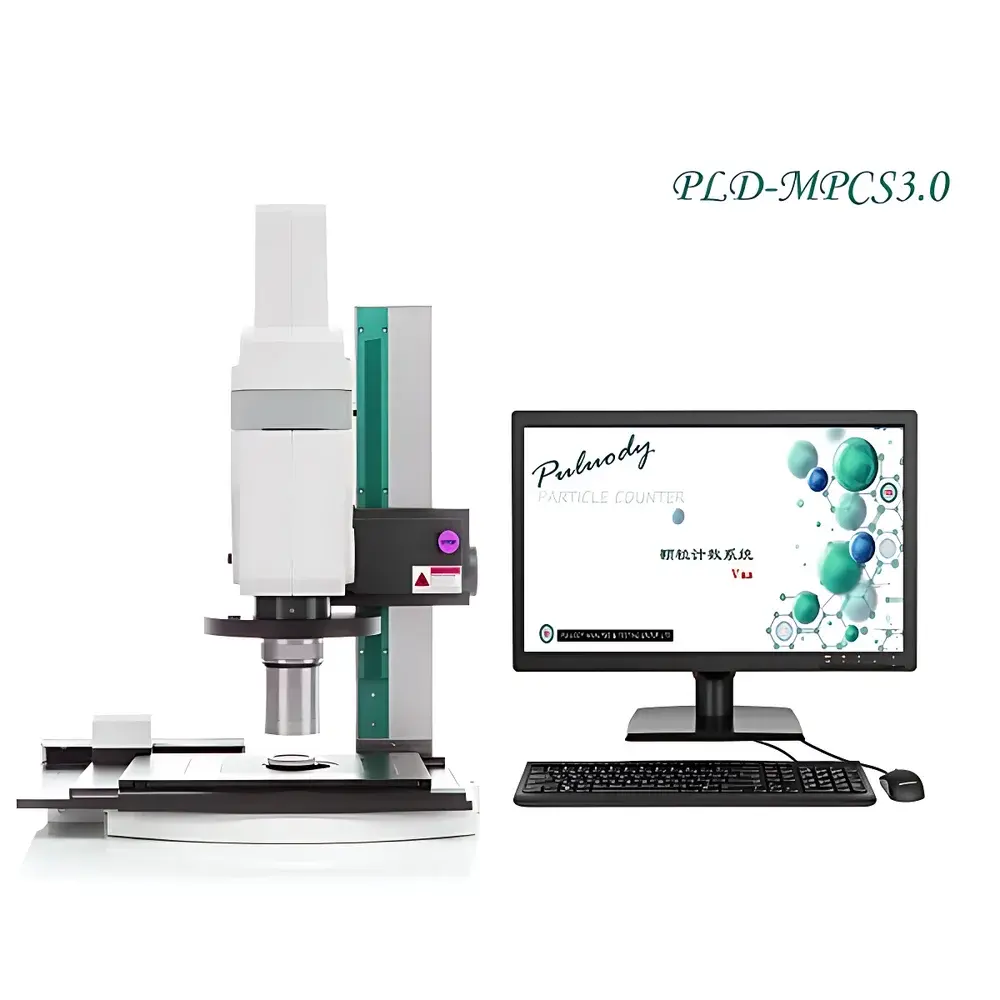
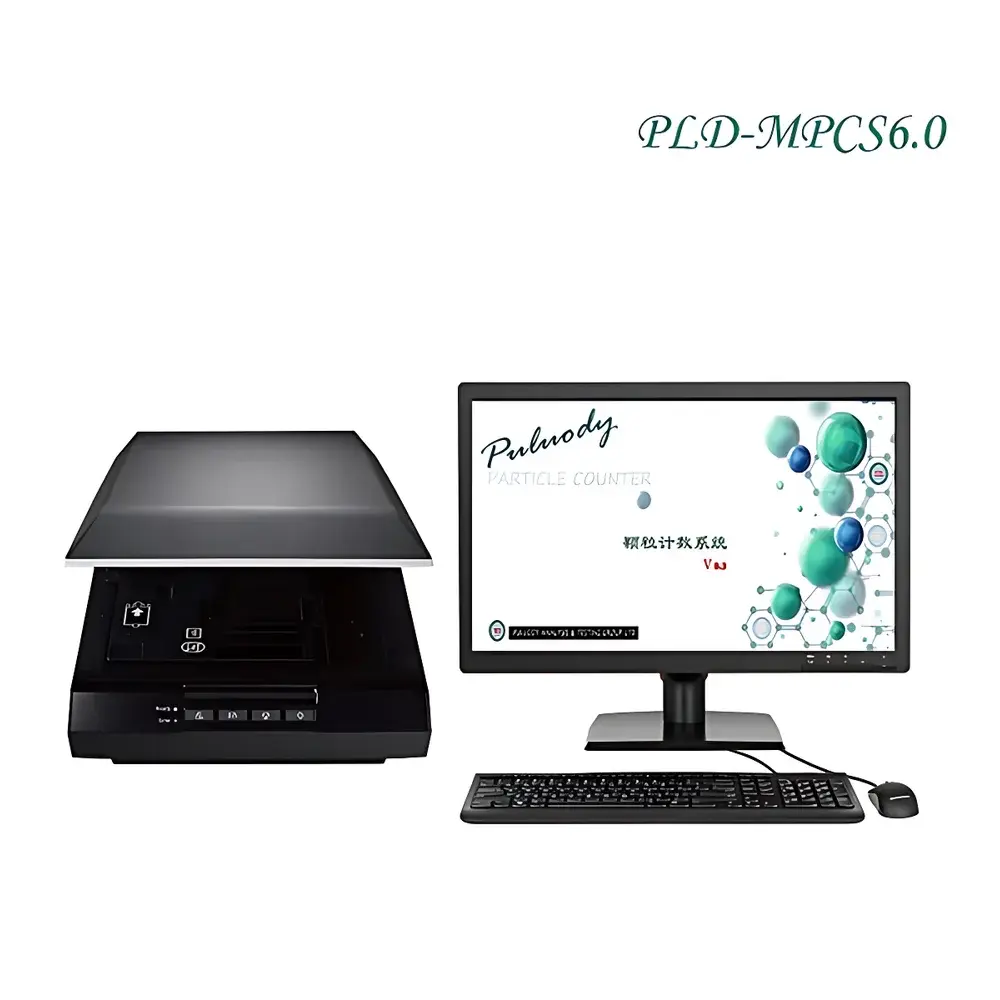
PULUODY PLD-MPCS2.0-A Metallurgical Microscope-Based Insoluble Particle Analyzer
| Brand | PULUODY |
|---|---|
| Origin | Shaanxi, China |
| Model | PLD-MPCS2.0-A |
| Microscope Type | Upright |
| Image Analysis System | Integrated |
| Total Magnification Range | 40× to 1000× |
| Detection Range | 1 μm – 500 μm |
| Resolution | 0.1 μm |
| Repeatability Error | < 5% (excluding sample preparation variability) |
| CCD Camera | 3 MP |
| Calibration Accuracy | ±3% (typical) |
| Particle Segmentation Speed | < 1 s |
| Segmentation Success Rate | > 93% |
| Software Platform | Windows 2000 / XP |
| Interface | RS232 or USB |
| Compliance Standards | USP <788>, USP <789>, EP, JP, ChP 2020, GB/T 11446.9-2013, ISO 21501, ISO 21510, ASTM F312, ISO 4406 (adapted) |
Overview
The PULUODY PLD-MPCS2.0-A Metallurgical Microscope-Based Insoluble Particle Analyzer is a regulatory-compliant, image analysis-driven system engineered for quantitative microscopic enumeration and morphological characterization of insoluble particulate matter in liquid pharmaceuticals, high-purity process fluids, and critical industrial media. Designed explicitly to fulfill the requirements of pharmacopoeial Method 2 (Microscopic Particle Count) under Chinese Pharmacopoeia Appendix 0903, it operates on the principle of brightfield transmitted-light microscopy coupled with high-resolution digital imaging and deterministic image segmentation algorithms. Unlike light obscuration (LO) or laser diffraction methods, this system preserves particle shape, transparency, and spatial context—enabling not only size distribution and count but also aspect ratio, circularity, and agglomeration state assessment. Its upright metallurgical microscope architecture supports both standard glass slide and membrane filtration sample formats, making it suitable for sterility-critical environments where non-destructive, visual verification is mandated.
Key Features
- Upright metallurgical microscope platform optimized for high-contrast, low-glare imaging of translucent and opaque particles on filter membranes or in suspension.
- Integrated 3-megapixel monochrome CCD camera with real-time frame capture and hardware-level exposure control for consistent grayscale fidelity across varying particle refractive indices.
- Automated motorized stage with programmable XY scanning and seamless tile-based mosaic stitching—enabling full-filter coverage without manual repositioning or field-of-view gaps.
- Dedicated particle analysis software featuring operator-level access control, audit-trail logging (aligned with FDA 21 CFR Part 11 principles), and configurable reporting templates compliant with USP, EP, JP, and ChP formats.
- Calibration traceability to national standards via National Northwest Metrology & Testing Center (civilian sector); certified reference materials used for daily verification per ISO/IEC 17025 practices.
- Manual focus and adjustable illumination intensity—essential for optimizing contrast in low-refractive-index particles (e.g., silicone oil droplets, polymer fragments) that lack inherent scattering contrast.
Sample Compatibility & Compliance
The PLD-MPCS2.0-A accommodates a broad range of sample types including aqueous and organic solvents, parenteral formulations (injectables, lyophilized powders, ophthalmic solutions), ultrapure water (UPW), CMP slurries, hydraulic oils, and filtered gases. It supports standardized membrane filtration using mixed cellulose ester (MCE), polycarbonate (PC), or polyvinylidene fluoride (PVDF) filters (0.45 µm or 0.8 µm pore size). The system meets analytical validation criteria outlined in ICH Q5A(R2), USP , and ISO 21501-4 for particle counting instrumentation. All software workflows support GLP/GMP-aligned data integrity: electronic signatures, version-controlled SOPs, time-stamped raw image archiving, and exportable XML/CSV datasets for third-party statistical review. Regulatory documentation packages—including Installation Qualification (IQ), Operational Qualification (OQ), and Performance Qualification (PQ) protocols—are available upon request.
Software & Data Management
The proprietary MPCS Analysis Suite runs natively on Windows platforms and provides dual-mode operation: guided workflow mode for routine QC labs and expert mode for method development. Core functions include adaptive thresholding, watershed-based particle splitting, edge-aware contour detection, and hierarchical classification by morphology (e.g., fiber vs. granule vs. flake). Reports auto-generate according to user-selected pharmacopoeial thresholds (e.g., ≥10 µm and ≥25 µm counts per mL), NAS 1638 cleanliness codes, or custom binning schemes. Raw images are stored with embedded metadata (magnification, calibration factor, operator ID, timestamp), and all processing steps are logged in an immutable audit trail. Data export supports PDF, Excel, and structured XML formats compatible with LIMS integration. Optional modules include automated filter defect mapping and multi-batch trend analysis with SPC charting.
Applications
This instrument serves as a primary or orthogonal method for particulate contamination assessment across regulated and industrial sectors. In pharmaceutical manufacturing, it validates filter integrity, quantifies extractables/leachables from packaging components (e.g., stoppers, IV bags), and supports root-cause analysis of visible particulates in final drug products. In semiconductor fabrication, it characterizes slurry residue on wafers and monitors UPW purity against SEMI F63 specifications. In aerospace and power generation, it evaluates hydraulic fluid cleanliness per ISO 4406 and NAS 1638 classifications. Additional use cases include evaluation of cleaning efficacy in medical device reprocessing, qualification of sterile filtration processes, and quality control of nanomaterial dispersions in battery electrolytes or conductive inks.
FAQ
Does the system comply with FDA 21 CFR Part 11 requirements for electronic records and signatures?
Yes—the software implements role-based access control, electronic signature capture with reason-for-change fields, and tamper-evident audit logs meeting ALCOA+ principles.
Can the system analyze particles smaller than 1 µm?
No; the validated lower detection limit is 1 µm under standard brightfield illumination and 40× objective magnification. Sub-micron analysis requires optional darkfield or phase contrast accessories, subject to separate validation.
Is external calibration certification included with purchase?
A factory calibration certificate traceable to national metrology standards is provided. On-site calibration verification by accredited third parties (e.g., CNAS-certified labs) is available as a service option.
What sample preparation protocols are recommended for viscous or highly colored liquids?
Dilution with particle-free solvent, centrifugal clarification, and membrane filtration using pressure-assisted vacuum manifolds are documented in the system’s SOP library. Protocol selection must be justified and verified per ICH Q2(R2).
How does the system handle particle overlap or agglomerates during image analysis?
The software applies iterative watershed segmentation with user-adjustable separation sensitivity. Validation studies demonstrate >93% split accuracy for doublets at ≤10,000 particles/mL concentration, per USP Annex recommendations.




