
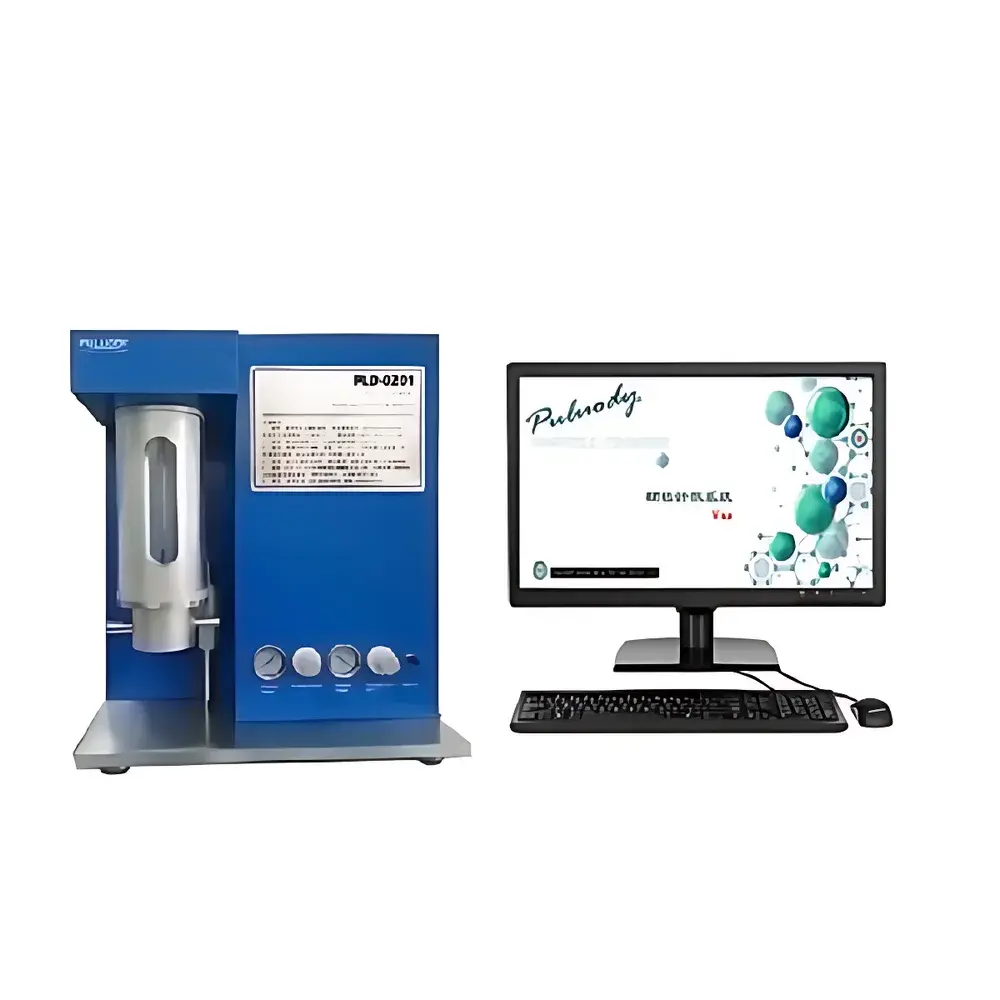
PULUODY PMT-2 Online Ultra-Pure Water Laser Particle Counter
| Brand | PULUODY |
|---|---|
| Origin | Shaanxi, China |
| Manufacturer Type | Authorized Distributor |
| Product Category | Domestic |
| Model | PMT-2 |
| Instrument Type | Optical Particle Counter |
| Detection Principle | Dual-Laser Narrow-Beam Light Scattering |
| Calibration Standards | ISO 21501-4, USP <788>, EP 2.9.19, ChP 2020 Vol. IV, GB 8368 |
| Measurement Range | 0.1–1.0 µm (standard), customizable 1–100 µm or 4–70 µm(c), down to 0.1 µm(c) |
| Sample Flow Control | Precision Plunger Pump + Electromagnetic Flow Regulation |
| Accuracy | ±3% typical |
| Sampling Precision | <±1% |
| Coincidence Limit | ≤2.5% at 1000 particles/mL |
| Output | 4–20 mA analog signal,超标 alarm (customizable) |
| Data Interface | iPad-compatible wireless acquisition |
| Software | V8.3 Integrated Analysis & Calibration Software (PC + embedded touchscreen) |
| Compliance | Supports 21 CFR Part 11 audit trail (via optional software module), GLP/GMP-ready reporting |
Overview
The PULUODY PMT-2 Online Ultra-Pure Water Laser Particle Counter is an engineered solution for real-time, continuous monitoring of particulate contamination in ultra-pure water (UPW) and other low-conductivity, low-viscosity process liquids used across semiconductor fabrication, pharmaceutical manufacturing, medical device cleaning validation, and advanced materials production. Based on dual-laser narrow-beam light scattering detection—a principle compliant with ISO 21501-4 for liquid-borne particle sizing—the instrument delivers high-sensitivity quantification of submicron particles from 0.1 µm upward. Its core sensor represents the eighth-generation evolution of PULUODY’s proprietary optical architecture, optimized for minimal background noise, high signal-to-noise ratio, and robust immunity to refractive index variation in aqueous matrices. Unlike conventional single-wavelength counters, the dual-laser configuration enables differential scattering analysis, improving discrimination between true particulates and optical artifacts such as bubbles or dissolved aggregates—critical for UPW systems where particle concentrations routinely fall below 1 particle/mL at ≥0.2 µm.
Key Features
- Dual-laser narrow-beam optical sensing platform with independent wavelength channels for enhanced size resolution and reduced false counts
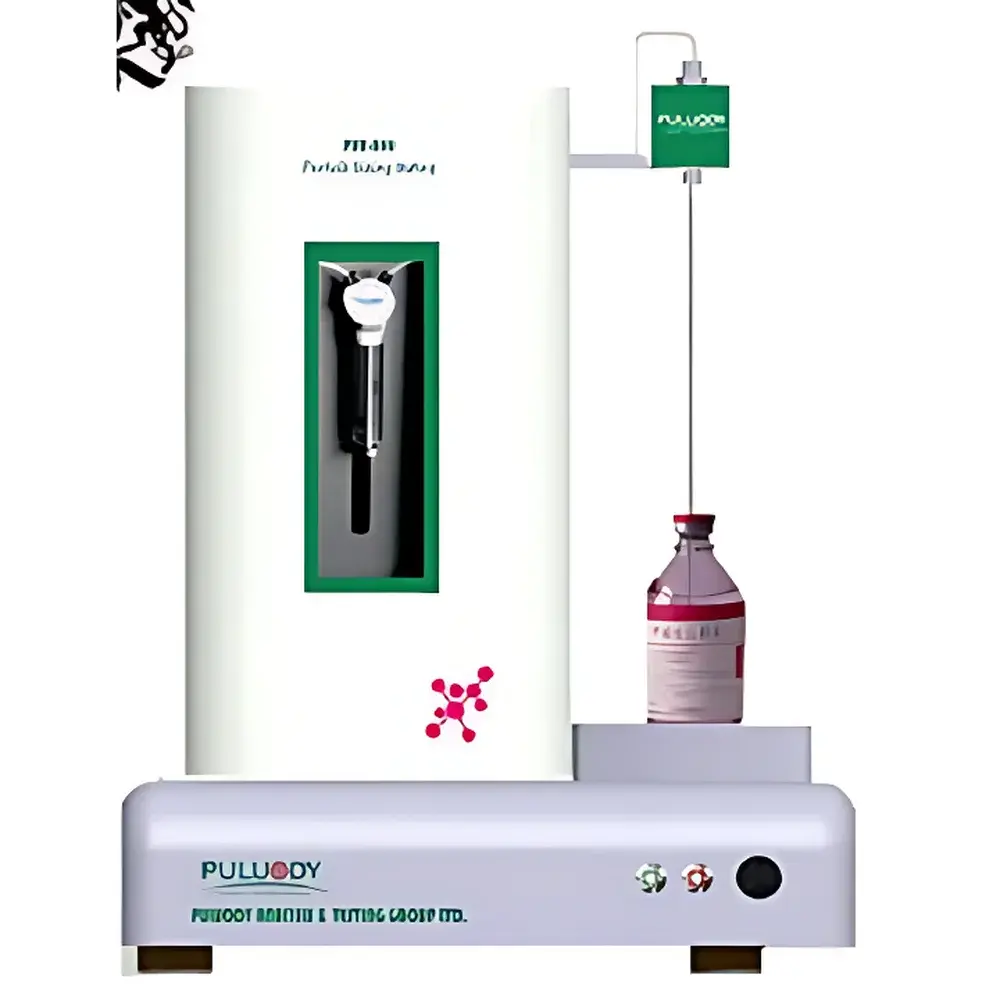
- Precision plunger pump coupled with electromagnetic flow regulation ensures repeatable volumetric sampling at ±1% delivery accuracy
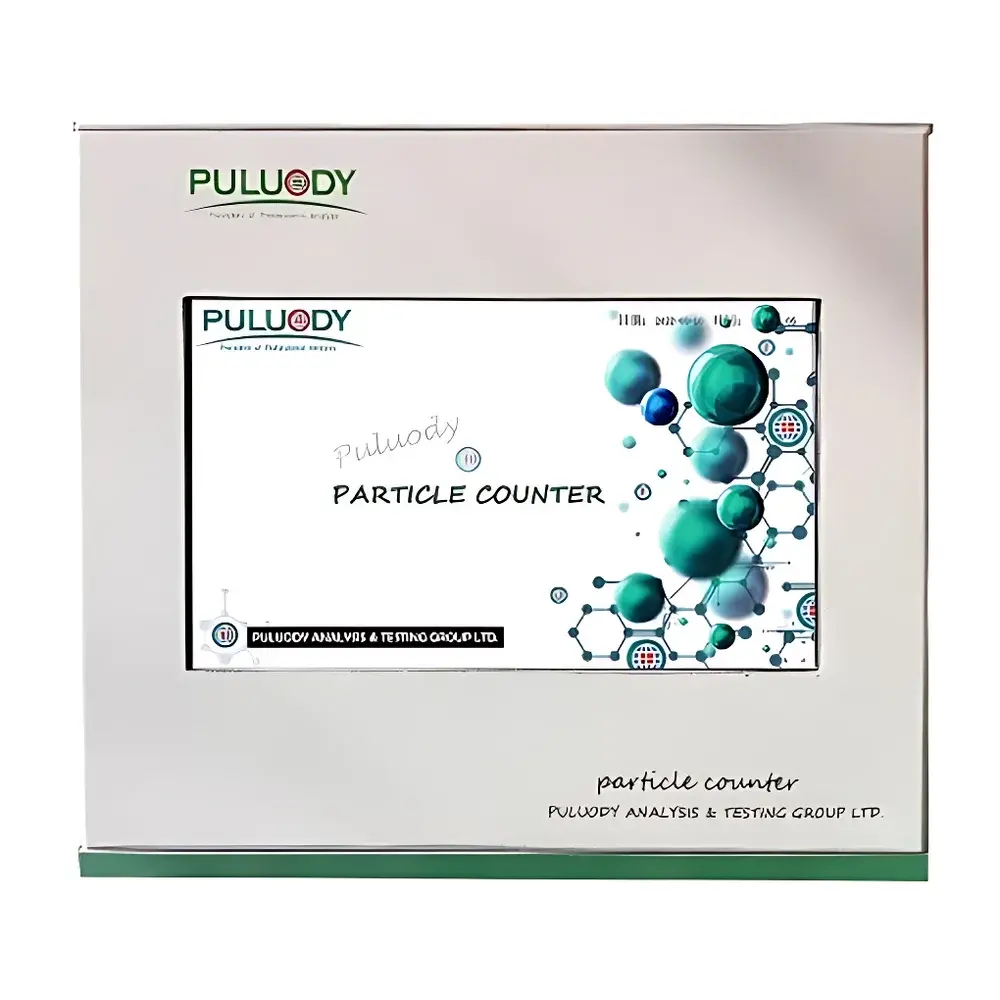
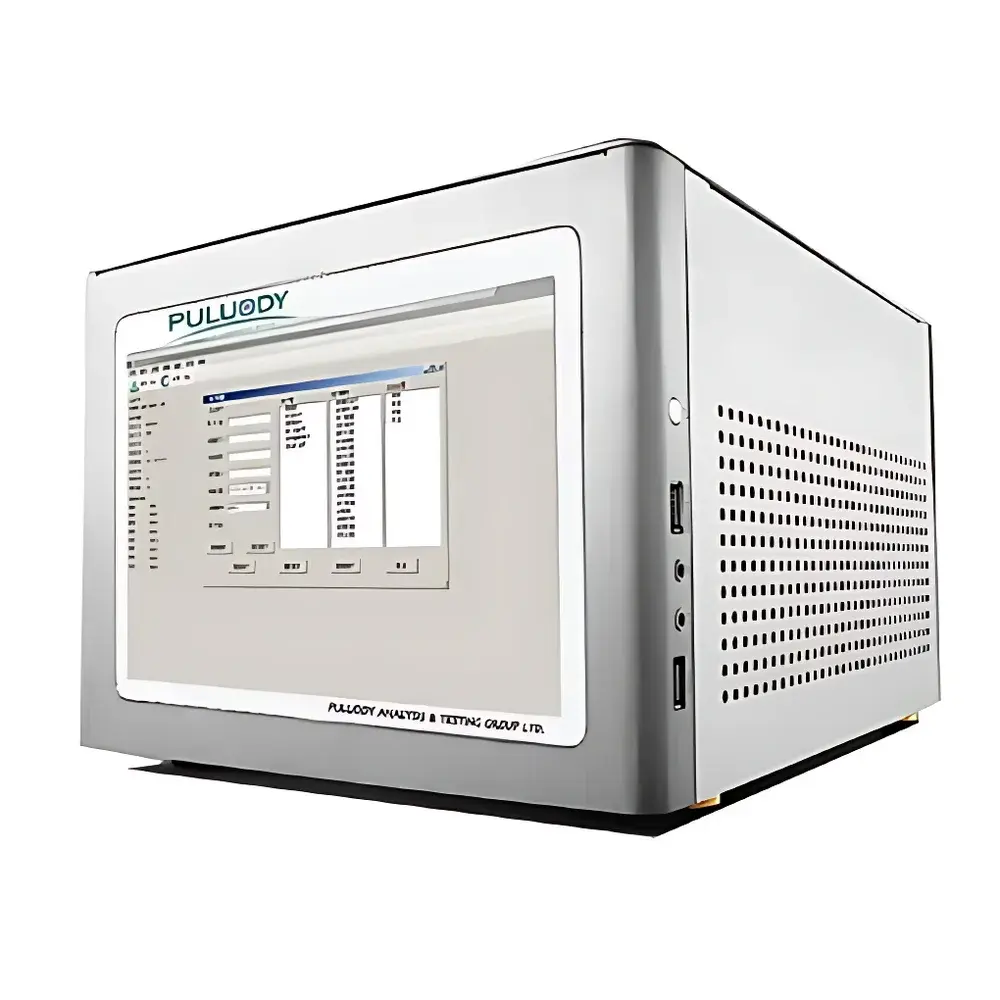
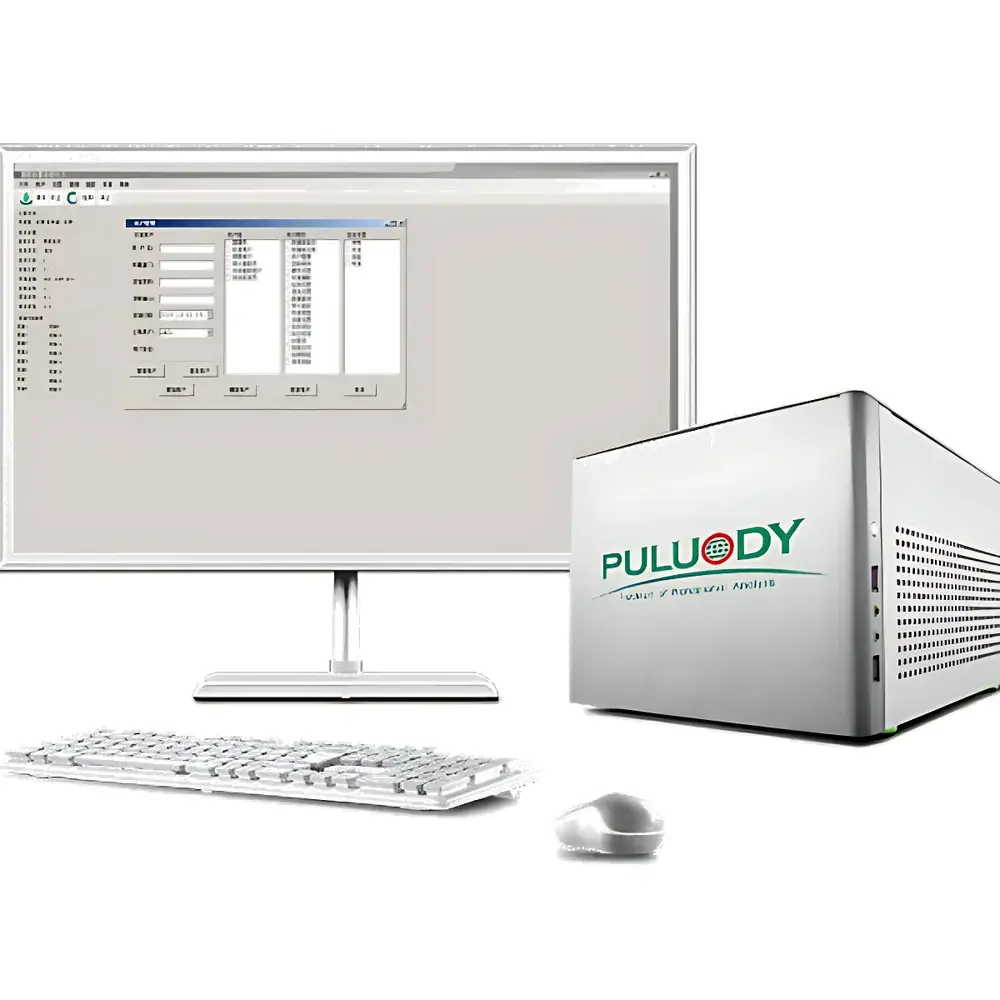
- Embedded 7-inch color LCD touchscreen interface with intuitive workflow navigation; supports optional wireless keyboard/mouse operation for lab-based offline analysis
- V8.3 integrated software suite—separately validated modules for measurement acquisition, calibration management, and report generation—to prevent cross-contamination of test and metrological data
- Analog 4–20 mA output with configurable alarm thresholds for integration into SCADA, DCS, or PLC-based facility monitoring systems
- Modular design enabling both online bypass-loop installation and portable offline sampling configurations
- Compliance-ready data handling: optional 21 CFR Part 11-compliant audit trail, electronic signatures, and secure user access levels
Sample Compatibility & Compliance
The PMT-2 is validated for use with ultra-pure water (resistivity ≥18.2 MΩ·cm), deionized water, semiconductor process chemicals (e.g., SC1, SC2, HF blends), photoresist solvents, polymer solutions, and aqueous suspensions of nanomaterials. It meets the particle counting requirements of multiple pharmacopoeial standards—including United States Pharmacopeia , European Pharmacopoeia 2.9.19, Japanese Pharmacopoeia 6.07, and Chinese Pharmacopoeia 2020 Edition Volume IV—as well as GB 8368 (sterile medical devices) and ASTM F3231-20 (for UPW in microelectronics). Calibration traceability follows JJG 1061 (China National Metrology Verification Regulation) or ISO 21501-4 using NIST-traceable polystyrene latex (PSL) reference particles. The system supports both fixed-interval and event-triggered sampling modes, with automatic dilution capability for high-concentration samples.
Software & Data Management
The V8.3 software platform operates in two logically isolated environments: a measurement runtime module for routine particle enumeration and a calibration administration module for sensor verification, standardization, and drift compensation. All raw scatter pulse data are stored in encrypted binary format with timestamp, temperature, pressure, and flow-rate metadata. Reports export in PDF/A-1b or CSV formats, including particle concentration per size bin (particles/mL), ISO Class coding per ISO 14644-1, NAS 1638 codes, and custom grading per client-defined thresholds. Audit logs record operator actions, method changes, calibration events, and alarm activations—fully compatible with GLP and GMP documentation requirements when configured with digital signature and role-based access control.
Applications
- Semiconductor front-end fabs: real-time UPW loop monitoring at point-of-use (POU) and sub-fab distribution nodes
- Pharmaceutical water-for-injection (WFI) and purified water (PW) systems: continuous compliance verification per USP and EU Annex 1
- Medical device cleaning validation: quantification of residual particulates on implants, endoscopes, and surgical instruments
- Nanofiltration and ultrafiltration membrane integrity testing via challenge particle breakthrough detection
- Research laboratories evaluating colloidal stability, nanoparticle dispersion, or filtration efficiency of novel membranes
- Flat-panel display manufacturing: monitoring rinse water purity during TFT-LCD and OLED substrate cleaning processes
FAQ
What particle size ranges does the PMT-2 support out-of-the-box?
Standard configuration covers 0.1–1.0 µm and 0.1–0.5 µm detection channels; extended ranges (e.g., 4–70 µm(c) or fully customizable 1–100 µm bins) are available via firmware update and sensor recalibration.
Can the PMT-2 be integrated into existing factory automation systems?
Yes—it provides 4–20 mA analog output with programmable alarm relays and Modbus TCP/IP option for direct connection to PLCs, MES, or cloud-based IIoT platforms.
Is the instrument suitable for non-aqueous solvents?
It supports low-viscosity organic solvents (e.g., IPA, acetone, PGMEA) and polymer solutions when equipped with chemically resistant wetted materials (e.g., sapphire flow cell, PFA tubing); compatibility must be confirmed case-by-case per fluid chemistry.
How is calibration verified and maintained?
Calibration is performed using ISO 21501-4 compliant PSL standards; the V8.3 software includes automated linearity checks, zero-count verification, and scheduled recalibration reminders aligned with ISO/IEC 17025 internal audit cycles.
Does the system meet FDA requirements for electronic records?
With the optional 21 CFR Part 11 add-on module enabled, it supports audit trails, electronic signatures, and role-based permissions—validated for use in regulated pharmaceutical and biotech environments.



