
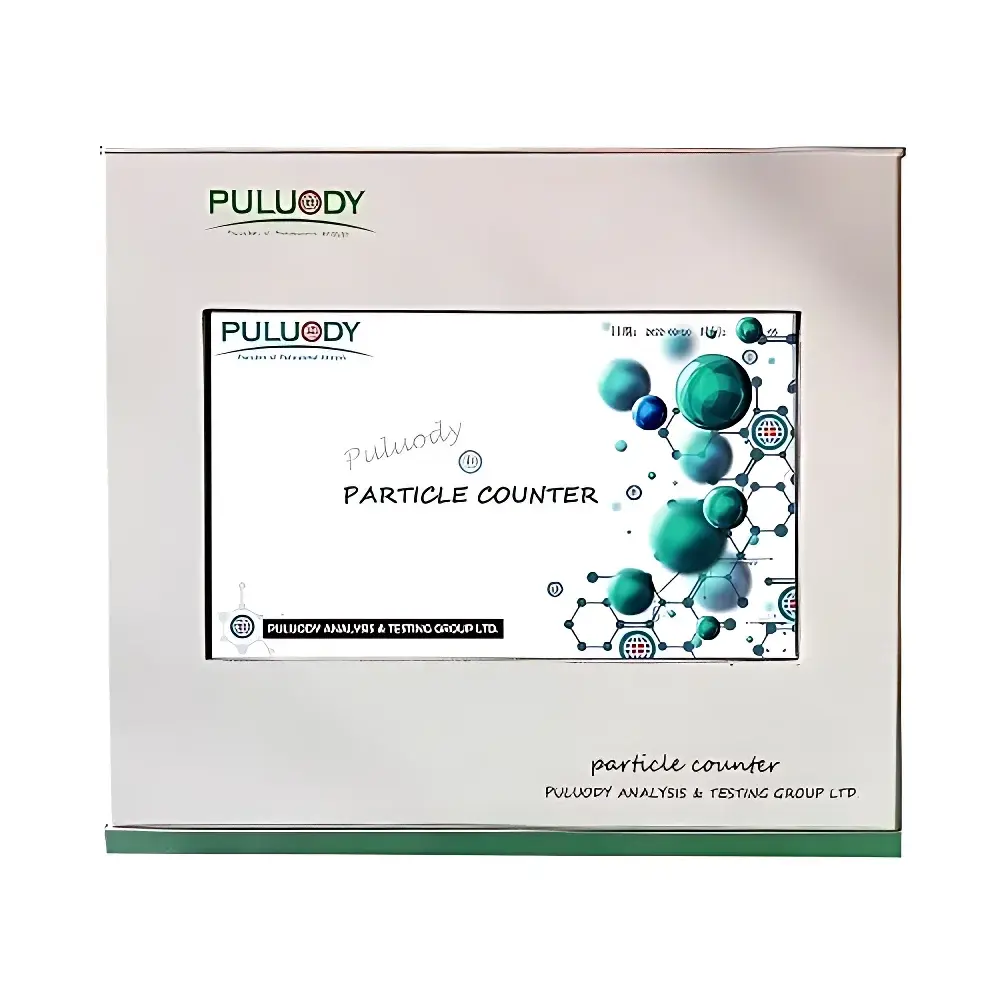
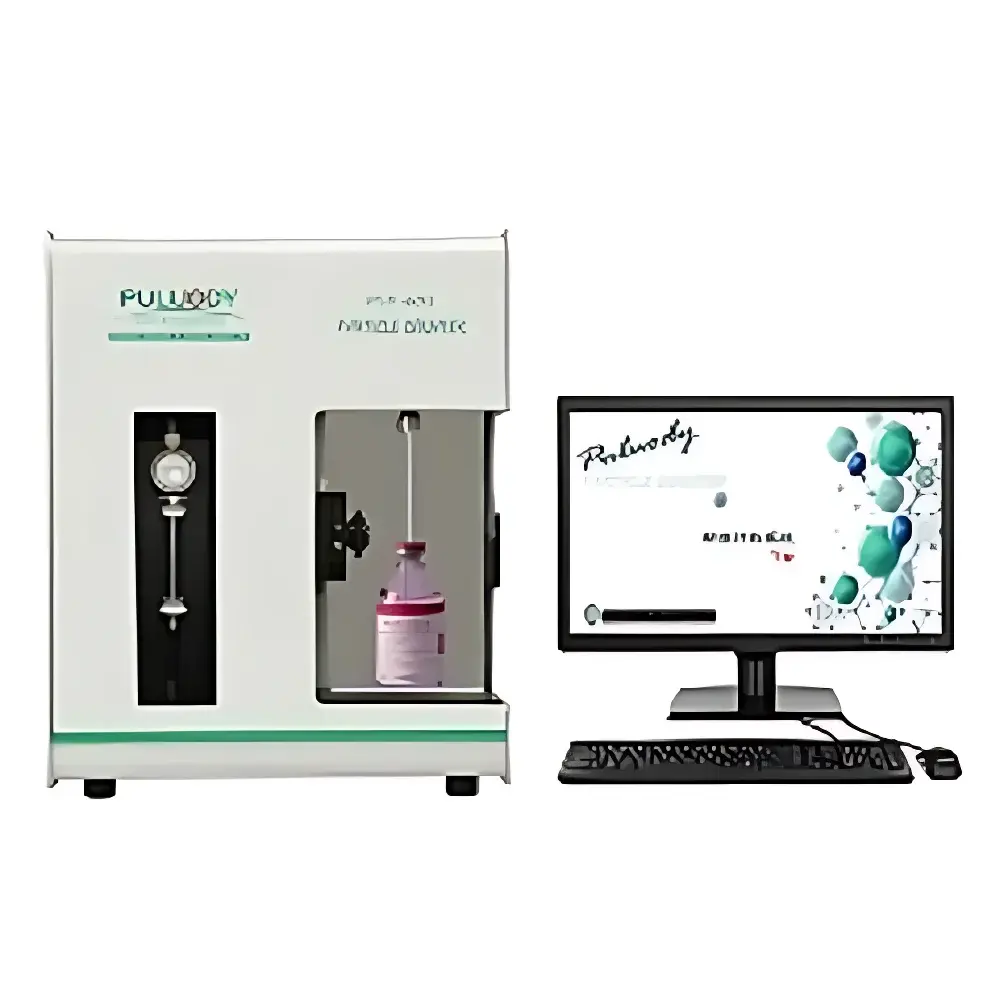
PULUODY PMT-20 Optical Liquid Particle Counter for Single-Use Gloves & Ultrapure Water
| Brand | PULUODY |
|---|---|
| Origin | Shaanxi, China |
| Manufacturer Type | Authorized Distributor |
| Instrument Type | Optical Particle Counter |
| Model | PMT-20 |
| Detection Principle | Dual-Laser Narrow-Beam Light Scattering |
| Measuring Range | 0.05–100 µm (configurable sub-ranges: 0.05–0.2 µm, 0.1–0.5 µm, 0.1–1.0 µm) |
| Accuracy | ±3% typical |
| Sampling Precision | <±1% |
| Coincidence Limit | 1000 particles/mL (2.5% coincidence error) |
| Flow Control | Precision Plunger Pump + Electromagnetic Flow Regulation |
| Calibration Standards | ISO 21501, JJG 1061, NIST-traceable Latex Spheres |
| Compliance | Chinese Pharmacopoeia 2015/2020, USP <788>, EP 2.9.19, BP, GB 8368 |
| Output Interface | 4–20 mA analog,超标 alarm (customizable) |
| Data Acquisition | iPad-integrated wireless acquisition |
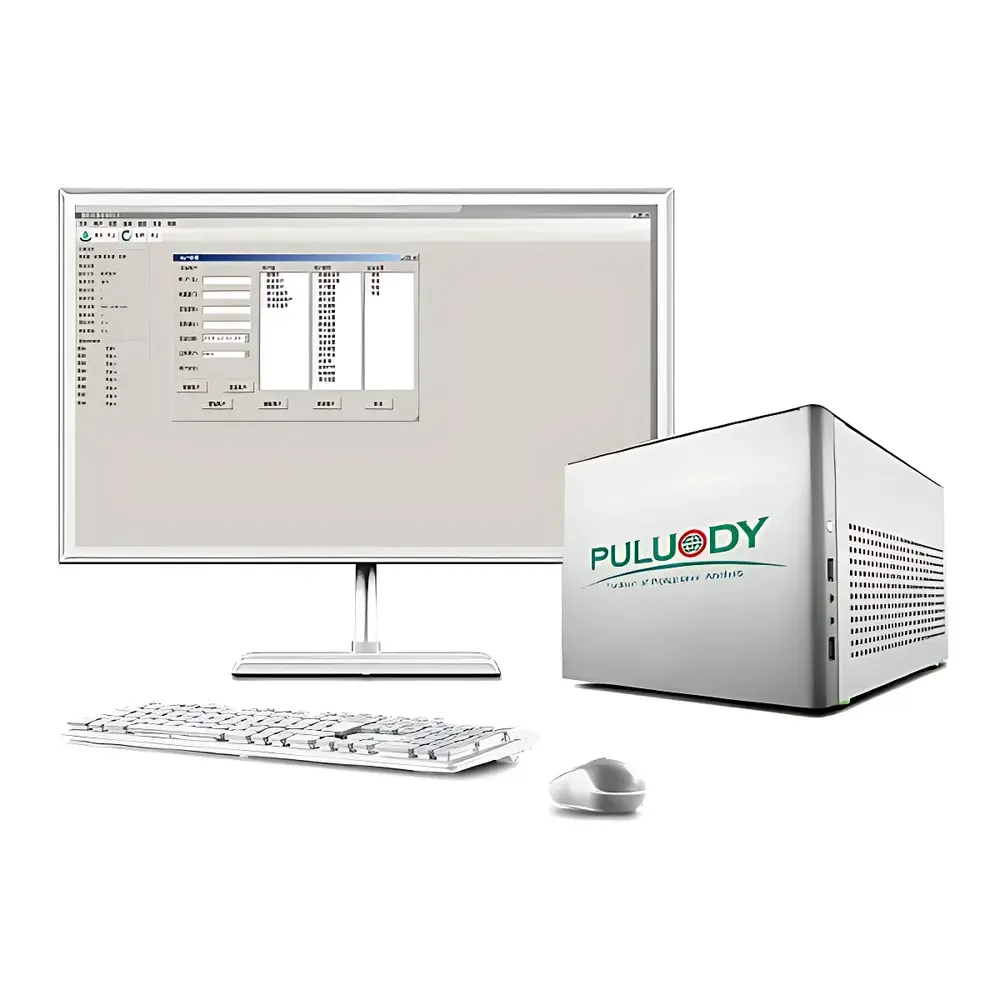
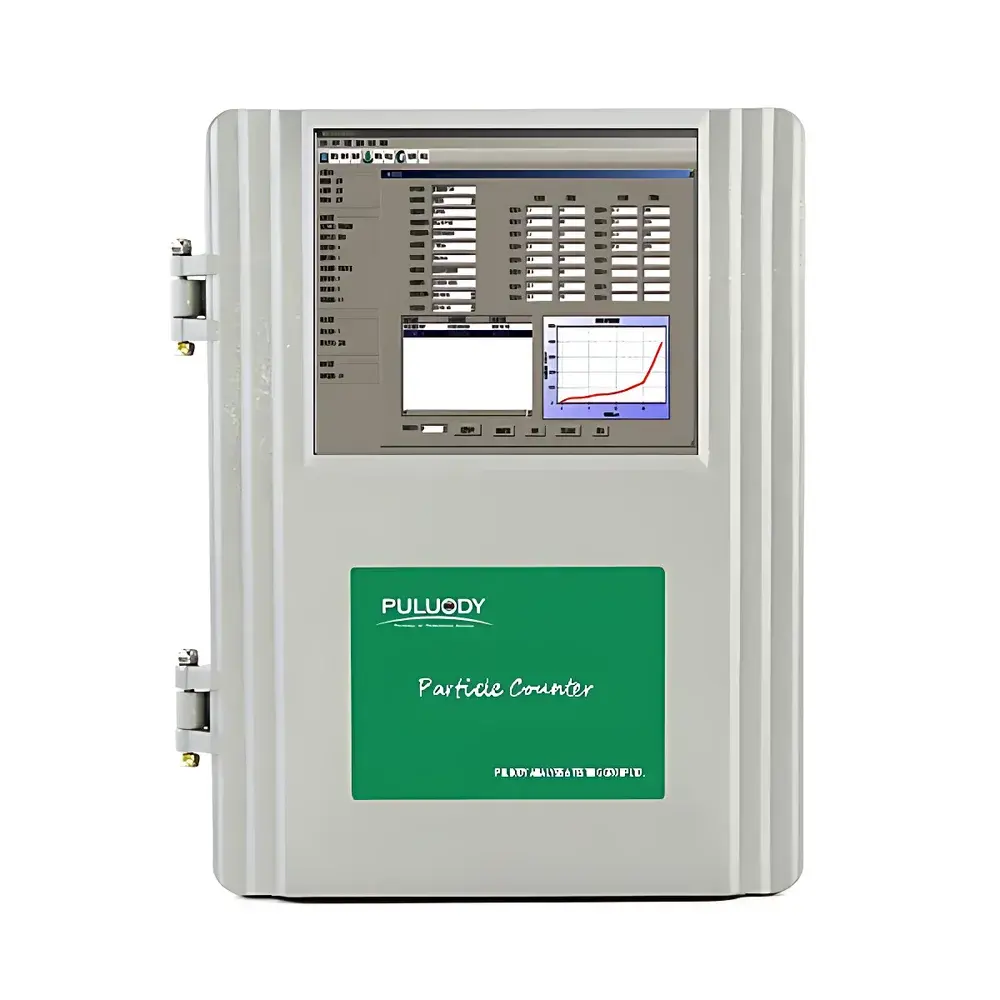
| Software | PULUODY V8.3 Integrated Analysis & Calibration Software (PC + Touchscreen GUI) |
| Power Supply | 100–265 VAC, 50–60 Hz |
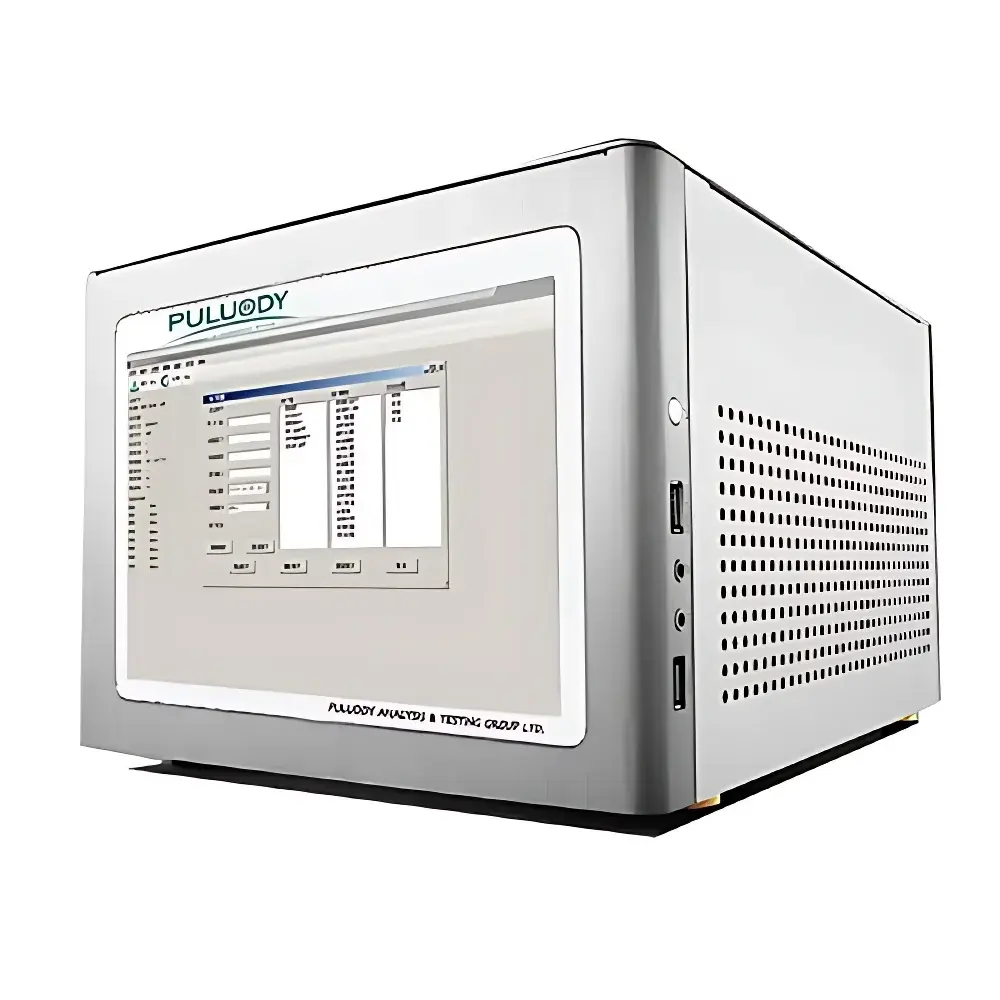
| Display | Color LCD touchscreen + optional wireless keyboard/mouse |
Overview
The PULUODY PMT-20 Optical Liquid Particle Counter is a high-sensitivity, dual-laser narrow-beam particle detection system engineered for stringent contamination control in critical fluid applications. Designed specifically for ultrapure water (UPW), semiconductor process chemicals, cleaning agents, and single-use glove rinse solutions, the instrument operates on the principle of light extinction and Mie scattering—optimized via eighth-generation dual-wavelength laser optics to resolve sub-100 nm particulates with high signal-to-noise ratio and minimal optical interference. Its architecture supports both online continuous monitoring and offline portable analysis, enabling real-time trend analysis, batch release verification, and root-cause diagnostics in GMP, ISO 14644-1 cleanroom, and semiconductor fab environments. The sensor’s narrow beam geometry minimizes diffraction artifacts and improves sizing resolution in low-conductivity, low-refractive-index media such as UPW and deionized solvents—key requirements for IC manufacturing and biopharmaceutical final rinse validation.
Key Features
- Eighth-generation dual-laser narrow-beam optical sensor with independent wavelength channels for enhanced refractive index discrimination and improved detection of transparent or low-contrast particles.
- High-fidelity volumetric sampling via precision plunger pump and electromagnetic flow regulation—ensuring <±1% volumetric accuracy and repeatable aspiration across viscosity ranges from 0.8 to 2.5 cP.
- Configurable detection thresholds: selectable size channels including 0.05–0.2 µm, 0.1–0.5 µm, and 0.1–1.0 µm; custom calibration available for user-defined ranges (e.g., 4–70 µm(c) or 0.1 µm(c)).
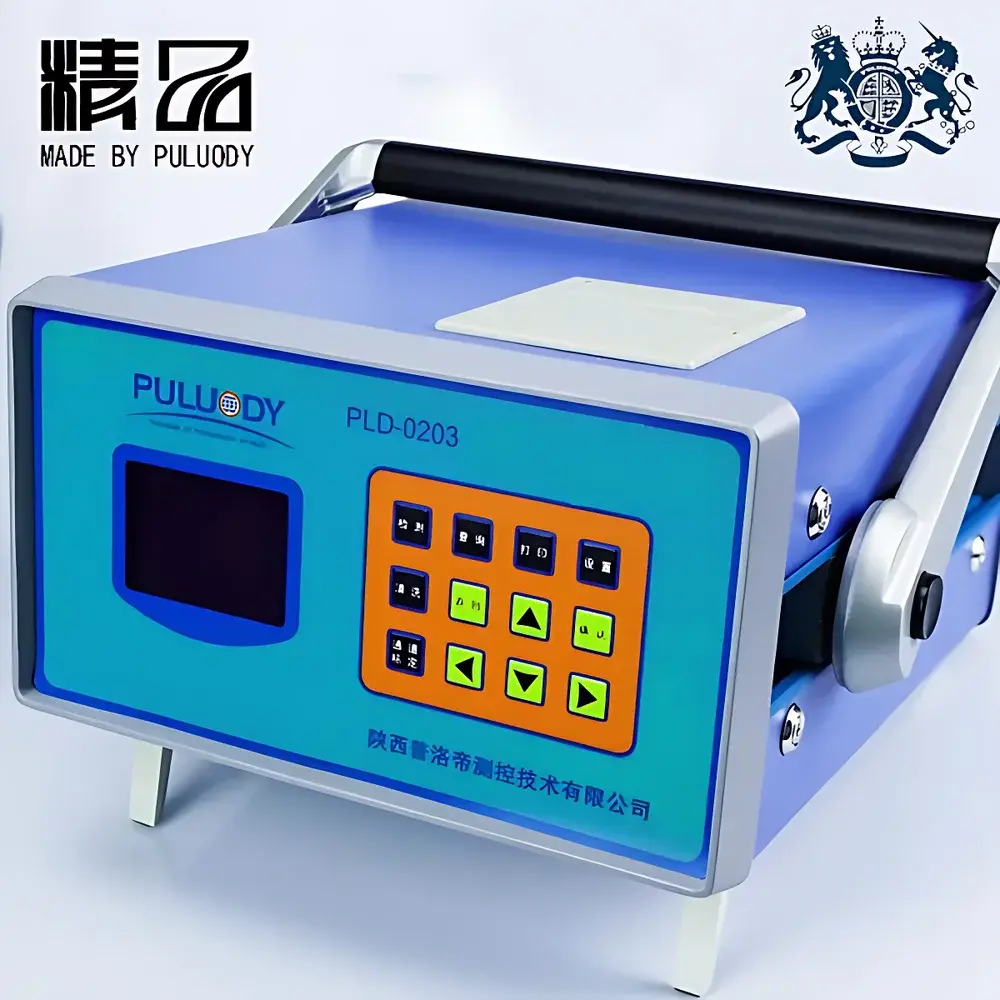
- Integrated dual-mode operation: online continuous flow interface (with 4–20 mA analog output and programmable alarm thresholds) and offline handheld mode with battery-powered sampling and wireless iPad data capture.
- Hardware-isolated analysis and calibration modules—eliminating software-induced drift during routine verification per ISO/IEC 17025 metrological traceability protocols.
- Compliance-ready firmware supporting audit trails, electronic signatures, and 21 CFR Part 11–compliant data integrity controls when operated with V8.3 PC software in regulated environments.
Sample Compatibility & Compliance
The PMT-20 is validated for use with aqueous and organic liquids exhibiting conductivity <1 µS/cm (e.g., UPW, IPA, SC-1/SC-2, HF-based etchants) and non-aqueous polymer solutions (e.g., PVDF, PTFE dispersions). It meets pharmacopeial requirements for insoluble particle testing in injectables (USP , EP 2.9.19, ChP 2020), medical device rinse validation (GB 8368), and semiconductor process fluid cleanliness (SEMI F63, SEMI F39). All calibrations are traceable to NIST-certified latex sphere standards and certified per JJG 1061 national metrology verification procedures. The system supports GLP/GMP documentation workflows—including raw data export in CSV/CSVX format, PDF report generation with embedded metadata (operator ID, timestamp, calibration ID), and configurable pass/fail logic aligned with ISO 4406 or NAS 1638 contamination codes.
Software & Data Management
PULUODY V8.3 software provides two operational modes: a standalone touchscreen interface for rapid field deployment and a full-featured PC version for laboratory-grade analysis. The PC platform supports multi-instrument fleet management, statistical process control (SPC) charting (X-bar/R, CUSUM), particle morphology filtering (via pulse width analysis), and automated compliance reporting against customizable acceptance criteria. Data files include full audit logs with operator actions, calibration history, and environmental metadata (temperature, pressure, flow rate). Export formats comply with ASTM E2911 and ISO/IEC 17025 data retention requirements. Optional integration with LIMS via OPC UA or RESTful API enables seamless alignment with enterprise quality systems.
Applications
- Real-time monitoring of ultrapure water loops in semiconductor fabs and pharmaceutical water-for-injection (WFI) distribution systems.
- Final rinse validation for single-use bioprocessing gloves and tubing assemblies per USP and ISO 15797.
- In-process control of wafer cleaning chemistries (e.g., RCA, piranha, dilute HF) to prevent pattern collapse and defect propagation.
- Quality assurance of nano-filtration and ultrafiltration membranes through challenge testing with monodisperse latex standards.
- Contamination forensics in flat-panel display (FPD) manufacturing—tracking metallic and silica particulates in photoresist developers and etchants.
- Validation of point-of-use purifiers and mobile purification units used in cleanroom tool maintenance.
FAQ
Does the PMT-20 support 21 CFR Part 11 compliance?
Yes—when operated with the V8.3 PC software in “regulated mode,” it enforces role-based access control, electronic signatures, and immutable audit trails meeting FDA requirements for electronic records.
Can it measure particles below 0.1 µm in ultrapure water?
The standard configuration detects down to 0.05 µm in optimized UPW conditions; sub-50 nm performance requires optional thermal noise suppression and background subtraction algorithms enabled in V8.3.
Is calibration traceable to international standards?
All factory and field calibrations use ISO 21501–1–certified polystyrene latex spheres, with certificates issued by CNAS-accredited calibration laboratories (e.g., Zhongte Institute of Metrology).
How is sample carryover mitigated during sequential measurements?
The fluidic path includes a triple-rinse protocol with programmable flush volume and dwell time; internal wetted surfaces are electropolished 316L stainless steel or PFA-lined to minimize adsorption.
What maintenance intervals are recommended for the optical sensor?
Optical alignment verification is advised every 6 months or after 500 hours of operation; sensor cleaning follows ISO 14644-1 Class 5 cleanroom protocols using Class 100 filtered IPA.



