
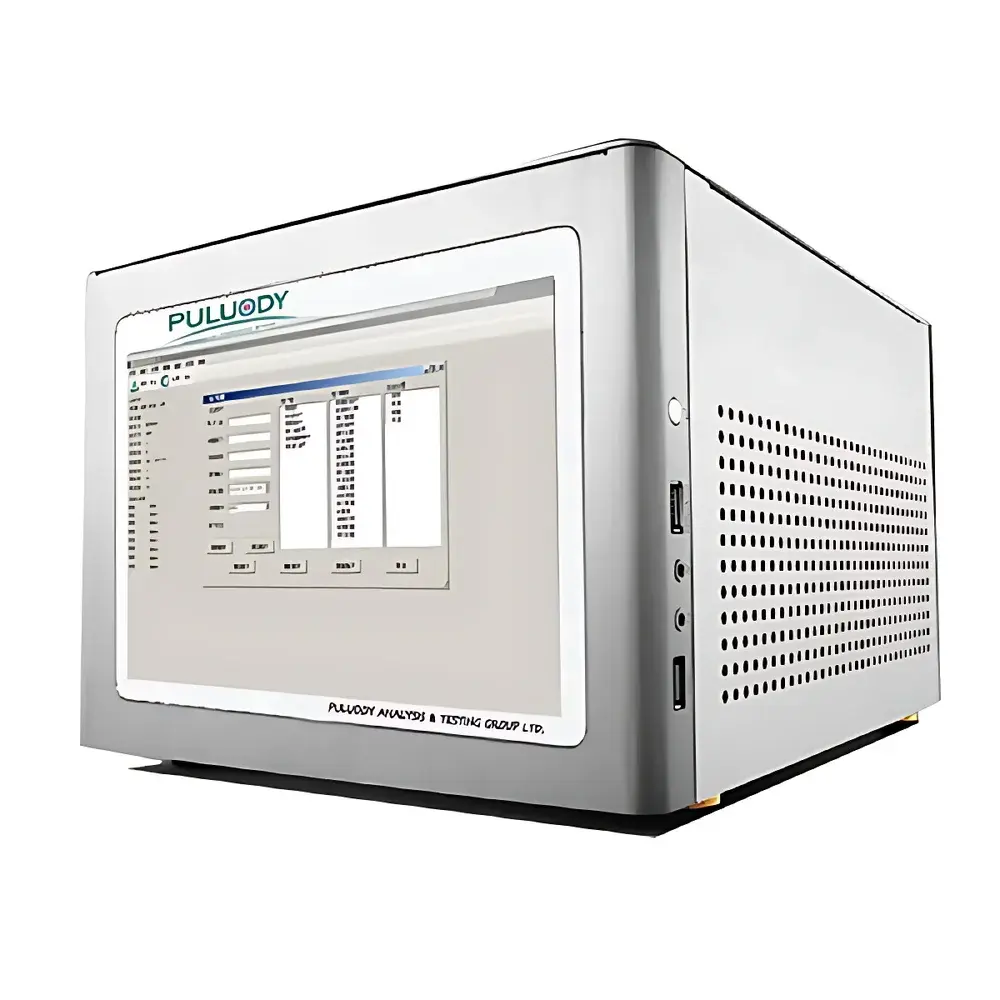
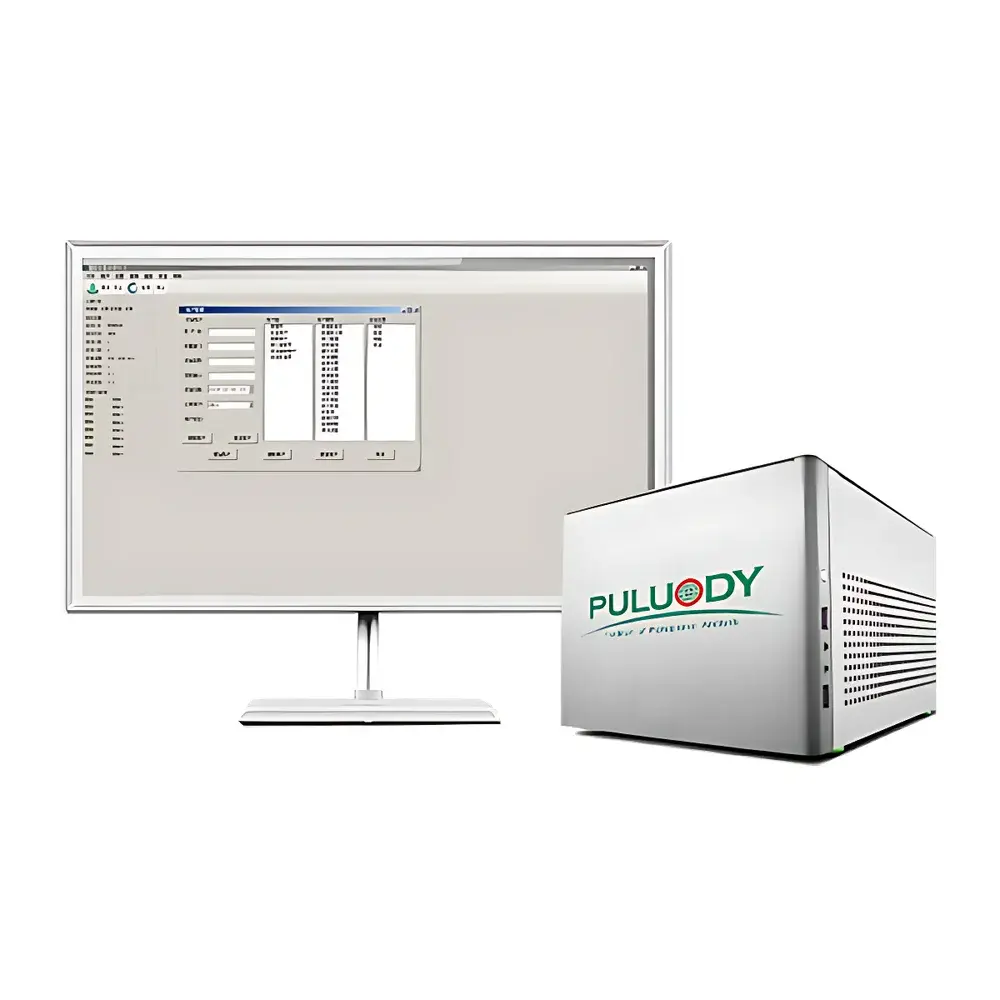
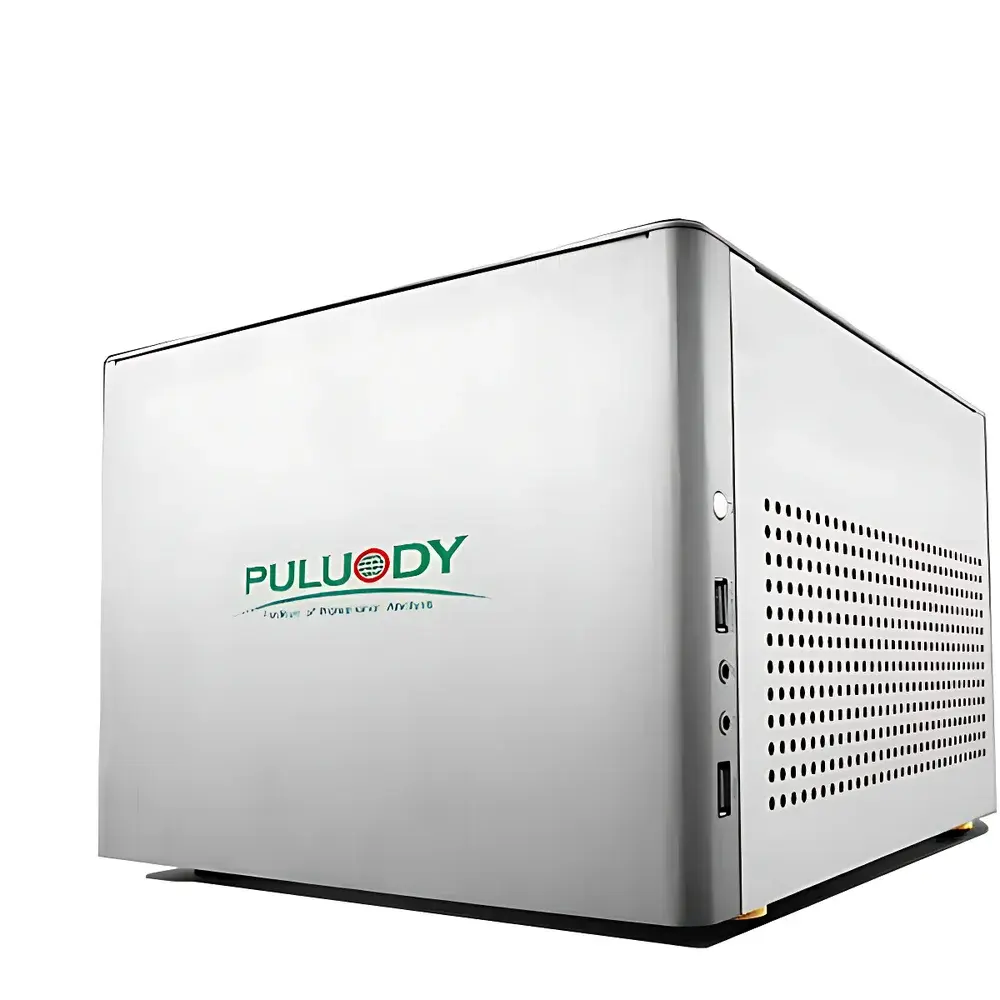
PULUODY PMT-2C Ultra-Pure Water Particle Counter
| Brand | PULUODY |
|---|---|
| Model | PMT-2C |
| Instrument Type | Optical Particle Counter |
| Detection Principle | Dual-Laser Narrow-Beam Light Scattering |
| Measurement Range | 0.1–0.5 µm, 0.1–1.0 µm (customizable from 0.1 µm to 100 µm) |
| Accuracy | ±3% typical |
| Sampling Precision | <±1% |
| Coincidence Limit | 1000 particles/mL (2.5% coincidence error) |
| Output | 4–20 mA analog signal with configurable alarm threshold |
| Calibration Standards | JJG 1061, ISO 21501-4, NIST-traceable latex spheres |
| Software | V8.3 Integrated Analysis & Calibration Suite (PC + touchscreen UI) |
| Power Input | 100–265 VAC, 50–60 Hz |
| Compliance | Designed for ISO 14644-1/2 cleanroom water monitoring, USP <788> & <789>, ASTM F3231, and semiconductor-grade ultrapure water (UPW) specifications per SEMI F63 |
Overview
The PULUODY PMT-2C Ultra-Pure Water Particle Counter is an engineered optical particle counter specifically designed for high-sensitivity, real-time monitoring of sub-micron particulate contamination in ultrapure water (UPW), process chemicals, and critical liquid streams used in semiconductor fabrication, flat-panel display manufacturing, pharmaceutical water systems, and advanced materials R&D. It employs a proprietary eighth-generation dual-laser narrow-beam detection architecture—originally developed by the UK-based PULUODY Analytical Testing Group—to achieve stable, low-noise signal acquisition across the 0.1 µm to 100 µm range. Unlike conventional single-wavelength counters, the dual-laser configuration enables simultaneous orthogonal scattering detection, improving refractive index independence and reducing sizing bias for polydisperse or low-contrast particles (e.g., silica, organics, or polymer residues). The instrument operates on the principle of light extinction and Mie scattering, with hydrodynamic focusing and precision volumetric sampling ensuring statistically robust counts per milliliter—essential for compliance with SEMI C33, ISO 14644-1 Class 1–5 environments, and FDA-referenced water-for-injection (WFI) validation protocols.
Key Features
- Dual-laser narrow-beam optical sensor with independent wavelength channels (typically 405 nm and 638 nm) for enhanced particle discrimination and reduced false counts from dissolved organics or air bubbles
- High-precision positive-displacement piston pump combined with electromagnetic flow control, delivering volumetric accuracy better than ±1% and enabling repeatable 1 mL to 100 mL sample draws
- Configurable detection thresholds: standard modes include 0.1–0.5 µm and 0.1–1.0 µm; extended ranges support user-defined bins (e.g., 4–70 µm(c) or 1–100 µm) aligned with ISO 21501-4 reporting conventions
- Integrated touchscreen HMI (10.1″ color LCD) with optional wireless keyboard/mouse interface; fully functional offline operation without external PC dependency
- 4–20 mA analog output with programmable alarm thresholds for integration into SCADA, DCS, or PLC-based facility monitoring systems
- Compliance-ready firmware architecture supporting audit trails, electronic signatures, and data integrity features aligned with FDA 21 CFR Part 11 and EU Annex 11 requirements
Sample Compatibility & Compliance
The PMT-2C supports direct analysis of ultrapure water (resistivity ≥18.2 MΩ·cm), deionized rinse solutions, photoresist developers, CMP slurries, and low-viscosity organic solvents (e.g., IPA, PGMEA) without dilution or filtration. Its wetted path uses chemically inert sapphire flow cells and PFA/PCTFE fluidic components, minimizing leachables and surface adsorption. The system meets calibration traceability requirements per JJG 1061 (Chinese national metrology regulation), ISO 21501-4:2018 (determination of particle size distribution), and ASTM F3231-21 (standard guide for UPW particle monitoring in semiconductor facilities). For regulated pharmaceutical applications, it supports USP and particulate matter testing when operated under validated SOPs and paired with appropriate reference standards.
Software & Data Management
The V8.3 Integrated Analysis Suite provides dual-mode operation: standalone touchscreen control for field deployment and full-featured PC-based analysis for laboratory-grade reporting. Software modules include automated calibration verification, multi-channel histogram generation, time-series trending (with configurable sampling intervals from 1 sec to 24 hr), and export to CSV, PDF, or XML formats compliant with LIMS ingestion. All measurement sessions are timestamped, user-authenticated, and stored with immutable metadata—including flow rate, temperature, pressure, and sensor health diagnostics. Audit trail functionality logs all parameter changes, report generations, and calibration events, satisfying GLP/GMP documentation requirements for quality assurance departments.
Applications
The PMT-2C is deployed across three primary operational contexts: (1) In-line UPW loop monitoring at point-of-use (POU) locations in fab tool supply lines, where continuous 24/7 sampling enables rapid fault isolation during excursion events; (2) Offline QC verification of final rinse water in wafer cleaning tools, photomask cleaning stations, and TFT array etch processes; and (3) R&D characterization of filtration efficiency (e.g., 2 nm ceramic membranes), nanoparticle dispersion stability, and cleaning agent residue profiling. Validated use cases include semiconductor front-end process control (SEMI F63 UPW specification), biopharma purified water system qualification, and nanomaterial synthesis batch release testing.
FAQ
What particle size ranges can the PMT-2C resolve with certified accuracy?
The instrument delivers traceable sizing performance from 0.1 µm upward, with primary calibrated ranges at 0.1–0.5 µm and 0.1–1.0 µm per ISO 21501-4 Annex B. Custom binning down to 0.1 µm(c) or up to 100 µm is supported via software configuration.
Is the system compatible with cleanroom ISO Class 1 environments?
Yes—the PMT-2C’s sealed optical housing, zero-oil pump design, and static-dissipative enclosure meet ISO 14644-2 requirements for installation in Class 1–5 cleanrooms without compromising environmental integrity.
Can the device be integrated into a central facility monitoring system?
Absolutely—the 4–20 mA analog output, Modbus TCP/IP option, and configurable alarm relays allow seamless interfacing with DeltaV, Siemens Desigo, or Yokogawa CENTUM VP platforms.
Does the software support 21 CFR Part 11 compliance?
Yes—V8.3 includes role-based access control, electronic signature workflows, and tamper-evident audit logs required for regulated life science and semiconductor manufacturing QA/QC operations.
What maintenance intervals are recommended for routine operation?
Optical alignment verification every 6 months; flow cell cleaning after every 500 mL of high-particulate samples; annual recalibration against NIST-traceable standards recommended for GMP environments.



