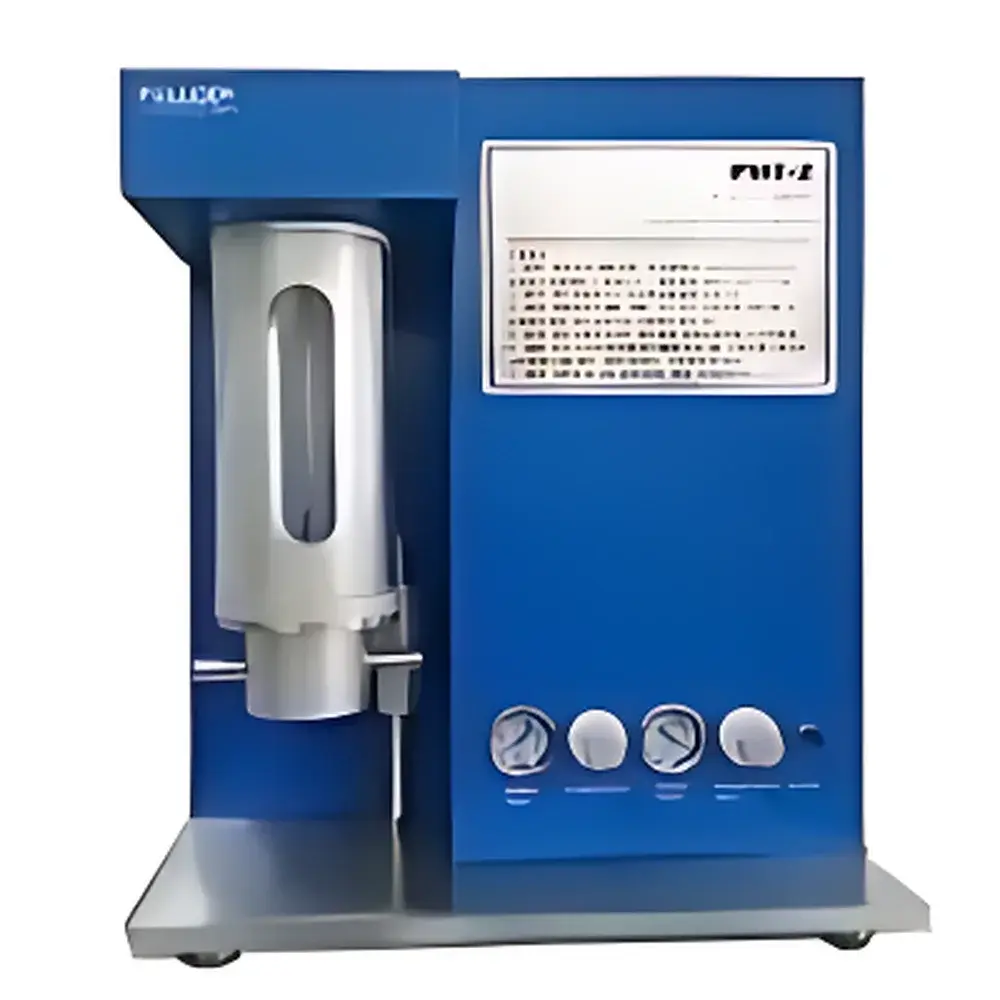
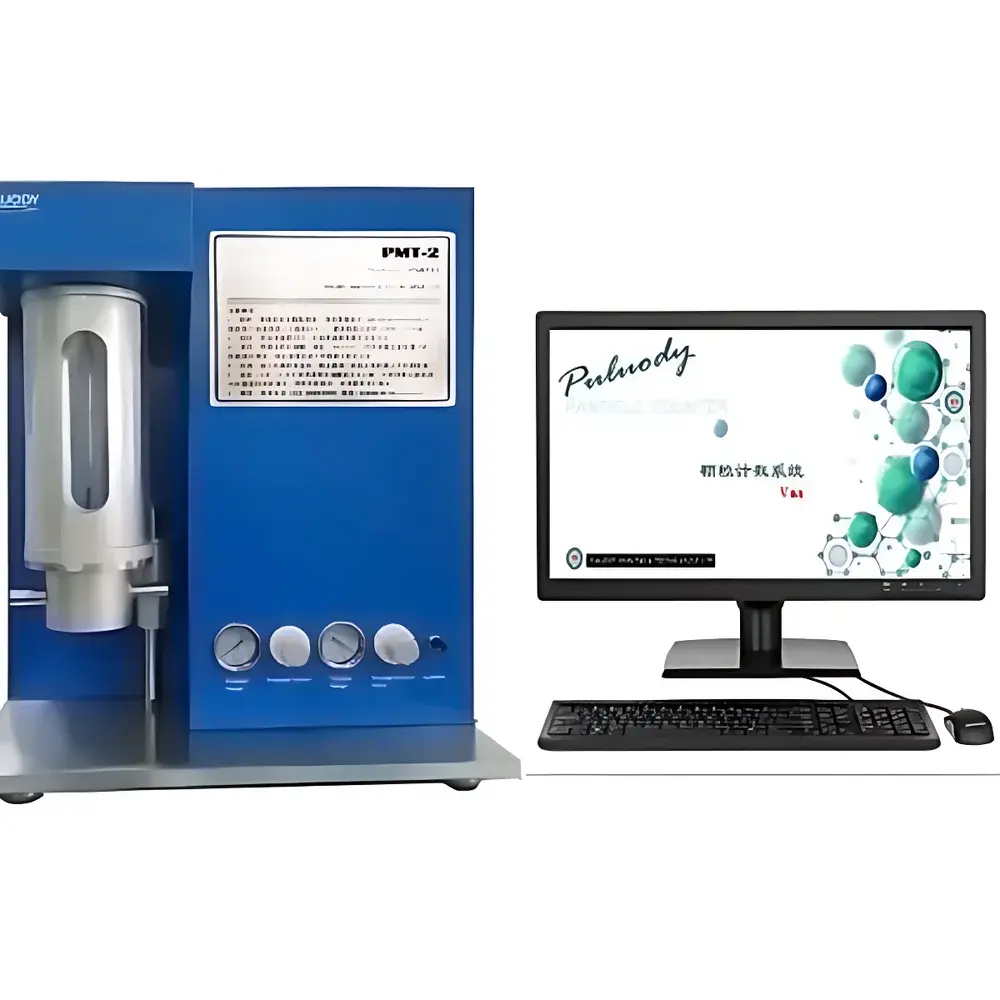
PULUODY PMT-2GN High-Viscosity Photoresist Liquid Particle Counter
| Brand | PULUODY |
|---|---|
| Origin | Shaanxi, China |
| Manufacturer Type | Authorized Distributor |
| Country of Origin | China |
| Model | PMT-2GN |
| Pricing | Upon Request |
Overview
The PULUODY PMT-2GN High-Viscosity Photoresist Liquid Particle Counter is a purpose-engineered optical particle counter designed specifically for real-time, high-precision particulate contamination monitoring in ultra-pure and highly viscous process fluids used throughout semiconductor front-end and back-end manufacturing. It operates on the principle of dual-laser, narrow-beam light extinction and scattering detection—enabling simultaneous sizing and counting of sub-micron particles in challenging media such as photoresist formulations, developer solutions, CMP slurries, and post-etch rinse chemistries. Unlike conventional single-wavelength counters, the eighth-generation dual-laser sensor architecture minimizes refractive index dependency and mitigates Mie scattering artifacts, delivering improved accuracy for polymeric and organic suspensions where particle morphology and optical properties vary significantly. The instrument supports both online integration into fluid delivery loops and offline benchtop analysis, with continuous sampling capability and programmable alarm thresholds aligned with SEMI F39, ISO 14644-1 Class 5–8 cleanroom fluid standards, and internal fab control limits.
Key Features
- Dual-laser narrow-beam optical detection system (8th-generation sensor) optimized for high-viscosity, optically heterogeneous liquids including photoresists and polymer-based solvents
- Precision metering piston pump combined with ultra-stable electromagnetic flow control ensures volumetric accuracy <±1% and counting repeatability <±3% (typical)
- Adjustable detection ranges: standard 0.1–0.5 µm; customizable channels from 1–100 µm or 4–70 µm (c), including user-defined 0.1 µm (c) threshold detection
- Integrated 4–20 mA analog output with configurable over-limit alarm signaling for PLC/SCADA interfacing and automated process intervention
- Touchscreen HMI with color LCD interface and optional wireless keyboard/mouse support for flexible offline operation
- Compliance-ready architecture supporting audit trails, electronic signatures, and data integrity features required under FDA 21 CFR Part 11 and ISO/IEC 17025 environments
Sample Compatibility & Compliance
The PMT-2GN is validated for use with non-aqueous, high-viscosity process fluids common in lithography and wafer cleaning—including DUV and EUV photoresists (e.g., novolac, chemically amplified resists), TMAH developers, organic strippers, and low-k dielectric precursors. Its wetted path employs chemically inert materials (e.g., sapphire flow cell, PFA tubing, ceramic pump components) resistant to aggressive solvents and amine-based chemistries. Calibration traceability follows JJG 1061 national metrological verification procedures, ISO 21501-4 for liquid-borne particle counters, and NIST-traceable polystyrene latex (PSL) reference standards. Instrument validation documentation supports GLP/GMP-aligned qualification protocols, including IQ/OQ/PQ execution packages and uncertainty budgets per ISO/IEC 17025 Annex A.5.
Software & Data Management
The V8.3 Analysis & Calibration Software Suite provides fully segregated modules for measurement acquisition and metrological calibration—eliminating software-induced interference between routine testing and traceable recalibration events. Data export supports CSV, PDF report generation, and SQL database integration. All measurement sessions are timestamped, user-logged, and stored with full metadata (flow rate, temperature, sample ID, calibration status). Audit trail functionality records all parameter changes, report edits, and user logins—meeting requirements for regulated environments governed by FDA 21 CFR Part 11 and EU Annex 11. Remote diagnostics and firmware updates are supported via secure HTTPS interface.
Applications
- In-line monitoring of photoresist dispense lines pre-filter and post-filter to detect filter breakthrough or degradation
- Offline verification of resist filtration efficiency during lot qualification and changeover validation
- Contamination trending in ultrapure water (UPW) recirculation loops serving track systems and coater/developer tools
- Particulate release assessment from wafer carriers, FOUPs, and wet benches during cleaning and etch processes
- Validation of nano-filtration membrane performance in chemical delivery systems (CDS) for advanced node fabrication
- Supporting ISO 14644-9 contamination control plans for liquid process chemicals in Class 1–10 cleanrooms
FAQ
What particle size ranges can the PMT-2GN detect in high-viscosity photoresist?
The instrument detects particles from 0.1 µm (c) upward, with factory-configured channels spanning 0.1–0.5 µm. Custom multi-channel configurations (e.g., 4–70 µm (c)) are available upon request to align with specific resist formulation specifications.
Is the system compatible with organic solvent-based photoresists?
Yes—the wetted path materials (sapphire, PFA, ceramic) are chemically resistant to common photoresist solvents including PGMEA, ethyl lactate, and propylene glycol monomethyl ether acetate (PGMEA), enabling direct inline integration without material compatibility concerns.
How does the dual-laser sensor improve measurement accuracy compared to single-laser systems?
Dual-laser interrogation reduces sizing ambiguity caused by particle orientation, refractive index variation, and non-spherical morphology—critical for polymeric contaminants and aggregated organics prevalent in resist processing.
Can the PMT-2GN be integrated into existing factory automation networks?
Yes—it provides 4–20 mA analog output with programmable alarm thresholds and supports Modbus TCP/IP communication for seamless integration into MES, SCADA, and APC platforms.
Does the system meet regulatory requirements for data integrity in qualified fabs?
Yes—software architecture includes electronic signatures, immutable audit trails, and role-based access control compliant with FDA 21 CFR Part 11, EU GMP Annex 11, and ISO/IEC 17025 data management clauses.