
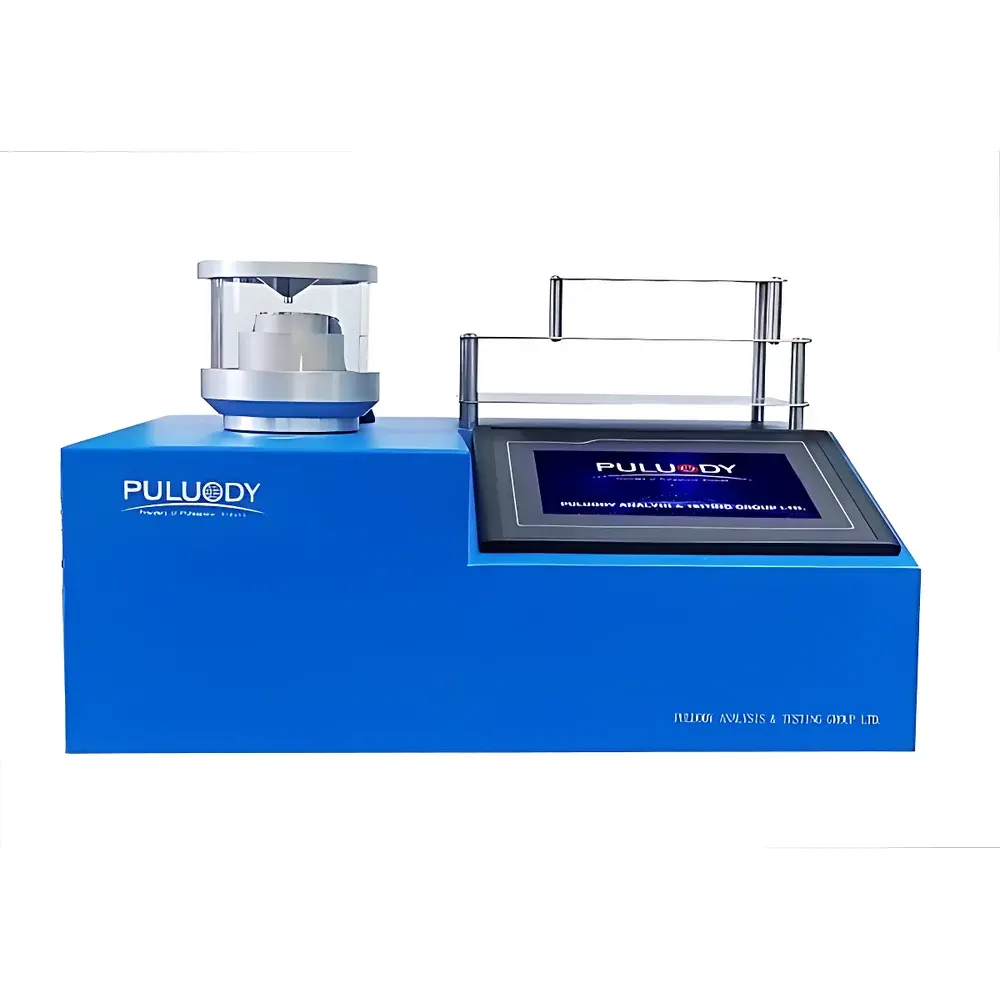
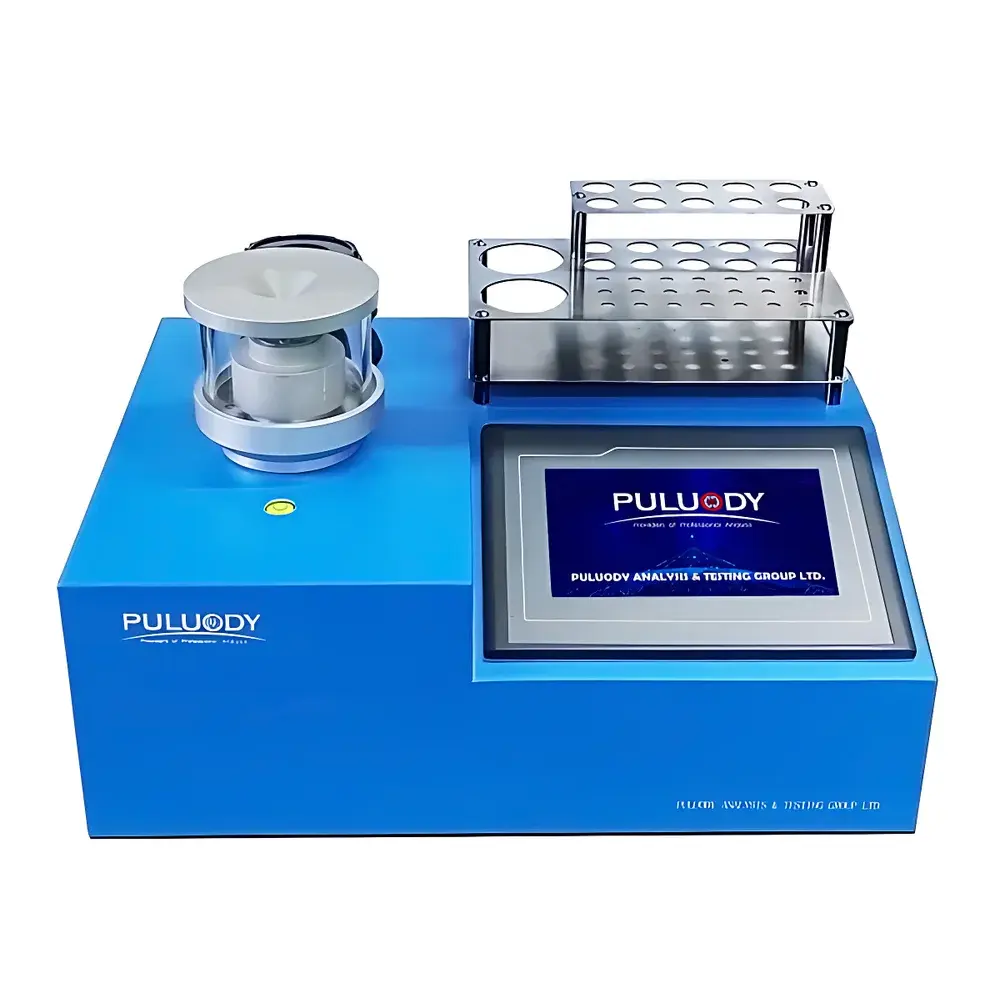
PULUODY PRF-III Rotational Ferrography Analyzer
| Brand | PULUODY |
|---|---|
| Origin | Shaanxi, China |
| Model | PRF-III-01 |
| Instrument Type | Optical Particle Counter for Wear Debris Analysis |
| Core Function | Magnetic Separation & Morphological Characterization of Ferrous Wear Particles in Lubricants |
Overview
The PULUODY PRF-III Rotational Ferrography Analyzer is an engineered solution for quantitative and qualitative wear debris analysis in lubricating oils and hydraulic fluids. It operates on the principle of high-gradient magnetic separation—leveraging a precisely controlled rotating magnetic field to deposit ferromagnetic and paramagnetic wear particles from oil samples onto a glass substrate in size-ordered concentric rings. This ferrographic deposition enables systematic morphological, dimensional, and spatial characterization of wear debris—critical for identifying wear mechanisms (e.g., adhesive, abrasive, fatigue, or corrosive wear), locating failure origins within mechanical systems, and assessing lubricant degradation status. Unlike generic particle counters, the PRF-III is purpose-built for ferrographic interpretation grounded in the “wear debris cluster theory” developed by China University of Mining and Technology—a methodology validated through decades of field deployment in heavy-industry asset monitoring.
Key Features
- Rotational magnetic deposition architecture delivering reproducible, ring-structured ferrograms with distinct large-, medium-, and small-particle zones—enabling rapid visual stratification of wear severity
- Optimized magnetic field gradient and rotational speed control to ensure consistent particle alignment and minimal aggregation artifacts
- Integrated sample handling system supporting standardized 1 mL oil volumes with optional dilution and solvent compatibility (e.g., kerosene, xylene)
- Designed for seamless coupling with dual-illumination optical microscopes (brightfield/darkfield) and digital imaging platforms
- Robust mechanical construction with vibration-dampened base and thermal-stable chamber—essential for long-duration deposition cycles under variable ambient conditions
- Compliant with foundational ferrography standards including ASTM D7690 (Standard Practice for Preparing Ferrographic Deposits) and ISO 4406:2017 (for particle count correlation where applicable)
Sample Compatibility & Compliance
The PRF-III accepts mineral-based, synthetic, and bio-based lubricants—including engine oils, gear oils, turbine oils, hydraulic fluids, and greases (after solvent extraction). It accommodates viscosity ranges up to 300 cSt at 40 °C and tolerates water contamination levels ≤ 0.5% v/v without significant deposition interference. All consumables—including precision-cut glass substrates and calibrated pipettes—meet ISO 8573-1 purity requirements for particulate-free handling. The system supports GLP-compliant documentation workflows when paired with traceable calibration records and operator log entries. While not inherently 21 CFR Part 11–certified, its hardware architecture permits integration into validated environments via external audit-trail software modules.
Software & Data Management
The PRF-III functions as a hardware platform for third-party or OEM-developed image acquisition and analysis suites. Typical configurations include high-resolution USB 3.0 digital cameras (≥5 MP) interfaced with proprietary ferrography analysis software capable of: automated particle counting per ASTM D7684, aspect ratio and morphology classification (e.g., laminar vs. spherical vs. curled), grayscale intensity mapping for oxidation state inference, and spatial density profiling across deposition rings. Data export formats include CSV, TIFF, and PDF reports compliant with internal QA/QC templates. Metadata tagging supports batch tracking, instrument ID, operator signature, and environmental parameters (temperature, humidity)—facilitating retrospective trending and cross-fleet benchmarking.
Applications
- Predictive maintenance programs for low-speed, high-torque equipment—including coal mill gearboxes, marine main engines, wind turbine pitch bearings, and cement kiln drives
- Root-cause failure analysis following unscheduled shutdowns in power generation and petrochemical facilities
- Lubricant life extension studies—validating oil drain intervals based on wear rate thresholds rather than fixed time/mileage schedules
- New equipment run-in protocol development, where early-stage wear debris profiles inform optimal break-in load profiles and duration
- Tribological research laboratories investigating wear mechanism transitions under varying load, speed, and temperature conditions
- Third-party oil analysis labs offering ISO 17025–accredited ferrographic testing services
FAQ
What distinguishes rotational ferrography from direct-read (DR) or analytical ferrography?
Rotational ferrography provides spatially resolved, morphology-rich deposits ideal for mechanistic diagnosis; DR ferrography yields only bulk iron concentration, while analytical ferrography requires manual slide preparation and lacks standardized ring segmentation.
Can the PRF-III analyze non-ferrous particles such as copper or aluminum?
It primarily separates ferromagnetic and strongly paramagnetic particles; non-ferrous debris may co-deposit via drag forces but require complementary techniques (e.g., SEM-EDS) for definitive identification.
Is operator training required to interpret ferrograms?
Yes—interpretation follows standardized morphology lexicons (e.g., ASTM D7690 Annex A) and benefits from certified ferrography analyst training, typically delivered by OEM or industry consortia such as the Oil Analysis Council.
How frequently should calibration verification be performed?
Magnetic field strength and rotational speed should be verified quarterly using NIST-traceable gauss meters and tachometers; deposition consistency must be confirmed daily using reference oil standards.
Related Products



