
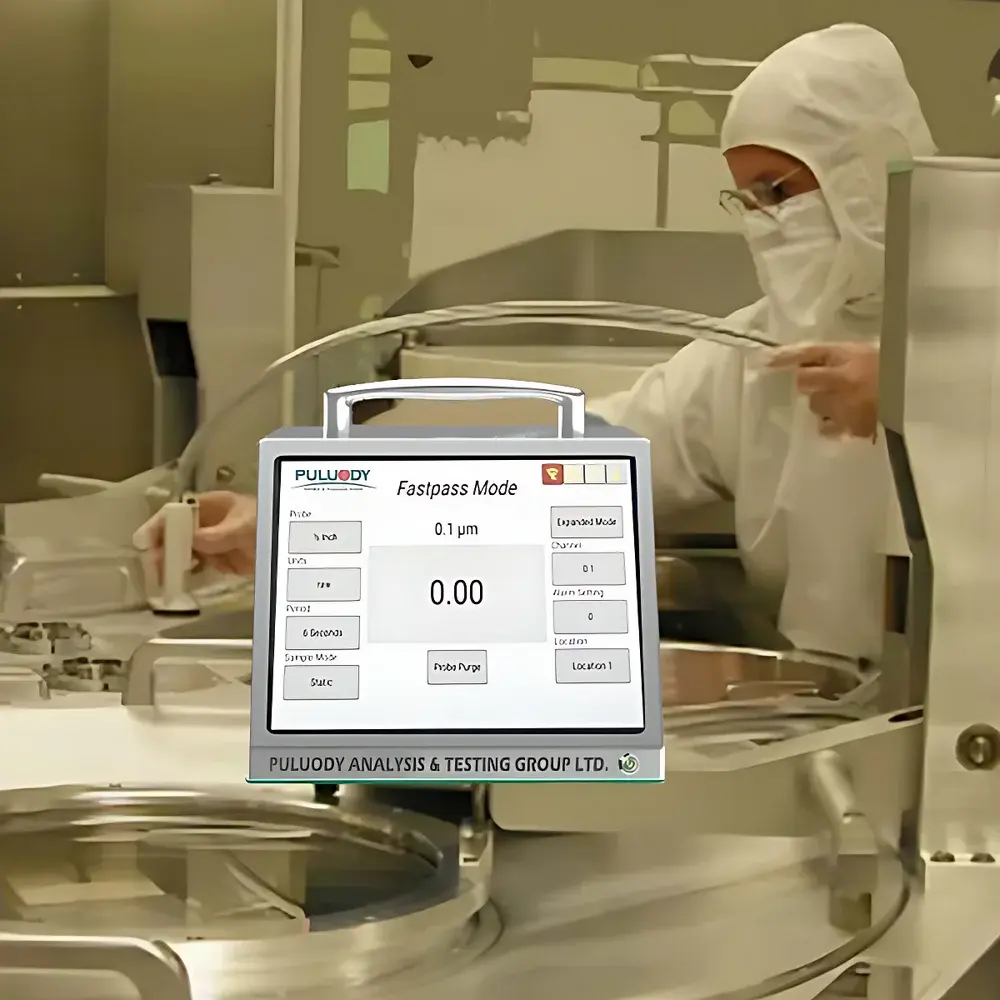
PULUODY Surface Particle Counter P-III ST
| Brand | PULUODY |
|---|---|
| Origin | Shaanxi, China |
| Model | P-III ST |
| Instrument Type | Optical Surface Particle Counter |
| Measurement Principle | Light Scattering (Laser-Based) |
| Standard Compliance | ISO 14644-9, ISO 21501-4, JIS B 9921 |
| Flow Rate Options | 2.83 L/min & 28.3 L/min |
| Detectable Particle Sizes | 0.1 µm to 25.0 µm (configurable channels A–F) |
| Size Accuracy | ≤ ±30% |
| Concentration Accuracy | ≤ ±30% |
| Repeatability | ≤ ±10% FS |
| Coincidence Error | ≤ 5% |
| Operating Temperature | −40 °C to +120 °C |
| Environmental Operating Range | 5–45 °C, ≤90% RH (non-condensing) |
| Power Supply | AC 100–240 V, 50/60 Hz |
| Data Interfaces | RS232, RS485, LAN, USB |
| Data Storage | Configurable real-time/timed storage, unlimited capacity |
| Audit Trail & User Access Control | Yes |
| Regulatory Features | Electronic records, role-based permissions, FDA 21 CFR Part 11–compatible logging (when enabled) |
Overview
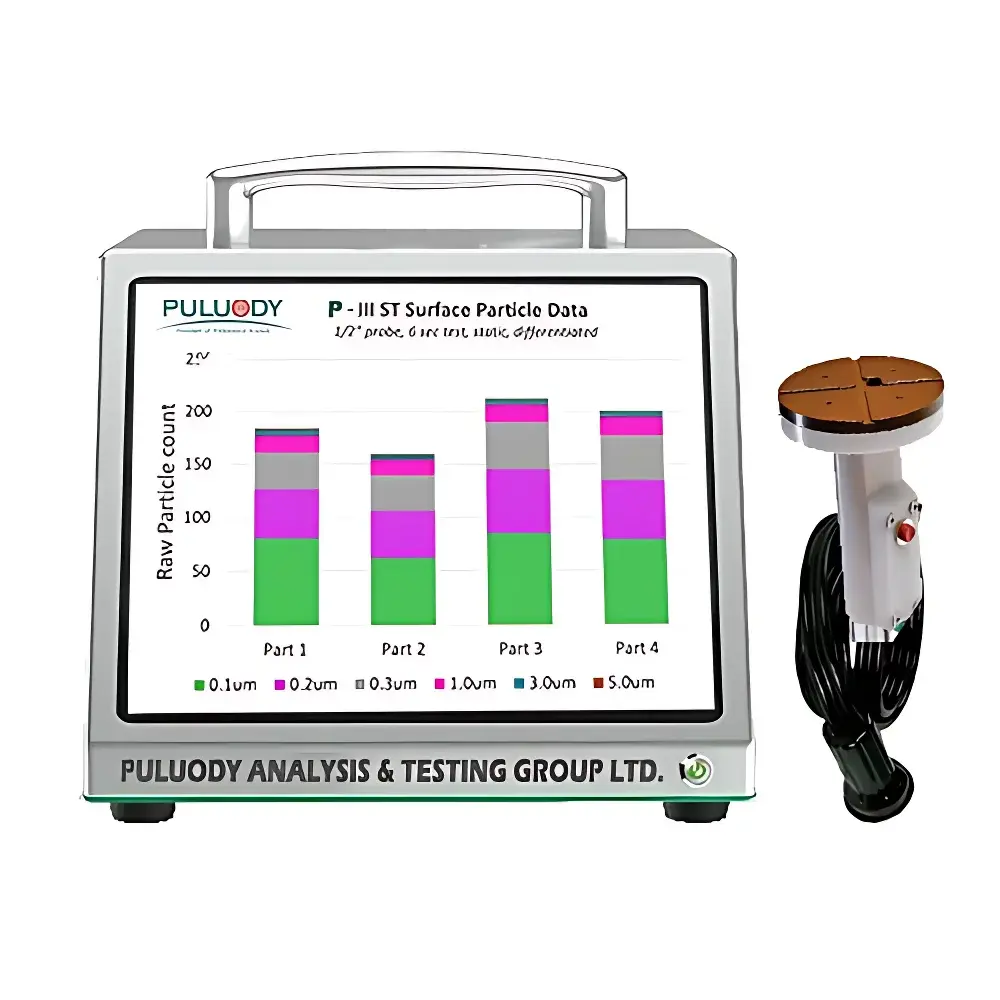
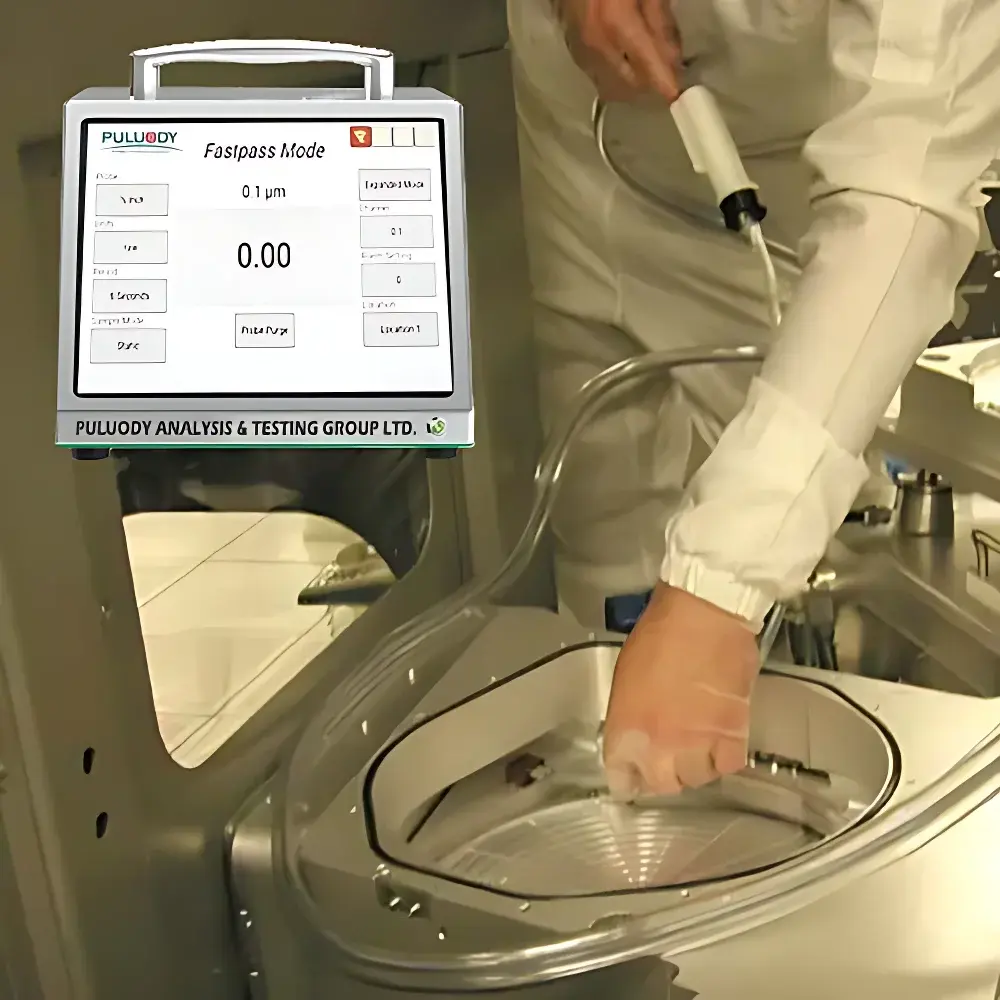
The PULUODY Surface Particle Counter P-III ST is a high-precision optical surface contamination monitor engineered for quantitative assessment of airborne and surface-adhered particulate matter in ultra-clean environments. Unlike conventional air-sampling particle counters, the P-III ST employs a calibrated, non-contact or probe-assisted sampling methodology compliant with ISO 14644-9 — the international standard governing surface particle counting in cleanrooms and controlled environments. Its core measurement principle relies on laser-induced light scattering from particles collected via controlled airflow across defined surface zones or extracted from localized micro-environments (e.g., wafer chucks, optical cavity interiors, or medical device packaging surfaces). The instrument delivers traceable, repeatable particle number concentration data across up to six user-selectable size channels — spanning 0.1 µm to 25.0 µm — enabling granular analysis of contamination profiles critical to semiconductor front-end process control, flat-panel display manufacturing, and Class 100 (ISO 5) or tighter cleanroom validation.
Key Features
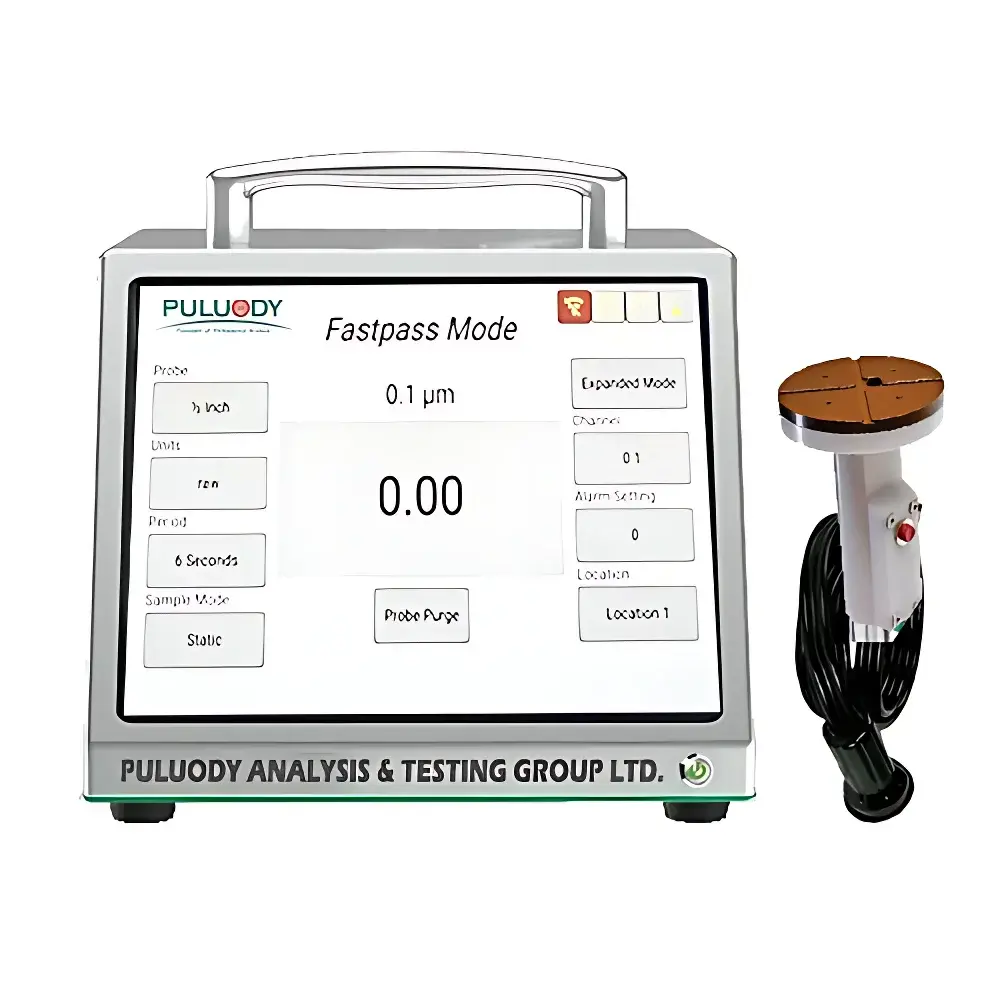
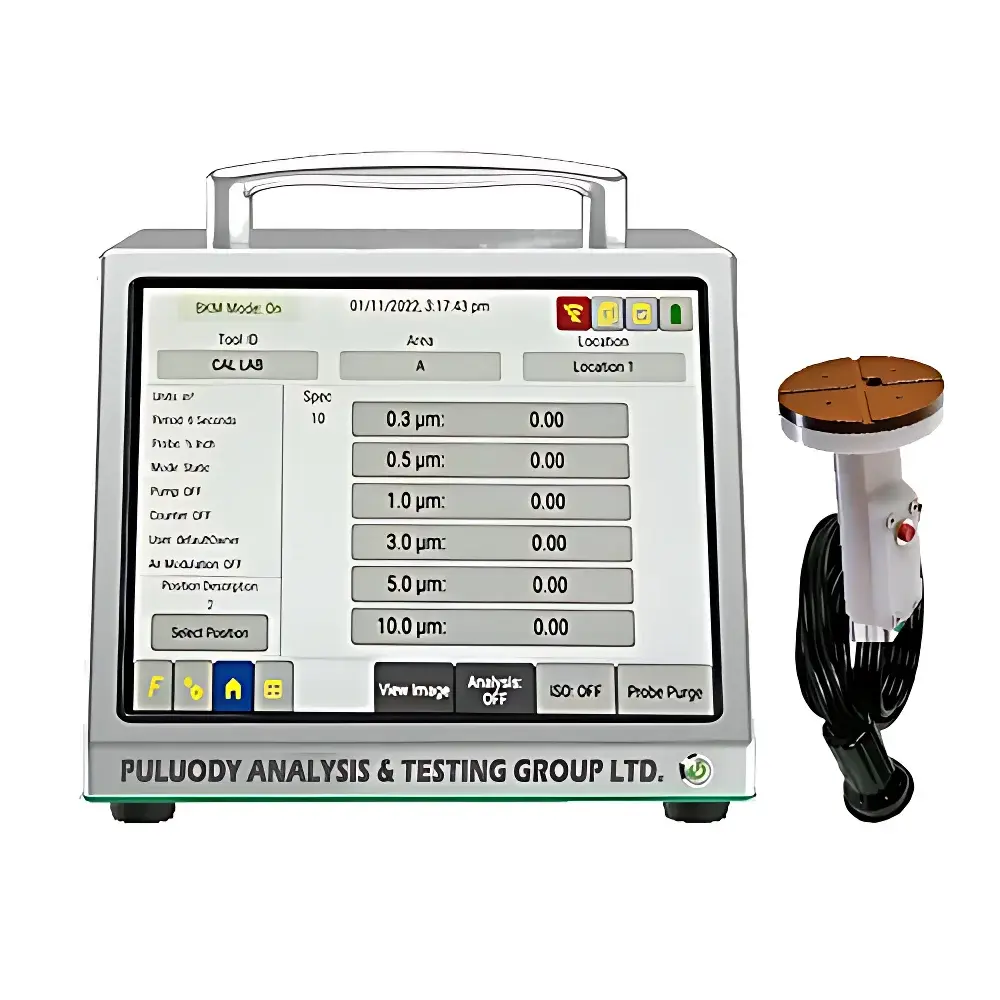
- 7-inch high-resolution capacitive touch display with intuitive GUI for real-time visualization of particle counts, size distribution histograms, and trend overlays — no external PC required for basic operation.
- Dual hot-swappable battery system supporting uninterrupted monitoring during preventive maintenance windows or extended production shifts — eliminates downtime during power source replacement.
- Configurable sampling flow rates (2.83 L/min for ISO 14644-1 alignment; 28.3 L/min for accelerated surface scan coverage), each validated per ISO 21501-4 calibration protocols.
- Multi-mode detection: particle count (per unit area/volume), mass-equivalent estimation (via Mie-theory-derived conversion), and net-effect mode for comparative pass/fail evaluation against dynamic threshold limits.
- Integrated environmental tolerance: operational capability from −40 °C to +120 °C enables deployment in thermal soak chambers, vacuum load-lock interfaces, and sterilization validation setups.
- Firmware-upgradable architecture via USB interface ensures long-term adaptability to evolving regulatory requirements and measurement methodologies without hardware replacement.
Sample Compatibility & Compliance
The P-III ST supports direct surface interrogation using three interchangeable sampling probes: a straight 2-inch probe (UK4400302), a 90° angled probe (UK4400304), and a multifunctional probe (UK4400301) optimized for recessed or geometrically complex surfaces. It meets the metrological requirements of ISO 21501-4 for light-scattering particle counters and aligns with JIS B 9921 for Japanese industrial cleanroom verification. For regulated industries, its embedded audit trail, electronic signature support, and role-based access control satisfy foundational elements of FDA 21 CFR Part 11 and EU Annex 11 expectations when deployed under documented quality systems (e.g., GMP/GLP). All calibrations are traceable to NIM (National Institute of Metrology, China) or equivalent national metrology institutes per ISO/IEC 17025.
Software & Data Management
Data acquisition, reporting, and archival are managed through a standards-compliant software suite supporting CSV, PDF, and XML export formats. Raw time-series datasets include timestamped particle counts per channel, environmental metadata (temperature, humidity if optional sensor installed), and operator ID. The system logs all configuration changes, user logins, and alarm events with immutable timestamps — fulfilling GLP/GMP record retention mandates. Network connectivity via Ethernet (LAN) allows centralized fleet monitoring across multiple tools in a fab or cleanroom facility. Optional integration with MES or CMMS platforms is supported via Modbus TCP or custom API endpoints.
Applications
- Semiconductor manufacturing: Quantitative verification of wafer surface cleanliness pre-lithography, post-etch, and after chamber PM cycles — directly supporting ISO 14644-9 Annex D protocols.
- Flat-panel display production: Monitoring residual particles on TFT glass substrates, color filter arrays, and polarizer films prior to lamination.
- Medical device assembly: Validation of particulate-free conditions inside ISO Class 5 isolators used for sterile packaging of implants and diagnostics.
- Optics and photonics: Surface contamination screening of precision lenses, laser crystals, and fiber-optic connectors where sub-micron debris induces scattering losses.
- Advanced packaging: In-line inspection of bump substrate surfaces and underfill residue before flip-chip bonding.
FAQ
What surface sampling methods does the P-III ST support?
It supports both contactless proximity sampling (using laminar airflow directed at the surface) and direct probe-based aspiration, with interchangeable probes for planar, recessed, or angular geometries.
Is the instrument suitable for ISO Class 1 (ISO 3) cleanroom certification?
Yes — when operated at 28.3 L/min with appropriate probe geometry and validated sampling duration, it meets minimum detectable particle density thresholds required for ISO 14644-9 surface classification down to ISO Class 1.
Can raw particle count data be exported for statistical process control (SPC)?
Yes — all measurements are stored with full metrological metadata and can be exported in CSV format compatible with JMP, Minitab, or custom SPC dashboards.
Does the system provide compliance documentation for audit readiness?
Yes — built-in audit trail, electronic signature capability, and configurable user roles support FDA 21 CFR Part 11 and EU GMP Annex 11 compliance when deployed within a validated quality management system.
How is calibration maintained over time?
Calibration is performed using NIST-traceable PSL (polystyrene latex) reference particles; annual recalibration is recommended, with internal self-check routines verifying photodetector linearity and flow rate stability before each measurement sequence.



