
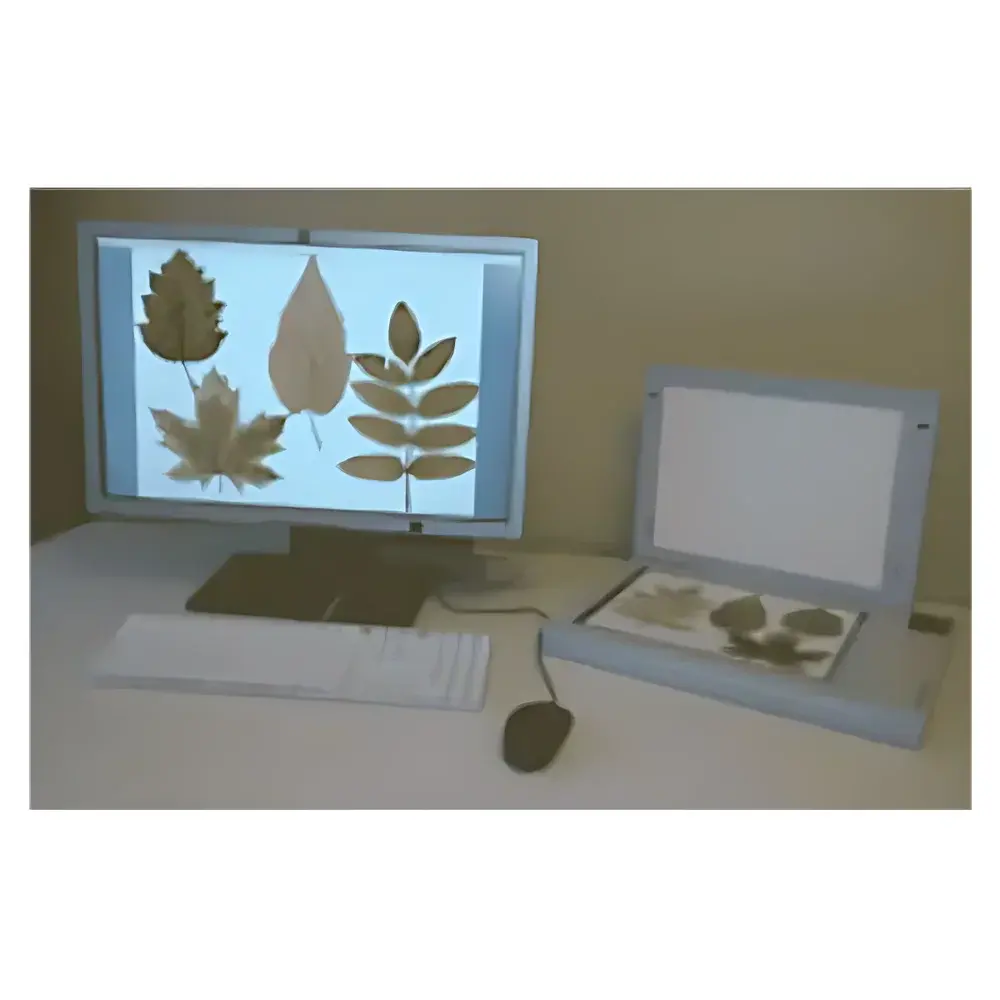
Regent WinFOLIA Multi-Function Leaf Area Analyzer
| Brand | Regent |
|---|---|
| Country of Origin | Canada |
| Model | WinFOLIA |
| Configuration Options | WinFOLIA Basic / Reg / Pro |
| Imaging Input | Flatbed Scanner (Desktop or Portable) or Digital Camera |
| Software Compatibility | Windows OS |
| Data Export | CSV, Excel-compatible formats via XLFolia add-on |
| Compliance | Designed for GLP-aligned plant phenotyping workflows |
| Hardware Requirements | User-supplied PC |
| Documentation | Printed & PDF User Manual |
Overview
The Regent WinFOLIA Multi-Function Leaf Area Analyzer is a computer-based image analysis platform engineered for quantitative leaf morphometrics and biotic stress assessment in plant science research and agronomic applications. Unlike contact-based mechanical leaf area meters, WinFOLIA employs high-resolution digital image acquisition followed by pixel-level segmentation and geometric computation—leveraging standardized grayscale or RGB thresholding algorithms to distinguish leaf tissue from background. Its core measurement principle relies on calibrated 2D planimetry: once an image is captured (via flatbed scanner or digital camera), the software identifies contiguous foreground regions, computes their pixel count, and converts it into real-world area units using user-defined spatial calibration (e.g., mm² per pixel). This non-destructive, operator-independent methodology ensures high reproducibility across replicates and laboratories—critical for longitudinal studies in plant physiology, ecophysiology, and breeding programs.
Key Features
- Three-tiered software architecture: WinFOLIA Basic (entry-level planimetry), WinFOLIA Reg (leaf-petiole separation, angular metrics, adaptive width profiling), and WinFOLIA Pro (fractal dimension analysis, convex hull envelope, serration quantification, and RGB-based colorimetric lesion mapping)
- Flexible imaging compatibility: Supports input from standard A4/A3 flatbed scanners (including portable USB models) and consumer-grade digital cameras—no proprietary hardware required
- Petiole-aware segmentation engine: In Reg and Pro versions, automated petiole detection enables conditional inclusion/exclusion in area, perimeter, and length calculations—essential for comparative morphology across species with variable petiole contribution
- Color-space analytics (Pro only): Converts RGB inputs into HSV or CIELab channels to isolate necrotic, chlorotic, or insect-feeding zones; outputs lesion area %, mean hue deviation, and spatial distribution statistics
- Batch processing capability: Processes hundreds of images sequentially with consistent calibration and threshold presets—reducing inter-operator variability and accelerating throughput in phenotyping pipelines
- XLFolia companion module: Enables post-hoc statistical visualization (scatter plots, boxplots, ANOVA-ready datasets) directly within Microsoft Excel environments without requiring MATLAB or R expertise
Sample Compatibility & Compliance
WinFOLIA accommodates fresh, dried, pressed, or laminated leaves—including broadleaf angiosperms, fern fronds, and gymnosperm needles (when imaged at sufficient resolution). It does not support translucent or highly overlapping samples without manual masking. The system complies with common data integrity expectations in academic and regulatory plant science contexts: audit-trail logging (user, timestamp, parameter set), exportable metadata headers (calibration factor, threshold values, image path), and CSV/Excel-compatible output structures suitable for integration into LIMS or ELN platforms. While not certified to ISO/IEC 17025, its algorithmic transparency and traceable calibration workflow align with Good Laboratory Practice (GLP) documentation requirements for non-clinical plant studies.
Software & Data Management
All WinFOLIA editions run natively on Windows 10/11 (64-bit) and require .NET Framework 4.8. Calibration is performed using a reference ruler placed adjacent to the sample during scanning—ensuring sub-millimeter spatial accuracy. Each analysis session generates a structured results file (.txt or .csv) containing primary metrics (area, length, width, perimeter, hole area) and, where applicable, derived indices (aspect ratio, circularity, solidity). XLFolia extends this by enabling pivot-table generation, outlier flagging based on z-score thresholds, and automated report templating. Raw images and processed masks are retained in user-defined directories with version-stamped filenames—supporting retrospective reanalysis under revised parameters.
Applications
- Phenotypic screening of mutant or transgenic lines for leaf size, shape, and symmetry anomalies
- Quantifying drought-induced leaf shrinkage or heat-stress-related necrosis progression over time
- Assessing herbivory damage intensity and spatial patterning in ecological field trials
- Validating canopy development models in controlled-environment growth chambers
- Supporting QTL mapping studies where leaf morphology serves as a quantitative trait locus endpoint
- Teaching plant morphology and digital image analysis principles in undergraduate botany laboratories
FAQ
Does WinFOLIA require a specific scanner model?
No—any flatbed scanner with 300–1200 dpi optical resolution and TWAIN/WIA driver support is compatible. Portable USB scanners (e.g., Epson DS-30, Canon LiDE series) are frequently deployed in greenhouse or field settings.
Can I analyze leaves with heavy venation or complex margins without manual correction?
Yes—WinFOLIA Pro’s adaptive edge-detection and morphological filtering reduce false positives in serrated or lobed leaves; however, overlapping or folded samples may still require interactive region-of-interest selection.
Is raw image data preserved after analysis?
Yes—original TIFF/JPEG files and binary mask exports remain accessible in user-specified folders, enabling full methodological transparency and third-party validation.
How is calibration maintained across multiple users or instruments?
Each project file embeds its calibration factor; XLFolia enforces consistent unit conversion (e.g., pixels → mm²) during cross-dataset aggregation, minimizing batch effects in multi-site collaborations.
Does WinFOLIA meet FDA 21 CFR Part 11 requirements for electronic records?
While WinFOLIA itself lacks electronic signature or audit-trail encryption features, its deterministic algorithms, timestamped outputs, and human-readable logs are routinely accepted in pre-regulatory agricultural biotech submissions when paired with institutional SOPs for data handling.






