
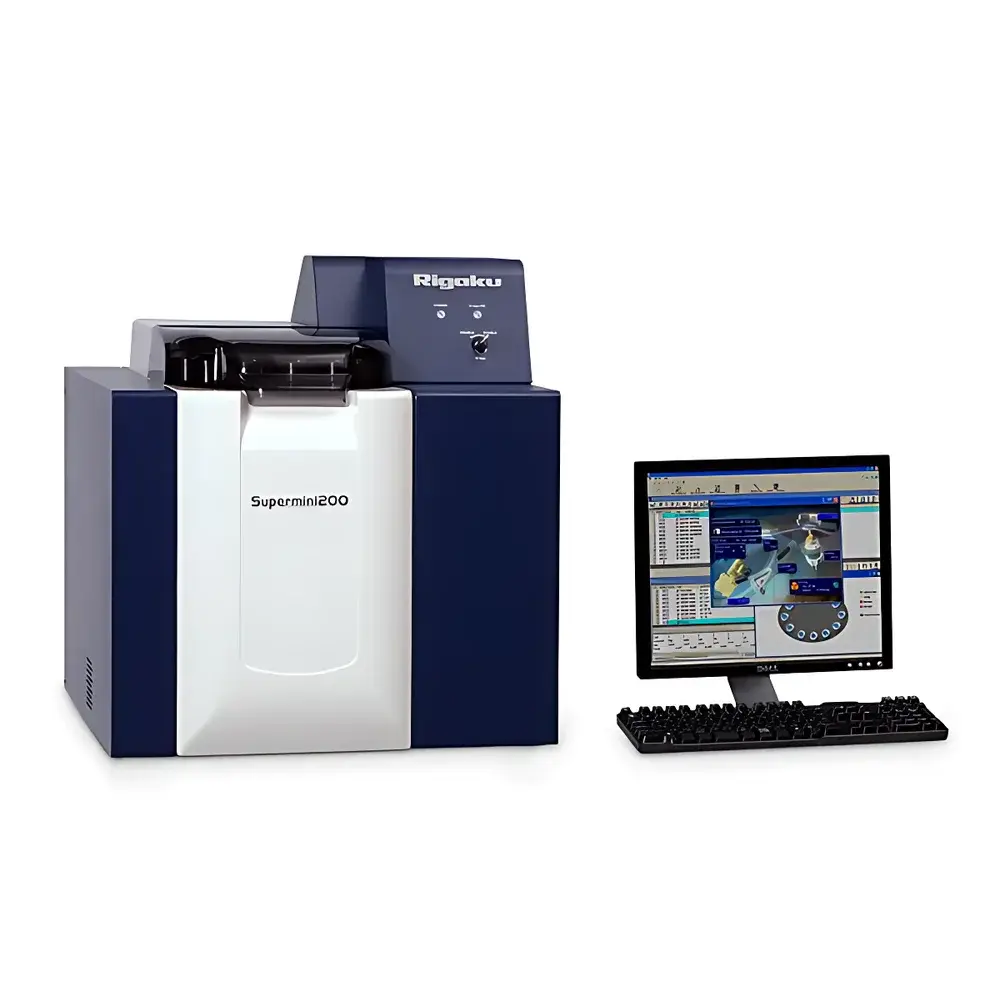
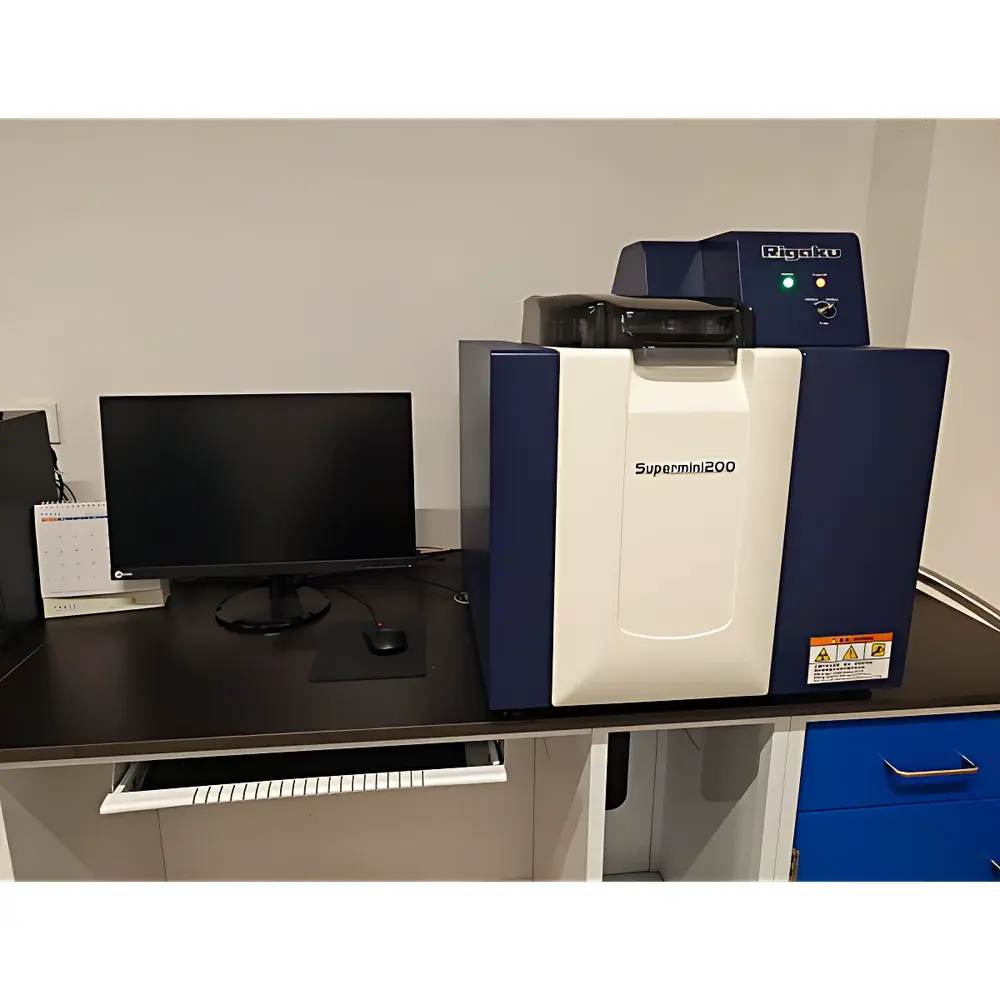
Rigaku Supermini200 Wavelength Dispersive X-Ray Fluorescence Spectrometer for Ultra-Trace S, Cl, Si, and Pb Analysis in Petroleum Products
| Brand | Rigaku |
|---|---|
| Origin | Japan |
| Model | Supermini200 |
| Instrument Type | Benchtop WDXRF Spectrometer |
| Excitation Source | Pd-anode X-ray tube (50 kV / 4 mA, 200 W) |
| Analyzed Elements | Total S, Total Cl, Total Si, Total Pb |
| Detection Limits | S: 0.15 ppm, Cl: 0.1 ppm, Si: 0.5 ppm, Pb: 0.2 ppm |
| Quantification Range | 0–99.99% |
| Optical Configuration | Single-wavelength excitation with automated multi-crystal changer (RX4, RX9, and others) |
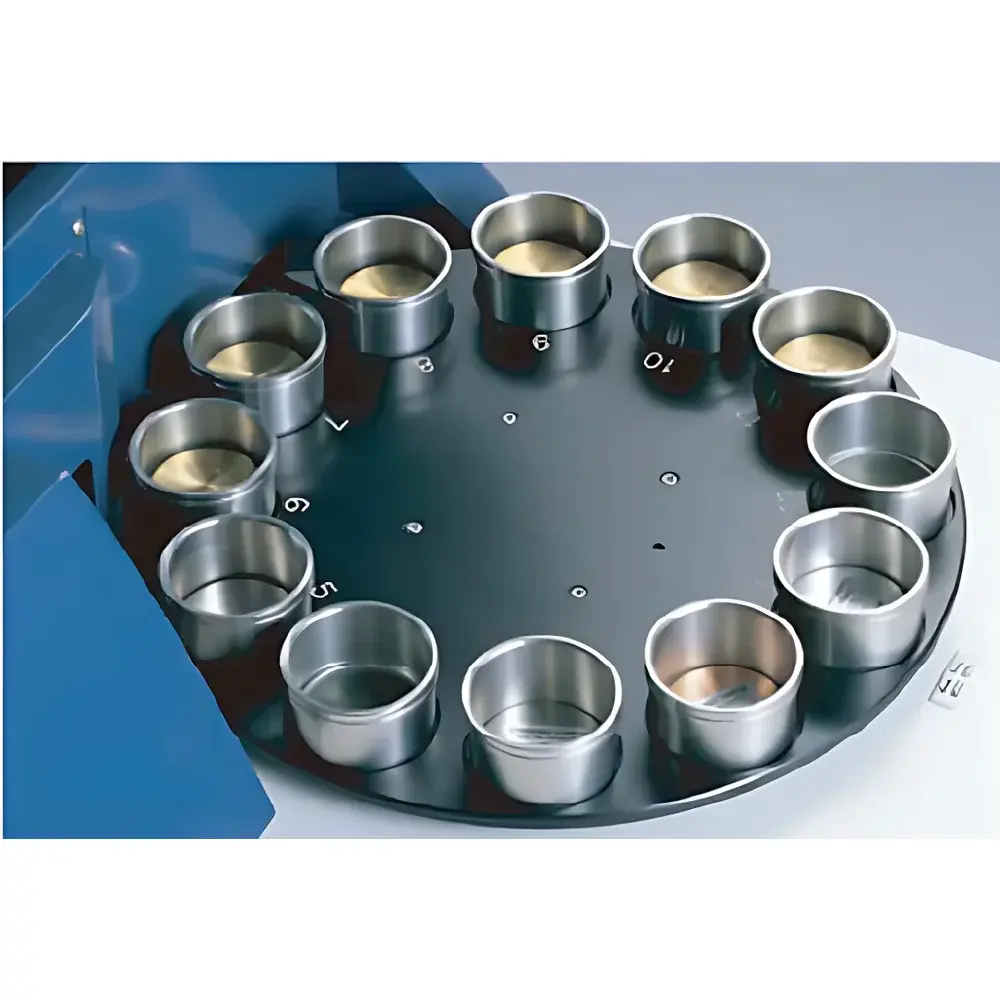
| Sample Handling | 12-position automatic sample changer |
| Compliance Standards | GB/T 111140 (S), SH/T 6083 (Cl & Si), ASTM D5059 (Pb) |
Overview
The Rigaku Supermini200 is a benchtop wavelength dispersive X-ray fluorescence (WDXRF) spectrometer engineered for ultra-trace quantification of sulfur (S), chlorine (Cl), silicon (Si), and lead (Pb) in petroleum-based matrices. Unlike energy-dispersive systems, WDXRF employs Bragg diffraction from precisely aligned analyzing crystals to isolate characteristic X-ray emission lines—delivering superior spectral resolution, lower background noise, and enhanced detection sensitivity. The instrument utilizes a high-power (200 W) palladium-target X-ray tube operating at 50 kV and 4 mA, enabling efficient excitation of low-Z elements (Cl, Si) while maintaining robust signal-to-noise for heavy elements (Pb) and mid-Z analytes (S). Its single-wavelength excitation architecture—optimized per element via dedicated crystal selection (including proprietary RX4 and RX9 crystals)—ensures minimal peak overlap and maximized peak-to-background ratios, particularly critical for challenging samples such as high-sulfur/low-chlorine fuels or catalysts containing matrix-interfering elements.
Key Features
- High-power 200 W Pd-anode X-ray source—significantly improving photon flux and detection limits compared to conventional 75 W systems.
- Automated multi-crystal changer accommodating RX4, RX9, and other standardized WDXRF crystals for optimal resolution across the S–Pb range.
- Benchtop footprint with integrated 12-position autosampler—designed for unattended operation in QC laboratories with space constraints.
- Dedicated optical path calibration and thin-film correction algorithms to compensate for absorption effects in liquid and solid samples.
- Multi-element analysis capability without hardware reconfiguration—enabling sequential S, Cl, Si, and Pb measurement within a single run.
- Robust mechanical design compliant with IEC 61000-6-3 (EMC) and IEC 61010-1 (safety) standards for industrial laboratory environments.
Sample Compatibility & Compliance
The Supermini200 accepts a broad spectrum of petroleum-related specimens—including gasoline, diesel, naphtha, jet fuel (Jet A-1, JP-8), crude oil, vacuum residue, process water (including wastewater), polypropylene, petroleum coke, and heterogeneous solid catalysts. Liquid samples are analyzed in sealed quartz or polymer cups; solids are pressed into pellets or measured as loose powders. Method validation adheres to internationally recognized protocols: sulfur quantification per GB/T 111140, combined chlorine and silicon determination per SH/T 6083, and lead analysis per ASTM D5059. The system supports GLP-compliant data handling and is compatible with audit-ready workflows under ISO/IEC 17025 and ASTM D7097 frameworks.
Software & Data Management
The instrument operates via Rigaku’s proprietary quantitative analysis software—fully localized for English-language interface and compliant with 21 CFR Part 11 requirements for electronic records and signatures. Core functionalities include qualitative spectral survey, fundamental parameter (FP)-based quantification, standardless semi-quantitative analysis, and empirical calibration using certified reference materials (CRMs). Database-driven matrix matching and automatic background subtraction minimize operator dependency. All raw spectra, calibration curves, and result logs are stored with time-stamped metadata, supporting full traceability and retrospective review. Export formats include CSV, XML, and PDF reports conforming to LIMS integration standards.
Applications
Primary use cases span refinery process control, finished fuel certification, environmental compliance monitoring, and catalyst performance evaluation. Specific applications include: monitoring ultra-low-sulfur diesel (ULSD) production against <10 ppm regulatory thresholds; verifying chlorine content in feedstocks to prevent catalyst poisoning; detecting silicon ingress from antifoam additives or corrosion products; and quantifying lead residues in legacy gasoline substitutes or reclaimed hydrocarbon streams. The system also supports R&D studies on additive degradation pathways and elemental contamination migration in closed-loop refining units.
FAQ
What regulatory standards does the Supermini200 support for sulfur analysis?
It complies with GB/T 111140 for total sulfur in light petroleum fractions and ASTM D2622 for broader hydrocarbon matrices.
Can the instrument analyze solid catalysts without pelletization?
Yes—it accommodates loose powders and irregular solids using optimized geometry and beam collimation, though pressed pellets yield higher reproducibility for routine QC.
Is method transfer possible between different Supermini200 units?
Yes—calibration files, crystal alignment parameters, and quantification models are fully portable across identical configurations when using matched CRMs.
Does the system require liquid nitrogen or vacuum pumping during operation?
No—it operates under ambient helium flush or air purge; no cryogenic cooling or high-vacuum maintenance is needed.
How is detector stability maintained over long-term operation?
The sealed proportional counter features built-in gain stabilization and periodic auto-calibration against internal reference sources, ensuring <0.5% drift over 8-hour continuous runs.






