
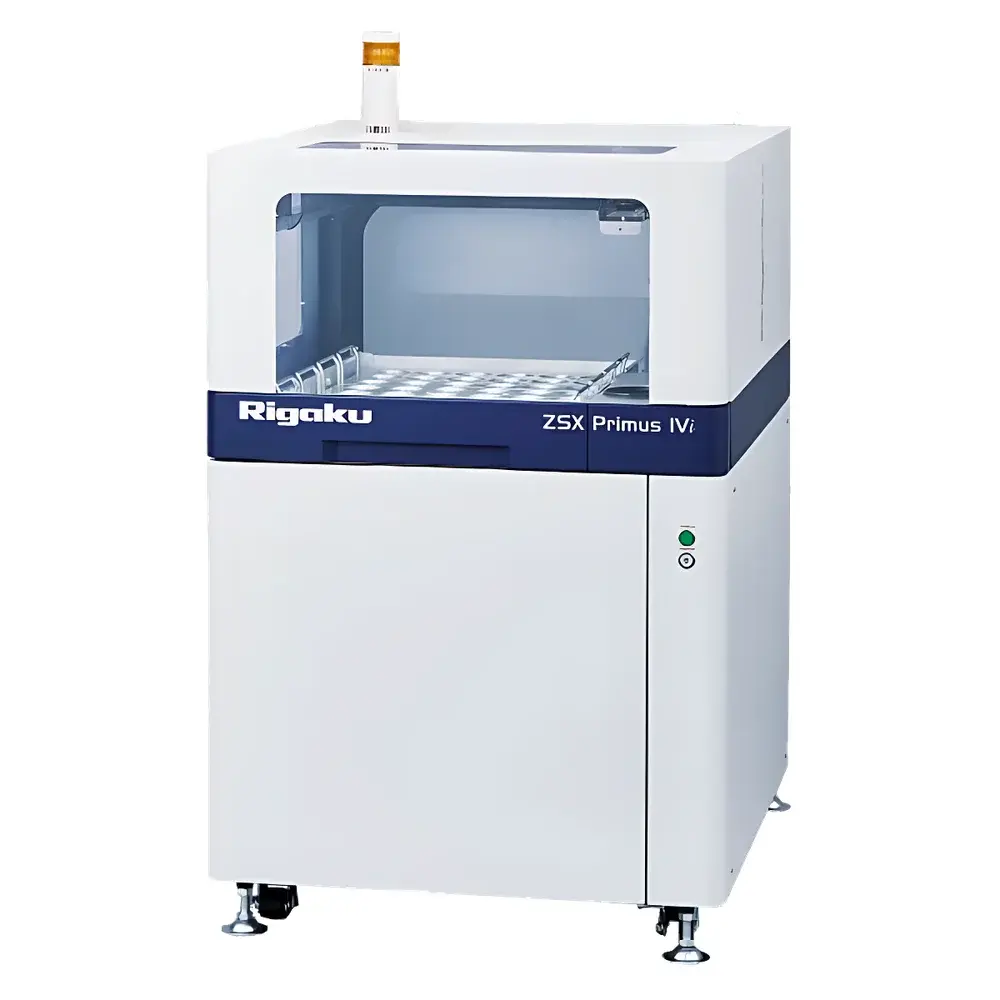
Rigaku ZSX Primus IVi Wavelength Dispersive X-Ray Fluorescence Spectrometer
| Brand | Rigaku |
|---|---|
| Origin | Japan |
| Model | ZSX Primus IVi |
| Instrument Type | Floor-standing |
| X-ray Tube Power | 4 kW |
| Elemental Range | Be (4) to U (92) |
| Scan Speed | 2400°/min |
| Detector Linear Count Rate | SC: 1800 kcps |
| FPC | 3000 kcps |
| Beryllium Window Thickness | 30 µm |
| Goniometer Angular Reproducibility | ±0.0001° |
Overview
The Rigaku ZSX Primus IVi is a high-performance, floor-standing wavelength dispersive X-ray fluorescence (WDXRF) spectrometer engineered for precision elemental analysis across industrial, geological, metallurgical, and regulatory laboratories. Based on Bragg diffraction of characteristic X-rays from crystalline analyzing crystals, the system delivers exceptional spectral resolution and quantitative accuracy—particularly critical for light-element analysis (Be–F) and trace-level detection in complex matrices. Its optical architecture employs a vertical (downward-looking) beam path, minimizing geometric artifacts associated with sample height variation and enabling robust analysis of heterogeneous solids, pressed powders, fused beads, and liquid samples without stringent surface flatness requirements.
Key Features
- Ultra-thin 30 µm Be window X-ray tube: Enables enhanced transmission of low-energy X-rays, significantly improving detection limits for light elements (e.g., Na, Mg, Al, Si) compared to conventional 50–75 µm windows.
- High-power 4 kW sealed-tube source: Delivers stable, high-intensity excitation for rapid acquisition and improved counting statistics—essential for high-throughput routine analysis and low-concentration quantification.
- D-MCA digital multichannel analyzer: Provides real-time pulse processing at up to 3000 kcps (FPC mode), supporting high count rates without dead-time distortion and enabling faster scan cycles without compromising precision.
- Sub-microradian goniometer stability: Angular reproducibility of ±0.0001° ensures long-term calibration integrity and minimizes drift-related errors during extended multi-element sequences or daily QC runs.
- Automatic filament cleaning mechanism (F-PC detector): Integrated resistive heating restores detector resolution by removing hydrocarbon contamination from the proportional counter anode wire—performed in situ without power-down or chamber venting.
- Optimized optical path geometry: Compensates for sample height variations (±2 mm) via dynamic focal distance correction, reducing intensity fluctuations caused by uneven powder pellets or irregular fused bead curvature.
Sample Compatibility & Compliance
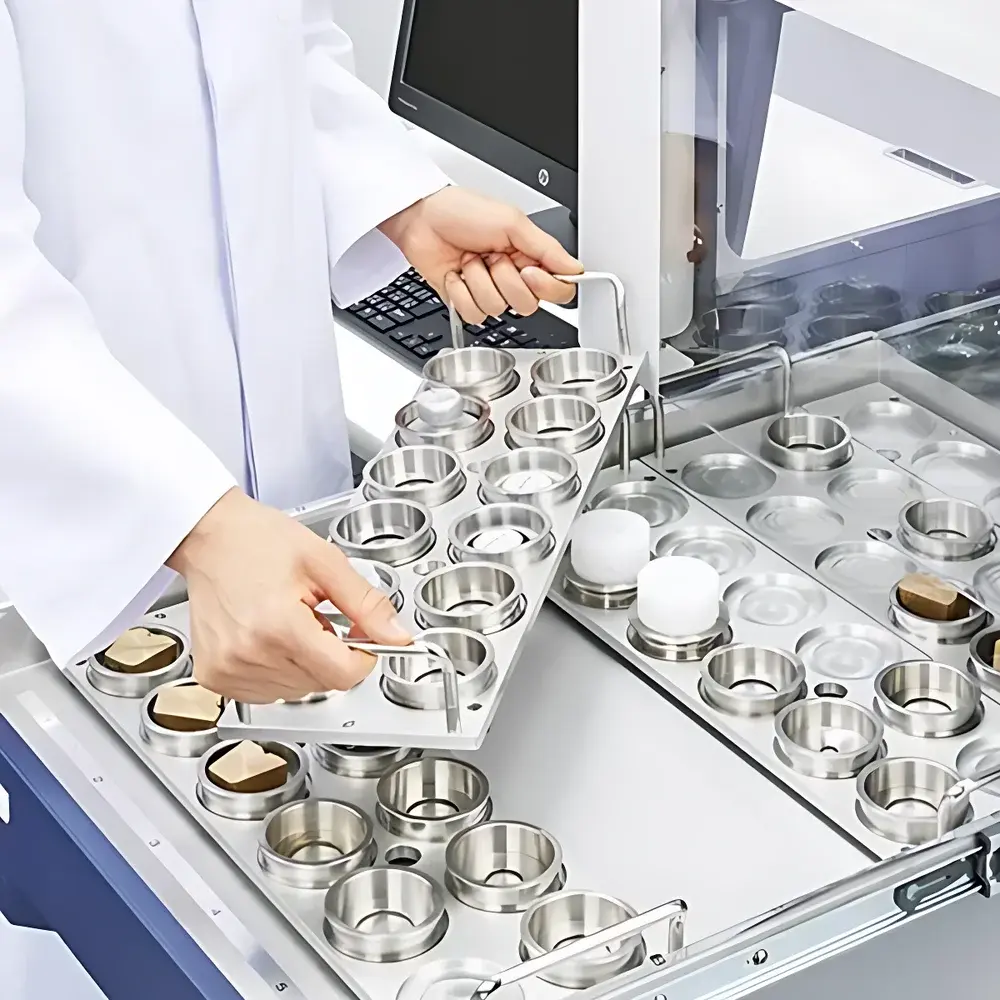
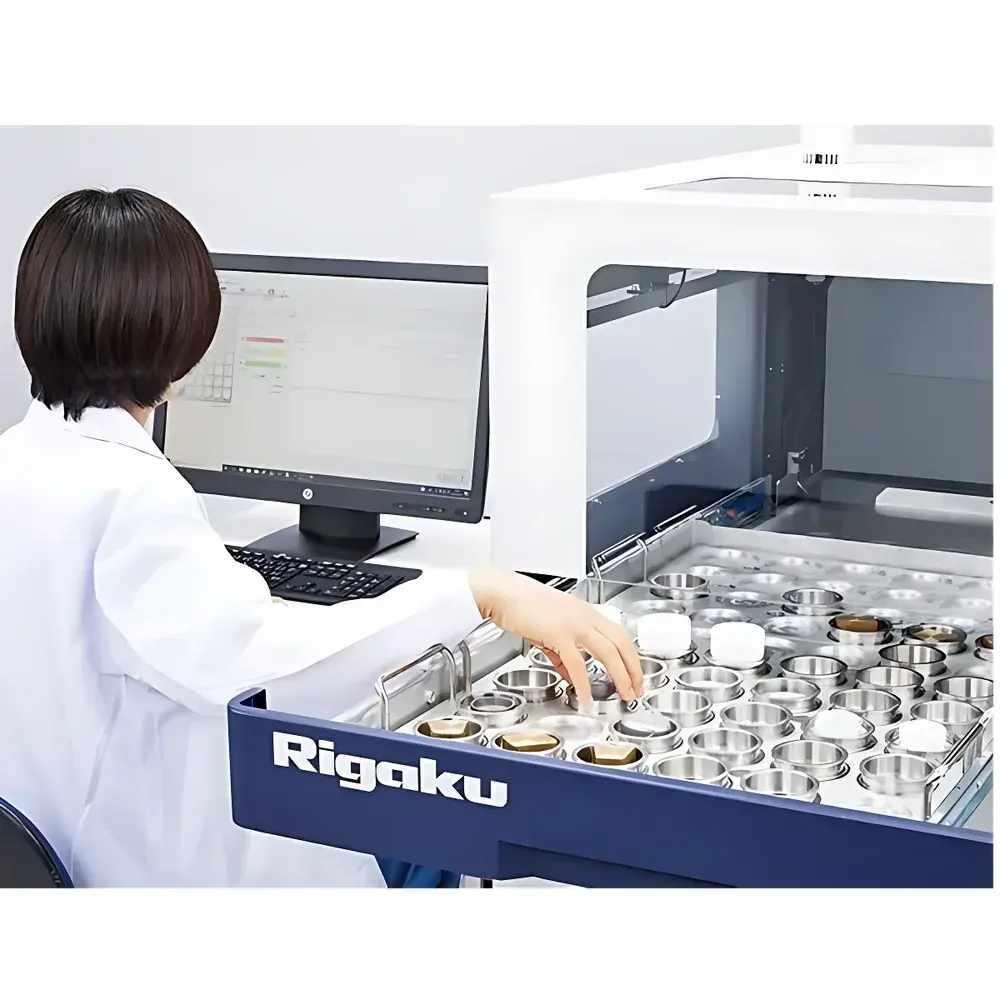
The ZSX Primus IVi accommodates a broad range of sample forms—including pressed pellets (e.g., cement, ores, ceramics), fused borate glasses, metals, thin films, and liquids in specialized cups. Its downward illumination design eliminates top-surface reflectivity artifacts and facilitates direct membrane-based analysis for volatile or hygroscopic specimens. The system complies with ISO 20063:2020 (XRF instrumentation performance verification), ASTM E1621 (standard guide for elemental analysis by WDXRF), and supports full audit trails required under GLP and GMP environments. Optional software modules enable compliance with FDA 21 CFR Part 11 for electronic records and signatures when configured with secure user authentication and version-controlled method storage.
Software & Data Management
ZSX Guidance software integrates third-generation SQX fundamental parameters (FP) quantification with automated method setup logic, eliminating manual peak selection and background definition for routine applications. The platform includes pre-validated application packages (e.g., cement, slag, polymers, RoHS screening) for immediate “out-of-the-box” operation. Sample tray programming allows batch ID assignment, auto-replication of measurement conditions, and geometric correction for liquid cup depth and meniscus effects. All spectral data, calibration curves, and raw counts are stored in vendor-neutral HDF5 format, ensuring long-term archival integrity and interoperability with LIMS and enterprise analytics platforms.
Applications
- Quantitative analysis of major, minor, and trace elements (ppm–wt%) in cement, clinker, and supplementary cementitious materials per ASTM C114 and EN 196-2.
- High-precision alloy certification (Fe-, Al-, Cu-, Ni-base) compliant with ISO 17025-accredited testing protocols.
- Geochemical exploration and ore grade control, including rare earth element (REE) profiling in monazite and bastnäsite concentrates.
- Regulatory screening for restricted substances (Pb, Cd, Hg, Cr⁶⁺, Br) in electronics and packaging per IEC 62321-5 and RoHS Directive Annex II.
- Research-grade speciation studies requiring high-resolution separation of overlapping Kα/Kβ lines (e.g., V/Ti, S/P, Zr/Nb) using LiF(200), PET, and TAP crystals.
FAQ
What is the minimum detectable limit (MDL) for sodium (Na) in glass matrix standards?
MDLs are matrix- and condition-dependent; typical values range from 10–50 ppm under optimized 4 kW excitation and 1000 s live time using LiF(200) crystal and SC detector.
Does the ZSX Primus IVi support automated calibration verification?
Yes—built-in drift correction routines use certified reference materials (CRMs) to monitor and adjust intensity, peak position, and background stability between analyses.
Can the instrument analyze hazardous or radioactive samples?
With appropriate shielding upgrades and interlocked sample chamber modifications, it may be adapted for low-activity alpha/beta emitters per IAEA SSG-46 guidelines—but standard configuration is not rated for radioisotope work.
Is remote diagnostics and firmware updates supported?
Rigaku Remote Service (RRS) enables encrypted, firewall-compliant access for predictive maintenance alerts, log file analysis, and secure over-the-air firmware deployment.
What sample preparation accessories are available for fused bead preparation?
Rigaku offers integrated fusion systems (e.g., Fusion Fluxer FX-100) with programmable temperature ramps, platinum crucible handling, and automated quenching—fully synchronized with ZSX Guidance workflow scheduling.






