
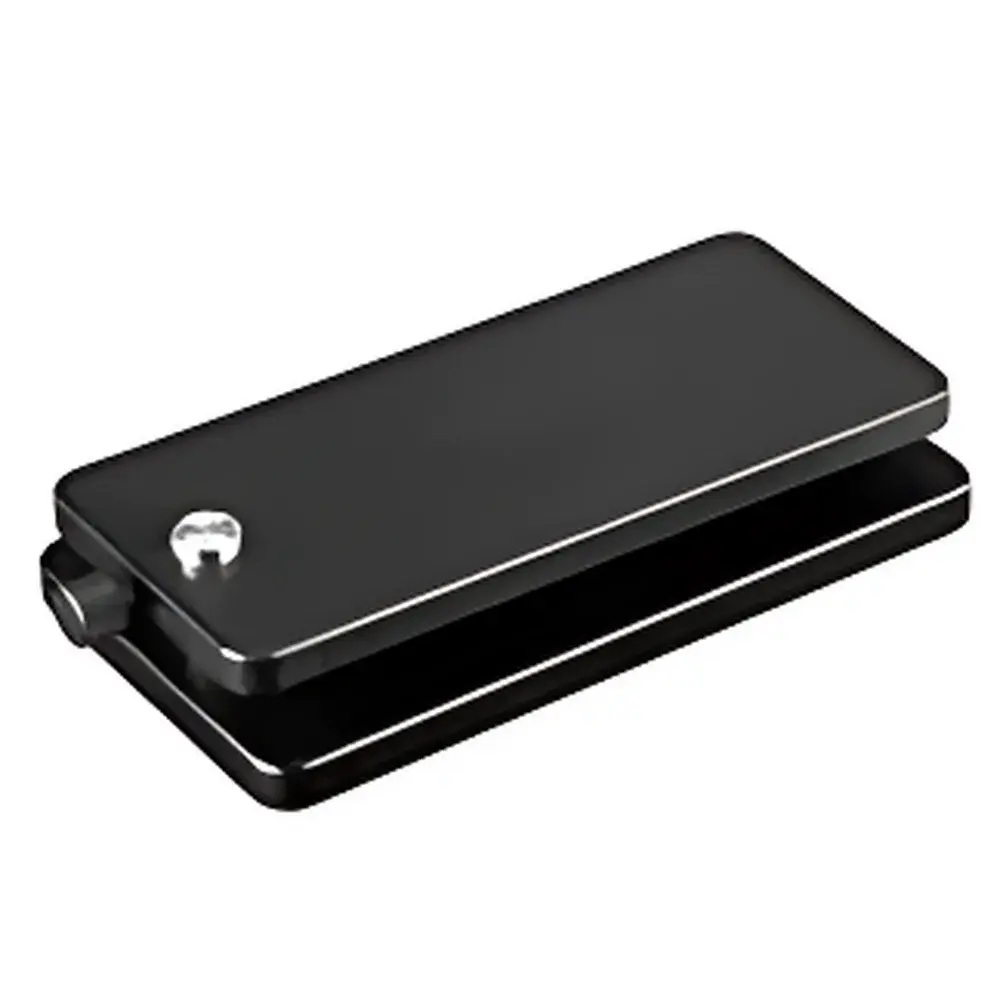
RWD 68604 & 68607 Adjustable Animal Elevation Platforms for Stereotaxic Surgery
| Brand | RWD |
|---|---|
| Origin | Guangdong, China |
| Manufacturer Type | Original Equipment Manufacturer (OEM) |
| Regional Classification | Domestic (China) |
| Model | 68604 / 68607 |
| Quotation | Available Upon Request |
| Elevating Platform Dimensions (L×W×H) | 195 × 90 × 11 mm |
| Base Plate Dimensions | 195 × 110 × 12 mm |
| Max. Vertical Travel | 20 mm (68604), 50 mm (68607) |
Overview
The RWD 68604 and 68607 Adjustable Animal Elevation Platforms are precision-engineered mechanical accessories designed exclusively for integration with RWD standard stereotaxic frames—particularly the 68604/68607 series brain stereotaxic instruments. These platforms address a fundamental biomechanical requirement in rodent neurosurgical procedures: consistent alignment of the animal’s skull relative to the stereotaxic coordinate system. During stereotaxic surgery, accurate targeting of subcortical structures (e.g., hippocampus, ventral tegmental area, or substantia nigra) depends critically on achieving a stable, level, and reproducible head position—defined by the bregma–lambda plane. Variations in animal size, strain-specific cranial morphology, and body weight (e.g., 20 g C57BL/6 mice vs. 300 g Sprague-Dawley rats) necessitate vertical adjustment of the animal’s torso to ensure the skull remains parallel to the horizontal plane of the stereotaxic frame. The elevation platforms provide calibrated, stepless vertical translation without introducing lateral drift or torsional instability—preserving the integrity of the stereotaxic coordinate grid.
Key Features
- Mechanically robust aluminum alloy construction with anodized surface finish for corrosion resistance and ease of decontamination between procedures.
- Two height-adjustable variants: 68604 (20 mm maximum lift) optimized for small rodents (mice, juvenile rats); 68607 (50 mm maximum lift) suitable for adult rats, guinea pigs, and other medium-sized laboratory mammals.
- Integrated micrometer-scale depth scale etched directly onto the elevation column, enabling repeatable positioning with ±0.5 mm resolution under visual verification.
- U-shaped base plate design ensures full compatibility with RWD 68604/68607 stereotaxic frame mounting interfaces—no adapter required.
- Non-slip silicone-coated platform surface minimizes animal slippage during anesthesia and surgical setup, reducing repositioning events and associated stress artifacts.
- Tool-free height locking via dual-position cam lever mechanism; secure engagement verified by tactile feedback and audible click.
Sample Compatibility & Compliance
These elevation platforms support standardized positioning across common laboratory species used in neuroscience research, including Mus musculus (C57BL/6, BALB/c), Rattus norvegicus (Sprague-Dawley, Wistar), and selected lagomorph models. Each unit is manufactured in compliance with ISO 13485:2016 principles for medical device-related instrumentation and conforms to general laboratory equipment safety standards (IEC 61010-1). While not classified as an active medical device, the platform’s mechanical stability and dimensional repeatability support adherence to GLP (Good Laboratory Practice) documentation requirements for preclinical stereotaxic studies. All materials are autoclavable at 121°C for 20 minutes, facilitating reuse in multi-animal experimental cohorts under institutional IACUC-approved protocols.
Software & Data Management
As a passive mechanical accessory, the RWD 68604/68607 Elevation Platform does not incorporate embedded electronics, firmware, or digital connectivity. Its operation is fully manual and independent of software control. However, it is fully compatible with third-party stereotaxic navigation systems—including those utilizing digital coordinate mapping (e.g., RWD NeuroStar™ software suite, Stoelting Co. Digital Stereotaxic Planner, or open-source platforms such as BrainMaker)—provided the user manually records and inputs the adjusted platform height into the coordinate transformation matrix. Height settings are traceable via physical markings and documented in procedural logs, satisfying audit requirements for FDA 21 CFR Part 11–aligned workflows when paired with validated electronic lab notebooks (ELNs).
Applications
- Craniotomy and intracranial cannula implantation in longitudinal electrophysiology or optogenetics experiments.
- Microinjection of viral vectors, tracers, or pharmacological agents into discrete brain nuclei with <100 µm spatial tolerance.
- Implantation of chronic EEG or LFP electrodes requiring precise dorsoventral calibration relative to bregma.
- Calibration of laser ablation or focused ultrasound targeting systems where skull-to-target distance must remain constant across subjects.
- Standardization of surgical posture in behavioral phenotyping pipelines involving post-operative recovery assessment.
FAQ
Can the 68604 and 68607 platforms be used interchangeably with non-RWD stereotaxic frames?
Compatibility is validated only with RWD 68604/68607 series frames due to proprietary mounting geometry and U-base interface tolerances. Third-party frame integration requires custom machining of adapter plates and is not supported by RWD technical documentation.
Is the elevation height adjustable during an ongoing procedure?
Yes—height can be fine-tuned intraoperatively using the cam lever; however, any adjustment after initial skull fixation must be accompanied by re-verification of bregma–lambda leveling using a digital inclinometer or spirit level to maintain stereotaxic accuracy.
What is the maximum load capacity of each platform?
Both models support static loads up to 500 g with ≤0.02 mm deflection under center-loading conditions, as verified per ASTM E8/E8M tensile testing methodology applied to structural components.
Are replacement parts (e.g., silicone pads, cam levers) available separately?
Yes—RWD offers OEM spare parts kits (P/N: RWD-EP-KIT-01) containing wear-prone components, supplied with calibration certificates traceable to NIM (National Institute of Metrology, China).



