
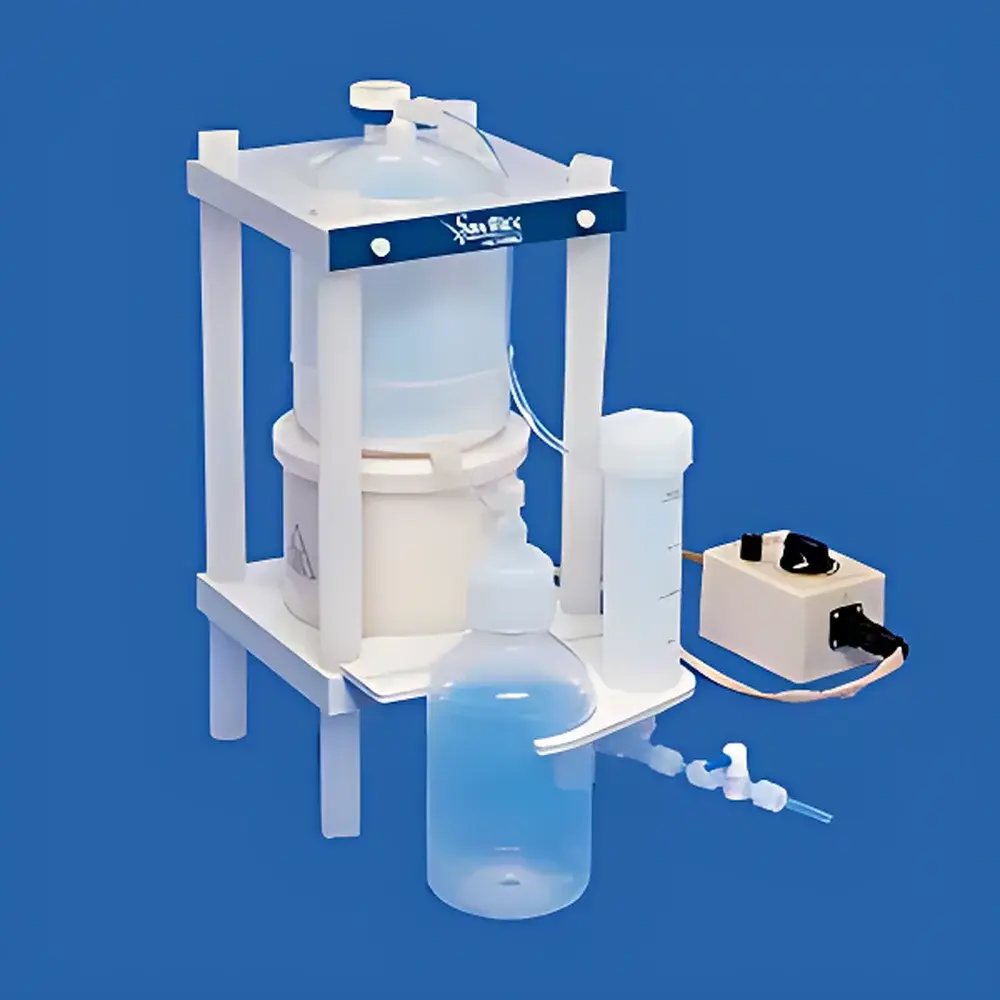
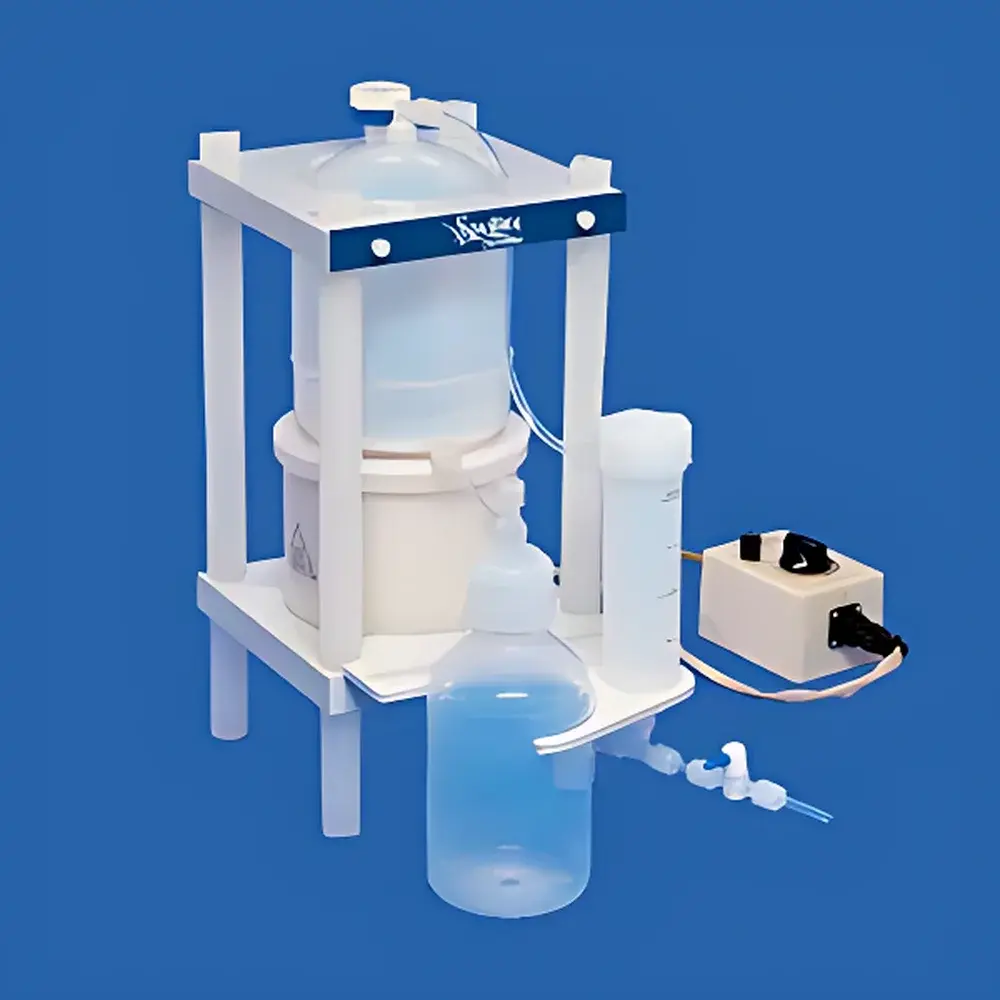
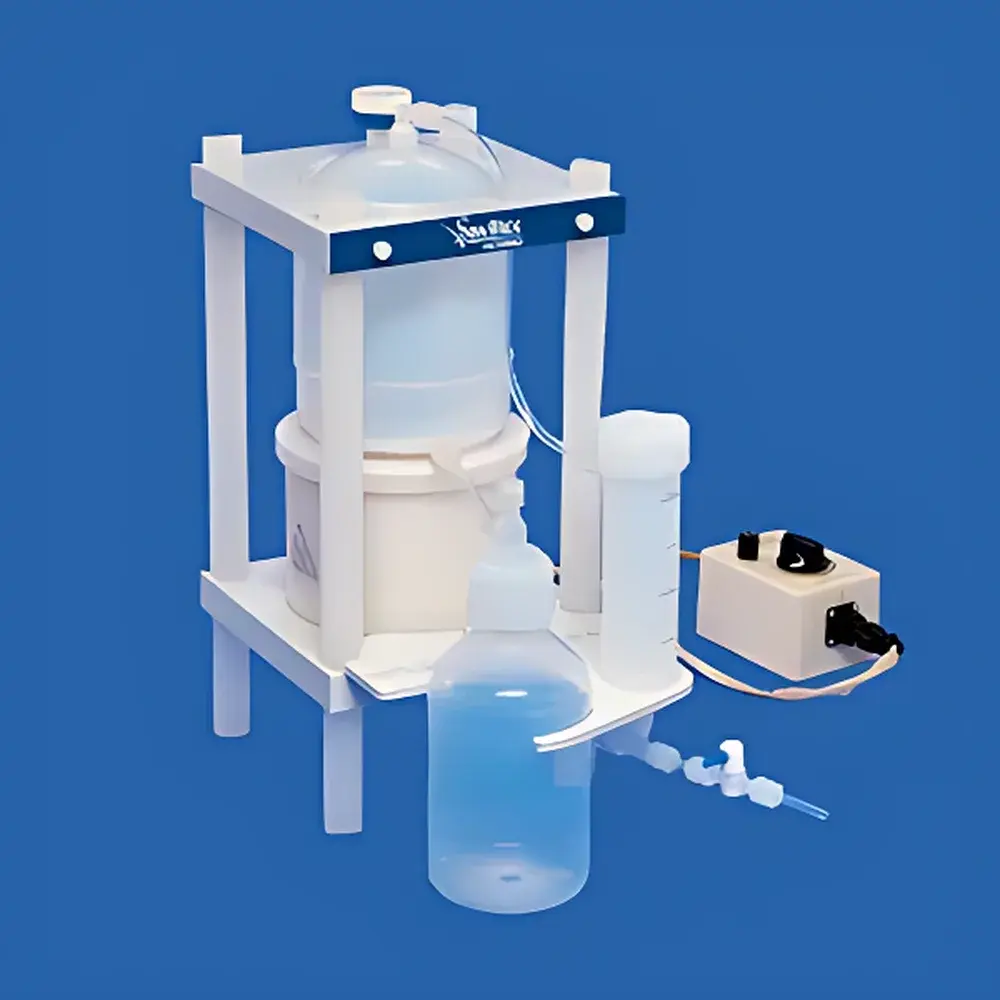
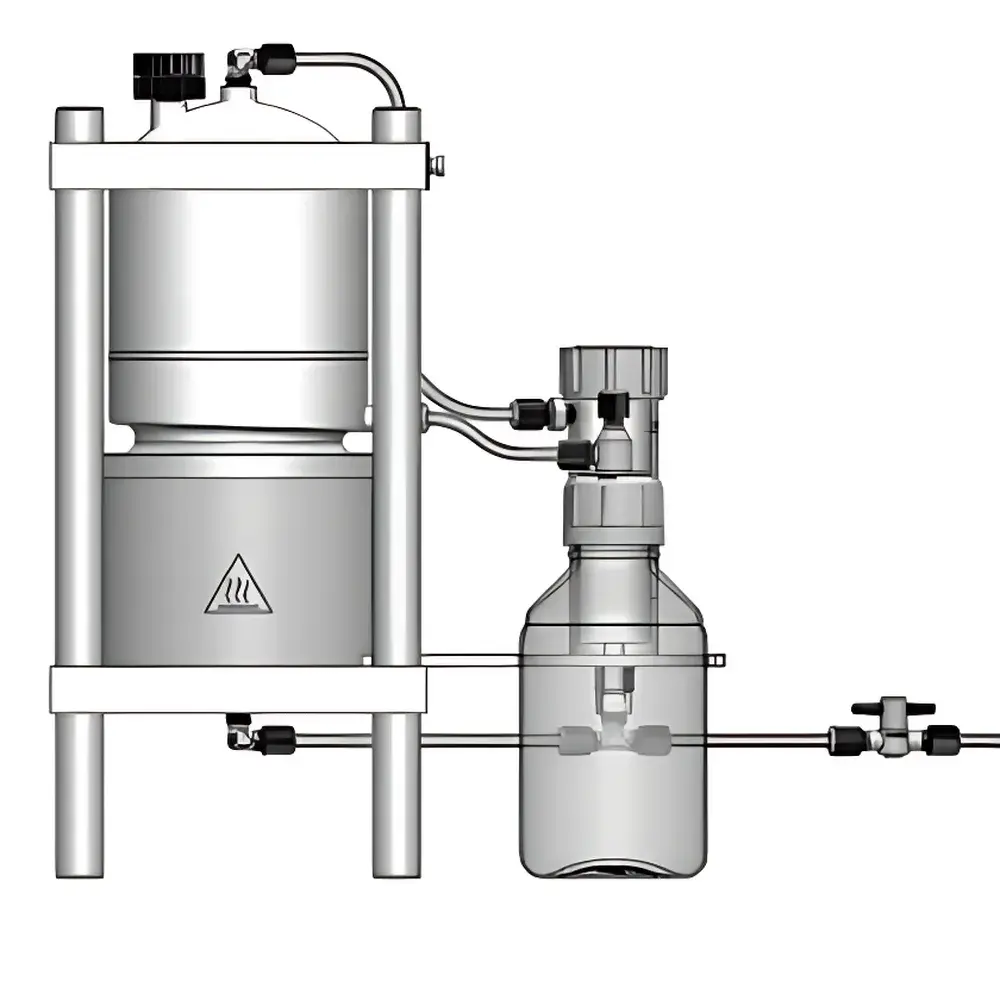
Savillex DST-1000 Sub-Boiling Acid Distillation System
| Brand | Savillex |
|---|---|
| Origin | USA |
| Model | DST-1000 |
| Power Input | 100/115/230 VAC ±10%, 50/60 Hz |
| Power Consumption | 70 W |
| Weight | 4.6 kg |
| Dimensions (L×W×H) | 20 cm × 20 cm × 43 cm (excl. funnel) |
| Capacity | 125 mL – 1 L |
| Material of Wetted Parts | Molded PFA |
| Cooling | Air-cooled (no water required) |
| Drainage | Integrated gravity-fed drain channel |
| Temperature Control | Adjustable, sub-boiling range |
Overview
The Savillex DST-1000 Sub-Boiling Acid Distillation System is an ultra-high-purity, air-cooled distillation apparatus engineered for the preparation of trace-metal-free mineral acids—specifically HNO₃, HCl, HF, and HBr—for ultra-trace elemental analysis by ICP-MS, ICP-OES, and HR-ICP-MS. Operating on the principle of sub-boiling (or “cold-vapor”) distillation, the DST-1000 maintains the acid solution below its atmospheric boiling point while applying controlled, uniform thermal energy via a tightly wound heating mantle. This minimizes volatile impurity carryover—including metal contaminants adsorbed on vapor-phase droplets—and ensures condensate purity at the part-per-quadrillion (fg/g) level. Unlike conventional reflux or hotplate-based distillers, the DST-1000 eliminates reliance on external cooling water, glass-jacket condensers, or mechanical pumps—reducing both infrastructure dependency and risk of contamination from cooling system leachates or pump lubricants.
Key Features
- Entire fluid path constructed from molded, high-molecular-weight PFA—certified per ASTM D4894 and ISO 10993-5 for biocompatibility and extractables compliance—ensuring zero contribution of Na, K, Al, Fe, Cr, Ni, Cu, Zn, or rare earth elements.
- Air-cooled condensation design: No recirculating chiller, tap water connection, or condenser tubing required—eliminating corrosion-prone brass fittings, silicone gasket leaching, and microbiological growth risks associated with water-cooled systems.
- Integrated gravity-fed drain channel enables complete, residue-free evacuation of spent acid without vacuum pumps, syringes, or manual tipping—critical for maintaining cleanroom-grade workflow integrity in Class 100–1000 environments.
- Adjustable temperature controller housed in a rugged, chemically resistant polypropylene enclosure; compatible with global voltage standards (100 V, 115 V, and 230 V AC) and equipped with over-temperature cutoff per UL 61010-1.
- Compact footprint (20 cm × 20 cm base) fits within standard fume hood sashes without obstructing airflow or compromising operator ergonomics—validated for continuous operation under ASHRAE 110 hood performance criteria.
- Sub-boiling thermal profile optimized to suppress aerosol entrainment and thermal decomposition pathways—particularly essential for preserving HF stability and minimizing SiO₂ volatilization during hydrofluoric acid purification.
Sample Compatibility & Compliance
The DST-1000 is validated for distillation of nitric, hydrochloric, hydrofluoric, and bromhydric acids across concentration ranges from 2% to 70% (v/v). It meets the material compatibility requirements of USP , ISO 15223-1, and EPA Method 200.8 Appendix A for trace metals preparation. All PFA components are lot-certified for ≤1 pg/g background levels of 35+ elements (including As, Cd, Pb, U, Th) as verified by independent ICP-MS analysis per ISO/IEC 17025-accredited protocols. The system supports GLP-compliant documentation through optional audit-ready logbooks and is routinely deployed in laboratories operating under FDA 21 CFR Part 11–aligned data governance frameworks.
Software & Data Management
The DST-1000 operates as a standalone analog-controlled instrument with no embedded firmware or digital interface—by design, to eliminate electromagnetic interference (EMI), software validation overhead, and cybersecurity exposure points common in microprocessor-driven lab equipment. Temperature setpoints are manually adjusted via calibrated potentiometer; all operational parameters (voltage input, ambient temperature, batch volume, collection time) are recorded externally in laboratory notebooks or LIMS-integrated electronic lab notebooks (ELNs) compliant with ALCOA+ principles. This architecture aligns with ISO/IEC 17025:2017 Clause 7.7.1 (control of equipment records) and supports full traceability for regulatory audits without requiring 21 CFR Part 11 electronic signature modules.
Applications
- Preparation of calibration standards and blanks for ultra-trace multielement analysis in environmental monitoring (e.g., EPA 1638, 200.8), geochemical profiling (e.g., ASTM D5173), and nuclear fuel cycle assays.
- Purification of acids used in semiconductor wafer cleaning (SEMI F57), photomask etching, and high-purity quartz crucible leaching where Na, K, and transition metal contamination must remain below 10¹⁰ atoms/cm².
- Recovery and re-use of spent acids from digestion vessels (e.g., after microwave-assisted digestion per ASTM D5688), reducing hazardous waste generation and disposal costs by >60% versus single-use acid protocols.
- On-demand generation of high-purity acid for field-deployable ICP-MS systems where portability, power efficiency (<70 W), and absence of water infrastructure are operational constraints.
FAQ
What acid concentrations can the DST-1000 effectively purify?
The system is validated for HNO₃ (2–70%), HCl (2–37%), HF (2–49%), and HBr (2–48%)—all at sub-boiling temperatures specific to each acid’s vapor pressure curve.
Does the DST-1000 require periodic recalibration?
No. As a purely thermal analog device with no sensors or feedback loops, it requires only routine visual inspection of PFA integrity and verification of heating mantle continuity per manufacturer’s maintenance checklist.
Can the DST-1000 be used with mixed acid systems (e.g., aqua regia)?
No. Mixed acids introduce unpredictable volatility profiles and risk of hazardous gas evolution (e.g., Cl₂, NOₓ); only single-component acids are supported per safety certification and performance validation.
Is the DST-1000 compatible with cleanroom Class 100 environments?
Yes—its PFA construction, lack of moving parts, and zero particulate shedding (verified per ISO 14644-1 Class 5 testing) make it suitable for ISO Class 5 laminar flow hoods and gloveboxes.
How often should the PFA evaporator vessel be replaced?
Under normal use (≤8 hrs/day, 5 days/week), the molded PFA vessel exhibits no measurable degradation for ≥2 years; replacement is recommended only upon visible clouding, cracking, or loss of hydrophobic surface character.



