
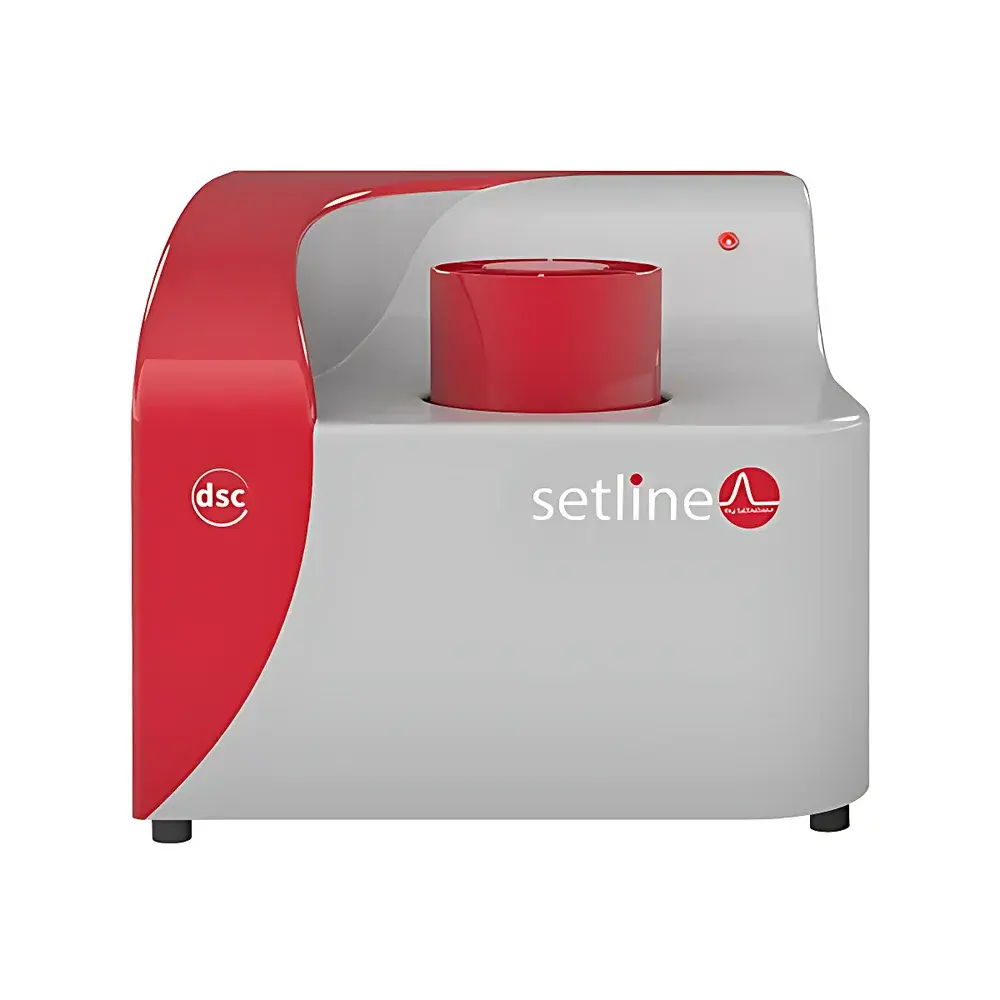
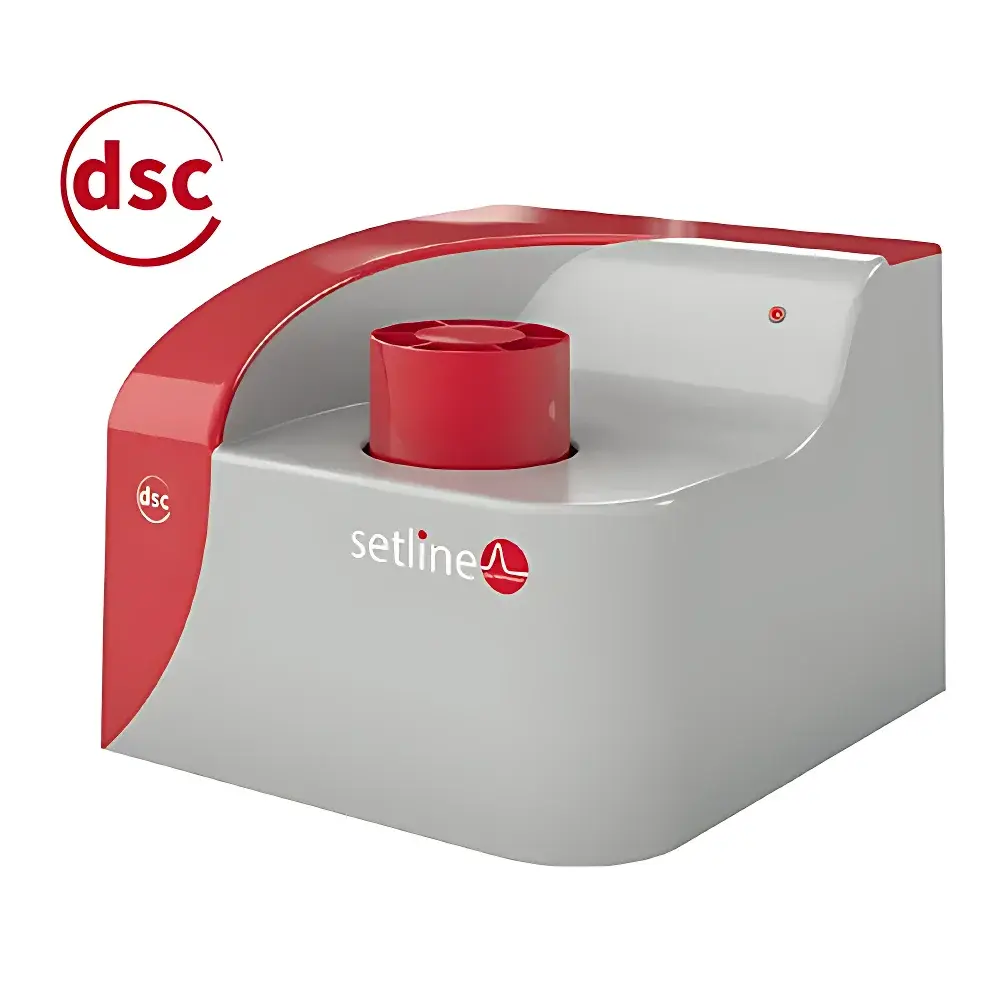
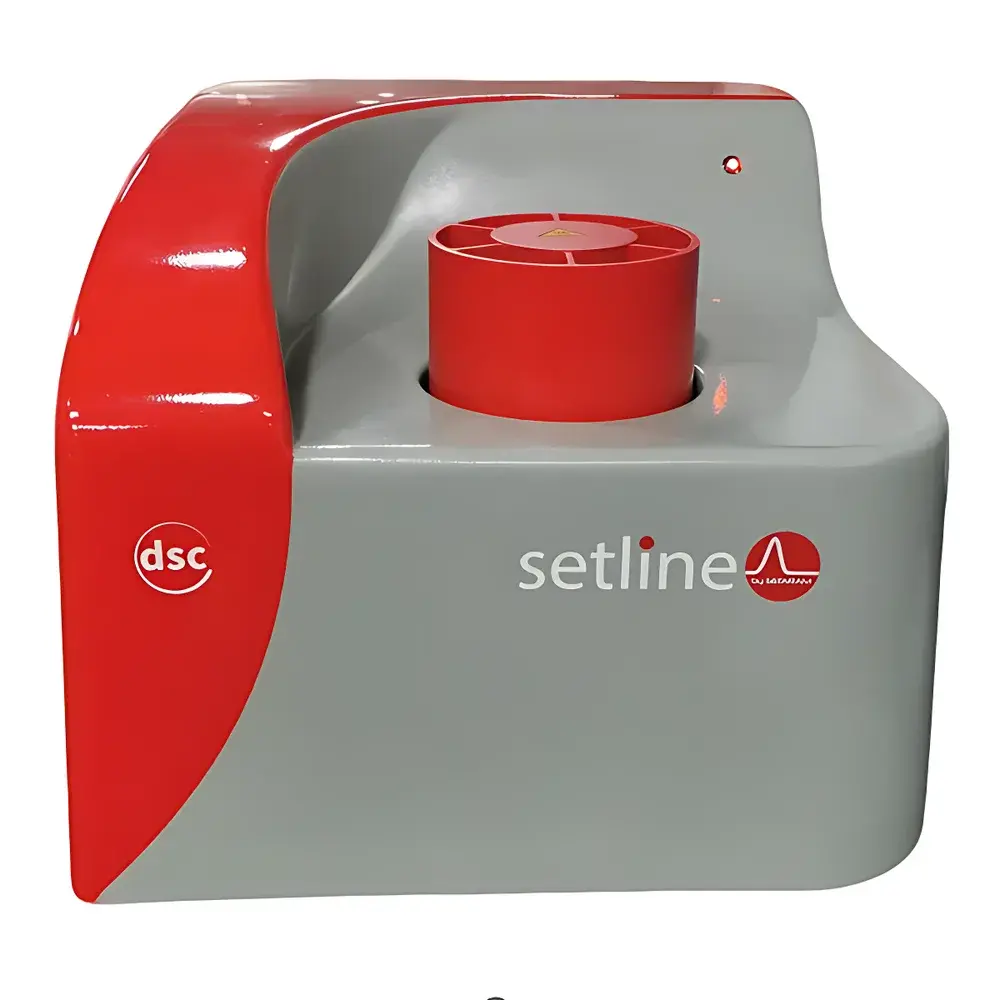
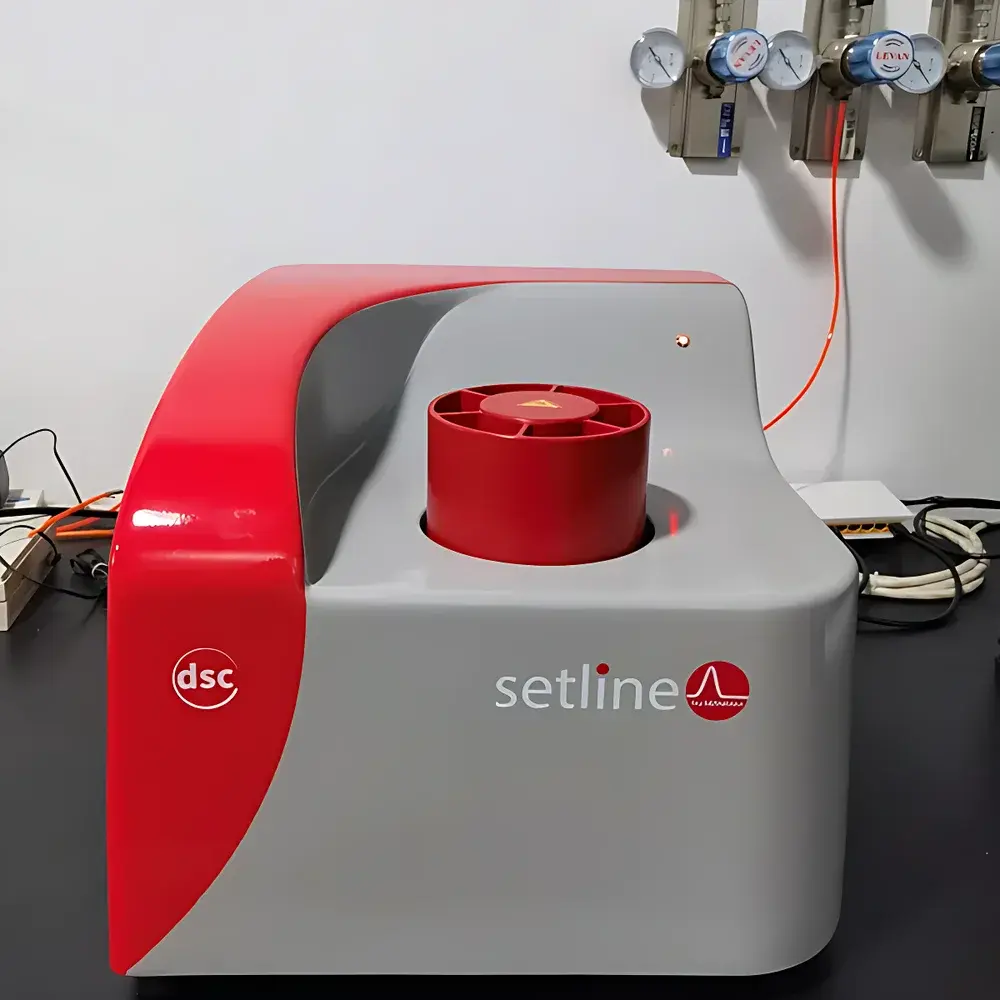
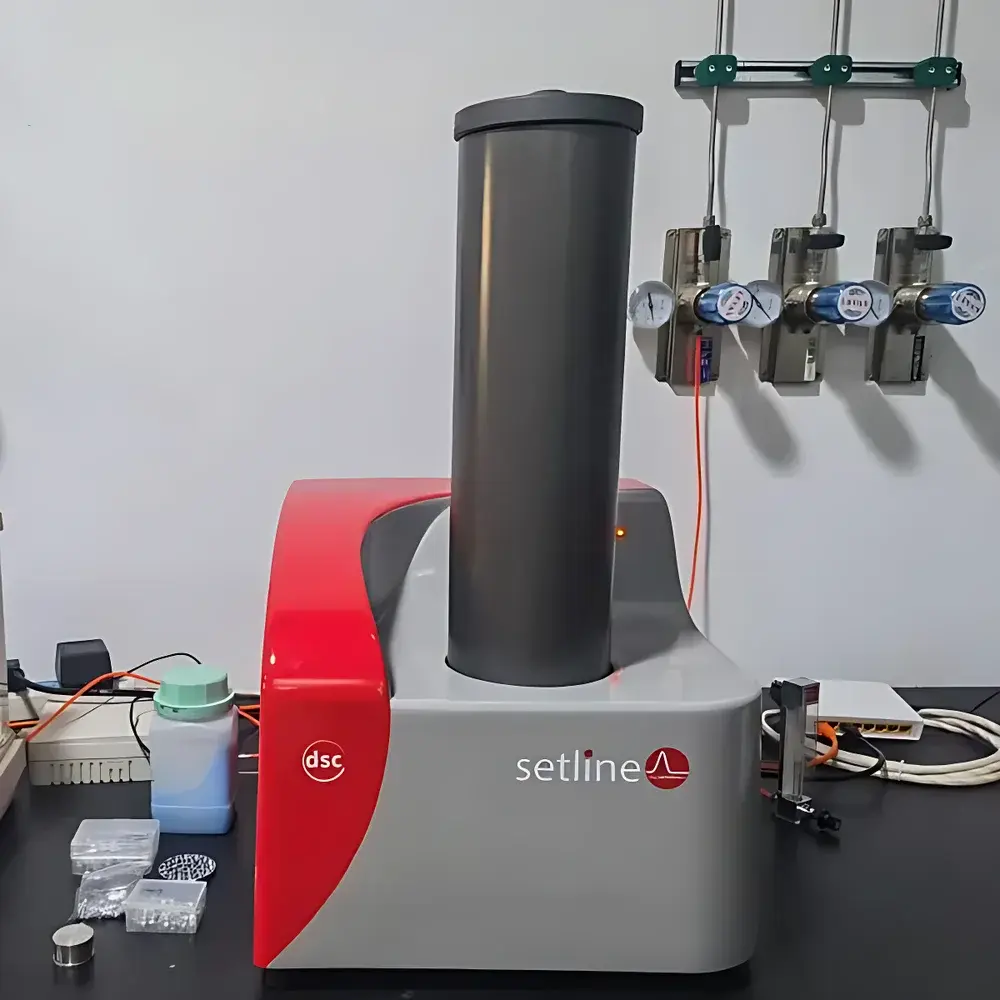
Setaram Setline DSC Differential Scanning Calorimeter
| Brand | Setaram |
|---|---|
| Origin | Beijing, China (jointly developed by Chinese, French & Swiss teams) |
| Model | Setline DSC |
| Temperature Range | −170 to 700 °C |
| Programmable Heating/Cooling Rate | 0.01–100 °C/min |
| Temperature Accuracy | ±0.1 °C (vs. standard metals) |
| Temperature Precision | ±0.05 °C |
| DSC Signal Range | ±6000 mW |
| Heat Flow Resolution | 0.1 µW |
| Temperature Stability | ±0.1 °C (standard metal) |
| Sample Capacity | Single-position |
| Cooling Options | Manual/auto liquid nitrogen (−170 to 400 °C), He/Ar/dry air gas-cooling (−70 to 400 °C) |
| Gas Control | Dual-channel programmable gas switching |
| Software | Calisto 2.0 (data acquisition & processing with audit trail, user permissions, macro automation, Cp calculation) |
Overview
The Setaram Setline DSC is a high-performance differential scanning calorimeter engineered for precision thermal analysis across academic, quality control (QC), and industrial R&D environments. Based on the heat-flux DSC principle, it measures the difference in heat flow between a sample and an inert reference as both are subjected to identical, precisely controlled temperature programs. This enables quantitative determination of enthalpy changes associated with physical transitions (e.g., glass transition, melting, crystallization) and chemical processes (e.g., curing, oxidation, decomposition). Designed in collaboration between Setaram’s French engineering center and its China-based development team, the instrument integrates EU-certified design standards (CE-marked), imported critical components—including high-stability NiCr-Constantan flat-plate sensors—and localized manufacturing in Beijing. Its operational range spans from cryogenic conditions (−170 °C) to high-temperature applications (700 °C), supporting rigorous method development and routine compliance testing in regulated sectors including pharmaceuticals, polymers, battery materials, and construction chemistry.
Key Features
- Robust flat-plate sensor architecture using NiCr-Constantan alloy, delivering high sensitivity and linearity across the full −170–700 °C range
- Low-inertia resistive furnace with exceptional thermal homogeneity and minimal temperature lag, ensuring accurate kinetic profiling
- Multi-mode cooling compatibility: manual and automated liquid nitrogen systems (−170 to 400 °C); helium, argon, or dry air gas-cooling (−70 to 400 °C)
- Dual independent gas channels with programmable auto-switching—supports inert, oxidative, and reactive atmospheres per ASTM E1269 and ISO 11357
- Modular design enabling field-replacement of core subassemblies: sensor, furnace, balance module, and gas manifold—reducing downtime and lifecycle cost
- Calisto 2.0 software suite compliant with FDA 21 CFR Part 11 requirements, featuring electronic signatures, audit trail, role-based access control, and data integrity safeguards
Sample Compatibility & Compliance
The Setline DSC accommodates standard crucibles (Al2O3, aluminum—30 µL and 100 µL volumes) for routine polymer, pharmaceutical, and food analyses, as well as high-pressure Incoloy crucibles rated to 500 bar at 600 °C for reactive or volatile samples. It supports direct integration into GLP/GMP workflows through Calisto’s validated data handling: all modifications are timestamped, attributable, and reversible; raw data files are immutable binary archives (.cal). The system meets key international standards including ISO 11357 (plastics), ASTM E794 (melting point), ASTM E1269 (heat capacity), and USP <1163> (thermal analysis in pharmaceutical development). Calibration protocols follow NIST-traceable reference materials (In, Sn, Zn, Bi, KCl), with documented uncertainty budgets available upon request.
Software & Data Management
Calisto 2.0 comprises two tightly integrated modules: Calisto Acquisition for real-time instrument control and Calisto Processing for advanced thermogram interpretation. Acquisition allows creation, storage, and recall of standardized test methods—including multi-step ramps, isotherms, and modulation sequences—with full parameter logging. Processing delivers peak integration with customizable baselines, deconvolution algorithms for overlapping transitions, onset/peak/endpoint detection per ASTM E1356, and quantitative Cp determination via step-heating (ASTM E1269). Users define macros for batch processing of repetitive QC assays (e.g., OIT, Tg, purity estimation via van’t Hoff), with outputs exportable to CSV, Excel, or publication-ready SVG/PNG formats. All actions are recorded in a tamper-evident audit trail meeting ALCOA+ principles.
Applications
- Polymer characterization: glass transition (Tg), melting temperature (Tm), crystallinity, cold crystallization, crosslink density (DCL), and oxidative induction time (OIT) per ASTM D3895
- Pharmaceutical solid-state analysis: polymorph screening, hydrate/anhydrate transitions, excipient compatibility, and API stability under thermal stress
- Materials science: specific heat capacity (Cp) mapping, reaction kinetics (Kissinger, Ozawa-Flynn-Wall), decomposition energetics, and phase diagram construction
- Energy materials: thermal runaway onset in battery cathodes/anodes, binder decomposition, and separator shrinkage behavior
- Food & cosmetics: fat crystallization profiles, melting ranges of waxes and emulsifiers, and shelf-life prediction via accelerated oxidation testing
FAQ
What regulatory standards does the Setline DSC support for GxP environments?
It supports full 21 CFR Part 11 compliance via Calisto 2.0’s electronic signature framework, audit trail, and data integrity controls—validated for use in pharmaceutical QC labs operating under ICH Q5, Q7, and USP <1163>.
Can the instrument perform heat capacity (Cp) measurements?
Yes—using the step-heating method per ASTM E1269, with automated baseline correction and reference material normalization within Calisto.
Is automatic sample loading available?
The Setline DSC+ configuration includes a 59-position autosampler with independent thermal control for each position, enabling unattended multi-sample analysis with variable ramp rates and gas protocols.
How is temperature calibration verified?
Using certified NIST-traceable metal standards (In, Sn, Zn, Bi); accuracy (±0.1 °C) and precision (±0.05 °C) are verified during factory acceptance testing and can be re-verified in situ using the built-in calibration routine.
What maintenance is required for long-term reliability?
Annual sensor and furnace verification is recommended; consumables (crucibles, O-rings, gas filters) are field-replaceable. The modular architecture allows component-level service without full system return, supporting >10-year operational life with scheduled preventive maintenance.



